
What traction motor efficiency benchmarks really matter?

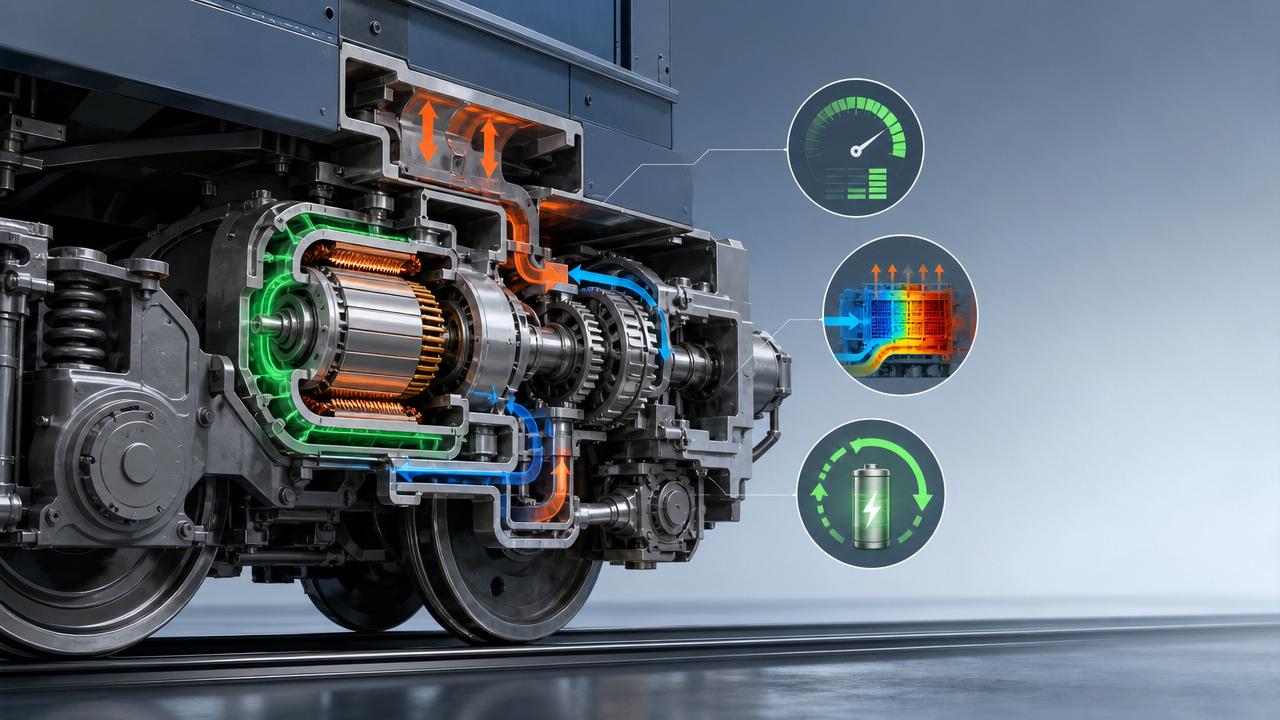
For technical evaluators in railway freight and engineering, traction motor efficiency benchmarks are no longer simple brochure numbers. They now shape energy cost, haulage reliability, thermal margins, maintenance intervals, and cross-border compliance.
In heavy-haul rail systems, the question is not whether a motor reaches a peak efficiency point. The real question is which traction motor efficiency benchmarks remain meaningful across gradients, stop-start duty, low-speed creep, and harsh ambient conditions.
That shift matters across integrated freight corridors. As electrification expands, diesel-electric fleets evolve, and digital diagnostics mature, benchmark quality determines whether locomotive comparisons reflect real operating value or only laboratory performance.
Why traction motor efficiency benchmarks are being redefined
Traditional comparisons often focused on rated efficiency at a single operating point. That remains useful, but it is incomplete for railway applications where load cycles vary dramatically over time and geography.
Today, traction motor efficiency benchmarks are being judged against route profile, converter interaction, axle load, adhesion demands, and thermal endurance. A motor can look excellent on paper yet underperform in corridor-specific duty cycles.
This change is especially visible in intermodal and heavy-haul networks. Longer trains, stricter energy targets, and higher asset utilization push evaluators toward system-level evidence rather than isolated component claims.
Key trend signals across the sector
- Benchmarking is moving from peak efficiency to duty-cycle efficiency.
- Thermal performance is being assessed together with electrical efficiency.
- Motor, inverter, gearbox, and control software are increasingly evaluated as one traction chain.
- Standards alignment with UIC, EN, and AAR expectations is becoming a competitive filter.
- Digital monitoring is enabling continuous validation of traction motor efficiency benchmarks in service.
The benchmarks that really matter beyond nameplate efficiency
The most useful traction motor efficiency benchmarks combine electrical, thermal, mechanical, and operational evidence. They must indicate not only energy conversion quality, but also how stable that quality remains under railway stress.
1. Efficiency map across the full torque-speed range
A single rated point can hide poor performance at low-speed, high-torque operation. Freight locomotives spend significant time in that region during starting, climbing, and constrained-yard movement.
A proper map shows how efficiency behaves across continuous, short-time, and overload zones. This is one of the most important traction motor efficiency benchmarks for corridor realism.
2. Duty-cycle weighted efficiency
Weighted efficiency uses actual route data. It reflects tunnels, gradients, regenerative braking opportunities, station spacing, and train mass variation. This converts abstract lab numbers into operationally relevant comparison values.
3. Thermal rise and thermal recovery
A motor may be efficient but thermally fragile. If winding temperature rises too fast, power derating appears, insulation life shortens, and availability drops. Thermal recovery between heavy pulls also matters.
4. Efficiency retention under contamination and aging
Dust, moisture, vibration, and bearing wear degrade real-world performance. High-value traction motor efficiency benchmarks should include retention behavior after service exposure, not only initial factory results.
5. Regenerative braking conversion effectiveness
For many corridors, return energy capability is now central. Benchmarking must examine how effectively the motor supports regenerative braking across speed bands and varying network receptivity conditions.
6. Power factor and converter compatibility
Motor efficiency cannot be separated from inverter behavior. Harmonic interaction, switching strategy, and cooling integration affect losses. Strong traction motor efficiency benchmarks therefore include converter-matched performance data.
What is driving the new benchmark focus
Several structural forces explain why traction motor efficiency benchmarks now receive deeper scrutiny in freight and engineering decisions.
How benchmark quality affects railway business outcomes
Poor benchmark selection leads to distorted total cost models. It can overstate energy savings, underestimate cooling demand, and ignore maintenance penalties caused by hot running or unstable insulation behavior.
Stronger traction motor efficiency benchmarks improve tender evaluation, retrofit prioritization, and lifecycle forecasting. They also support more defensible engineering choices when comparing asynchronous and permanent-magnet architectures.
Operational areas most affected
- Fleet energy budgeting and route assignment
- Cooling system sizing and enclosure design
- Maintenance planning for bearings, insulation, and ventilation paths
- Locomotive modernization cases and return-on-investment modeling
- Compliance documentation for multinational rail projects
What to examine when comparing traction motor efficiency benchmarks
A useful comparison process starts with test context. Without knowing test method, cooling condition, ambient temperature, and converter pairing, benchmark numbers can mislead even experienced engineering teams.
Core evaluation points
- Was efficiency measured at wheel-rim relevant operating points?
- Are losses separated into copper, iron, mechanical, and converter-related contributions?
- Does the dataset include transient duty and overload intervals?
- Is thermal saturation shown over long-haul operation?
- Are benchmark results repeatable under EN, UIC, or AAR aligned procedures?
- Is field validation available from similar climate, gradient, and tonnage conditions?
These questions turn traction motor efficiency benchmarks from marketing shorthand into engineering evidence. They also reduce the risk of selecting a motor optimized for test benches rather than freight corridors.
A practical decision framework for the next evaluation cycle
The most effective approach is to rank benchmarks by mission relevance. Not every railway network needs the same weighting, but every network needs consistency between route reality and comparison logic.
Priority focus areas going forward
- Demand route-specific traction motor efficiency benchmarks, not generic averages.
- Treat thermal endurance as equal to electrical efficiency.
- Require benchmark traceability to standards and test conditions.
- Use operational data to confirm efficiency retention over time.
- Evaluate the traction package as a system, not a standalone motor.
As freight corridors become more digital, more energy-sensitive, and more performance-driven, traction motor efficiency benchmarks will continue to evolve. The strongest benchmark is the one that predicts service behavior, not just catalog appeal.
The next practical step is to review existing motor comparison sheets and remove metrics that cannot be tied to duty cycle, thermal stability, or standards-based verification. That single change often improves decision quality immediately.
For railway-freight engineering programs, better traction motor efficiency benchmarks create clearer technical alignment, more credible lifecycle models, and stronger long-term asset value across demanding international operations.
Industry Briefing
Get the top 5 industry headlines delivered to your inbox every morning.