
How to compare a railway axle manufacturer with confidence

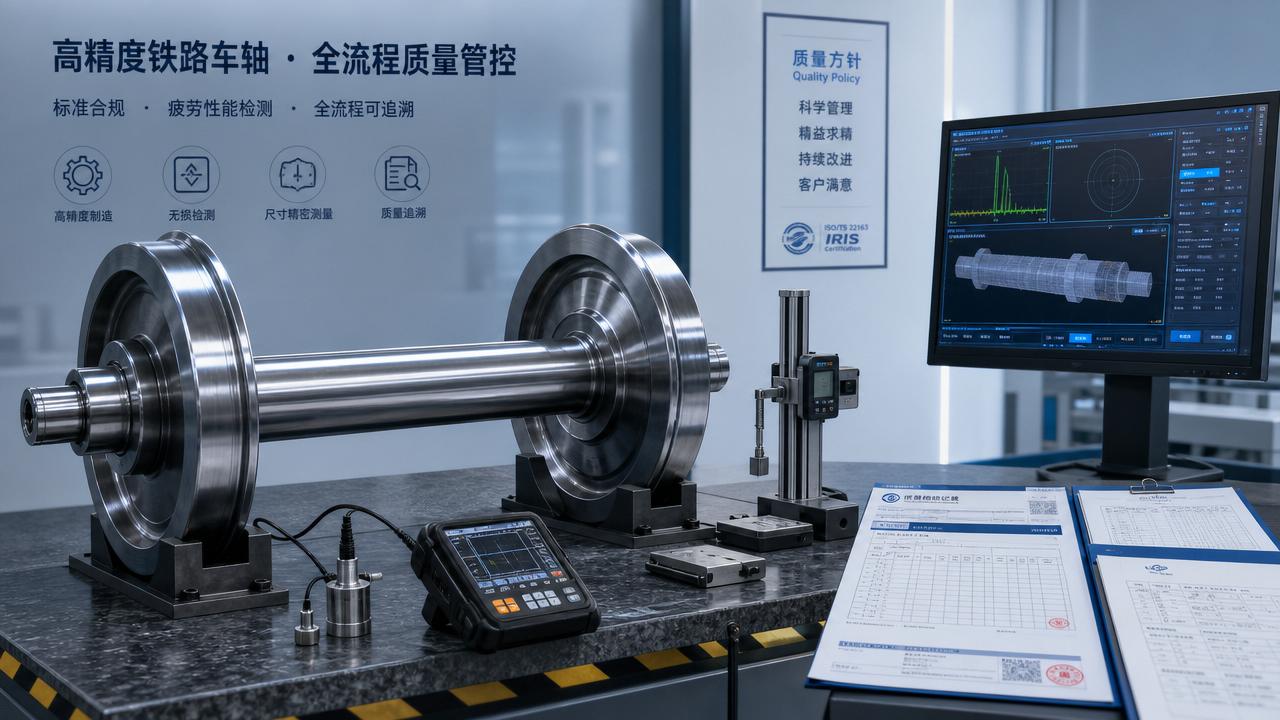
Choosing a railway axle manufacturer is more than comparing catalogs or prices—it directly affects reliability, maintenance cycles, and fleet safety. For aftersales maintenance teams, a confident evaluation should focus on material standards, fatigue performance, traceability, machining precision, and compliance with UIC, EN, or AAR requirements. This guide outlines the practical criteria that help you assess suppliers with clarity and reduce long-term operational risk.
What maintenance teams really need to know before comparing suppliers
When searching for a railway axle manufacturer, aftersales teams usually want one thing: confidence that the axle will perform safely through years of service, inspections, and overhaul cycles.
That means the best comparison is not based on unit price alone. It should be based on how well a supplier supports fatigue life, inspection predictability, spare parts consistency, and root-cause accountability.
For maintenance personnel, the most useful question is simple: if this axle enters service across our fleet, will it reduce uncertainty or create more of it?
A reliable manufacturer should make your work easier with stable specifications, clear documentation, repeatable dimensions, and support when cracks, wear, or abnormal readings appear during service.
Start with standards compliance, but do not stop there
Most qualified suppliers will say they meet major railway requirements. The real comparison begins when you check exactly which standards they follow and how they prove compliance batch by batch.
Ask whether the axle is designed, forged, heat treated, machined, tested, and documented according to UIC, EN, AAR, or other applicable regional requirements for your operating environment.
It is also important to confirm whether compliance applies only to the final product or to the full manufacturing route, including raw material sourcing, testing frequency, dimensional control, and release procedures.
A serious railway axle manufacturer should be able to provide certificates, process records, inspection reports, and technical references without hesitation. Vague claims about “international quality” are not enough.
If your fleet operates across different regulatory regions, compare whether the supplier has experience with multi-standard qualification. That experience often reduces approval delays and future maintenance disputes.
Material quality is the foundation of axle reliability
For maintenance teams, material quality matters because many in-service problems begin long before the axle reaches the workshop. Steel cleanliness, composition control, and forging integrity affect long-term fatigue behavior.
Ask what steel grades the manufacturer uses, how inclusions are controlled, and whether the material source is stable across production lots. Frequent source changes can create inconsistent field performance.
You should also review how the supplier verifies internal soundness. Ultrasonic testing, macro-etch examination, and metallurgical analysis help confirm that the axle core and critical sections are fit for service.
A well-made axle is not just strong on paper. It shows low variability in chemistry, microstructure, hardness distribution, and defect control across repeated production runs.
For aftersales teams, consistency matters as much as peak performance. One excellent batch does not help if the next batch behaves differently in service or inspection.
Compare fatigue performance, not just static strength
Railway axles operate under repeated cyclic loads, so fatigue resistance should be a central comparison point. Static tensile values alone do not tell you how the axle will behave over long mileage.
Ask whether the manufacturer can provide fatigue test data, design validation records, and evidence of service life performance under similar axle loads, speeds, and track conditions.
It is useful to know how the supplier treats transition radii, wheel seats, bearing seats, and other stress-sensitive zones. Small design or finishing differences can affect crack initiation risk.
Surface finish quality, residual stress condition, and heat treatment control all influence fatigue life. Maintenance teams should not treat these as abstract production details—they directly affect inspection intervals and failure risk.
If the supplier has field data from comparable freight or mixed-traffic applications, that information is often more valuable than generic strength claims in a sales brochure.
Machining precision affects installation, wear, and inspection results
Even a sound forged axle can become a maintenance problem if machining tolerances are inconsistent. Dimensional accuracy influences wheel fit, bearing performance, balance, vibration, and component life.
When comparing a railway axle manufacturer, ask about tolerances for wheel seats, bearing journals, fillet geometries, concentricity, runout, and surface roughness in critical areas.
Also ask how these dimensions are measured, recorded, and released. A supplier with controlled metrology and digital trace records usually gives maintenance teams fewer surprises during assembly and overhaul.
Poor precision can increase press-fit issues, create abnormal wear patterns, or complicate non-destructive testing. In practice, workshop time lost to fitment correction often costs more than initial price savings.
If possible, review dimensional reports from multiple batches rather than one sample. Repeatability is what matters when the same axle design must support a whole fleet over time.
Traceability is essential when failures or anomalies occur
Aftersales teams should treat traceability as a non-negotiable requirement. When an axle shows unusual wear, ultrasonic indications, or service damage, you need to identify its origin fast.
A strong manufacturer should trace each axle to heat number, forging lot, heat treatment cycle, machining route, inspection results, and release documentation. This supports fast containment and credible root-cause analysis.
Without traceability, even a minor field issue can become a fleet-wide uncertainty. Workshops may be forced to increase inspections or quarantine stock because the affected population cannot be clearly identified.
Ask how markings are applied, how records are stored, and how long data remains accessible. Long-life rail assets require documentation that survives personnel changes and extended maintenance cycles.
Digital traceability systems are especially useful for large operators and cross-border supply chains, where technical accountability must remain clear over many years.
Non-destructive testing capability should be examined in detail
Because axle safety depends heavily on defect detection, you should examine the supplier’s non-destructive testing methods closely rather than accepting a simple “tested” statement.
Find out which techniques are used, such as ultrasonic testing, magnetic particle inspection, or other approved methods for the axle type and applicable standard.
Ask about operator qualification, calibration routines, acceptance criteria, equipment maintenance, and how indications are documented. Testing quality depends on process discipline, not just equipment ownership.
It also helps to know whether the manufacturer performs testing only at final release or at multiple stages throughout production. Early-stage detection usually reduces hidden quality escape risk.
For maintenance teams, a supplier that understands inspection logic is often better prepared to support in-service diagnostics when unusual signals appear later in fleet operation.
Evaluate heat treatment control and process stability
Heat treatment has a major impact on strength, toughness, hardness profile, and fatigue behavior. Small process variations can create large differences in service performance.
Ask the manufacturer how temperature, soak time, quench conditions, and tempering are controlled and recorded. Well-managed process windows are a sign of production maturity.
You should also ask how hardness is checked across critical sections and whether the supplier monitors microstructure consistency from batch to batch.
A supplier with unstable heat treatment may still pass basic acceptance tests while producing wider performance variation over time. That variation eventually reaches the maintenance workshop as uncertainty.
Consistent process control is especially important for heavy-haul, high-mileage, and harsh-environment applications where axle demands are less forgiving.
Look at field support, not just manufacturing capability
A capable railway axle manufacturer should support the product after delivery, especially when maintenance teams need clarification on wear limits, inspection signals, repair decisions, or failure investigation.
Ask whether the supplier offers technical response procedures, service bulletins, metallurgical support, and turnaround commitments for urgent field issues.
Good aftersales support can reduce downtime significantly. When cracks, scoring, corrosion, or fitment abnormalities are detected, fast technical guidance helps avoid unnecessary removals or unsafe reuse decisions.
You should also consider whether the manufacturer can train maintenance staff on inspection focus areas, handling practices, and known failure modes for the axle design.
In long-life rail assets, supplier responsiveness often becomes as important as manufacturing quality, because not every issue can be predicted before service begins.
Use total lifecycle cost instead of purchase price alone
Low acquisition cost can be attractive, but maintenance teams know that true axle value appears over years of inspections, wheelset work, removals, and service reliability.
Compare suppliers using lifecycle factors such as mean time between removals, rework frequency, inspection burden, documentation quality, spare availability, and technical support efficiency.
An axle that costs slightly more upfront may lower total maintenance cost if it delivers stable dimensions, predictable fatigue performance, and fewer unplanned workshop interventions.
Include the cost of investigation delays as well. Poor documentation or weak traceability can make a small incident expensive when engineering teams must spend extra time validating safety.
For fleet operators, the best supplier is often the one that lowers uncertainty and labor intensity across the asset lifecycle, not simply the one with the cheapest quotation.
Questions to ask before approving a railway axle manufacturer
To compare suppliers with confidence, maintenance teams should use a structured qualification checklist rather than relying on commercial presentations or generic compliance claims.
Ask for applicable standard references, axle material specifications, forging and heat treatment controls, NDT procedures, dimensional tolerances, fatigue data, and full traceability examples.
Request evidence from actual production, not just type approval documents. Batch reports, inspection records, and field references from similar operating conditions are especially valuable.
You should also ask how the supplier handles non-conformance, concession requests, corrective action, and customer complaint analysis. Those processes reveal how they behave when quality pressure rises.
Finally, involve workshop, quality, and engineering personnel in the comparison. The best decision usually comes from combining procurement input with real maintenance experience.
Practical warning signs that should reduce your confidence
Some risks become visible early if you know what to look for. One warning sign is inconsistent answers between sales, quality, and engineering staff about standards or production routes.
Another is incomplete traceability, especially when the supplier cannot quickly connect an axle to steel origin, testing records, and process history.
Be cautious if fatigue evidence is vague, dimensional data is limited to one sample, or inspection reports lack detail on acceptance criteria and operator qualification.
Frequent outsourcing without clear control is another concern. If forging, machining, heat treatment, and testing are spread across multiple parties, oversight must be exceptionally strong.
Maintenance teams should also be cautious when a supplier avoids discussing previous field issues. Transparent manufacturers usually inspire more confidence than those claiming zero problems under all conditions.
How to make a confident final comparison
The best way to compare a railway axle manufacturer is to score each supplier against operationally meaningful criteria, not just commercial ones.
Focus on standards compliance, material integrity, fatigue performance, machining precision, NDT discipline, traceability depth, process stability, and aftersales responsiveness.
Then compare those findings against your fleet reality: load spectrum, climate, maintenance intervals, wheelset practices, inspection capability, and regulatory obligations.
If a supplier can consistently prove quality, support field diagnostics, and reduce ambiguity in long-term maintenance, that supplier deserves stronger confidence than one offering only a lower price.
For aftersales teams, confidence comes from evidence, repeatability, and supportability. Those three factors usually separate a safe long-term partner from a short-term purchasing option.
Conclusion
Choosing the right railway axle manufacturer is a maintenance decision as much as a procurement decision. The axle affects safety margins, workshop efficiency, inspection planning, and fleet reliability.
For confident comparison, look beyond brochures and focus on documented standards, metallurgical control, fatigue resistance, dimensional consistency, traceability, and real aftersales support.
When a supplier performs well across those areas, the result is not only a compliant component but also a more manageable maintenance environment with lower operational risk.
In practical terms, the best manufacturer is the one that helps your team prevent uncertainty before it becomes downtime, cost, or safety exposure in the field.
Industry Briefing
Get the top 5 industry headlines delivered to your inbox every morning.