
Common mistakes when choosing a railway buffer factory

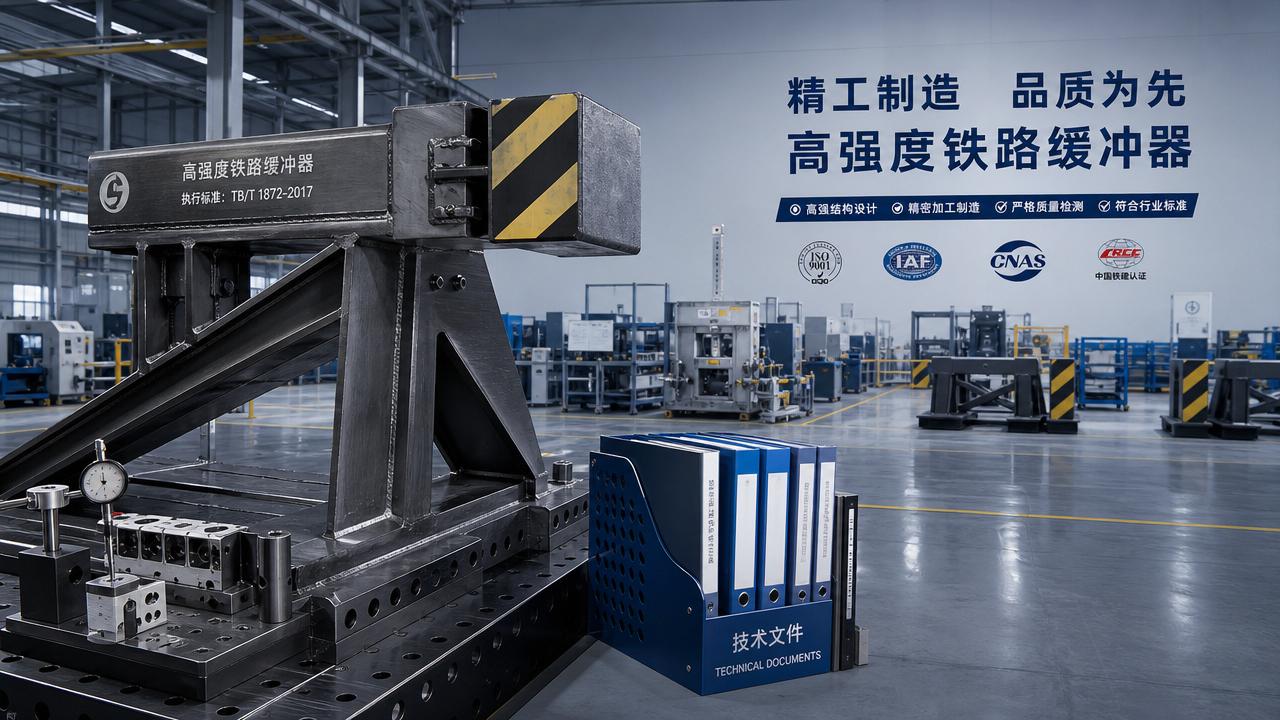
Choosing a railway buffer factory is not a routine sourcing task. For business assessment professionals, the biggest mistake is treating buffers as simple metal components rather than safety-critical railway assets. A low quotation may look attractive during procurement, but if the supplier lacks engineering depth, traceable quality control, or compliance discipline, the commercial risk can quickly become an operational, regulatory, and reputational problem.
When buyers search for a railway buffer factory, their real intent is usually broader than finding a manufacturer. They want a dependable supplier that can meet technical standards, support project documentation, pass audits, deliver consistent production quality, and reduce lifecycle risk. In other words, they are evaluating whether a factory can become a safe long-term partner, not just a short-term vendor.
For commercial evaluators, the most useful approach is to focus less on catalog claims and more on evidence: standards compliance, product validation, testing capability, materials control, engineering responsiveness, after-sales support, and manufacturing consistency. The common mistakes outlined below are the ones that most often weaken supplier selection and lead to avoidable cost, delay, or safety exposure.
Why railway buffer factory selection carries more risk than many buyers expect
Railway buffers absorb impact energy, protect rolling stock structures, support operational safety, and influence maintenance performance over time. Their reliability matters in freight yards, industrial rail systems, mainline operations, and heavy-duty shunting conditions. A supplier failure can therefore affect more than a single shipment or purchase order.
Unlike commodity hardware, buffers must perform under repeated mechanical stress, environmental variation, and installation-specific loading conditions. This means supplier evaluation should include design suitability, fatigue resistance, manufacturing repeatability, and product traceability. Buyers who ignore these factors often discover the real cost only after commissioning or in-service use.
In practice, business assessment teams also need to think about documentation quality, inspection discipline, warranty response, and communication speed. A technically acceptable product from a disorganized factory can still create major project disruption if records are incomplete, lead times slip, or non-conformities are handled poorly.
Mistake 1: Choosing only on price and assuming all buffers are equivalent
The most common procurement error is reducing supplier comparison to unit price. This often happens when the purchasing team sees multiple factories offering apparently similar railway buffer products with similar dimensions, similar photos, and broad claims of compliance. On paper, the offers may appear interchangeable, but in reality they rarely are.
Price-focused selection tends to overlook hidden differences in steel grade, welding quality, energy absorption characteristics, corrosion protection, machining tolerances, spring or friction system design, and quality documentation. A factory that cuts cost aggressively may also be reducing inspection steps, outsourcing uncontrolled processes, or simplifying designs in ways that affect field performance.
For business evaluators, the better question is not “Who is cheapest?” but “What total risk is attached to this quotation?” A slightly higher price from a proven railway buffer factory can be commercially superior if it lowers failure probability, shortens approval time, and reduces replacement or dispute costs later.
Mistake 2: Failing to verify standards compliance in detail
Many buyers ask whether a factory complies with international or regional standards, and then accept a simple “yes” as sufficient. This is a weak evaluation method. Railway safety components should be reviewed against the exact applicable standards, customer specifications, test methods, and operating requirements relevant to the project.
Depending on market and application, buyers may need alignment with UIC, EN, AAR, or project-specific authority requirements. The problem is that some suppliers reference standards loosely for marketing purposes without demonstrating full design, testing, or production compliance. A certificate list alone does not confirm that the supplied product actually meets the required performance envelope.
Commercial teams should ask for specific evidence: approved drawings, type test reports, material certificates, welding procedure qualifications, inspection plans, and records showing conformity between tested samples and serial production units. A competent railway buffer factory should be able to explain not only what standard it claims, but how that claim is supported.
Mistake 3: Ignoring the factory’s real engineering capability
Some suppliers are strong traders or assemblers but present themselves as full-scale manufacturers. Others can produce standard designs but struggle when customers require customization, integration with existing rolling stock, or adjustments for operating environment. This creates risk when specifications are complex or when project changes occur after the initial inquiry.
Engineering capability matters because railway buffers are not one-size-fits-all components. Load cases, coupler arrangements, vehicle types, installation interfaces, speed profiles, and maintenance expectations all affect suitability. A supplier without real design and application engineering competence may still win an order, but may not solve problems effectively during review, testing, or installation.
Business assessment personnel should therefore evaluate the factory’s technical team, design tools, revision control, drawing process, and response quality during pre-sales communication. If the supplier cannot answer detailed questions clearly, or relies heavily on generic brochures, that is often an early warning sign of limited engineering depth.
Mistake 4: Overlooking testing capability and validation discipline
Another serious mistake is assuming that finished products are reliable simply because they look robust. Railway components need verified performance, especially where impact absorption and repeated stress are involved. Buyers should determine whether the factory has in-house testing capability, access to accredited third-party labs, and a clear product validation process.
Important questions include whether the supplier performs static load testing, fatigue-related validation, dimensional inspection, weld examination, coating checks, and any functional performance testing required by specification. It is also important to know whether testing is done only once for a sample, or systematically linked to ongoing production quality assurance.
A dependable railway buffer factory will typically provide formal test records, acceptance criteria, and traceable links between raw materials, production batch numbers, and final inspection results. Without that chain of evidence, buyers may find themselves unable to defend the purchase during internal audit, customer review, or incident investigation.
Mistake 5: Not examining manufacturing consistency and process control
Many supplier assessments focus on the final product sample but pay too little attention to production consistency. A strong sample does not guarantee stable mass production. For railway hardware, repeatability is essential because dimensional drift, inconsistent welding, or variable heat treatment can undermine both performance and interchangeability.
Factory audits should therefore examine process control at the shop-floor level. This includes incoming material inspection, identification and segregation, welding control, machining accuracy, jigs and fixtures, coating preparation, non-conformance handling, calibration management, and final release procedures. A polished sales presentation cannot substitute for disciplined manufacturing practice.
When a railway buffer factory has mature production systems, it should be able to show documented workflows, quality checkpoints, training records, and clear accountability for deviations. For evaluators, this matters because process discipline is one of the best predictors of delivery reliability and long-term supplier stability.
Mistake 6: Underestimating traceability and documentation requirements
In many B2B railway projects, the physical product is only part of the deliverable. Customers also require documentation packages that support installation approval, quality verification, warranty management, and future maintenance. Buyers who forget this often face delays even when the goods themselves are ready.
Essential records may include material certificates, inspection and test plans, dimensional reports, welding records, coating records, packing lists, operating guidance, maintenance recommendations, and certificates of conformity. If the factory cannot produce complete and organized documentation, project acceptance can be slowed or rejected.
For business assessment professionals, this is especially important when supplying to rail authorities, EPC contractors, rolling stock builders, or cross-border freight infrastructure projects. A railway buffer factory that is weak in documentation can increase internal management cost, create claims exposure, and complicate compliance reviews later.
Mistake 7: Assuming production capacity equals delivery reliability
Some factories promote large workshops, many machines, and impressive monthly output. While capacity matters, it should not be confused with dependable delivery performance. Lead time reliability depends on production planning, subcontractor control, inventory management, bottleneck handling, and responsiveness to priority orders or engineering revisions.
A supplier may have sufficient nominal capacity but still miss deadlines because it lacks schedule discipline or overcommits during peak demand. This can be critical in railway projects where buffer delivery is linked to broader milestones such as wagon assembly, yard commissioning, or infrastructure handover.
To evaluate this risk, buyers should ask for recent delivery performance data, typical lead times by product type, policy for urgent orders, and examples of how the factory handles changes after order confirmation. A trustworthy railway buffer factory should be able to discuss delivery control with operational clarity, not vague reassurance.
Mistake 8: Neglecting lifecycle cost and after-sales support
Commercial teams sometimes evaluate only acquisition cost, even though lifecycle cost often determines the true business outcome. If a low-cost buffer requires more frequent replacement, creates downtime, or lacks spare parts support, its financial impact can exceed any initial savings. This is particularly relevant in freight-intensive operations.
After-sales support should include technical clarification, installation guidance, warranty handling, root-cause investigation, and availability of replacement units or components. Buyers should also understand the supplier’s response times and escalation process in the event of field issues. Poor support can turn a minor defect into a major contractual dispute.
When reviewing a railway buffer factory, assessment teams should ask how the supplier supports product performance over time. A serious manufacturer will usually provide maintenance recommendations, service life expectations under defined conditions, and a structured process for handling claims or recurring issues.
Mistake 9: Failing to assess application fit for operating conditions
Not every railway buffer is suitable for every duty cycle. Heavy-haul freight, port rail systems, industrial sidings, shunting yards, and long-distance mainline operations can impose different impact patterns, environmental demands, and maintenance realities. Choosing a capable factory means checking whether its products match the actual application, not just the nominal specification.
Critical factors may include impact frequency, peak load, wagon type, coupler interface, climate exposure, corrosion risk, and maintenance access. A supplier that understands these variables is more likely to recommend the right design, materials, and protective treatment. A supplier that does not may offer a technically acceptable but commercially weak solution.
For evaluators, this is where supplier interviews become especially useful. Ask how the factory has supported comparable operating environments and what design adjustments were made. Real application knowledge is often one of the clearest markers of a mature railway buffer factory.
Mistake 10: Relying on marketing claims instead of structured supplier assessment
One of the most preventable mistakes is using informal judgment rather than a scoring-based evaluation model. In technical B2B procurement, strong websites, attractive brochures, and fast quotations can create an impression of competence that is not always backed by evidence. Structured assessment reduces this bias.
A better approach is to score suppliers across weighted criteria such as standards compliance, engineering capability, testing, process control, documentation, delivery reliability, cost transparency, and after-sales support. Site audits, sample reviews, reference checks, and document verification should be built into the decision process where possible.
This framework allows business teams to compare railway buffer factory candidates more objectively and to explain their recommendations internally. It also makes it easier to justify selecting a supplier that may not be the lowest-price option but offers lower operational and contractual risk.
How business assessment professionals can evaluate a railway buffer factory more effectively
If the goal is sound supplier selection, evaluators should treat the process as risk management rather than price discovery. Start by defining the technical and commercial must-haves: applicable standards, operating conditions, required documentation, inspection expectations, lead times, and warranty terms. This creates a disciplined basis for comparison.
Next, request evidence instead of broad statements. Ask for recent test reports, production flow descriptions, material traceability examples, and references for similar projects. If possible, conduct a factory audit or third-party inspection focused on actual production controls rather than only office-level certifications.
It is also wise to involve cross-functional stakeholders early. Engineering, quality, procurement, and operations may each see different risks. A supplier that looks acceptable to purchasing alone may reveal weaknesses when reviewed through installation, maintenance, or compliance requirements.
Finally, compare total value, not just initial quote. A railway buffer factory that demonstrates reliable compliance, stable quality, responsive engineering, and strong documentation discipline often delivers better commercial performance over the contract lifecycle. That is the outcome most business assessment professionals are ultimately measured against.
Conclusion: the right factory is the one that reduces risk, not just price
The biggest mistakes when choosing a railway buffer factory usually come from treating buffers as standard industrial items instead of safety-relevant railway components. Price-only comparison, weak compliance checks, poor verification of testing and process control, and inadequate review of documentation or support all increase procurement risk.
For business assessment professionals, the most practical takeaway is simple: select on evidence, application fit, and lifecycle value. The best supplier is not necessarily the one with the lowest quote or the broadest marketing language, but the one that can prove technical capability, consistent manufacturing, and dependable support.
In a market where reliability, safety, and compliance directly affect commercial outcomes, a careful evaluation of any railway buffer factory is an investment in asset performance and project confidence. Better supplier judgment at the start usually means fewer disputes, fewer failures, and stronger long-term procurement results.
Industry Briefing
Get the top 5 industry headlines delivered to your inbox every morning.