
What matters most in locomotive cab equipment OEM today

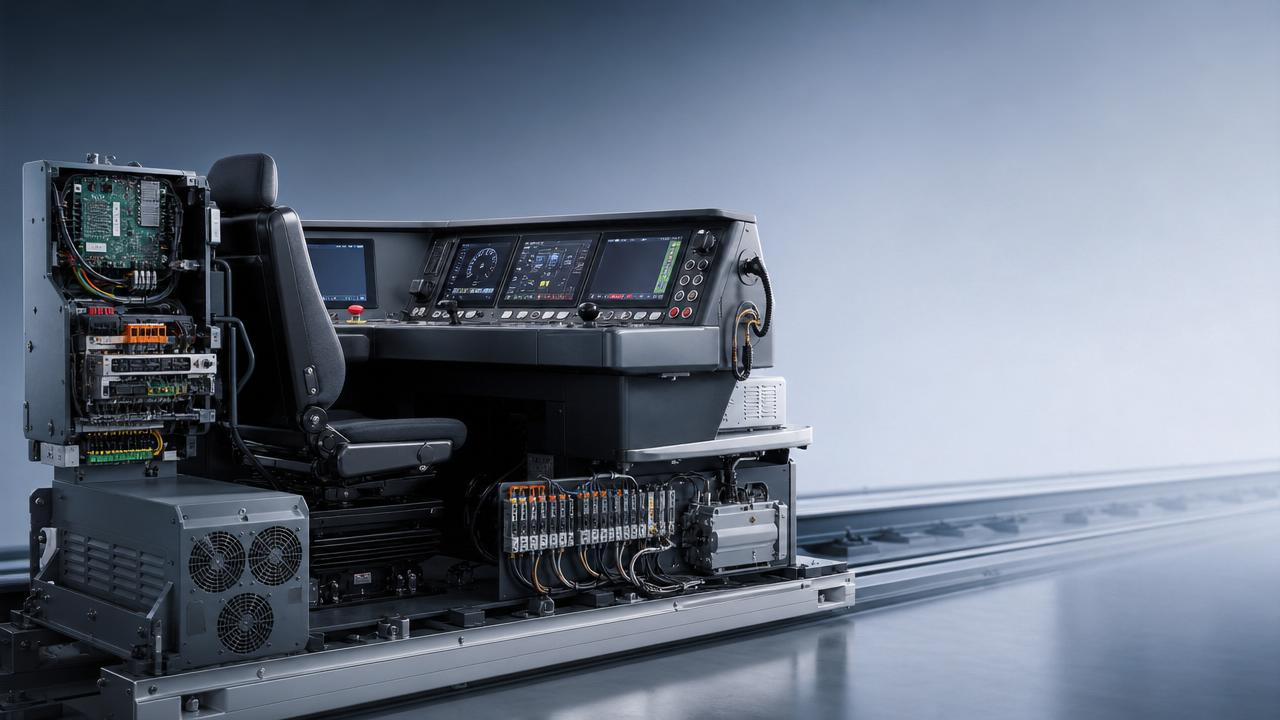
For technical evaluators, the answer is clear: the best locomotive cab equipment OEM is no longer the one that merely supplies durable hardware. Today, real OEM value is defined by certified compliance, integration with train control and signaling systems, human-factors engineering, maintainability, cybersecurity readiness, and the ability to perform reliably across harsh freight duty cycles.
In practical terms, this means evaluation teams should look beyond switch panels, driver desks, seats, displays, and HVAC assemblies as isolated products. The cab has become a safety-critical operating environment connected to ETCS, GSM-R, event recording, onboard diagnostics, and fleet-wide digital maintenance strategies.
For organizations specifying new locomotives or upgrading existing platforms, the key procurement question is not simply, “Can this supplier build cab equipment?” It is, “Can this OEM deliver a compliant, interoperable, supportable, and lifecycle-efficient cab system for modern railway operations?”
Why locomotive cab equipment OEM selection is more strategic than before
Cab equipment used to be assessed mainly on robustness, ergonomics, and manufacturing quality. Those criteria still matter, but they are no longer sufficient for modern freight corridors operating under tighter safety, interoperability, and reliability requirements.
Technical evaluators now work in an environment shaped by international standards, higher operator expectations, stricter accident investigation requirements, and digitalized rolling stock architectures. As a result, cab equipment must perform as part of a larger engineering ecosystem.
A driver desk is no longer just a control surface. It is the interface through which traction commands, braking logic, signaling information, event logging, communications, diagnostics, and safety alerts must be presented clearly and consistently.
This shift raises the stakes for OEM selection. A supplier that can deliver mechanically sound components but cannot manage system interfaces, certification documentation, or long-term engineering changes may create hidden risk across the locomotive program.
What technical evaluators actually care about most
For technical assessment teams, the priority is not marketing claims. It is evidence. They want proof that an OEM can meet specification, integrate with adjacent systems, support validation, and maintain repeatable quality over the asset lifecycle.
In most evaluations, the most important questions tend to cluster around five themes: compliance, integration, operator safety, durability, and lifecycle support. These are the issues that directly affect acceptance, operational readiness, and whole-life cost.
Compliance matters because locomotive cabs sit at the intersection of rolling stock design, safety engineering, fire performance, EMC behavior, visibility, crashworthiness assumptions, and human-machine interface requirements.
Integration matters because even high-quality cab components can become a project weakness if interfaces with TCMS, signaling, radio, vigilance, braking, or diagnostics are poorly managed.
Operator safety matters because the cab is a live working environment under fatigue, vibration, thermal stress, and high cognitive load. Layout errors that seem minor in review can become operational hazards in service.
Durability matters because heavy-haul freight locomotives face vibration, dust ingress, thermal cycling, electrical transients, and long operating hours. The cab must remain stable under these realities, not just in factory tests.
Lifecycle support matters because rail assets remain in service for decades. Evaluators need confidence in spare parts continuity, obsolescence management, software maintenance, and field-service responsiveness.
Compliance is now a baseline, not a differentiator
One of the most important shifts in the locomotive cab equipment OEM market is that compliance is no longer a value-add. It is an entry condition. If an OEM cannot demonstrate structured compliance, it should not advance far in technical evaluation.
Depending on geography and project scope, evaluators may need evidence aligned with UIC guidance, EN standards, AAR expectations, national rail authority requirements, fire safety rules, EMI and EMC criteria, and operator-specific engineering specifications.
What matters is not only whether the supplier says the product is compliant, but how compliance is demonstrated. Strong OEMs provide traceable documentation, test records, interface control documents, material declarations, and change histories.
Technical teams should pay close attention to how the OEM manages design assurance. Is there a clear verification and validation process? Are requirements linked to test evidence? Can the supplier support audits and regulatory review?
In today’s procurement environment, incomplete documentation can delay approval just as much as poor hardware performance. A credible OEM understands that paperwork quality is part of engineering quality.
System integration capability is often the real differentiator
Many suppliers can manufacture cab assemblies. Fewer can integrate them effectively into a locomotive platform with mixed legacy and digital subsystems. This is where strong OEMs separate themselves from commodity vendors.
Cab equipment must interface with braking controls, propulsion logic, train protection systems, radio communication, event recorders, CCTV, fault diagnostics, and often TCMS or broader onboard network architecture.
When these interfaces are not engineered properly, the result is rarely a simple cosmetic issue. Problems emerge as signal conflicts, HMI inconsistency, maintenance confusion, software revision mismatch, or difficult commissioning.
Technical evaluators should therefore test an OEM’s interface discipline. Ask for interface control methodology, communication protocol experience, wiring architecture practices, software update governance, and prior integration references.
It is also useful to understand whether the OEM can participate constructively in cross-disciplinary design reviews. A supplier may have good products but still be a poor fit if it cannot collaborate with signaling, braking, and vehicle integration teams.
In current rail programs, the best locomotive cab equipment OEM is usually the one that reduces integration uncertainty early, not the one that simply offers the lowest unit cost.
Human factors and operator safety now deserve heavier weighting
Cab design directly influences safety, fatigue, and operational performance. Yet human factors are still underweighted in some sourcing decisions, especially where procurement teams focus too heavily on mechanical specification and price.
For technical evaluators, the question is whether the OEM designs around actual driver use conditions. Control placement, display readability, alarm prioritization, seat geometry, HVAC effectiveness, glare management, and reach envelopes all matter.
Heavy-haul and long-distance freight operations make these considerations even more important. Operators may face prolonged seated duty, night operation, extreme temperatures, repetitive control use, and high vibration levels.
An OEM with strong human-factors capability will not treat ergonomics as a final styling step. It will show evidence of mock-up validation, visibility studies, anthropometric analysis, operator feedback loops, and scenario-based design decisions.
Evaluators should also examine emergency usability. Can critical controls be identified quickly under stress? Are labels clear? Is the HMI coherent during degraded modes? Can operators respond effectively with gloves, fatigue, or limited visibility?
These factors influence safety case credibility and driver acceptance. They also affect training, incident probability, and long-term workforce performance, which means they carry both engineering and commercial consequences.
Reliability under freight conditions matters more than lab performance
Freight locomotive cabs operate in punishing conditions. Dust, vibration, shock, temperature swings, humidity, and power quality variation can expose weaknesses that are not obvious during standard demonstrations or brief bench tests.
That is why evaluators should look for evidence of field-proven durability, not just nominal specification compliance. A cabinet, console, display mount, or switchgear assembly may pass formal tests yet still suffer unacceptable failure rates in real service.
Useful evaluation questions include: What are the OEM’s MTBF assumptions? What environmental qualification data is available? How have products performed on heavy-haul, cross-border, or high-usage freight fleets?
Also assess maintainability under service conditions. Can critical modules be replaced quickly? Are connectors accessible? Is diagnostic status visible? Can technicians perform repairs without excessive disassembly or long locomotive downtime?
Reliability is not just about rugged materials. It is also about design simplicity, cable management, thermal control, component derating, fastening integrity, and resistance to progressive wear during years of operation.
Lifecycle support and obsolescence management are now central evaluation criteria
One of the biggest mistakes in OEM selection is treating cab equipment as a one-time capital purchase. In reality, technical evaluators must consider supportability over decades of service, mid-life upgrades, and evolving regulatory expectations.
This is especially important where displays, processors, communication modules, and software-based interfaces are involved. Electronics obsolescence can become a major operational problem if not actively managed by the OEM.
Strong suppliers should be able to explain spare parts strategy, repair capability, software maintenance approach, revision control, retrofit pathways, and end-of-life notification procedures.
Ask whether the OEM offers documented obsolescence plans. Can they identify second-source components where appropriate? Do they support form-fit-function replacements? How do they preserve backward compatibility during upgrades?
For technical evaluators, this area often reveals the difference between a supplier that can ship products and a partner that can support fleet continuity. Over a locomotive lifecycle, that distinction has major cost and availability implications.
Cybersecurity and digital architecture are becoming relevant even in cab equipment
As locomotive cabs become more connected, cybersecurity can no longer be treated as someone else’s responsibility. Human-machine interfaces, networked displays, communication gateways, and diagnostic functions all increase the digital exposure of the cab environment.
Not every cab component is a cyber asset in the same way, but evaluators should still examine how the OEM approaches secure configuration, access control, software updates, logging, and interface segregation.
This is particularly important for projects involving remote diagnostics, software-managed displays, digital radio integration, or links into broader train control and fleet management systems.
An OEM does not need to be the prime cybersecurity authority for the whole locomotive, but it should demonstrate disciplined engineering practices consistent with modern rail assurance expectations.
Suppliers that ignore this trend may still satisfy older specifications, yet they are less likely to remain suitable for future-ready rolling stock platforms.
How to evaluate a locomotive cab equipment OEM in practical terms
For technical teams, a useful evaluation framework should combine product review with supplier capability assessment. Looking only at component features can miss the organizational weaknesses that later affect delivery, integration, and support.
Start with requirements traceability. Confirm that the OEM understands the operational profile, regulatory environment, signaling context, environmental conditions, and maintenance philosophy of the target locomotive program.
Then review technical evidence in depth. This includes drawings, interface definitions, test plans, qualification reports, FMEA outputs, material compliance data, software documentation, and prior project references.
Next, assess manufacturing and quality maturity. A capable OEM should show repeatable production control, supplier quality management, configuration control, and nonconformance handling processes suited to safety-relevant rail applications.
After that, evaluate integration behavior. How early will the OEM engage with locomotive designers, TCMS engineers, signaling teams, and maintainers? Good collaboration reduces commissioning risk and speeds problem resolution.
Finally, review service commitment. This means spare parts lead times, technical support access, retrofit engineering capability, training, warranty structure, and long-term sustainment planning.
Using this approach helps evaluators compare suppliers on real delivery capability rather than on catalog breadth or sales presentation quality alone.
Common red flags that should not be ignored
Several warning signs repeatedly appear in difficult cab equipment programs. One is vague compliance language without traceable evidence. Another is strong product marketing combined with weak interface documentation or unclear responsibility boundaries.
A further red flag is limited experience with demanding freight duty cycles. Suppliers sometimes perform well in lighter passenger or industrial applications but struggle with vibration, contamination, and long-hour heavy-haul operation.
Evaluators should also be cautious when an OEM cannot explain change control. In cab systems, unmanaged revisions can create mismatches between wiring, software, labels, maintenance manuals, and spare parts inventories.
Poor support transparency is another concern. If the supplier is unclear about repair scope, parts continuity, software maintenance, or response times, that uncertainty usually becomes expensive later.
These issues do not always appear in the initial quotation stage, which is why structured technical due diligence remains essential.
What matters most in the final decision
For today’s technical evaluator, the best OEM is not simply the manufacturer with the strongest individual component. It is the supplier that can support a safe, compliant, integrated, maintainable, and future-resilient cab environment.
That means the winning locomotive cab equipment OEM will usually demonstrate five things clearly: standards-based engineering, cross-system integration competence, operator-centered design, proven durability, and credible lifecycle support.
In modern freight rail, cab equipment influences far more than driver comfort or visual layout. It affects acceptance, safety case confidence, maintenance efficiency, fleet availability, and long-term upgrade flexibility.
Technical evaluators who prioritize these dimensions will make stronger procurement decisions and reduce downstream risk for locomotive programs operating in increasingly demanding regulatory and operational environments.
In short, what matters most today is not just what the OEM can build, but how well it can support the full engineering reality of the locomotive cab throughout its service life.
Industry Briefing
Get the top 5 industry headlines delivered to your inbox every morning.