
How to Compare a Railway Bogie Manufacturer Beyond Price

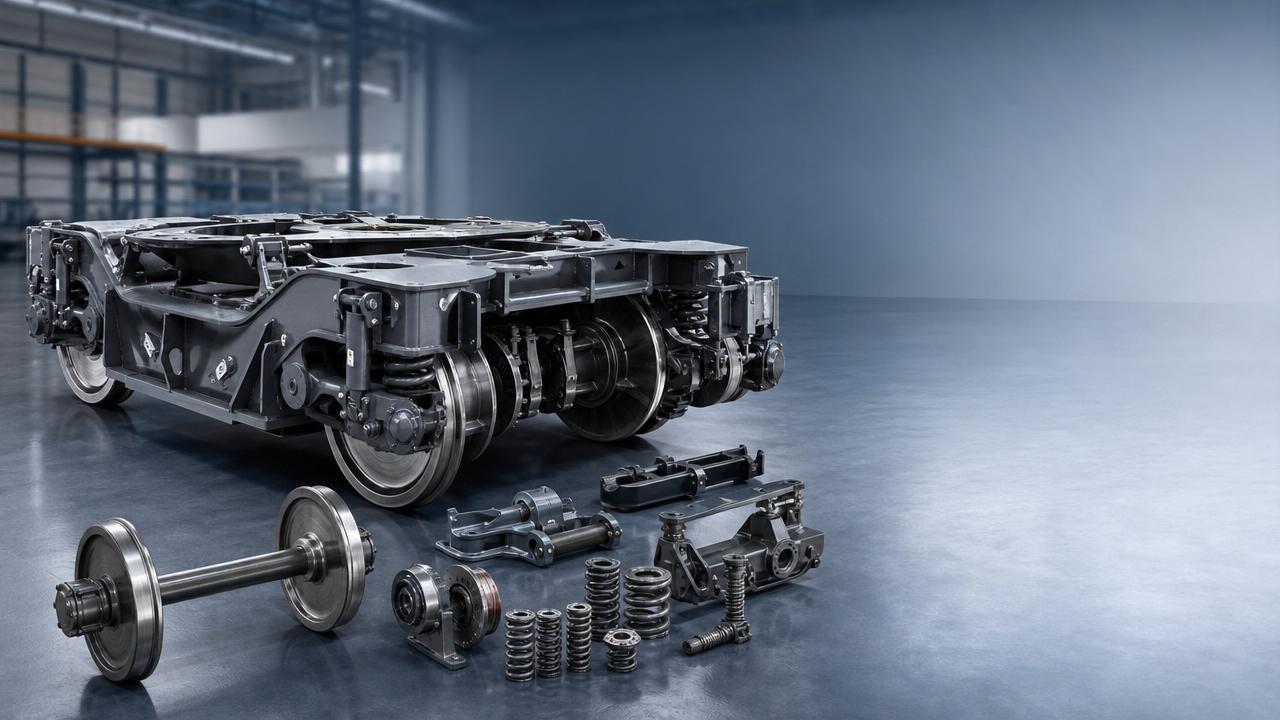
Choosing a railway bogie manufacturer on price alone can create long-term risks in safety, lifecycle cost, compliance, and freight performance. For procurement teams and technical researchers, a smarter comparison looks at engineering standards, manufacturing capability, testing systems, customization strength, and after-sales support. This guide explains how to evaluate suppliers through a technical and strategic lens, helping you identify partners that deliver reliable value beyond the initial quotation.
Why the comparison criteria for a railway bogie manufacturer are changing
The market is no longer rewarding suppliers only for offering the lowest procurement price. Across freight corridors, intermodal terminals, and cross-border rail projects, buyers are facing a different reality: heavier axle loads, tighter safety expectations, stricter documentation requirements, and more pressure to reduce downtime over the full service life of the wagon. As a result, the way buyers compare a railway bogie manufacturer is shifting from simple unit cost review to technical risk evaluation.
This change is especially visible in heavy-haul and export-oriented railway projects. Operators and EPC contractors increasingly need bogies that can perform reliably under variable track conditions, climate differences, maintenance maturity gaps, and international standards alignment. A cheap offer may look attractive during tender review, but if it creates wheel wear, suspension instability, brake integration issues, or spare parts inconsistency later, the total cost quickly rises beyond the original savings.
For information researchers, this means the supplier shortlist should reflect industry direction, not just current quotations. The best railway bogie manufacturer is often the one that can demonstrate stable engineering discipline, traceable quality systems, and long-term support capacity in addition to competitive pricing.
The strongest market signals shaping supplier evaluation today
Several practical signals are reshaping how procurement and technical teams judge a railway bogie manufacturer. These signals matter because they directly influence reliability, compliance, and long-term freight economics.
These changes explain why experienced buyers no longer ask only, “What is the unit price?” They also ask, “How will this bogie behave after years of service, under our track conditions, with our maintenance resources, and under our regulatory framework?”
What is driving this shift beyond price
The first driver is freight intensity. Modern rail freight networks are expected to carry more tonnage with less disruption. That increases the importance of wheelset stability, suspension consistency, and structural fatigue resistance. In this environment, a railway bogie manufacturer is not simply supplying a component; it is influencing network uptime and wagon productivity.
The second driver is standardization pressure. Large infrastructure owners and international contractors are becoming less tolerant of incomplete validation, inconsistent welding quality, or unclear material sourcing. A supplier that cannot present a disciplined technical file, inspection plan, and test history creates approval risk even before the bogie enters service.
The third driver is the spread of lifecycle procurement thinking. More buyers now calculate cost in terms of wheel wear, unscheduled maintenance, spare parts availability, repair lead times, and overhaul predictability. This naturally benefits a railway bogie manufacturer with stronger metallurgy control, repeatable production, and after-sales engineering support.
The fourth driver is route diversity. Bogies used in heavy-haul mining, agricultural bulk transport, port-rail intermodal systems, or long-distance continental freight may face very different operational demands. Suppliers must prove application understanding rather than relying on a one-size-fits-all offer.
How to compare a railway bogie manufacturer through a strategic lens
A useful comparison framework starts with five questions. First, does the supplier have sound engineering depth? Second, can it manufacture consistently at scale? Third, does it validate performance properly? Fourth, can it adapt to your operating profile? Fifth, will it support the product after delivery?
1. Engineering standards and design maturity
A capable railway bogie manufacturer should be able to explain its design logic clearly: load path distribution, frame structure, suspension arrangement, damping behavior, brake interface compatibility, and maintenance accessibility. Researchers should look for evidence of design review discipline, finite element analysis where relevant, fatigue assessment, and practical alignment with UIC, EN, AAR, or local authority requirements. Mature engineering is visible not in marketing language, but in how well the supplier can answer technical edge cases.
2. Production capability and process control
Not all suppliers with acceptable drawings can produce the same bogie quality consistently. Procurement teams should examine welding procedures, jig accuracy, machining control, dimensional inspection, heat treatment management where applicable, and supplier control over castings, forgings, and wheelset-related interfaces. A strong railway bogie manufacturer will usually have visible process discipline instead of depending on final inspection alone to catch defects.
3. Testing, validation, and traceability
Testing capability is now a major differentiator. Buyers should ask what static, dynamic, fatigue, material, NDT, and assembly validation methods are used. Equally important is traceability: can the supplier connect each unit to materials, weld records, inspections, and critical dimensions? The stronger the traceability system, the lower the risk during acceptance disputes or field investigations.
4. Customization and application fit
A reliable railway bogie manufacturer should not force every customer into the same standard configuration if operating conditions differ. Instead, it should assess axle load, speed profile, brake system, track quality, climate exposure, maintenance interval expectations, and wagon body integration. Customization does not always mean a completely new design. Sometimes it means tuning suspension parameters, adapting interfaces, or selecting wear components suited to local service realities.
5. After-sales support and service responsiveness
Support quality becomes visible only after operation begins, which is why many buyers underestimate it during sourcing. Ask how the supplier handles spare parts planning, field failure analysis, technical training, warranty response, retrofits, and engineering feedback loops. A railway bogie manufacturer with weak post-delivery support may still win on price, but it often transfers operational risk back to the customer.
Which stakeholders are affected most by these changes
The shift beyond price affects more than procurement. It changes how multiple decision-makers define supplier value.
This broader impact explains why technical intelligence platforms and engineering-focused B2B researchers increasingly assess supplier depth, not just purchase terms. In practice, the winning supplier is often the one that reduces uncertainty for the whole project chain.
Warning signs that a low quote may hide higher future costs
A low offer is not automatically a bad offer, but it deserves closer scrutiny if several warning signs appear. Common concerns include limited test evidence, vague material traceability, incomplete standards references, overpromised delivery schedules, poor clarity on critical subcontracted parts, and weak answers about maintenance support. Another warning sign is when the railway bogie manufacturer speaks mainly in commercial terms and cannot explain practical performance behavior under service load.
Researchers should also be careful when a supplier presents a broad product list but little route-specific experience. In rail freight, the difference between nominal compatibility and proven suitability can be commercially significant. What matters is not whether the bogie can be sold for a use case, but whether it can operate with predictable wear, stable dynamics, and efficient maintenance over time.
What a future-ready railway bogie manufacturer increasingly looks like
The next generation of supplier evaluation will likely place even more emphasis on integrated engineering credibility. A future-ready railway bogie manufacturer is expected to combine robust mechanical design with stronger digital traceability, better documentation discipline, and closer cooperation with wagon builders, operators, and infrastructure stakeholders. It will also be more prepared to support performance optimization rather than just product delivery.
In parallel, sustainability and asset efficiency themes will continue to shape decisions. Buyers may increasingly value designs that reduce wear, extend maintenance intervals, or improve freight energy efficiency indirectly through weight optimization and running stability. These are not always headline selling points in a quotation, but they are strategically important in long-life rail assets.
A practical decision framework for researchers and buyers
When comparing candidates, build a review model that gives meaningful weight to technical and operational criteria. Price should remain part of the decision, but not the dominant factor when the project involves safety-critical freight operations or export compliance complexity.
Key questions worth confirming before you shortlist any railway bogie manufacturer
Before moving forward, confirm a few high-impact points. Which standards does the supplier truly work to in production, not just in marketing materials? What test evidence exists for comparable duty conditions? How stable is the supply chain for critical parts? What is the expected wear and maintenance profile? How quickly can engineering changes be handled if route conditions evolve? And how transparent is the railway bogie manufacturer when discussing previous project lessons, including problems and corrective actions?
These questions help transform supplier selection from a price comparison exercise into a strategic risk decision. For researchers, that is the real trend worth watching: in modern freight rail, technical resilience is becoming a stronger source of value than initial discounting. If your organization wants to judge how this trend affects its own sourcing strategy, focus first on lifecycle exposure, compliance complexity, maintenance capability, and route-specific performance demands. Those factors will usually reveal which supplier is truly competitive beyond price.
Industry Briefing
Get the top 5 industry headlines delivered to your inbox every morning.