
Next-gen locomotive tech breakthroughs that may cut downtime

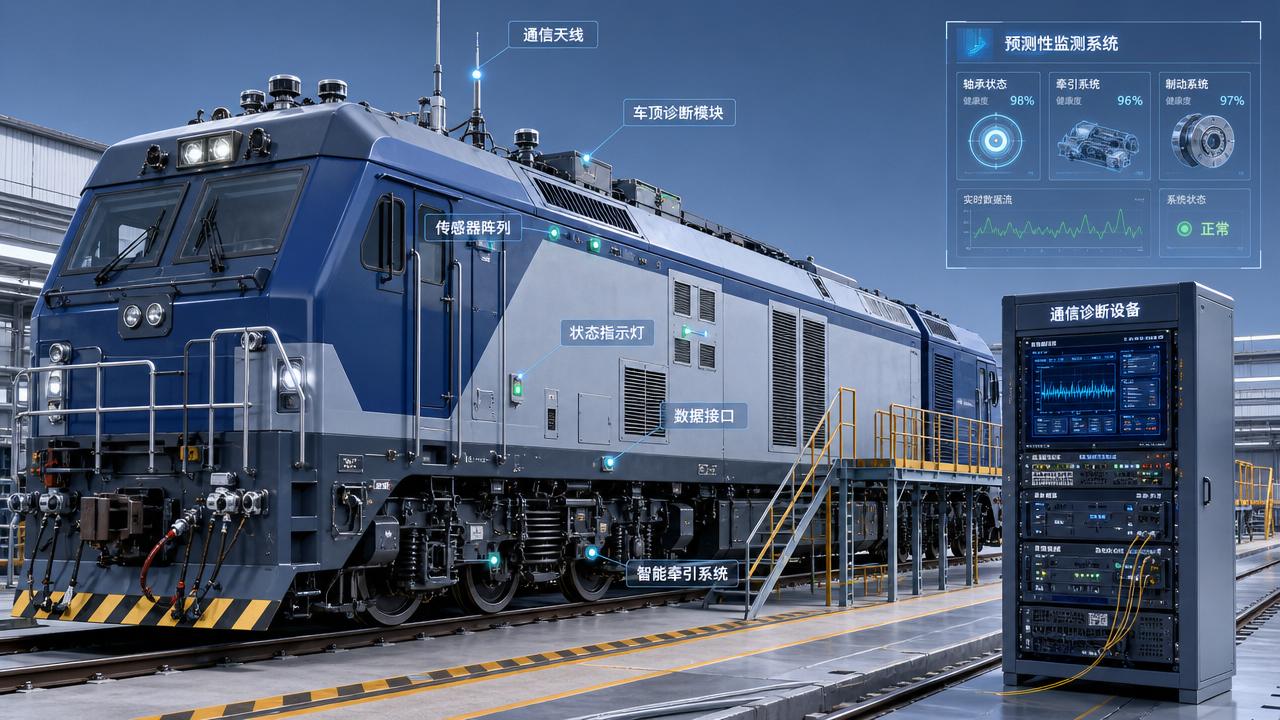
For aftermarket maintenance teams, next-gen locomotive tech breakthroughs are no longer future concepts—they are practical tools for cutting unplanned downtime, improving fault diagnosis, and extending asset life. From predictive monitoring and smarter traction systems to digital signaling integration, these advances are reshaping how heavy-haul fleets are serviced under demanding railway-freight conditions.
In railway-freight operations, even a 6-hour locomotive stoppage can disrupt crew planning, yard sequencing, wagon availability, and port handover windows. For maintenance personnel working across heavy-haul locomotives, rolling stock interfaces, signaling-linked assets, and trackside communication systems, the value of next-gen locomotive tech breakthroughs lies in measurable service outcomes: fewer road failures, faster troubleshooting, better spare-parts planning, and more consistent compliance with UIC, EN, and AAR-aligned maintenance expectations.
For organizations following a data-led engineering approach such as G-RFE’s cross-pillar model, the key question is not whether advanced locomotive technology matters. The real question is which innovations reduce downtime first, how they integrate with legacy fleets, and what maintenance teams must change in the workshop, depot, and field service process to capture those gains.
Why downtime reduction is now a maintenance technology issue
Traditional locomotive maintenance depended heavily on fixed intervals such as 30-day inspections, 90-day subsystem checks, and overhaul windows tied to mileage or engine hours. That model still has value, but it often misses the early warning signs that appear 2–6 weeks before a traction motor fault, cooling-system imbalance, compressor decline, or control-electronics instability becomes a line-stopping event.
Modern railway-freight fleets operate under higher axle loads, longer consists, tighter terminal turnarounds, and stronger pressure for fuel efficiency and emissions control. As duty cycles become harsher, maintenance teams cannot rely on manual inspection alone. Next-gen locomotive tech breakthroughs matter because they convert hidden operating data into actionable maintenance decisions at the component level.
The cost profile of unplanned locomotive failure
Unplanned downtime is rarely just a repair cost. It typically includes 4 layers of loss: locomotive unavailability, secondary network delay, labor rescheduling, and emergency spare consumption. In freight corridors with long-haul duty cycles, a single traction or braking defect can trigger 8–12 hours of operational recovery, especially when rescue power, remote dispatch coordination, and route occupancy are involved.
For aftermarket teams, this changes maintenance priorities. The target is not simply fixing failed parts faster. The target is detecting performance drift before fault codes escalate into service interruption.
Where newer technologies deliver the earliest gains
The earliest payback often comes from systems that already generate data but were previously underused. These include traction inverters, diesel-engine control units, wheel-slip protection modules, cooling circuits, air systems, event recorders, and communication interfaces linked to GSM-R, ETCS, or other signaling environments. When these signals are trended at 5-minute, 15-minute, or trip-based intervals, maintenance teams can identify abnormal heat rise, voltage imbalance, pressure decay, and intermittent communication errors much earlier.
The table below outlines where maintenance teams typically see the strongest downtime reduction impact from next-gen locomotive tech breakthroughs.
The main takeaway is practical: maintenance value increases when data is tied to a service decision. A sensor alone does not cut downtime. A sensor linked to thresholds, trend rules, technician workflows, and parts planning does.
Core next-gen locomotive tech breakthroughs changing aftermarket maintenance
Not every innovation has equal impact on serviceability. For aftermarket teams, the most useful next-gen locomotive tech breakthroughs are those that shorten diagnosis time, reduce no-fault-found events, and improve planned intervention timing across the locomotive lifecycle.
Predictive monitoring and edge diagnostics
Predictive monitoring combines onboard sensing, data logging, and analytic rules to flag performance deviation before a failure becomes operationally visible. In practice, this may include temperature differentials above 8–12°C across comparable components, pressure leakage trends over 3–5 cycles, or vibration signatures that exceed baseline by 15%–20%.
Edge diagnostics are especially useful in long freight corridors where real-time connectivity may be uneven. Instead of sending raw data continuously, the locomotive can process key alerts onboard and transmit only exception events. That reduces bandwidth demand while still giving maintenance control rooms enough information to schedule inspection before the next rostered departure.
What maintenance teams should monitor first
- Traction motor temperature spread and insulation-related warning patterns
- Turbocharger, coolant, and lube-oil performance drift in diesel-electric units
- Air compressor cut-in/cut-out timing and brake pipe pressure stability
- Battery, auxiliary converter, and control-voltage irregularities
- Wheel-slip, adhesion control, and axle-speed sensor inconsistencies
Smarter traction systems and modular power electronics
Traction systems are becoming more maintainable through modular inverter architecture, improved thermal management, and more granular fault reporting. Older systems often pushed technicians toward broad replacement decisions because fault logic was too coarse. Newer systems can separate gate-driver faults, cooling shortfalls, DC link instability, and traction motor feedback errors into clearer service categories.
For a depot, that can reduce diagnostic time from several hours to less than 60–90 minutes in recurring fault cases. It also improves spare strategy. Instead of stocking full assemblies only, workshops may hold selected high-failure modules, fans, sensors, and interface boards matched to the fleet’s top 10 recurrent fault patterns.
Digital signaling and communications integration
As locomotive behavior becomes more dependent on digital control environments, maintenance teams need visibility beyond pure mechanical and electrical domains. Communication dropouts, ETCS interface mismatches, antenna degradation, GSM-R instability, and onboard software handshake failures can all appear to operators as a locomotive problem even when the root cause sits at the boundary between vehicle and network.
This is where cross-disciplinary platforms such as G-RFE’s signaling and heavy-haul focus become relevant. Maintenance teams benefit when diagnostic records combine vehicle events, route conditions, communication status, and train control interactions in a single review path rather than separate engineering silos.
Remote software support and update discipline
Software now influences propulsion logic, fault thresholds, energy management, and communications behavior. A locomotive may be mechanically sound but still lose availability because of configuration mismatch, outdated control logic, or poor update governance. Maintenance teams should treat software baselines with the same rigor as physical components, including version control, rollback steps, and post-update validation over 24–72 operating hours.
How to evaluate and implement these technologies in an existing fleet
A common mistake is trying to modernize every subsystem at once. For most operators and service organizations, the better path is phased adoption based on fault history, route criticality, and workshop readiness. Next-gen locomotive tech breakthroughs create the highest return when they are matched to the fleet’s actual downtime drivers rather than broad digital ambitions.
A 4-step evaluation framework for maintenance managers
- Rank the top 5–8 causes of locomotive unavailability over the last 12 months.
- Separate failures into mechanical, electrical, software, and vehicle-to-network interface categories.
- Identify which failures showed repeat warning signs 3 days to 3 weeks beforehand.
- Prioritize technologies that reduce diagnostic time or catch repeated precursors early.
This method prevents overinvestment in attractive but low-impact tools. If 35% of service delays come from cooling, air, and auxiliary electrical issues, those areas deserve attention before advanced features with limited effect on availability.
The following table provides a practical decision matrix for selecting next-gen locomotive tech breakthroughs in aftermarket environments.
The best solution is usually not the one with the most data points. It is the one maintenance teams can interpret quickly, act on reliably, and support with existing tooling and skills.
Implementation risks that often slow results
Three risks appear repeatedly in retrofit or modernization programs. First, alarm overload causes technicians to ignore useful alerts because too many low-value signals are generated. Second, poor baseline capture makes trend analysis unreliable during the first 30–60 days. Third, responsibility gaps between rolling stock, signaling, and IT teams delay root-cause closure.
To manage these risks, maintenance leaders should define threshold ownership, escalation paths, and a closed-loop review process. A weekly review of the top 20 alerts, repeated faults, and deferred interventions is often more effective than a large monthly report.
Training priorities for aftermarket technicians
Training should move beyond component replacement and include data interpretation, software-aware troubleshooting, and interface diagnosis. A practical program can be built around 3 levels: operator symptom capture, technician fault isolation, and engineering escalation. In many fleets, even 6–8 hours of focused cross-functional training per month can improve first-time fault resolution on recurring issues.
Maintenance strategies that turn technology into uptime
Technology adoption alone does not guarantee availability gains. To actually cut downtime, maintenance teams need a repeatable service strategy that connects alerts, inspection windows, inventory, and field execution.
Build condition-based intervention rules
Condition-based maintenance works best when alerts are tied to clear action bands. For example, a temperature anomaly may trigger observation at level 1, scheduled inspection at level 2 within 72 hours, and immediate withdrawal review at level 3. Without these bands, data remains interesting but operationally weak.
Align spare strategy with predictive findings
When predictive tools highlight common pre-failure components, inventory policy can shift from broad stocking to targeted availability. This often means keeping higher coverage for sensors, cooling fans, electronic interface parts, pressure-control elements, and selected converter modules, while reducing emergency ordering of full assemblies.
Use corridor-specific maintenance planning
A locomotive running in hot, dusty, long-gradient heavy-haul service faces very different stress compared with one in shorter intermodal duty. Maintenance thresholds should reflect route profile, ambient temperature range, stop-start frequency, and communication environment. That is particularly important where rail-port interfaces, international border operations, or mixed signaling territories affect onboard systems.
Practical checklist for maintenance supervisors
- Review the previous 30 days of recurring locomotive faults by subsystem
- Confirm whether each critical alert has an inspection action and time limit
- Check if software versions are documented per unit and per control module
- Compare field failure parts against depot stock coverage and lead times
- Verify communication-related faults against route and signaling conditions
- Measure whether diagnosis time is falling after technology deployment
For aftermarket organizations supporting global railway-freight assets, next-gen locomotive tech breakthroughs are most valuable when they are embedded into disciplined maintenance routines, not treated as isolated digital add-ons. Predictive monitoring, modular traction diagnostics, and signaling-aware fault analysis can materially reduce unplanned downtime when paired with clear thresholds, trained technicians, and corridor-specific service planning.
If your team is evaluating upgrades for heavy-haul locomotives, rolling stock interfaces, smart signaling integration, or maintenance process optimization, now is the right time to map technology options against your actual downtime profile. Contact us to discuss your fleet conditions, get a tailored assessment framework, and learn more solutions for reducing locomotive service interruptions with practical, maintainable engineering strategies.
- Benchmarking Railway Equipment Suppliers in Southeast Asia: A Procurement FrameworkTime : Oct 04, 2026
- How Locomotive Auxiliary Systems Monitoring Detects Cooling and Compressor FaultsTime : Oct 02, 2026
- Global Supply Chain Updates for Cold Storage Equipment: What Buyers Should TrackTime : Oct 01, 2026
Industry Briefing
Get the top 5 industry headlines delivered to your inbox every morning.