
Rail Engineering Machinery: Key Selection Risks

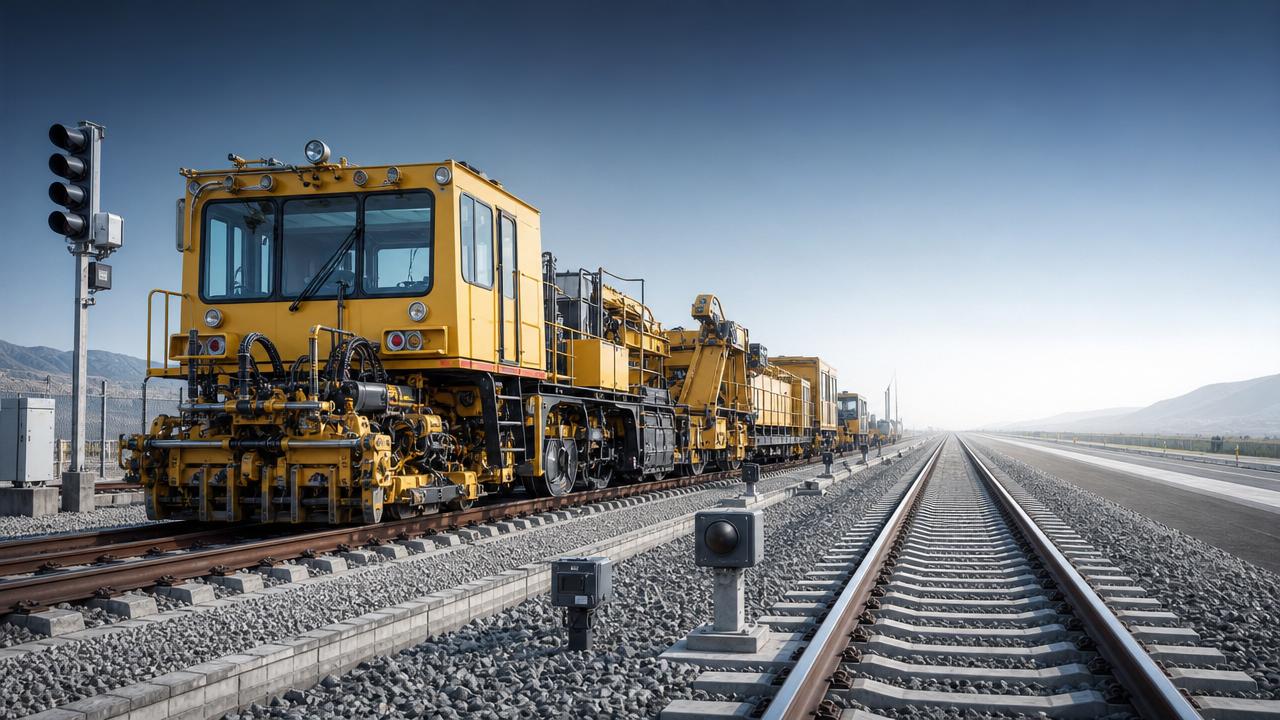
Rail Engineering Machinery: Key Selection Risks in a Faster, Heavier Network Era
Selecting rail engineering machinery is no longer a simple comparison of capacity, cost, and delivery time.
The real challenge is identifying hidden risks across compatibility, lifecycle reliability, safety compliance, signaling integration, and cross-border maintenance.
As freight corridors become heavier, faster, and digitally controlled, a mismatched machine can create bottlenecks and regulatory exposure.
This article outlines the key selection risks that should be assessed before rail engineering machinery procurement is finalized.
Freight Corridors Are Changing the Risk Profile
Global railway networks are moving toward longer trains, heavier axle loads, and tighter maintenance windows.
These changes increase the performance burden on rail engineering machinery used for track laying, tamping, ballast cleaning, welding, and inspection.
A machine that performs acceptably on a regional line may fail operationally on a high-density freight corridor.
The selection risk is shifting from visible specifications to hidden system fit.
Modern rail engineering machinery must work within a broader ecosystem of infrastructure standards, safety rules, digital signaling, and logistics schedules.
This makes procurement decisions more strategic and less equipment-centric.
Key Trend Signals Behind Selection Pressure
Several market and technology signals show why rail engineering machinery evaluation is becoming more complex.
These signals show why rail engineering machinery must be assessed beyond catalog data.
A selection model should connect technical capability with operating conditions, regulatory exposure, and asset lifecycle costs.
Performance Compatibility Is the First Hidden Risk
Performance compatibility is often misunderstood as maximum output.
For rail engineering machinery, the more important question is whether output remains stable under local track, climate, and duty conditions.
Track geometry, rail profile, ballast condition, gradient, curve radius, and tunnel clearance can all limit effective machine performance.
A high-capacity ballast cleaner may lose value if discharge logistics, conveyor reach, or spoil handling are unsuitable.
A tamping machine may underperform if lifting force and measurement systems do not match track stiffness.
The risk grows when rail engineering machinery is transferred between projects with different infrastructure assumptions.
Compatibility Checks That Reduce Uncertainty
- Confirm machine limits against real corridor geometry, not only standard drawings.
- Validate output under expected possession time, crew level, and support logistics.
- Compare axle load, braking performance, and clearance with route requirements.
- Assess whether working modes align with heavy-haul or passenger-shared operations.
Lifecycle Reliability Is Becoming More Important Than Initial Price
Initial price remains visible, but lifecycle reliability determines long-term economic value.
Rail engineering machinery often operates during limited access windows where failure has direct network consequences.
Unplanned downtime can delay track reopening, disrupt freight flows, and increase penalties across connected logistics chains.
Reliability risk is not only mechanical.
It includes hydraulic durability, sensor stability, software support, spare parts availability, and diagnostic transparency.
Some rail engineering machinery offers strong factory performance but weak field maintainability.
This gap becomes costly when projects are located far from certified service centers.
Reliability Indicators Worth Reviewing
- Mean time between failures under comparable duty cycles.
- Mean time to repair with local tools and available skills.
- Spare part lead times for critical modules.
- Remote diagnostics capability and data access rules.
- Documented performance in harsh climate or heavy-haul environments.
Safety Compliance Can Become a Cross-Border Barrier
Safety compliance is a decisive selection risk for rail engineering machinery used on regulated networks.
Compliance gaps can delay commissioning, restrict operating zones, or require costly redesign.
International corridors may involve UIC, EN, AAR, national railway rules, and project-specific safety cases.
The machine must satisfy braking, visibility, emergency protection, fire safety, noise, emissions, and operator protection requirements.
Risk rises when certification evidence is incomplete or based on non-equivalent operating conditions.
Rail engineering machinery also needs safe interaction with adjacent live tracks, overhead systems, and worksite protection protocols.
A technically capable machine may still face approval delays if safety documentation is not audit-ready.
Digital Integration Risk Is Now a Core Procurement Issue
Modern rail networks depend on digital signaling, communication, and asset monitoring systems.
Rail engineering machinery must therefore be evaluated for its ability to operate safely within digital control environments.
Machines may need onboard radio, event recording, positioning, worksite data exchange, and protected interface management.
Integration risk appears when machine systems are closed, undocumented, or incompatible with national signaling architecture.
The rise of ETCS, CBTC, and GSM-R makes this issue more visible.
Cybersecurity is another emerging requirement.
Connected rail engineering machinery may transmit maintenance data, location data, and production records across networks.
Weak access control or unclear data ownership can create operational and contractual risks.
Maintenance Ecosystems Shape Total Asset Value
Cross-border freight corridors require maintenance arrangements that extend beyond one depot or one country.
Rail engineering machinery must be supported by parts distribution, trained technicians, software updates, and standardized service documentation.
A machine with limited local service support may become a stranded asset during urgent work programs.
This is especially important for specialized units such as rail grinders, flash-butt welding machines, and track renewal trains.
Maintenance ecosystem risk should be assessed before the commercial comparison stage.
Otherwise, low acquisition cost can mask future dependency on imported experts, proprietary tools, and slow component supply.
How Selection Risks Affect Business and Project Functions
The impact of rail engineering machinery selection risk spreads across planning, construction, operations, compliance, and finance.
For infrastructure delivery, poor equipment fit can compress schedules and reduce daily production targets.
For operations, unreliable machines can extend track closures and reduce network resilience.
For compliance teams, weak certification evidence can delay access approvals and increase audit pressure.
For financial planning, hidden maintenance costs can distort whole-life cost assumptions.
- Planning risk: unrealistic productivity assumptions.
- Operational risk: downtime during limited possession windows.
- Compliance risk: incomplete approval documentation.
- Financial risk: spare parts and service escalation.
- Technology risk: weak digital interface readiness.
Priority Areas for Smarter Evaluation
A stronger evaluation framework should treat rail engineering machinery as a network asset, not an isolated machine.
The following areas deserve close attention before final selection.
- Route compatibility, including clearance, axle load, curves, gradients, and worksite access.
- Productivity under real maintenance windows and local support conditions.
- Compliance evidence aligned with UIC, EN, AAR, and national requirements.
- Digital interface readiness for signaling, communication, and asset data systems.
- Lifecycle cost based on parts, labor, downtime, training, and software support.
- Vendor continuity, upgrade roadmap, and long-term service commitment.
These factors make rail engineering machinery evaluation more resilient against market volatility and project complexity.
A Practical Risk-Based Decision Matrix
A structured matrix helps compare rail engineering machinery options without relying only on headline specifications.
Next-Step Thinking for Resilient Procurement
Future-ready selection should begin with corridor requirements, not supplier brochures.
Define the operating envelope, compliance scope, digital environment, maintenance resources, and expected utilization profile first.
Then test each rail engineering machinery option against those conditions using evidence-based scoring.
Pilot demonstrations, reference-site reviews, spare part simulations, and safety document audits should become standard steps.
Contract terms should also address software updates, diagnostics access, training transfer, and long-term technical support.
The strongest decision is rarely the lowest bid or the largest machine.
It is the rail engineering machinery solution that remains compliant, productive, maintainable, and digitally compatible across its service life.
Action Direction
Before committing to rail engineering machinery, build a selection file around real route data and lifecycle risk.
Include performance validation, compliance mapping, service readiness, digital integration, and whole-life cost evidence.
This approach reduces procurement uncertainty and supports safer, more resilient railway infrastructure delivery.
G-RFE supports technical benchmarking for rail engineering machinery across heavy-haul, intermodal, and cross-border engineering environments.
Industry Briefing
Get the top 5 industry headlines delivered to your inbox every morning.