
Hazardous Waste Equipment News and Compliance Risks

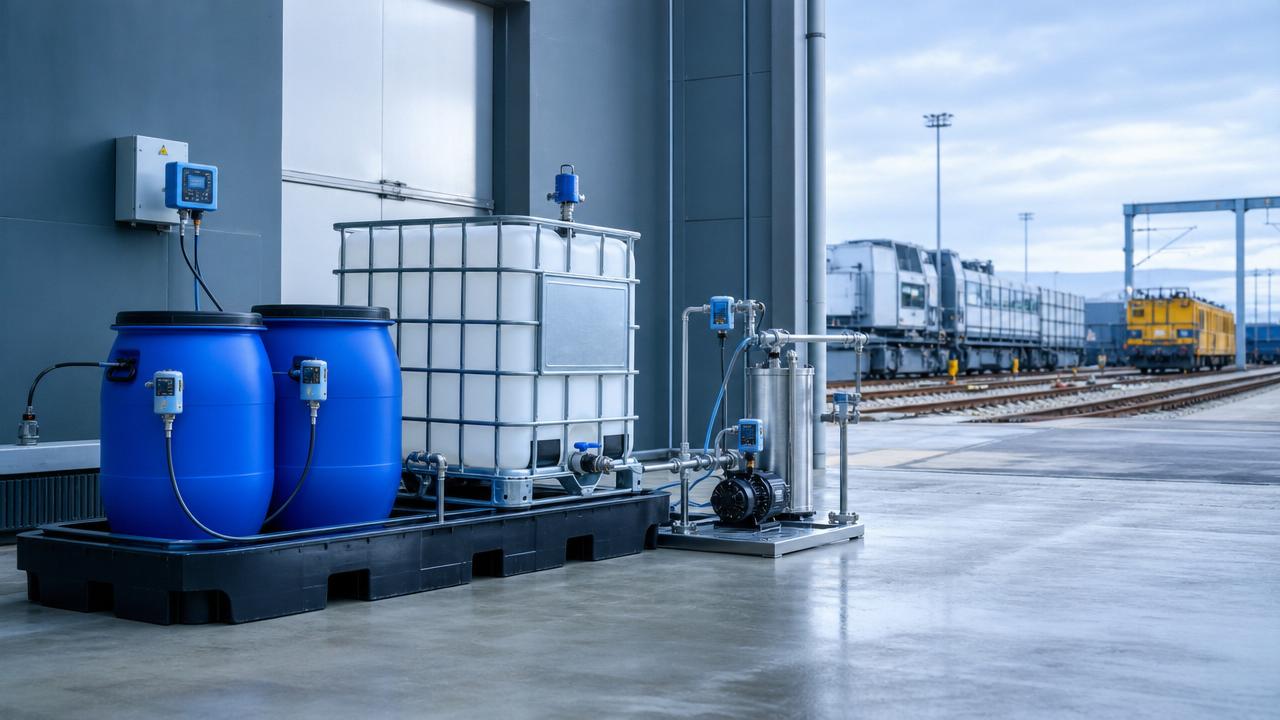
Hazardous Waste Equipment News and Compliance Risks
As hazardous waste rules tighten across transport, engineering, and industrial operations, equipment reliability has become a direct compliance issue.
This article reviews key environmental equipment news for hazardous waste, with emphasis on containment, monitoring, handling, and disposal systems.
For rail freight, EPC projects, maintenance depots, and intermodal corridors, hazardous waste controls now influence safety, audits, and operating continuity.
Basic Scope of Hazardous Waste Equipment
Hazardous waste equipment includes systems used to identify, contain, transfer, treat, store, or dispose of regulated waste streams.
Typical waste streams include used oils, solvents, contaminated ballast residues, chemical cleaning agents, batteries, coatings, and maintenance sludge.
Current environmental equipment news for hazardous waste often focuses on leak prevention, digital records, emissions control, and safer material handling.
Equipment performance is no longer judged only by capacity, durability, or price. Traceability and documented compliance are equally important.
In railway and engineering environments, hazardous waste equipment must operate around vibration, heavy loads, weather exposure, and irregular maintenance schedules.
This makes equipment selection more complex than standard industrial waste management, especially near tracks, workshops, ports, and remote project sites.
Industry Signals in Environmental Equipment News for Hazardous Waste
Recent environmental equipment news for hazardous waste shows a clear shift from passive storage toward active risk control.
Regulators increasingly expect proof that waste containers, transfer systems, and treatment assets are properly inspected and maintained.
These signals matter because non-compliance often begins with small equipment gaps, not major system failures.
A corroded drum, missing label, failed valve, or incomplete inspection record can create immediate enforcement exposure.
The strongest environmental equipment news for hazardous waste also highlights integration with broader environmental, health, and safety systems.
Compliance Risks Linked to Equipment Failure
Compliance risk increases when equipment design does not match the actual waste stream, site conditions, or inspection frequency.
For example, solvent waste requires compatible seals, closed transfer points, vapor control, and fire-safe storage practices.
Used oils and contaminated coolants require spill-resistant storage, clear labeling, and reliable pumping systems.
Rail maintenance waste may include grease, paint residues, brake materials, oily rags, and cleaning chemicals.
Environmental equipment news for hazardous waste frequently reports enforcement linked to poor segregation and undocumented storage duration.
- Containers without compatible liners or corrosion-resistant coatings.
- Transfer pumps without drip trays or emergency shutoff controls.
- Temporary storage zones without secondary containment.
- Waste treatment units without calibration records.
- Absorbent systems that are undersized for realistic spill volumes.
The financial impact may include fines, cleanup costs, transport delays, insurance scrutiny, and contract penalties.
In freight corridors, a spill near sidings, depots, or intermodal yards can disrupt several connected operations.
Business Value of Better Hazardous Waste Equipment
Equipment improvements create value by reducing uncertainty. They also make compliance evidence easier to collect and verify.
This is why environmental equipment news for hazardous waste is relevant beyond environmental departments and legal reviews.
Reliable equipment supports project scheduling, asset uptime, safer workshops, and more predictable contractor performance.
For G-RFE’s railway-freight and engineering context, this connects directly with heavy assets and infrastructure delivery.
Locomotive maintenance depots need safe collection systems for lubricants, filters, batteries, and chemical cleaning residues.
Track construction projects need portable containment, compliant storage, and clear transfer processes for site-generated hazardous waste.
Intermodal rail-port facilities need equipment that controls spills where rail, road, and maritime operations overlap.
Specialized rail engineering machinery also creates maintenance by-products that require documented collection and disposal pathways.
Environmental equipment news for hazardous waste helps identify technologies that reduce these operational friction points.
Typical Equipment Categories and Application Objects
Hazardous waste equipment should be evaluated by waste type, movement frequency, exposure conditions, and regulatory documentation needs.
Environmental equipment news for hazardous waste suggests rising demand for modular equipment that can move between project locations.
This is especially useful where rail extensions, tunnel works, and depot upgrades generate temporary hazardous waste streams.
Technology Trends Shaping Compliance Decisions
Digital monitoring is one of the most important trends in environmental equipment news for hazardous waste.
Sensors now track tank levels, bund fluid presence, temperature changes, access events, and abnormal transfer conditions.
These data points help demonstrate that equipment was supervised before a regulator or insurer requests evidence.
Another trend is improved material compatibility. Suppliers are offering better polymers, linings, gaskets, and corrosion-resistant fittings.
This reduces failures caused by aggressive chemicals, oily residues, seasonal temperature change, and long storage periods.
Automation is also influencing hazardous waste handling through safer drum lifting, metered transfer, and controlled dispensing equipment.
In large railway facilities, automated handling reduces exposure during repetitive movement of heavy or contaminated containers.
Environmental equipment news for hazardous waste also shows greater interest in low-emission treatment systems and closed-loop recovery.
Practical Evaluation Criteria for Equipment Selection
A structured evaluation prevents equipment purchases that appear compliant but fail under site conditions.
The following criteria align equipment decisions with regulatory exposure and operating reality.
- Confirm the exact waste classification before selecting containers or transfer equipment.
- Check chemical compatibility for seals, coatings, hoses, and storage surfaces.
- Verify secondary containment capacity against local rules and realistic spill volumes.
- Require inspection points that are visible, accessible, and easy to document.
- Assess whether equipment withstands vibration, weather, forklift contact, and transport movement.
- Review supplier documentation, including manuals, certifications, maintenance schedules, and test records.
Environmental equipment news for hazardous waste is useful when comparing these criteria against emerging products and enforcement examples.
However, technology alone does not ensure compliance. Procedures, training, and inspections must match equipment capabilities.
Operational Controls That Reduce Audit Exposure
Audit exposure often increases when equipment records are scattered, outdated, or disconnected from waste movement logs.
A practical control system should connect equipment identity, inspection history, waste type, location, and service status.
- Use unique identification numbers for tanks, pallets, pumps, and storage units.
- Keep inspection intervals aligned with regulatory requirements and equipment risk.
- Record repairs, replacements, calibration, and spill response actions promptly.
- Separate incompatible wastes through clear storage maps and physical barriers.
- Review incident trends to identify repeated equipment weaknesses.
Environmental equipment news for hazardous waste repeatedly confirms that documentation gaps can be as damaging as physical failures.
A clean storage area still carries risk if inspection records cannot prove consistent control.
Relevance for Rail Freight and Engineering Networks
Rail systems depend on distributed assets, long corridors, and high-value equipment. Hazardous waste controls must reflect that structure.
A locomotive depot may manage hundreds of maintenance tasks that generate small but regulated waste quantities.
A track renewal project may move across regions, creating changing storage locations and temporary waste handling points.
A rail-port interface may face stricter scrutiny because several transport modes and regulators overlap.
Environmental equipment news for hazardous waste helps benchmark equipment against these complex operating patterns.
For G-RFE’s technical intelligence framework, this supports stronger comparison of infrastructure, machinery, and safety protocols.
It also complements standards-based thinking used in railway engineering, including disciplined inspection, asset lifecycle control, and documented performance.
Recommended Next Steps
Organizations should begin with a site-level inventory of hazardous waste equipment and its related records.
The inventory should identify waste type, equipment condition, containment capacity, inspection status, and documentation gaps.
Next, compare findings with recent environmental equipment news for hazardous waste and applicable regulatory expectations.
Priority upgrades should address high-consequence risks first, including leaks, incompatible storage, unverified sensors, and poor transfer controls.
A rolling improvement plan can then connect equipment replacement, procedure updates, training, and audit preparation.
The final goal is not simply passing inspections. It is building resilient hazardous waste control across daily operations.
By following environmental equipment news for hazardous waste, decision processes become better informed, more defensible, and more aligned with operational risk.
Industry Briefing
Get the top 5 industry headlines delivered to your inbox every morning.