
Railway Maintenance Equipment Machines: What Reduces Downtime Fastest

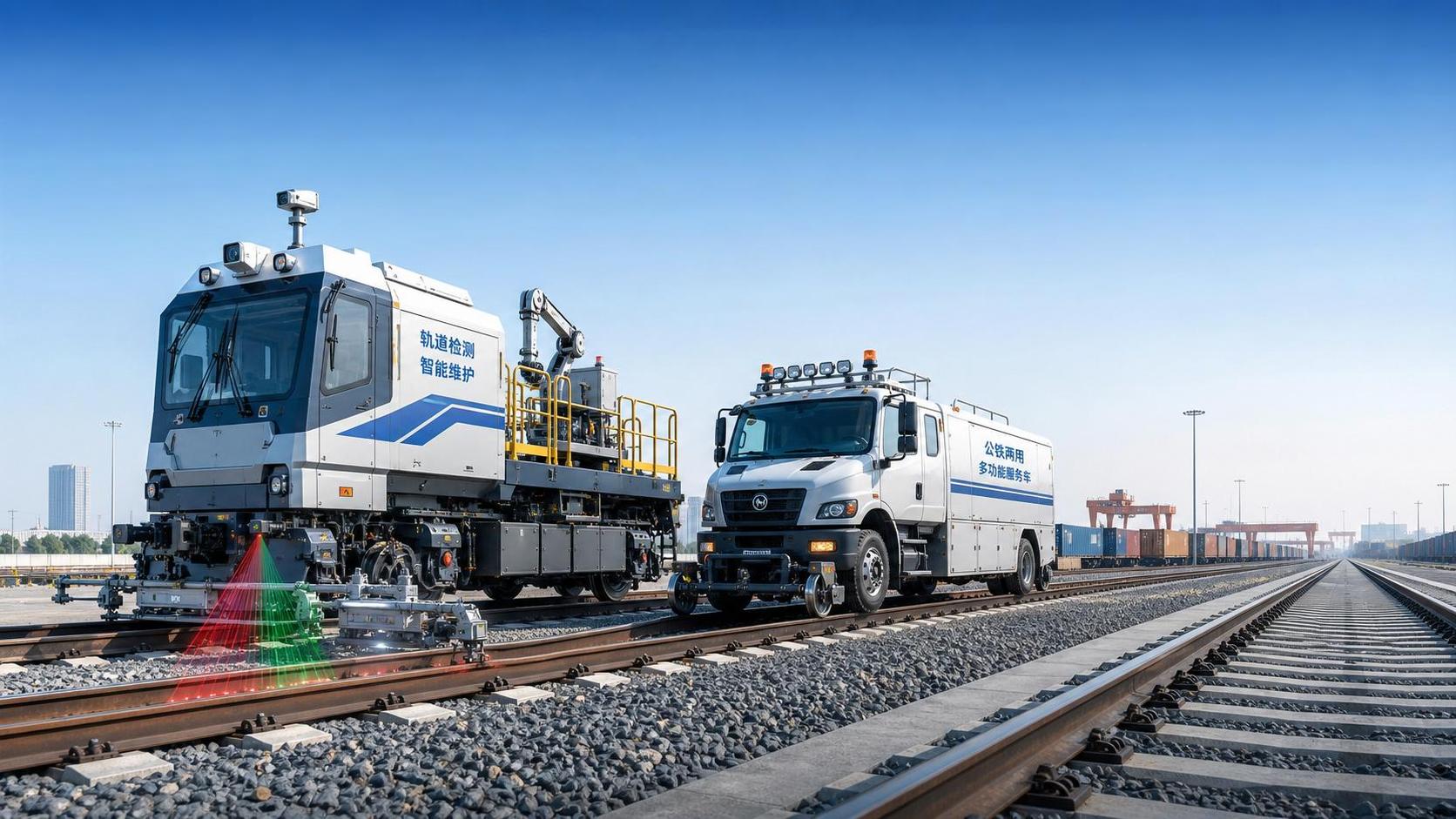
Railway Maintenance Equipment Machines: What Reduces Downtime Fastest
For after-sales maintenance teams, downtime is rarely caused by one dramatic failure.
More often, it comes from slow inspection, late fault detection, and repair bottlenecks.
That is why railway maintenance equipment machines matter so much in daily operations.
The fastest gains usually come from machines that shorten diagnosis time before they shorten wrench time.
In real freight corridors, every saved hour protects asset availability, service reliability, and contractual performance.
This also means the best investment is not always the biggest machine in the fleet.
The best result usually comes from the right mix of detection, access, repair, and verification equipment.
What downtime really looks like in railway maintenance
Rail downtime has three common layers.
First, the defect remains hidden too long.
Second, teams spend too much time locating the exact failure point.
Third, repairs take longer because access, parts, or verification are not ready.
The most effective railway maintenance equipment machines address at least two of these layers at once.
For example, a track inspection machine finds geometry defects early and maps location precisely.
That reduces both search time and the risk of larger secondary damage.
The machines that reduce downtime fastest
Not all railway maintenance equipment machines deliver the same speed of impact.
The fastest movers usually fall into five groups.
1. Track inspection and diagnostic machines
These often deliver the quickest return.
They include track geometry cars, ultrasonic rail flaw detectors, and laser profile systems.
Their advantage is simple.
They identify wear, cracks, gauge variation, and alignment issues before failure escalates.
In practical terms, these railway maintenance equipment machines prevent emergency closures better than almost any other category.
2. Mobile rail grinding and milling machines
Grinding and milling machines remove defects before they become failure triggers.
They control corrugation, surface fatigue, and profile distortion.
That reduces noise, wheel impact, and accelerated rail wear.
Where traffic density is high, this equipment can delay expensive rail replacement.
3. Tamping, lining, and stabilization machines
These machines restore track geometry after ballast settlement or renewal work.
They are especially valuable where repeated speed restrictions create hidden productivity loss.
A line may remain open, yet still underperform badly.
In those cases, tamping and stabilization machines reduce operational downtime, not just physical outage time.
4. Overhead line and catenary maintenance vehicles
Electrified routes depend heavily on access speed.
A specialized maintenance vehicle gives faster fault isolation and safer elevated repair.
This is crucial when wire tension, contact wear, or support damage affects freight schedules.
5. Multi-function road-rail service vehicles
These are often underrated.
They combine mobility, lifting, tooling, and site access in one platform.
For localized faults, these railway maintenance equipment machines can cut response time more than larger dedicated units.
Which category delivers the fastest measurable impact
If the goal is immediate reduction in unplanned downtime, diagnostic machines usually rank first.
They change maintenance from reactive work into planned intervention.
From there, mobile repair and geometry correction machines rank next.
Their benefit depends on how quickly teams can deploy them into traffic windows.
What matters more than machine size
A bigger machine does not automatically mean less downtime.
The strongest results usually come from four operational factors.
- Deployment speed: Can the machine reach the fault during short possession windows?
- Data quality: Does it produce accurate readings that support maintenance decisions?
- Parts support: Are wear parts, sensors, and consumables available locally?
- Operator readiness: Can crews use the machine without long retraining cycles?
In actual service networks, these issues decide whether railway maintenance equipment machines reduce downtime or simply add capital cost.
This is where technical platforms such as G-RFE become useful, because benchmarked comparisons reveal practical fit, not just brochure performance.
A practical selection framework for maintenance teams
Choosing railway maintenance equipment machines should begin with downtime pattern analysis.
That sounds obvious, yet many fleets still buy by habit or vendor familiarity.
A better approach is to map failure frequency against outage duration.
- List the faults that cause the most lost operating hours.
- Separate hidden defects from visible, access-related, and repair-related delays.
- Identify where a machine can remove diagnosis time, not just repair labor.
- Check whether the machine fits route gauge, electrification, axle load, and safety rules.
- Review supplier support against UIC, EN, or AAR-aligned maintenance requirements.
This method usually changes priorities.
Teams often discover that one portable inspection platform and one road-rail unit beat a larger single-purpose machine.
That is especially true on freight routes with dispersed assets and tight maintenance windows.
Common mistakes that slow results
Some investment mistakes appear again and again.
- Buying high-capacity equipment for faults that are mostly low-scale and frequent.
- Ignoring calibration, software updates, and spare sensor availability.
- Choosing machines that require long track possession periods.
- Treating data collection as separate from work order planning.
- Underestimating crew training for digital inspection systems.
Each mistake weakens the benefit of railway maintenance equipment machines.
More importantly, it delays the moment when maintenance becomes predictable instead of reactive.
What reduces downtime fastest in the real world
In most railway environments, the fastest downtime reduction comes from combining diagnostic accuracy with fast field access.
That usually means inspection systems first, road-rail support second, and defect-correction machines third.
For heavy-haul and intermodal corridors, this sequence is often more effective than starting with major renewal equipment.
The reason is straightforward.
You cannot shorten repairs consistently if failures are found too late or crews reach them too slowly.
The right railway maintenance equipment machines create a maintenance chain that is faster from detection to verification.
That is the real driver behind lower outage hours, better asset life, and more stable freight service.
Start with the machines that reveal faults early, move crews quickly, and fit your actual maintenance window. That is where downtime falls fastest.
- Using Railway Wheel Wear Data to Plan Reprofiling and Reduce Lifecycle RiskTime : Oct 12, 2026
- How to Select Track Maintenance Equipment for Rail Defects, Geometry, and Access LimitsTime : Sep 29, 2026
- A Practical Framework for Railway Technical Intelligence Analysis in Asset PlanningTime : Sep 19, 2026
Industry Briefing
Get the top 5 industry headlines delivered to your inbox every morning.