
2026 Railway Infrastructure Equipment Trends Shaping Maintenance Planning

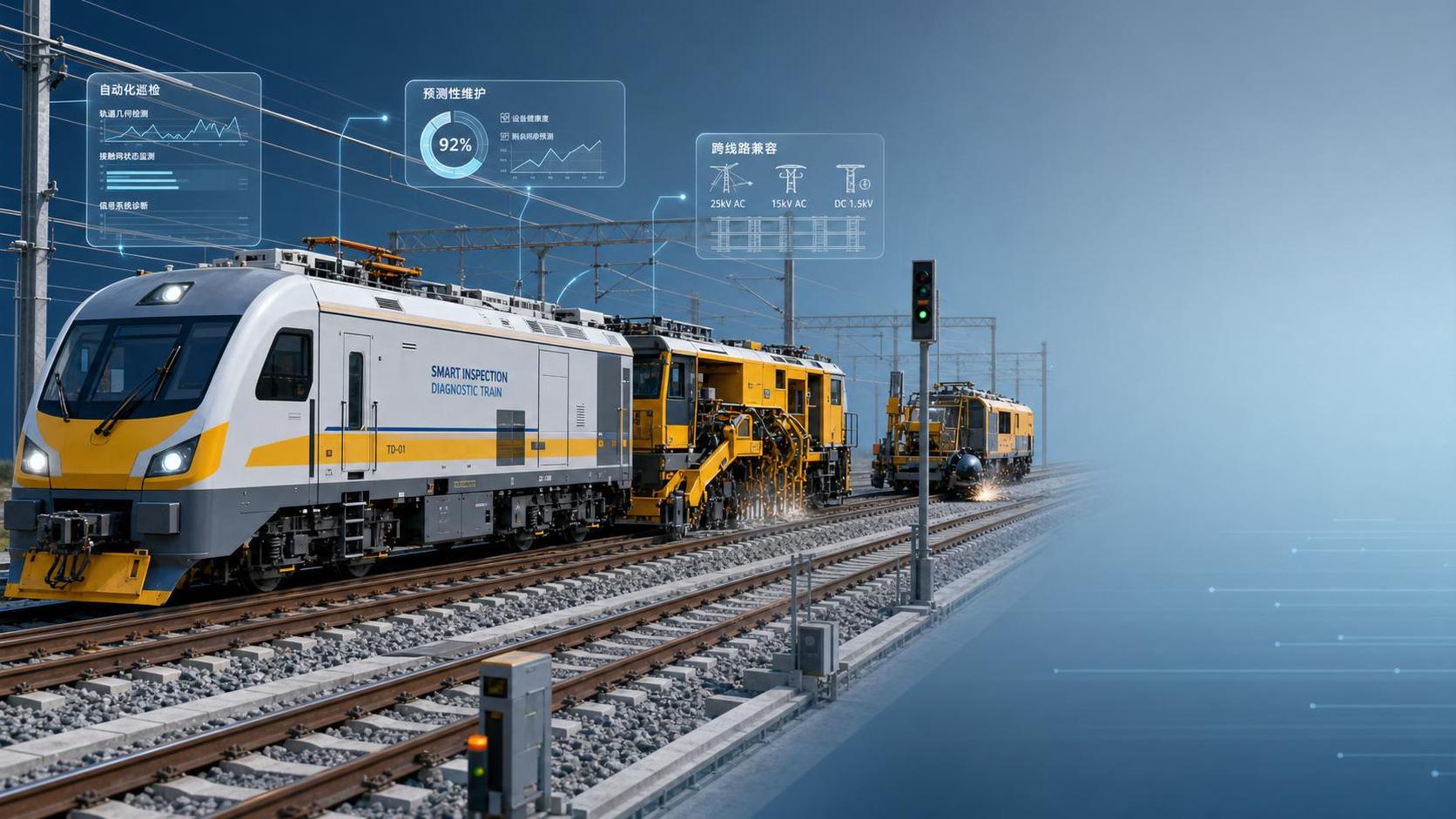
Maintenance planning in 2026 is no longer centered on replacing worn components at fixed intervals. Across expanding freight corridors, railway infrastructure equipment now shapes network uptime, safety performance, energy efficiency, and long-term capital discipline.
That shift matters because rail systems face a tighter operating window. Traffic density is rising, environmental expectations are harder to ignore, and outages are more expensive when cross-border logistics depend on uninterrupted line availability.
In this context, the question is not simply which machines to buy. The more useful question is how railway infrastructure equipment fits into a broader maintenance model covering data, standards, labor, possession time, and asset life.
Why railway infrastructure equipment has become a planning issue
The category covers more than tamping machines or rail grinders. It includes inspection vehicles, ballast regulators, track-laying systems, overhead line maintenance units, welding equipment, digital monitoring tools, and specialized machinery tied to signaling interfaces.
For many operators, these assets were once viewed as support equipment. In 2026, they sit much closer to the center of network strategy because maintenance delays now affect freight reliability, port throughput, and corridor competitiveness.
G-RFE’s institutional perspective is useful here. By connecting heavy-duty hardware with signaling, safety, and international benchmarking, it reflects how modern rail maintenance is judged across technical, operational, and regulatory dimensions at the same time.
The trends changing maintenance decisions in 2026
Automation is moving from pilot projects to fleet logic
Automation is spreading across inspection, track renewal, geometry correction, and worksite protection. The practical value is not novelty. It is shorter possession time, more repeatable work quality, and better use of limited skilled labor.
Semi-autonomous and assisted systems are often more realistic than full autonomy. They reduce operator burden while keeping human control where route complexity, local rules, and safety approvals still require it.
Predictive maintenance is becoming financially relevant
Condition-based planning has been discussed for years, but the economics are improving. Sensors, machine vision, onboard diagnostics, and cloud-based analysis now make it easier to tie maintenance actions to actual degradation patterns.
This changes procurement logic. Railway infrastructure equipment that can generate clean, structured asset data may deliver more value than a lower-priced machine with weak monitoring and poor system integration.
Interoperability is a hidden differentiator
Rail maintenance machinery increasingly has to work across mixed environments. That includes different gauges, axle load demands, traction systems, digital control architectures, and reporting frameworks used along intercontinental freight routes.
Compatibility with ETCS, CBTC-related interfaces, GSM-R communications, and operator maintenance software is becoming a selection factor. Without it, machine performance may be acceptable while planning efficiency remains weak.
Compliance pressure is getting more operational
Standards such as UIC, EN, and AAR are not abstract reference points. They influence approval cycles, cross-border acceptance, documentation quality, inspection traceability, and residual risk in long-life infrastructure programs.
The trend is clear: railway infrastructure equipment is being evaluated less as a standalone machine and more as part of a documented compliance chain supporting safe, auditable maintenance execution.
Where these trends create business value
The most obvious gain is reliability. Better inspection and targeted intervention reduce the risk of geometry faults, rail defects, catenary failures, and repeated slow orders that quietly erode corridor productivity.
A second gain is lifecycle cost visibility. When railway infrastructure equipment feeds usable condition data into planning systems, maintenance budgets can shift from reactive emergency work toward prioritized interventions with clearer return profiles.
There is also a workforce dimension. Advanced maintenance fleets can help address skills shortages by standardizing procedures, improving training pathways, and reducing dependence on improvised field decision-making.
For networks under decarbonization pressure, newer machinery may lower fuel consumption, support electrified maintenance operations, and reduce waste through more precise treatment of rails, ballast, and sleepers.
Which equipment categories deserve closer attention
Not every asset class is changing at the same speed. Some categories now influence planning far beyond their traditional maintenance role.
This is where broad market intelligence becomes valuable. G-RFE’s coverage across rolling stock, track maintenance, signaling, intermodal systems, and specialized machinery mirrors the way these categories increasingly overlap in real maintenance programs.
How to read the market without overbuying technology
The strongest solutions are not always the most complex ones. A useful evaluation starts with traffic profile, network condition, possession windows, regulatory exposure, and the maturity of the maintenance data environment.
That usually leads to a more disciplined review of railway infrastructure equipment across four dimensions:
- Operational fit: output quality, cycle time, route access, and resilience in harsh field conditions.
- Digital fit: sensor quality, data ownership, interface standards, and integration with asset management platforms.
- Compliance fit: alignment with UIC, EN, AAR, local approvals, safety documentation, and audit requirements.
- Commercial fit: lifecycle support, spare parts access, training burden, financing structure, and fleet commonality.
A frequent planning mistake is weighting acquisition price too heavily. Lower entry cost can be offset by longer possessions, fragmented data, poor interoperability, or limited support for renewal planning over the next decade.
Typical scenarios where decisions diverge
Heavy-haul corridors
Heavy axle loads accelerate wear and raise the cost of unplanned disruptions. Here, railway infrastructure equipment with strong geometry control, defect detection, and rapid intervention capability usually has the highest planning value.
Cross-border freight routes
Interoperability matters more than isolated machine productivity. Data formats, standards alignment, and signaling compatibility affect whether maintenance activity can support corridor-level performance targets.
Mixed traffic networks
Passenger schedules compress maintenance windows. In these settings, compact machinery, faster setup, and precise planning tools may outperform larger high-capacity platforms that are harder to deploy efficiently.
Expansion and modernization programs
When new lines and upgrades run in parallel, planners need equipment that supports construction, renewal, and long-term maintenance continuity. That reduces handover friction and improves asset traceability from day one.
What to verify before setting the next maintenance roadmap
A solid 2026 roadmap should test whether current railway infrastructure equipment still matches traffic growth, reliability targets, and digital maintenance ambitions. That review is more productive when it is evidence-based rather than vendor-led.
- Map recurring failures against the equipment currently used to inspect or correct them.
- Identify which machines produce decision-grade data and which only produce work output.
- Check whether maintenance software, signaling interfaces, and machine telemetry can share structured records.
- Compare approval and documentation demands across domestic and international operating environments.
- Model lifecycle cost under realistic possession, labor, spares, and utilization assumptions.
The next step is rarely a single procurement decision. More often, it is a phased maintenance strategy linking equipment capability, corridor priorities, and compliance requirements into a clearer investment sequence.
In 2026, the most effective maintenance plans will come from treating railway infrastructure equipment as part of a connected system. That means benchmarking assets carefully, testing interoperability early, and building decisions around measurable network outcomes.
- How to Select Track Maintenance Equipment for Rail Defects, Geometry, and Access LimitsTime : Sep 29, 2026
- A Practical Framework for Railway Technical Intelligence Analysis in Asset PlanningTime : Sep 19, 2026
- How to Qualify a Rail Track Equipment Supplier for Multi-Site Maintenance ContractsTime : Sep 17, 2026
Industry Briefing
Get the top 5 industry headlines delivered to your inbox every morning.