
How to Compare a Track Maintenance Machinery Manufacturer

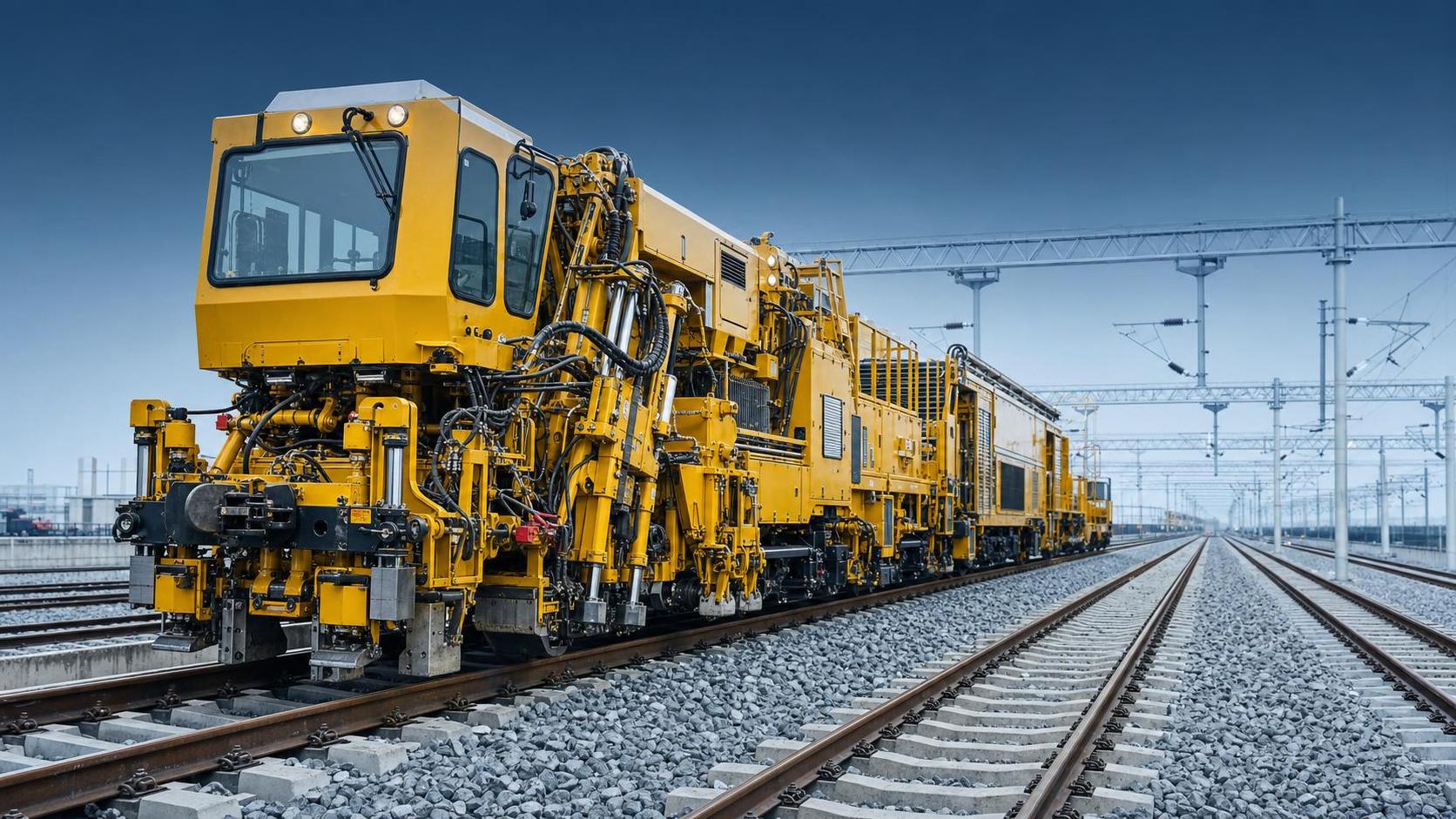
Comparing a track maintenance machinery manufacturer is rarely a simple equipment exercise. In rail freight, every maintenance asset affects availability, safety margins, labor planning, and corridor capacity. A useful comparison goes beyond catalog features and unit price, and looks at whether a supplier can support real operating conditions, compliance demands, and long service life across complex railway networks.
That matters even more as freight corridors become heavier, faster, and more integrated. Platforms such as Global Railway-Freight & Engineering, with its focus on rolling stock, infrastructure, signaling, and specialized machinery, reflect how maintenance decisions now sit inside a wider technical ecosystem. A track maintenance machinery manufacturer must therefore be judged not only as a machine builder, but also as a long-term engineering partner.
What the comparison really involves
Track maintenance machinery covers a broad range of assets. It may include tamping machines, ballast regulators, rail grinders, stabilizers, track laying systems, inspection vehicles, and specialized renewal equipment.
Because these machines work in safety-critical environments, the comparison should start with fit for purpose. The question is not which supplier has the longest brochure, but which one matches route conditions, maintenance philosophy, and operational targets.
A capable track maintenance machinery manufacturer should show strength in four connected areas: engineering depth, standards alignment, lifecycle support, and field performance. Weakness in any one of these can turn a low-cost purchase into an expensive operational constraint.
Why the market is paying closer attention
Railway infrastructure is under pressure from heavier axle loads, tighter possession windows, and stronger sustainability targets. Maintenance machinery now needs to deliver more output in less time, often with better energy efficiency and more accurate data capture.
At the same time, project structures have changed. National authorities, EPC contractors, rolling stock integrators, and corridor operators increasingly expect machinery to work within standardized technical frameworks such as UIC, EN, and AAR references.
This shifts the comparison from basic procurement toward system-level evaluation. A track maintenance machinery manufacturer that understands signaling interfaces, worksite safety rules, and intermodal logistics constraints may create more value than one offering only lower upfront pricing.
Engineering capability is the first real filter
Engineering capability should be tested through evidence, not claims. It helps to examine how the manufacturer designs for axle load, gauge variation, climate exposure, maintenance access, and component durability.
A credible supplier can usually explain why a machine is configured in a certain way. That includes hydraulic systems, control architecture, measurement accuracy, modular assemblies, and onboard diagnostics.
It is also worth looking at design maturity. New concepts may be attractive, but a track maintenance machinery manufacturer with stable generations of proven platforms often carries lower execution risk on strategic projects.
Useful engineering questions
- How many machines of the same platform are operating in similar rail conditions?
- What components are proprietary, and what parts come from established industrial suppliers?
- How are vibration, dust, heat, moisture, and ballast impact handled in the design?
- What is the expected overhaul interval under heavy-duty usage?
- How easily can software, sensors, or work modules be upgraded later?
Standards and compliance should not be treated as paperwork
In cross-border freight and institutional rail projects, compliance is part of asset value. A track maintenance machinery manufacturer should demonstrate familiarity with relevant safety, interoperability, emissions, and certification requirements.
This is especially important when machinery will operate alongside advanced signaling, digital communications, or mixed traffic environments. Poor alignment can delay approvals, complicate integration, and increase modification costs after delivery.
The strongest manufacturers do more than present certificates. They can map specific requirements to design choices, test procedures, documentation packages, and acceptance protocols.
Field performance matters more than rated specifications
Many machines look similar on paper. The real separation appears in possession efficiency, output consistency, fault behavior, and recovery time during live operations.
A strong track maintenance machinery manufacturer should provide reference cases with comparable traffic density, rail profile, climate, and maintenance regime. General references are less useful than operationally similar ones.
Pay attention to metrics that influence the business case directly. Examples include work rate per shift, repeat-pass reduction, measurement precision, fuel or power consumption, and mean time to repair.
Where possible, site visits or live demonstrations reveal details that proposals hide. Operator visibility, machine stability, changeover speed, and maintainability often become obvious only in the field.
Support capability often decides long-term value
A machine purchase is only the beginning. For that reason, support capability should weigh heavily in any comparison of a track maintenance machinery manufacturer.
The practical questions are straightforward. Can the supplier deliver spare parts quickly? Is there regional service coverage? Are training programs structured? Is remote diagnostics available? Can software issues be resolved without lengthy downtime?
Some manufacturers perform well during tendering, then struggle after commissioning. Reviewing service level commitments, parts stocking plans, and escalation procedures helps expose that gap early.
Support signals worth checking
- Regional maintenance footprint and response times
- Availability of bilingual manuals and digital service records
- Training for operators, maintainers, and supervisors
- Stocking strategy for critical wear parts and electronics
- Clear upgrade path for controls, sensors, and compliance changes
Comparison should reflect the actual operating scenario
Not every railway requires the same machine strategy. A heavy-haul mineral corridor, an urban mixed-traffic network, and a new intercontinental freight route will prioritize different features.
For heavy-haul routes, structural durability and fast restoration quality may dominate. In dense passenger-freight networks, compact work windows, low disruption, and precise data interfaces may be more important.
This is where a track maintenance machinery manufacturer should show application understanding. The best suppliers can adjust machine configuration, work modules, and support packages to the railway’s maintenance strategy rather than pushing a fixed standard offering.
A practical way to structure the decision
A disciplined comparison usually works better than open-ended scoring. Start by separating mandatory requirements from competitive differentiators.
Mandatory items may include gauge compatibility, standards compliance, minimum output, axle load limits, and service support commitments. Any track maintenance machinery manufacturer that fails these should not move forward.
Then compare differentiated value. That may include automation level, data quality, lifecycle cost, training depth, reference performance, local content options, and upgrade flexibility.
It is also sensible to compare total cost of ownership rather than purchase price alone. Downtime exposure, spare parts dependence, energy use, crew requirements, and midlife modernization costs usually change the ranking.
Where to go next
A sound comparison of any track maintenance machinery manufacturer should end with clearer decision criteria, not just a preferred name. The strongest choice is the supplier that fits the railway’s technical reality, compliance path, and long-term operating model.
The next step is usually to build a short evaluation matrix grounded in route conditions, standards, reference performance, and support obligations. When that framework is tied to broader rail system intelligence, the comparison becomes more defensible and far more useful in strategic project planning.
- How to Select Track Maintenance Equipment for Rail Defects, Geometry, and Access LimitsTime : Sep 29, 2026
- A Practical Framework for Railway Technical Intelligence Analysis in Asset PlanningTime : Sep 19, 2026
- How to Qualify a Rail Track Equipment Supplier for Multi-Site Maintenance ContractsTime : Sep 17, 2026
Industry Briefing
Get the top 5 industry headlines delivered to your inbox every morning.