
Railway Equipment Benchmarking for Smarter Maintenance Planning

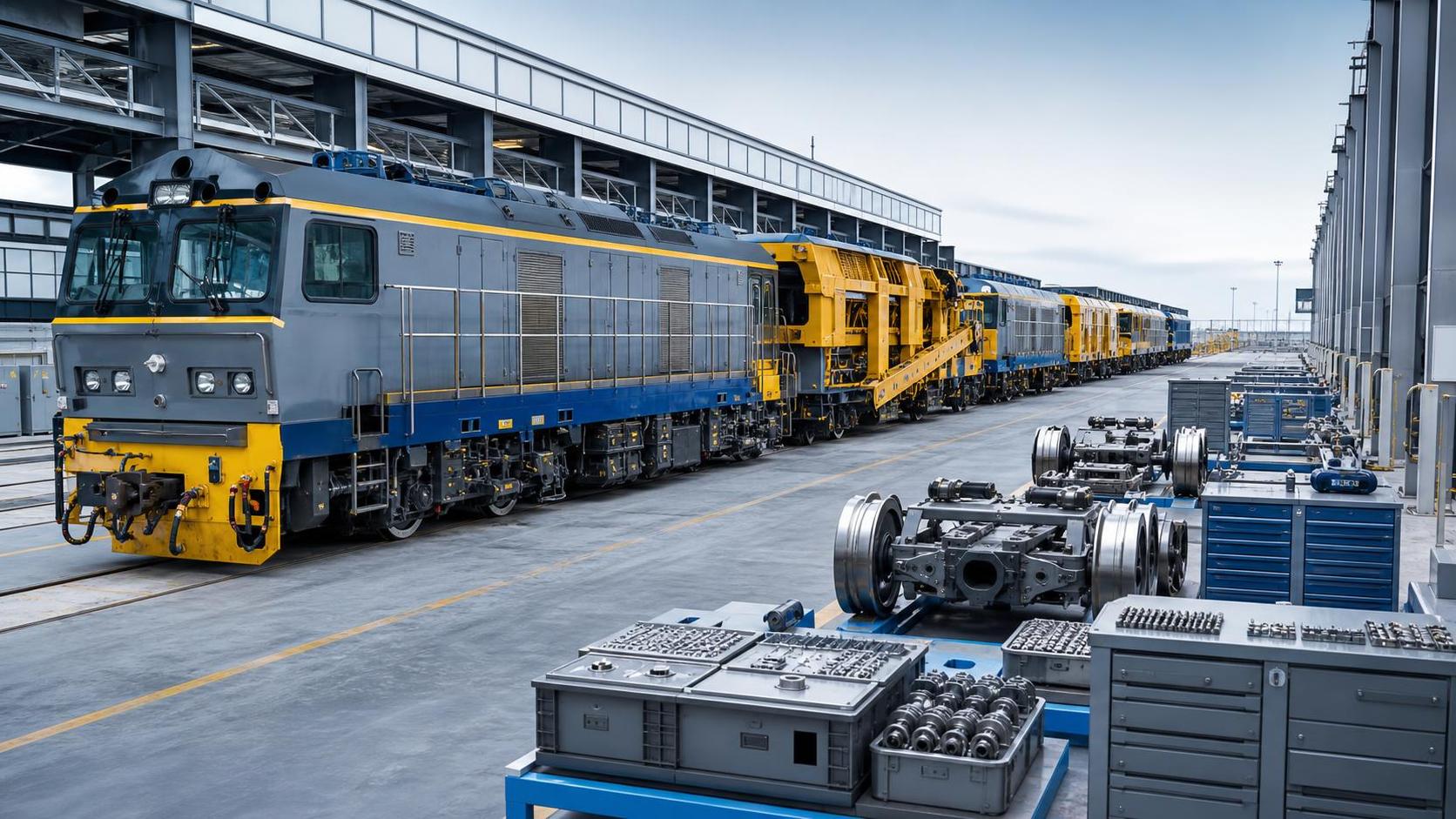
Railway Equipment Benchmarking for Smarter Maintenance Planning
For technical evaluators managing complex rail assets, railway equipment benchmarking maintenance is becoming essential to smarter planning and risk control. By comparing locomotives, rolling stock, track machinery, and signaling systems against global standards and real-world performance data, organizations can identify weak points earlier, prioritize interventions more accurately, and improve lifecycle value across freight operations.
If you are reviewing equipment for heavy-haul freight, cross-border corridors, or mixed fleets, the hardest part is usually not getting data. It is deciding which data should actually influence maintenance planning. Plenty of teams still benchmark on purchase specs alone, then wonder why the maintenance burden looks nothing like the original model. In rail, the gap between brochure performance and field performance is where budgets get distorted.
This checklist is written for evaluators who need to make selection and planning decisions, not for people collecting generic industry talking points. Use it before approving a fleet expansion, comparing overhaul options, or standardizing maintenance strategy across regions.
Start with operating duty, not the equipment catalog
Benchmarking fails early when the comparison set ignores the actual duty cycle. A 6000hp locomotive used on long, predictable mineral corridors should not be evaluated the same way as one working in stop-start mixed freight with variable gradients, harsh weather, or patchy maintenance windows. The same problem shows up with tamping machines, rail grinders, wagon bogies, and onboard signaling hardware.
- Define axle load, annual tonnage, route profile, climate exposure, and service interruption tolerance before comparing assets.
- Separate mainline freight, port-rail shuttle, mountain corridor, and mixed-traffic operations. Maintenance demand changes sharply across these use cases.
- Check whether the supplier’s benchmark data comes from networks with similar track quality, fueling quality, braking regimes, and loading patterns.
A familiar mistake: evaluators compare mean time between failures across fleets that operate in completely different contamination, vibration, or temperature environments. That number is nearly useless without context.
Check whether the benchmark aligns with the right standard set
For railway equipment benchmarking maintenance, standards are not window dressing. They shape whether your comparison is even valid. On international projects, you may be balancing UIC references, EN requirements, AAR practices, and national railway authority specifications at the same time. That is normal. What matters is being explicit about which standard governs which subsystem.
Pay particular attention where subsystems interact. Wheelset and braking behavior, coupler performance, track geometry tolerance, and signaling interface compliance can each look acceptable in isolation while creating maintenance friction together. If the benchmark pack simply says “compliant with international standards” and stops there, that is not enough for a decision file.
Where documentation is incomplete, mark assumptions clearly as 【待核实】. Technical evaluators get into trouble when unverified compliance claims quietly turn into approved maintenance assumptions.
Do not benchmark on acquisition cost without maintenance structure
A lower capital price often hides a more fragmented maintenance model: more special tools, narrower parts availability, more frequent inspection intervals, or heavier dependence on OEM field support. In freight rail, that tradeoff becomes visible only after several maintenance cycles.
Ask for the maintenance structure in a way that can actually be compared:
- Scheduled inspection intervals by mileage, hours, or calendar basis
- Workshop skill requirements and tooling dependencies
- Consumables and wear components with expected replacement logic
- Software, diagnostics, and remote monitoring licensing constraints
- Lead times for critical spares and repairable units
If a supplier can provide top-level lifecycle cost but cannot show what drives it, treat that estimate carefully. It may still be useful, but not as a planning-grade benchmark.
Look for failure consequences, not just failure frequency
Some components fail often and are easy to recover from. Others fail rarely but create long disruptions, route restrictions, safety events, or expensive out-of-position repairs. Maintenance planning should treat those very differently.
This matters especially in onboard electronics, braking subsystems, traction converters, wagon hotbox detection interfaces, and signaling components that can block service release. A benchmark that only ranks assets by failure count can push you toward the wrong intervention priorities.
A practical screen is to tag each known failure mode by operational consequence: delayed departure, speed restriction, unscheduled workshop entry, train rescue, line possession impact, or safety-critical escalation. Once you do that, the maintenance plan usually changes shape.
Be careful with mixed fleets and “almost compatible” assets
Mixed fleets are where benchmarking becomes genuinely valuable, and where teams often underestimate the maintenance penalty. Two wagon families may share nominal dimensions but differ in brake rigging details, bogie parts, sensor architecture, or inspection methods. Two signaling platforms may both support ETCS-related functions yet require very different diagnostic workflows and update regimes. That “close enough” assumption usually ends up in stores complexity and avoidable downtime.
Before approving an additional variant, ask three blunt questions:
- Will it increase spare part lines for safety-critical or high-turn items?
- Will technicians need separate certification, software access, or calibration tools?
- Will workshop throughput drop because inspection and release steps are no longer standardized?
If the answer is yes to two or more, the maintenance benchmark should include a fleet-complexity penalty, even if headline unit performance looks attractive.
Use field maintainability as a scored criterion
This is one of the most underused filters in equipment selection. On paper, two assets may have similar reliability projections. In the field, one allows quick access, modular replacement, standard test equipment, and clear fault isolation. The other turns routine work into extended possession time or repeated troubleshooting.
For track maintenance machinery, evaluate setup time, transport readiness, calibration effort, and post-work verification needs. For locomotives and wagons, look at access points, inspection ergonomics, drainage and contamination control, connector quality, and whether diagnostic codes are actually useful to technicians instead of just to the OEM.
If you can arrange site visits or workshop observations, do it. A two-hour walkdown often reveals more than a polished reliability presentation.
Benchmark data quality before you benchmark equipment
A lot of benchmarking disputes are really data-governance problems. Failure coding differs by operator. Planned removals get mixed with corrective removals. Mileage counters are inconsistent. Software incidents may be logged separately from hardware incidents, which distorts subsystem comparisons.
At minimum, verify the following before accepting a benchmark as decision-grade:
- Common failure taxonomy across fleets or sites
- Clear separation between preventive, corrective, and campaign actions
- Consistent denominator such as locomotive-km, wagon-km, machine-hours, or route-km
- Traceability to source systems, not just spreadsheet extracts
Without that, the benchmark can still support discussion, but not procurement ranking or maintenance interval redesign.
Treat signaling and digital systems differently from heavy mechanical assets
Mechanical assets usually degrade visibly. Digital rail systems often degrade through version drift, interface mismatch, intermittent communications faults, and cybersecurity-related controls. That changes how benchmarking should feed maintenance planning.
For CBTC, ETCS, GSM-R, and related communications layers, include configuration control, software support horizon, rollback procedure, and test environment maturity in the benchmark. An asset with stable hardware but weak version governance can create more maintenance burden than a mechanically demanding unit with disciplined support structure.
Also check who owns diagnostic visibility. If the operator cannot access enough technical detail without OEM intervention, maintenance planning becomes slower and more expensive than the original comparison suggests.
Keep region-specific constraints in view
A benchmark that works in Western Europe may not transfer cleanly to Central Asia, Africa, Latin America, or port-linked freight corridors in coastal climates. Dust, fuel quality variation, workshop infrastructure, customs delay on parts, and local certification processes all affect maintenance reality. None of this is controversial, but teams still underweight it during selection.
Where regional evidence is thin, flag the gap instead of smoothing it over. Use cautious wording, set pilot periods, and require condition-monitoring review points before finalizing maintenance intervals. That is a stronger decision process than pretending foreign benchmark data is universally portable.
What a usable benchmarking output should look like
By the end, you should have more than a comparison table. A usable output for technical evaluators normally includes a shortlist with explicit assumptions, maintenance burden drivers, compliance references, data-confidence notes, and a recommendation on where standardization is worth more than marginal performance gains.
If the exercise is done well, it tells you where to tighten condition monitoring, where to hold more spares, where a supplier claim still needs validation, and where an apparently strong asset would actually complicate maintenance planning. That is the point of railway equipment benchmarking maintenance: not to produce a prettier scorecard, but to make the next maintenance decision harder to get wrong.
Industry Briefing
Get the top 5 industry headlines delivered to your inbox every morning.