

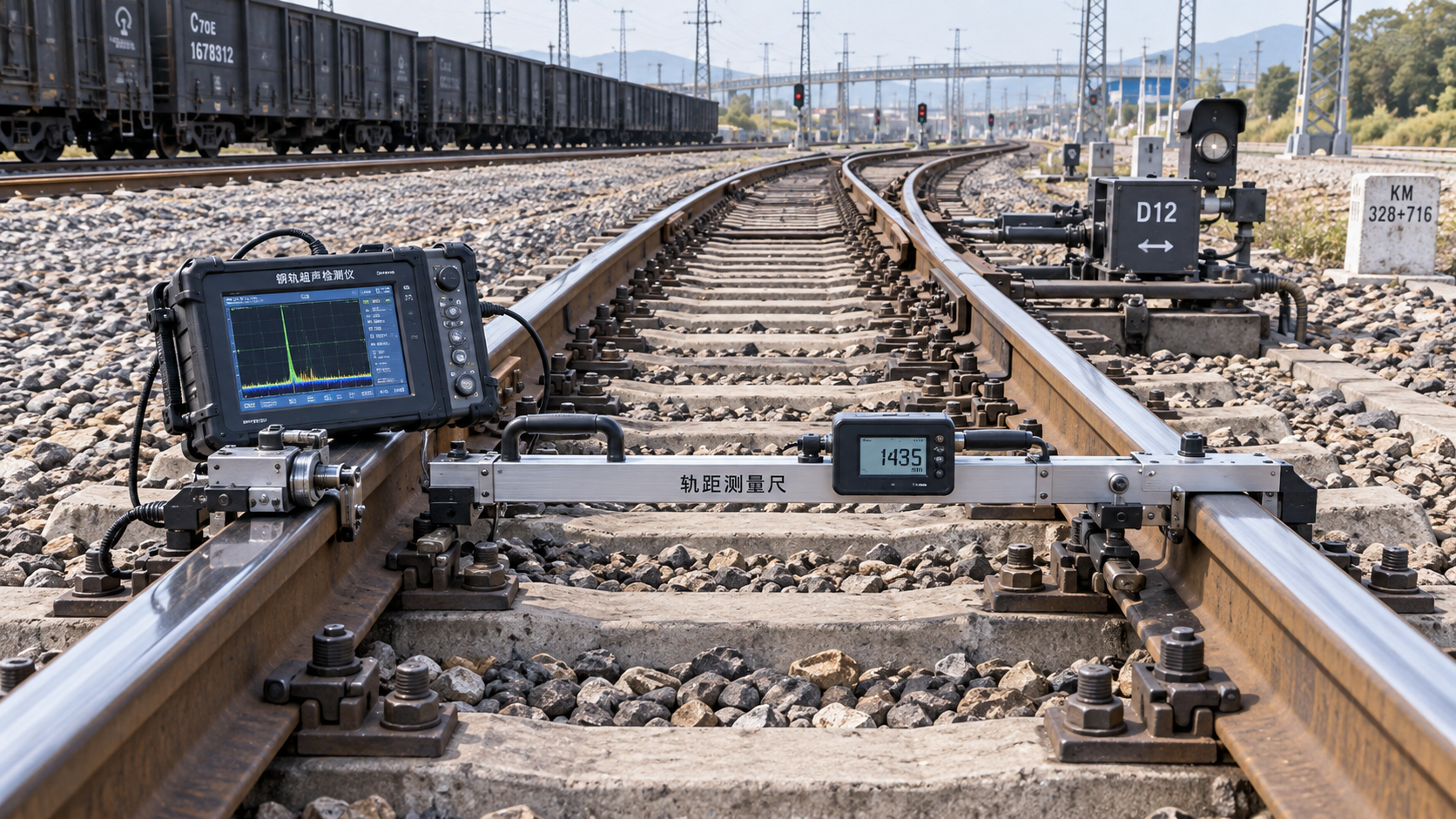
What track maintenance work cannot be deferred? For railway authorities, freight operators, and infrastructure contractors, the answer begins with defects that threaten safe train passage.
Broken rails, unsafe track geometry, compromised switches, and washouts require immediate assessment and protective action. Repair priorities depend on applicable standards, operating conditions, and verified findings.
The immediate obligation is to control exposure. Depending on the defect, this may require closing the track, restricting operations, inspecting further, or completing repairs before reopening.
This guide explains how to distinguish urgent interventions from work that can be safely scheduled, helping decision-makers protect heavy-haul corridors and maintain reliable freight operations.
Which Defects Require Action Before the Next Train?
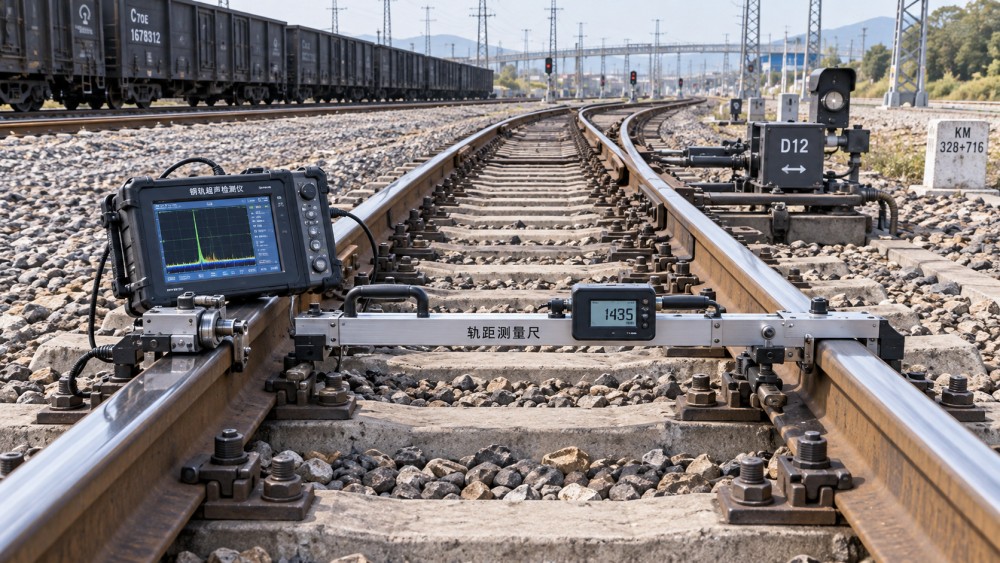
Track maintenance cannot be deferred when a defect compromises the track’s ability to guide, support, or restrain the next train under the proposed operating conditions.
That judgment must consider the defect itself, train speed, axle loads, weather, track configuration, and any safeguards permitted by the governing rules and infrastructure manager.
A maintenance backlog alone does not establish urgency. A newly discovered defect can require immediate protection, while an older, stable condition may remain eligible for monitored scheduling.
The following categories identify common situations requiring prompt intervention. They are screening priorities, with decisions governed by measured conditions, applicable requirements, and qualified engineering assessment.
Immediate action does not always mean completing permanent reconstruction immediately. It means establishing an authorized safe condition before allowing further exposure to the identified hazard.
Equally, a speed restriction is not a universal remedy. Some defects require closure or repair because slower trains still impose substantial vertical and lateral forces.
Can a Broken Rail or Suspected Crack Wait?
Broken rails and serious rail defects deserve urgent attention because remaining strength can be uncertain. Freight axle loads and repeated loading may accelerate further deterioration.
A visible break, failed weld, or significant internal indication requires classification under the applicable defect rules. Appearance alone cannot establish whether continued operation is acceptable.
Where the rules permit a temporary repair or restricted movement, qualified personnel must verify the repair arrangement, operating conditions, inspection requirements, and any applicable time limits.
Joint bars, bolts, and adjoining rail also matter. A failed component can undermine rail continuity, especially where several defects occur together or support is poor.
Suspected defects should trigger a defined verification process. Depending on the indication, this may include ultrasonic examination, surface testing, visual inspection, or additional approved methods.
An inconclusive inspection leaves uncertainty that requires resolution. If safe passage cannot be established, the infrastructure manager must apply appropriate protection while obtaining reliable findings.
Heavy-haul operators should also examine recurring defects at the same location. Repeated rail failure may indicate unresolved support, welding, contact stress, or vehicle-related loading problems.
When Does Track Geometry Become an Immediate Priority?
Gauge, alignment, longitudinal level, crosslevel, and twist affect wheel guidance and vehicle response. Urgency depends on measured severity and the limits governing the intended operation.
A defect exceeding the applicable operating limit requires the prescribed response. Teams should verify the measurement, establish protection, and determine whether repair or another authorized action is necessary.
Combinations deserve particular attention. Geometry conditions that appear manageable individually may create greater risk together, especially on curves, transitions, approaches, or locations with weak support.
Measurements also need context. Unloaded geometry may not reveal the full movement that occurs beneath a train where sleepers, ballast, or formation provide inadequate support.
Sudden alignment changes during hot weather can indicate instability in continuously welded rail. Suspected buckling demands immediate protection and assessment under the railway’s established procedures.
Thermal risk assessment should consider rail temperature, restraint, recent disturbance, and the documented stress condition. Ambient temperature alone cannot establish whether the track is stable.
After tamping, excavation, or other work affecting lateral resistance, operating restrictions and stabilization requirements must follow the applicable procedure before normal traffic conditions are restored.
Which Switch and Crossing Problems Cannot Be Postponed?
Switches and crossings concentrate wheel guidance demands in relatively short distances. Defects affecting the intended wheel path require prompt attention, even where traffic volumes are modest.
Priority conditions include damaged switch points, inadequate point closure, failed locking components, displaced fittings, and crossing damage that compromises support or guidance through the turnout.
A correct indication from signaling equipment does not establish mechanical integrity by itself. The physical switch condition and the associated detection system must both be assessed.
Inspection should examine point fit, fastenings, rods, bearers, crossing components, and relevant clearances. The required checks depend on turnout design and the infrastructure manager’s standards.
Protection may affect one route, several routes, or the entire turnout. Any permitted use must reflect the verified defect and the authorized protection arrangement applied.
Freight yards require the same disciplined assessment. Low speeds may reduce some dynamic effects, but heavy vehicles can still derail when guidance or support fails.
Why Washouts and Drainage Failures Can Override the Maintenance Schedule
Water becomes an urgent track issue when it removes support, destabilizes earthworks, or creates uncertainty about the formation beneath apparently intact rails and sleepers above.
Washouts, scour, slope movement, and substantial voids require immediate assessment. Track can remain visually aligned while losing the foundation needed to carry a loaded train.
Following flooding, inspection should extend beyond the visible track surface. Culverts, embankments, bridge approaches, retaining structures, and surrounding drainage paths may contain the underlying damage.
Cleaning a blocked drain is therefore urgent when blockage threatens track stability. Routine vegetation or sediment clearance can be scheduled where drainage capacity remains adequate.
After severe weather, reopening should depend on competent inspection and any required engineering confirmation. Receding water and an undamaged-looking rail line do not establish safe support.
Permanent recovery may require staged reconstruction. Each stage needs a documented basis for operation, including any restrictions, monitoring, and conditions that would trigger renewed closure.
When Do Sleepers, Fastenings, and Ballast Require Urgent Work?
Individual deteriorated components do not automatically create an immediate hazard. Their significance depends on distribution, remaining capacity, track configuration, and the requirements for continued operation.
Clusters of failed sleepers or ineffective fastenings can impair gauge restraint and load distribution. Concentration often matters more than the overall percentage reported across a maintenance section.
Critical locations include curves, joints, turnouts, and areas subject to substantial lateral forces. Component condition must be judged against the function required at that location.
Ballast deficiencies become urgent when they compromise support or resistance to movement. Examples include substantial loss after flooding or inadequate restraint where thermal instability is suspected.
Fouled ballast warrants attention when it causes pumping, persistent settlement, or rapid geometry deterioration. A cosmetic assessment cannot establish how the track behaves under loading.
Repairing the visible symptom alone may provide limited benefit. Sustainable intervention may require drainage correction, formation treatment, component replacement, and restoration of the appropriate ballast profile.
What Should the Team Do Immediately After Finding a Critical Defect?
The first decision is whether another train can safely enter the affected location. That decision belongs within the railway’s authorized inspection and operational control arrangements.
Field teams need clear escalation routes, while controllers need usable information. A precise location and explicit operating status are more valuable than an ambiguous urgency label.
- Identify the affected track, location, defect type, and inspection findings. Record measurements, photographs where useful, and any uncertainty affecting the assessment of safe operation.
- Apply the required protection through authorized channels. Communicate closures, restrictions, or route limitations clearly, and confirm that the responsible operational personnel have received them.
- Have competent personnel assess the defect against applicable requirements. Determine whether further inspection, immediate repair, temporary measures, or continued closure is necessary for safe operation.
- Complete the authorized intervention and verify the resulting condition. Check adjoining track and interfaces where the original failure or repair could affect their performance.
- Document the release decision, operating conditions, follow-up inspections, and permanent work required. Assign responsibility for monitoring and for responding if the condition worsens again.
Temporary measures need explicit boundaries. Their scope, duration, permitted traffic, and inspection frequency should follow applicable rules and the engineering assessment of the actual condition.
A completed work order does not itself authorize unrestricted operation. Release requires the relevant checks and acceptance by personnel empowered to make that operating decision.
For contractors, handover should provide verified findings and remaining obligations. For infrastructure managers, the essential outcome is a clear, traceable basis for safe continued operation.
Which Work Can Be Deferred, and Under What Conditions?
Work may be scheduled when the assessed condition remains within applicable requirements, deterioration is understood, and any necessary controls can be maintained throughout the proposed delay.
Examples may include isolated component replacement, preventive grinding, vegetation management, or drainage cleaning where inspection confirms that postponement will not compromise safe operation or required compliance.
Task names alone cannot justify deferral. Rail grinding may be routine in one location, while a related defect elsewhere requires urgent investigation and corrective action.
A sound deferral record states the condition, supporting measurements, applicable criteria, authorized decision, next inspection, and planned completion date. It also identifies triggers for earlier intervention.
Triggers may include worsening geometry, additional component failures, changed traffic loading, severe rainfall, or temperature conditions addressed by local procedures. They must be practical to monitor.
Managers should consider total operating consequences alongside repair cost. Repeated restrictions, inspections, possession requirements, and freight disruption can make prolonged temporary management economically unattractive overall.
Standards must be applied within their proper jurisdiction and scope. United States operations may involve FRA track safety requirements under 49 CFR Part 213, as applicable.
Other networks follow their national requirements, infrastructure rules, and relevant technical specifications. UIC guidance, EN standards, and AAR requirements serve different purposes and are not interchangeable.
Making a Defensible Maintenance Priority Decision
The decisive question is whether safe operation can be demonstrated until the proposed repair date. If it cannot, protective action and further assessment cannot be deferred.
Prioritize defects affecting rail integrity, wheel guidance, track restraint, and foundation support. Then distinguish immediate protection, temporary intervention, permanent repair, and verified return to service.
For railway authorities and freight corridor managers, disciplined prioritization protects safety and reliability together. It directs scarce maintenance resources toward conditions with the greatest operational consequences.
A defensible backlog contains assessed, controlled, and monitored work. Every deferred item should have an accountable owner, a justified deadline, and clear conditions requiring earlier action.