
What cab ergonomics benchmarks reveal about driver fatigue

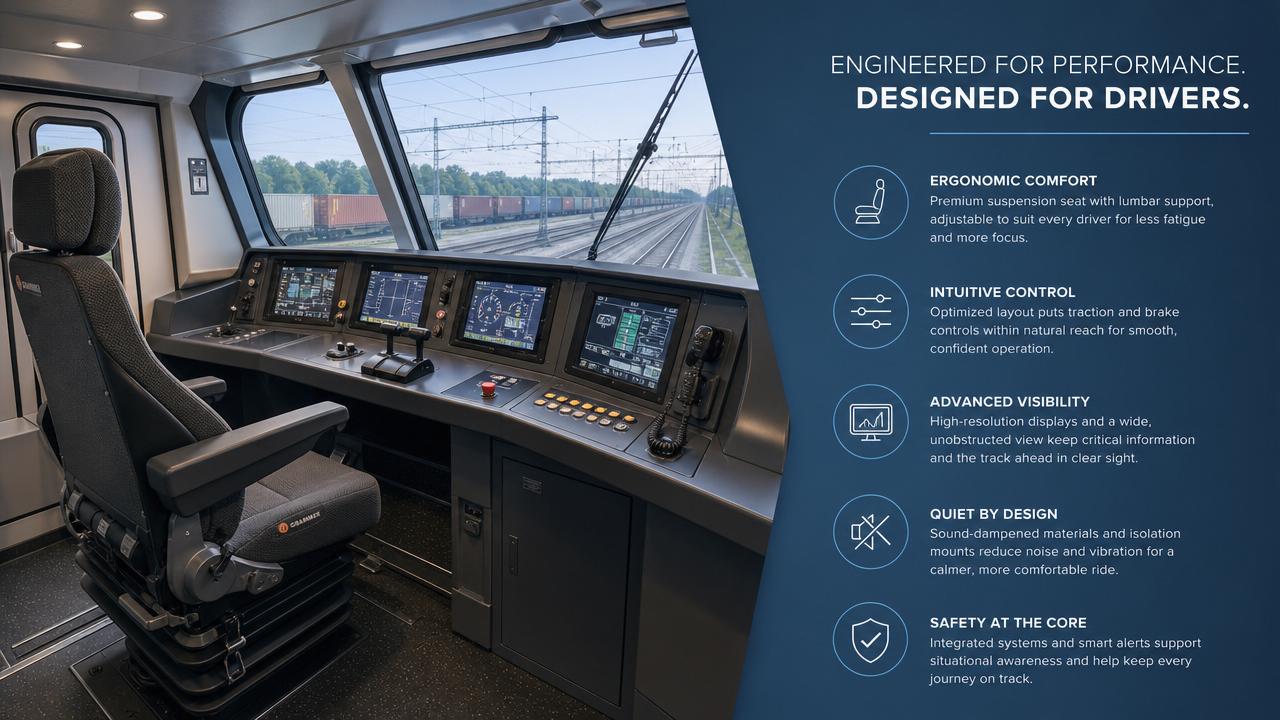
For operators spending long hours in the cab, locomotive cab ergonomics benchmarks do more than guide interior design. They expose measurable links between posture, visibility, vibration, workload, and fatigue.
In freight rail, fatigue is not only a human factor issue. It affects braking precision, signal compliance, radio communication quality, and consistency across long-distance corridors.
That is why locomotive cab ergonomics benchmarks matter across the broader transport engineering landscape. They help translate driver discomfort into technical indicators that can be assessed, compared, and improved.
For data-driven rail platforms such as G-RFE, these benchmarks support better alignment between rolling stock design, operational safety, and international engineering expectations including UIC, EN, and AAR references.
What locomotive cab ergonomics benchmarks actually measure
Locomotive cab ergonomics benchmarks are structured evaluation criteria for the working environment inside the driving cab. They define whether the cab supports alert, stable, low-strain operation over long duty cycles.
These benchmarks usually combine physical layout metrics with operational performance indicators. The goal is not comfort alone. The goal is sustained human performance under real railway conditions.
- Seat adjustability, lumbar support, and pressure distribution
- Reach distance to brake, throttle, display, and communication controls
- Forward, lateral, and signal sightlines from normal seated posture
- Noise exposure and whole-body vibration levels
- Thermal comfort, glare control, and lighting uniformity
- Cognitive workload from screen arrangement and alarm logic
When locomotive cab ergonomics benchmarks are ignored, fatigue often appears first as minor discomfort. Later, it becomes delayed reactions, awkward scanning patterns, and inconsistent control inputs.
Why fatigue has become a stronger benchmark concern in freight rail
Modern freight operations place new pressure on cab design. Train lengths are increasing, corridors are expanding, and control systems are becoming more information-dense.
At the same time, rail networks are expected to deliver low-carbon, high-capacity transport with fewer operational errors. That makes human endurance inside the cab a system-level performance issue.
This is where locomotive cab ergonomics benchmarks reveal hidden operational risk. A cab may satisfy basic equipment requirements yet still create avoidable fatigue during real duty conditions.
The benchmark areas most closely linked to driver fatigue
Seat support and static posture
Poor seat geometry forces continuous micro-adjustment. That increases lower-back stress, shoulder tension, and leg discomfort, especially during low-movement monitoring phases.
Strong locomotive cab ergonomics benchmarks assess seat travel range, suspension response, cushion firmness, and the ability to maintain a neutral posture while reaching primary controls.
Control layout and reach zones
Brake handles, vigilance controls, radios, and touchscreen interfaces should sit inside efficient reach envelopes. Repeated twisting or overreaching increases fatigue and can slow response time.
In practical reviews, locomotive cab ergonomics benchmarks often compare high-frequency controls against low-frequency ones. The closer the fit to task frequency, the lower the physical workload.
Visibility and visual workload
Sightlines influence more than route awareness. They shape head movement, eye strain, signal detection speed, and confidence during switching, yard entry, or degraded weather operation.
If windshield pillars, display reflections, or monitor stacks block natural scanning, fatigue rises even when the train remains technically controllable.
Noise, vibration, and thermal exposure
Whole-body vibration is a major fatigue amplifier in freight locomotives. Constant low-frequency vibration can reduce comfort, attention stability, and tolerance for long operating periods.
Locomotive cab ergonomics benchmarks therefore examine insulation, seat isolation, HVAC consistency, and local temperature differences around feet, hands, and upper torso.
How these benchmarks create operational and business value
Better cab ergonomics do not only improve comfort scores. They support safer and more predictable train handling, especially on long cross-border or heavy-haul corridors.
- Lower fatigue-related performance variation across shifts
- Improved signal observation and rule compliance
- Reduced physical complaints linked to repetitive strain
- Stronger acceptance of digital control upgrades
- Better lifecycle value in locomotive modernization programs
For engineering platforms focused on railway freight assets, locomotive cab ergonomics benchmarks also improve comparative assessment. They make it easier to evaluate locomotive families beyond horsepower and traction metrics.
This broader perspective matters when aligning rolling stock with safety systems, route profiles, and maintenance expectations. A technically powerful locomotive may still underperform if the cab environment weakens human reliability.
Typical benchmark applications across rail asset categories
Not every locomotive operates under the same ergonomic pressure. Benchmark interpretation should reflect service pattern, route duration, signaling density, and vibration environment.
Using locomotive cab ergonomics benchmarks this way helps prioritize engineering effort. It prevents generic upgrades and supports interventions tied to actual duty conditions.
Practical assessment methods and common review mistakes
A useful ergonomic review combines measurement, observation, and operator feedback. One method alone rarely captures the full fatigue picture.
- Measure control distances, sightlines, noise, and vibration during service.
- Observe posture changes across route phases and signal density.
- Compare day and night operation, including glare and display readability.
- Review maintenance condition of seats, dampers, seals, and HVAC systems.
- Map discomfort reports against event logs and operational irregularities.
Several mistakes reduce the value of locomotive cab ergonomics benchmarks. One is treating the cab as a static interior rather than a dynamic work environment.
Another mistake is checking only design drawings. Real fatigue often comes from worn suspensions, aftermarket equipment placement, or poor calibration of displays and alarms.
A third mistake is separating ergonomics from signaling and safety integration. Screen overload, alert timing, and radio position can significantly affect driver fatigue.
A practical next step for benchmark-led improvement
The most effective starting point is a route-based cab review, not a generic checklist. Different corridors expose different fatigue mechanisms.
Use locomotive cab ergonomics benchmarks to rank issues by safety exposure, task frequency, and retrofit complexity. Quick gains often come from seat upgrades, display repositioning, and glare reduction.
For larger fleet planning, benchmark results should sit beside traction performance, maintenance data, and signaling compatibility. That creates a more complete view of locomotive fitness.
In a rail sector defined by capacity, interoperability, and precision, locomotive cab ergonomics benchmarks reveal where human endurance supports system performance, and where overlooked fatigue still creates risk.
Industry Briefing
Get the top 5 industry headlines delivered to your inbox every morning.