
Rail Supply Chain Risks Rising with Trade Shifts in 2026

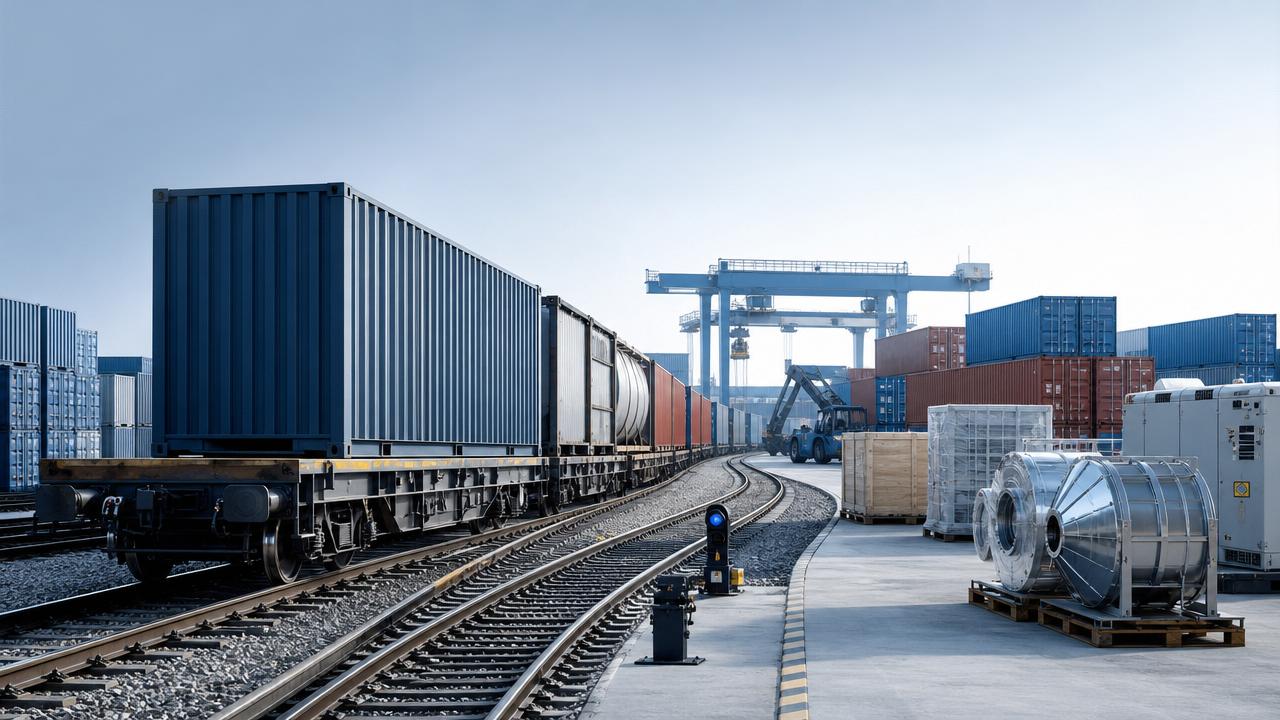
As trade routes realign in 2026, rail operators, manufacturers, and infrastructure planners face mounting uncertainty across sourcing, lead times, compliance, and corridor reliability.
For business evaluators, understanding the impact of trade on rail supply chain performance is now essential to judging project viability, supplier resilience, and long-term investment risk.
Why Rail Supply Chain Risk Is Rising Faster Than Many Procurement Models Assume
The core issue for evaluators is not whether disruption will occur, but where it will emerge first and how quickly it can undermine commercial assumptions.
In 2026, the impact of trade on rail supply chain conditions is expanding beyond tariffs and customs delays into engineering qualification, parts localization, sanctions exposure, and route volatility.
That matters because rail projects are unusually sensitive to long lead items, standards compliance, and system integration.
A delayed axle, signaling module, traction converter, or turnout machine can hold up rolling stock delivery, corridor commissioning, or maintenance readiness across an entire asset program.
For business assessment teams, the practical conclusion is clear: traditional cost comparison is no longer enough.
Supplier resilience, regulatory adaptability, and corridor-specific risk now deserve the same weight as price, capacity, and technical fit.
What Business Evaluators Need to Know Before Approving Rail Projects in 2026
Most target readers are trying to answer a disciplined set of questions before approving vendors, investment cases, or expansion plans.
Can suppliers still deliver on schedule if trade conditions shift?
Will changing import controls affect component availability or documentation?
Can the selected design be supported if country-of-origin rules tighten?
Will corridor bottlenecks increase lifecycle cost even if initial procurement appears competitive?
These are not only procurement concerns.
They influence revenue timing, project bankability, maintenance continuity, and contractual exposure across freight, infrastructure, and systems engineering portfolios.
A locomotive order with stable pricing but unstable subcomponent sourcing can become a financial risk if acceptance timelines slip by two quarters.
A signaling package aligned with one regulatory regime may also require expensive redesign if border integration standards or telecom restrictions change.
The Main Trade Shifts Driving Rail Supply Chain Exposure
Several trade changes are likely to shape rail procurement and engineering decisions in 2026.
First, regionalization is accelerating.
Buyers increasingly prefer supply bases closer to deployment markets, not only for speed but for political and compliance resilience.
That can improve continuity, yet it may reduce access to specialized components that remain concentrated in a few manufacturing centers.
Second, export controls are becoming more relevant for advanced rail systems.
Digital signaling, communications hardware, onboard control electronics, and industrial software are more exposed to cross-border restrictions than many legacy procurement models assume.
Third, customs screening and product traceability requirements are tightening.
Rail buyers now need clearer evidence of origin, certification lineage, and sub-tier supplier visibility, especially on safety-critical or cyber-sensitive systems.
Fourth, trade route shifts are changing inland transport economics.
Even when a component is available, congestion at ports, border crossings, and inland terminals can make total delivery performance less predictable than quoted lead times suggest.
Which Rail Segments Are Most Vulnerable to Trade Disruption
Not every category faces the same level of risk.
Business evaluators should rank exposure by technical complexity, concentration of suppliers, replacement difficulty, and regulatory approval burden.
Heavy-haul locomotives and rolling stock are highly exposed because propulsion systems, braking packages, bearings, and electronic subsystems often come from multinational supply chains.
Interruption at one specialist supplier can delay complete vehicle acceptance.
Smart signaling and communications may carry even greater strategic risk.
CBTC, ETCS, GSM-R, and related digital interfaces depend on interoperable software, certified hardware, and disciplined version control.
If trade restrictions affect one embedded module or telecom element, recertification or redesign may follow.
Rail infrastructure and track maintenance equipment also face risk, particularly where turnout systems, inspection sensors, and mechanized maintenance machinery rely on imported control units.
Intermodal rail-port systems are vulnerable to wider logistics volatility.
When trade lanes shift, terminal equipment demand can surge in one region while installed network assumptions become outdated in another.
How the Impact of Trade on Rail Supply Chain Performance Shows Up Financially
Risk becomes meaningful to evaluators when it changes economics, timelines, or downside exposure.
The impact of trade on rail supply chain performance usually appears in five measurable ways.
First, lead times extend, reducing schedule reliability.
A 10 percent delay in imported control components can become a much larger commissioning delay when testing windows, contractor sequencing, and site readiness are linked.
Second, inventory cost rises.
Operators and EPC contractors may need to carry more strategic stock, especially for high-failure or long-cycle components.
Third, qualification costs increase.
Alternative suppliers are useful only if their products meet technical, safety, and interoperability standards without creating hidden engineering work.
Fourth, contract risk grows.
Penalty clauses, liquidated damages, and performance guarantees become more expensive when supply predictability weakens.
Fifth, asset lifecycle cost becomes less certain.
A competitively priced procurement package can lose value if spare parts, software updates, or repair support become difficult later.
How to Evaluate Supplier Resilience Beyond Basic Capacity Claims
In 2026, supplier resilience should be tested with more rigor than standard prequalification questionnaires typically provide.
Business evaluators should ask where critical subcomponents are made, how many approved alternatives exist, and what percentage of value depends on single-country sourcing.
They should also verify whether the supplier has previously managed design localization, substitution approval, or emergency requalification without serious delivery failure.
Another important factor is standards readiness.
Suppliers aligned with UIC, EN, or AAR frameworks may still vary significantly in documentation quality, configuration control, and change management discipline.
For technical systems, resilience is not only about production continuity.
It is about the ability to preserve certification, interoperability, and supportability when the supply base changes.
Financial health matters as well.
Suppliers facing margin pressure from trade volatility may cut buffer inventory, delay tooling investment, or pass through sudden surcharges after contract award.
That can create hidden exposure for buyers who relied too heavily on headline bid price.
Practical Red Flags That Often Signal Hidden Rail Supply Chain Risk
Some warning signs appear before formal disruption occurs.
If a supplier offers unusually short lead times without explaining sub-tier sourcing, evaluators should investigate whether assumptions are outdated or unsupported.
If compliance documents do not clearly identify component origin or certification scope, future customs, audit, or acceptance problems may follow.
Frequent engineering change notices can also indicate unstable sourcing, especially where electronic modules or communication interfaces are involved.
Another red flag is overdependence on one logistics corridor.
Even technically strong suppliers can become unreliable if most shipments rely on a port, border, or region with rising volatility.
Finally, weak aftersales structure should not be ignored.
Many procurement teams focus on initial delivery, but long-term rail performance depends on spare parts, software maintenance, field service, and configuration support.
Where those capabilities are geographically concentrated, trade shifts can become operational risk long after project handover.
What Stronger Risk Mitigation Looks Like in Rail Procurement and Project Planning
Mitigation should start before tender finalization, not after disruption appears.
One effective approach is to classify components by criticality and substitutability.
This helps evaluators distinguish between items that can be dual-sourced quickly and those that require long technical approval cycles.
Procurement models should also include corridor-aware delivery assumptions.
Instead of accepting factory lead times at face value, project teams should model customs, inland transfer, staging, and border clearance variability.
Contract structures can be improved as well.
Clear obligations on origin disclosure, change notification, strategic stockholding, and approved alternates reduce ambiguity when conditions shift.
For large rail programs, early engagement with engineering, compliance, and operations teams is essential.
This prevents the common mistake of selecting a low-cost supply option that later proves difficult to certify, maintain, or integrate.
Some buyers may also benefit from regional service hubs or localized assembly arrangements, especially where demand continuity justifies the investment.
How Trade Shifts Should Change Investment Screening for Rail Assets and Corridors
For investment and commercial evaluation teams, the main adjustment is methodological.
Risk analysis should move from static supplier review to dynamic scenario testing.
That means asking how the business case performs if lead times stretch, one supplier becomes unavailable, or compliance costs rise mid-project.
Projects with narrow schedule margins or high dependency on imported specialist systems deserve closer scrutiny.
It is also useful to compare resilience at corridor level.
A rail freight investment may look attractive based on demand growth, but corridor fragility can erode returns if maintenance equipment, spare parts, or signaling support are difficult to sustain.
Likewise, rolling stock programs should be assessed not only on acquisition economics but on support ecosystem strength across the full operating horizon.
In this environment, resilient assets may deserve a premium.
A slightly higher upfront cost can be justified when it lowers delay risk, protects service continuity, and preserves lifecycle value under changing trade conditions.
2026 Outlook: What a Balanced Judgment Looks Like
Rail supply chain risk in 2026 is rising, but it is not uniform and it is not unmanageable.
The best decisions will come from separating noise from structural exposure.
Business evaluators should focus on where trade shifts directly affect technical integrity, delivery reliability, and long-term maintainability.
They should be cautious about offers that appear commercially attractive but rely on opaque sourcing, narrow certification pathways, or fragile logistics assumptions.
At the same time, not every globally sourced rail product is high risk.
Well-governed suppliers with diversified manufacturing, strong standards alignment, and transparent sub-tier control may still offer dependable value.
The difference lies in evidence, not presentation.
Conclusion
The impact of trade on rail supply chain performance is now a strategic evaluation issue, not a secondary procurement detail.
In 2026, trade shifts can affect rail programs through sourcing concentration, compliance complexity, route instability, and lifecycle support constraints.
For business evaluators, the most useful response is disciplined scrutiny of supplier resilience, component criticality, contractual safeguards, and corridor-level assumptions.
Projects that account for these realities early will be better positioned to protect delivery schedules, preserve investment quality, and sustain reliable rail operations in a less predictable trade environment.
Industry Briefing
Get the top 5 industry headlines delivered to your inbox every morning.