
Are China Europe railway express trends still worth tracking

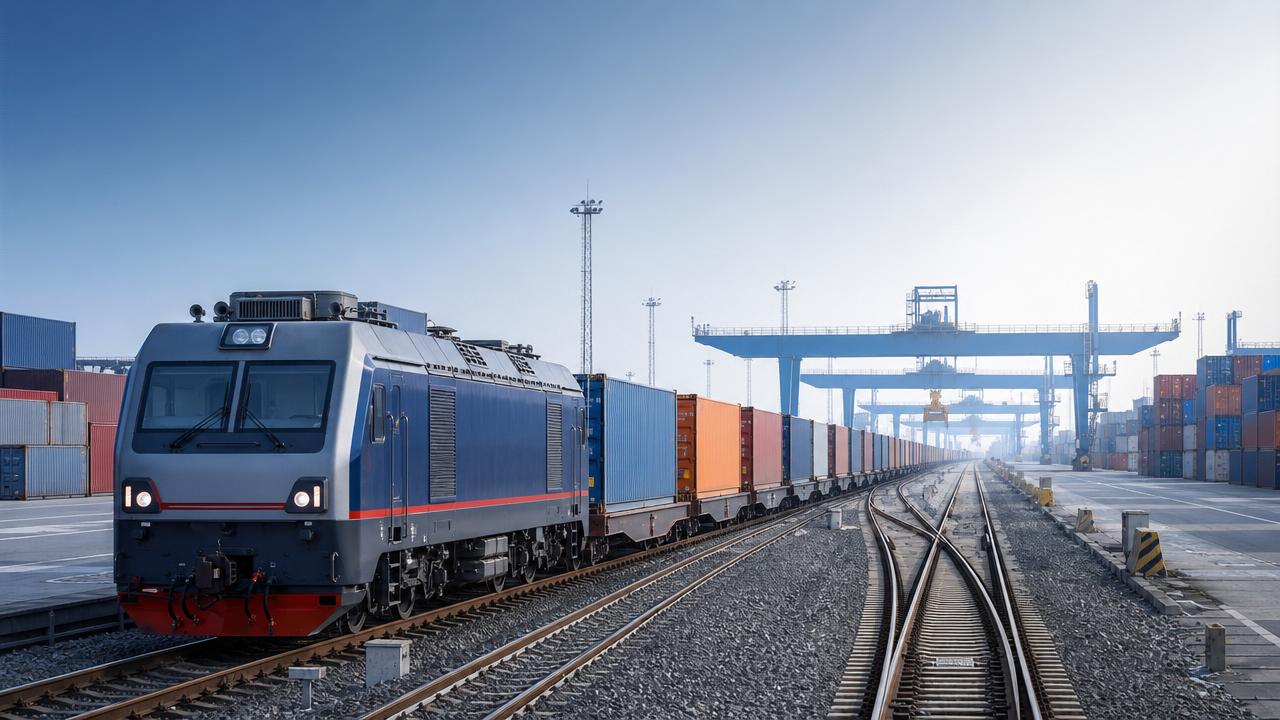
Why china europe railway express trends still matter in current logistics evaluation
For business evaluators assessing Eurasian logistics risk, china europe railway express trends remain highly relevant.
Changes in corridor capacity, customs alignment, energy pricing, and sanctions policy continue to reshape rail economics and delivery confidence.
Rail still occupies a strategic middle ground between sea and air.
That position makes china europe railway express trends valuable for judging speed, resilience, carbon impact, and network optionality.
For a platform like G-RFE, trend tracking is not only about volumes.
It also involves signaling reliability, border transfer efficiency, heavy-haul asset utilization, and intermodal node performance.
When these technical layers improve, corridor value rises even if short-term sentiment remains mixed.
Which background conditions make china europe railway express trends worth tracking
The relevance of china europe railway express trends depends on the scenario being evaluated.
Some cases prioritize transit time.
Others prioritize continuity, customs predictability, emissions reduction, or engineering-led corridor modernization.
Rail becomes more attractive when sea routes face congestion, vessel schedules become unstable, or urgent replenishment needs exceed maritime flexibility.
Rail also gains strategic weight when air freight becomes too expensive for medium-value cargo.
At the same time, trend relevance weakens when geopolitical barriers raise route uncertainty faster than infrastructure can compensate.
This is why china europe railway express trends should be read through corridor quality, not headline volume alone.
Core background signals to watch
- Border crossing efficiency and gauge-change handling
- Locomotive availability and traction power utilization
- Terminal dwell time at inland hubs and dry ports
- Customs digitization and data-sharing maturity
- Energy costs, insurance costs, and security surcharges
- ETCS, GSM-R, or comparable signaling modernization
Scenario one: time-sensitive cargo with cost pressure
This scenario is where china europe railway express trends often remain most compelling.
The cargo is too valuable or time-sensitive for ocean freight, yet too cost-sensitive for regular air use.
Examples include electronics, engineered components, seasonal goods, and replenishment inventory with narrow service windows.
The key judgment is not the advertised transit time.
The real question is end-to-end consistency, including first-mile loading, border transfer, customs release, and final inland distribution.
If china europe railway express trends show improving schedule adherence and terminal coordination, rail can protect margin while preserving speed.
Core judgment points
- Can corridor transit remain stable during peak weeks?
- Are intermodal transfers digitized and visible?
- Do inland terminals support rapid container turnarounds?
- Are surcharge mechanisms transparent enough for budgeting?
Scenario two: supply chain resilience under route disruption
Another reason to monitor china europe railway express trends is resilience planning.
When seaports face strikes, weather disruption, canal constraints, or severe congestion, inland rail corridors become strategic alternatives.
In this scenario, rail is not always the cheapest mode.
Its value comes from preserving continuity, reducing single-route dependence, and creating modal diversification.
China europe railway express trends help reveal whether such fallback capacity is practical or only theoretical.
Resilience depends on rolling stock allocation, border operating discipline, and cross-country policy coordination.
G-RFE’s engineering lens is especially useful here, because hard infrastructure determines whether diversion plans can scale under pressure.
Scenario three: low-carbon transport commitments with operational constraints
Sustainability targets have made china europe railway express trends more important for modal planning.
Rail generally offers lower emissions than air and can outperform long maritime detours in some carbon-accounting frameworks.
However, this scenario requires care.
The environmental case depends on traction mix, network electrification, terminal efficiency, and empty repositioning levels.
If china europe railway express trends show upgrades in electrified corridors, intelligent dispatching, and better train loading, the carbon advantage becomes stronger.
This matters for evaluation frameworks that combine cost, lead time, and emissions in one corridor score.
Scenario four: infrastructure and signaling upgrades reshape corridor value
Some of the most meaningful china europe railway express trends are technical rather than commercial.
Track renewal, axle-load enhancement, ETCS alignment, GSM-R coverage, automated inspection, and smart yard management can change corridor performance.
These engineering shifts often appear before major freight growth becomes visible.
That makes them early indicators of future competitiveness.
For cross-border freight evaluation, technical compatibility is not a background detail.
It directly affects punctuality, safety margins, maintenance intervals, and network throughput.
How different scenarios change what should be tracked
Practical recommendations for scenario-fit evaluation
- Use corridor-level KPIs, not only average transit claims.
- Separate physical infrastructure strength from temporary policy support.
- Track border dwell variance, not just mean dwell time.
- Assess signaling and communications modernization as leading indicators.
- Compare rail against both sea and air under disruption scenarios.
- Evaluate dry port and intermodal hub quality near destination markets.
- Review insurance, compliance, and rerouting clauses before relying on rail.
These steps make china europe railway express trends actionable instead of purely observational.
Common misjudgments when reading china europe railway express trends
A frequent mistake is treating all Eurasian rail corridors as operationally similar.
In reality, route quality differs sharply by border regime, terminal design, traction resources, and security exposure.
Another mistake is overemphasizing freight volume headlines.
Volume can rise while predictability falls.
A third error is ignoring engineering constraints.
If track maintenance cycles, wagon availability, or signaling compatibility are weak, commercial promises may not hold.
The strongest reading of china europe railway express trends combines policy signals with technical evidence.
So, are china europe railway express trends still worth tracking
Yes, but only when they are interpreted through scenario relevance.
China europe railway express trends still matter for mid-speed logistics, resilience planning, lower-carbon transport, and corridor engineering assessment.
They are most valuable when linked to measurable indicators such as border dwell, network electrification, signaling maturity, and terminal productivity.
For organizations working across railway freight, infrastructure, and intermodal systems, that perspective supports better long-term decisions.
The next practical step is to build a corridor scorecard.
Track monthly china europe railway express trends across operations, policy, and engineering performance, then compare them against sea and air alternatives.
That approach turns trend watching into a disciplined basis for action.
Industry Briefing
Get the top 5 industry headlines delivered to your inbox every morning.