
Why raw material swings keep pushing wagon costs higher

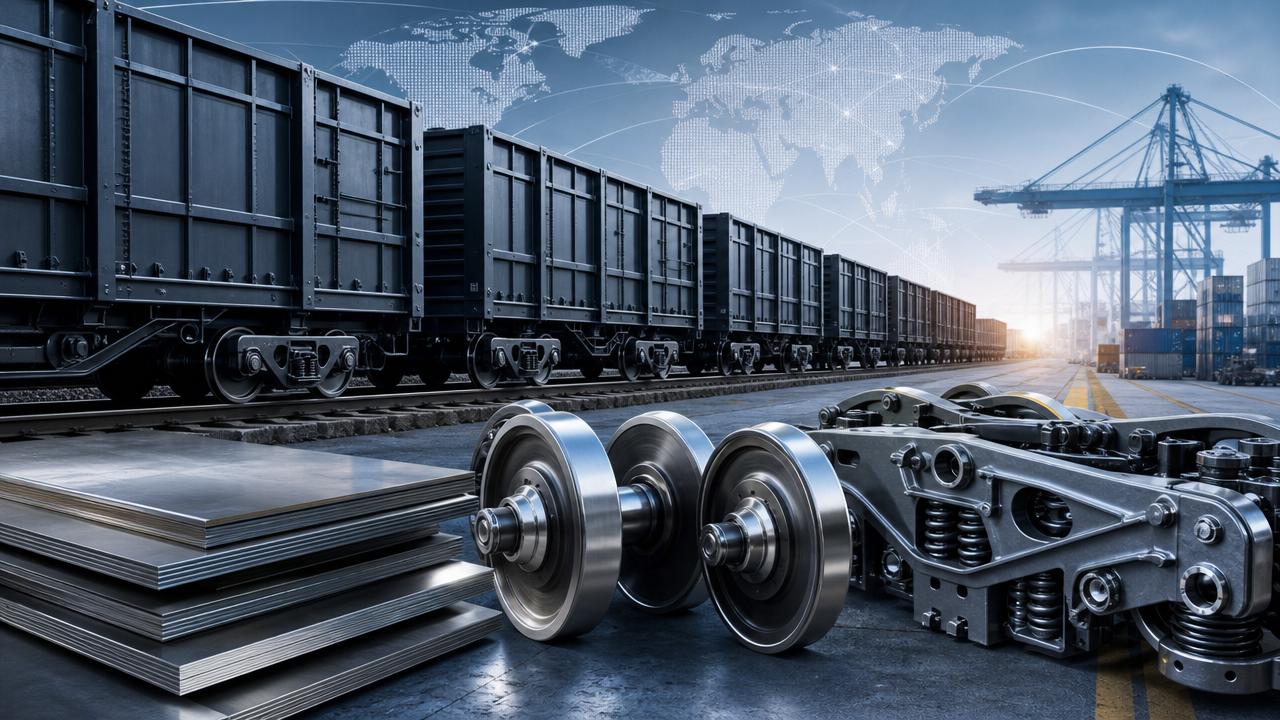
For finance approvers overseeing rail asset budgets, the impact of raw material on wagon costs is no longer a marginal issue but a decisive factor in capex planning.
Volatility in steel, aluminum, energy, and components now reshapes tender pricing, supplier exposure, and long-term lifecycle assumptions across freight wagon programs.
In the wider transport and engineering market, this pressure reflects deeper industrial shifts, not temporary noise. That is why wagon pricing remains structurally elevated.
Raw material exposure in wagon manufacturing
A freight wagon is a steel-intensive asset. Its frame, body, bogie structures, coupler supports, and many fabricated parts depend on commodity-linked inputs.
The impact of raw material on wagon costs begins with carbon steel plate, sections, castings, forgings, and wear-resistant grades used in heavy-duty applications.
It also extends beyond metal. Energy, welding consumables, brake systems, bearings, coatings, electronics, and logistics all move with upstream input inflation.
When these categories rise together, wagon builders cannot fully offset the increase through productivity gains. The cost base itself has shifted upward.
Main cost-sensitive inputs
- Steel plate and structural sections for underframes and car bodies
- Aluminum or stainless materials in specialized lightweight designs
- Wheelsets, axles, cast bogie parts, and forged safety components
- Brake equipment, couplers, draft gear, and suspension assemblies
- Energy, gas, transport, and factory overhead tied to industrial commodities
Why price swings remain persistent rather than temporary
The impact of raw material on wagon costs remains high because wagon supply chains are global, energy-intensive, and exposed to policy, freight, and capacity constraints.
Steel prices no longer move only with demand. They also react to electricity tariffs, coking coal, scrap availability, emissions rules, and furnace utilization rates.
Aluminum and alloy inputs add another layer of uncertainty. Smelting economics, power markets, and trade restrictions can push conversion costs sharply upward.
Even when benchmark commodity prices cool, fabricated rail components may stay expensive because specialist capacity is limited and certification takes time.
Key forces behind sustained volatility
How the impact of raw material on wagon costs flows through budgets
The impact of raw material on wagon costs does not stop at the ex-works unit price. It changes the entire financial profile of a wagon investment.
A higher steel price increases quoted wagon cost directly. It also raises spare parts exposure, mid-life repair assumptions, and working capital needs.
Long manufacturing lead times magnify this problem. Projects approved on one price basis may face later escalation before production slots are secured.
This creates variance between budget approval, tender return, contract award, and delivery-stage cash flow. That variance can alter fleet renewal timing.
Budget areas most affected
- Initial capex for new wagon procurement
- Framework pricing for multi-year fleet programs
- Maintenance reserve assumptions for structural parts
- Inventory strategy for critical replacement components
- Residual value estimates for asset planning models
Current market signals across the wider industrial landscape
The broader industrial environment helps explain why the impact of raw material on wagon costs remains difficult to forecast with confidence.
Infrastructure spending is still strong in many regions. Rail, ports, mining, and heavy construction compete for the same steel-intensive production capacity.
At the same time, decarbonization standards are changing material choices. Higher-strength steel, recycled content, and traceable sourcing can command premiums.
Digital wagons also add more sensors, wiring, and communication devices. These systems introduce electronics exposure alongside traditional metal cost exposure.
What recent industrial signals usually indicate
- Rising energy contracts often precede higher fabricated metal quotations
- Longer lead times for castings often signal future wagon quote pressure
- Freight congestion often appears first in component availability
- Policy-driven carbon rules may widen the gap between mills and regions
Typical wagon categories and their sensitivity to input swings
Not every wagon reacts the same way. Material intensity, axle load, fabrication complexity, and onboard equipment determine cost sensitivity.
Practical responses for stronger wagon cost control
Because the impact of raw material on wagon costs is structural, response strategies should combine procurement discipline, engineering choices, and timing control.
Useful actions during specification and tendering
- Separate fixed-price elements from indexed material elements in bid formats
- Request transparent weight breakdowns for major steel and alloy content
- Compare alternative designs using lifecycle cost, not only purchase price
- Check certification bottlenecks for wheelsets, bogies, and braking systems
- Evaluate supplier resilience across geography, power cost, and logistics routes
Useful actions after contract award
- Track commodity indices relevant to contracted escalation formulas
- Align production milestones with approved funding windows
- Review change requests quickly to avoid exposure to later price resets
- Plan spare parts stocking around likely raw material lead-time risk
Decision value for future fleet planning
Understanding the impact of raw material on wagon costs improves more than price negotiation. It strengthens timing, risk allocation, and whole-life asset planning.
It also helps compare competing fleet options fairly. A lighter design may cost more initially but reduce future material-linked maintenance exposure.
Likewise, a supplier with stronger upstream contracts may protect delivery certainty better than a lower bidder with fragile material access.
In this sense, the impact of raw material on wagon costs has become a strategic indicator of project quality, not just a procurement variable.
Next-step focus for better-defended approvals
A robust wagon business case should now test several material-price scenarios before approval. Base, stress, and delayed-award cases provide a clearer funding picture.
It should also map which cost elements are truly index-driven and which reflect supplier margin, complexity, compliance, or constrained specialist capacity.
When that analysis is built early, decisions become faster, assumptions become easier to defend, and capex risk becomes more visible.
For any rail investment pipeline, treating the impact of raw material on wagon costs as a core planning input is now essential to realistic budgeting.
Industry Briefing
Get the top 5 industry headlines delivered to your inbox every morning.