
Wagon Volume Capacity Benchmarks: Why Similar Specs Deliver Less Space

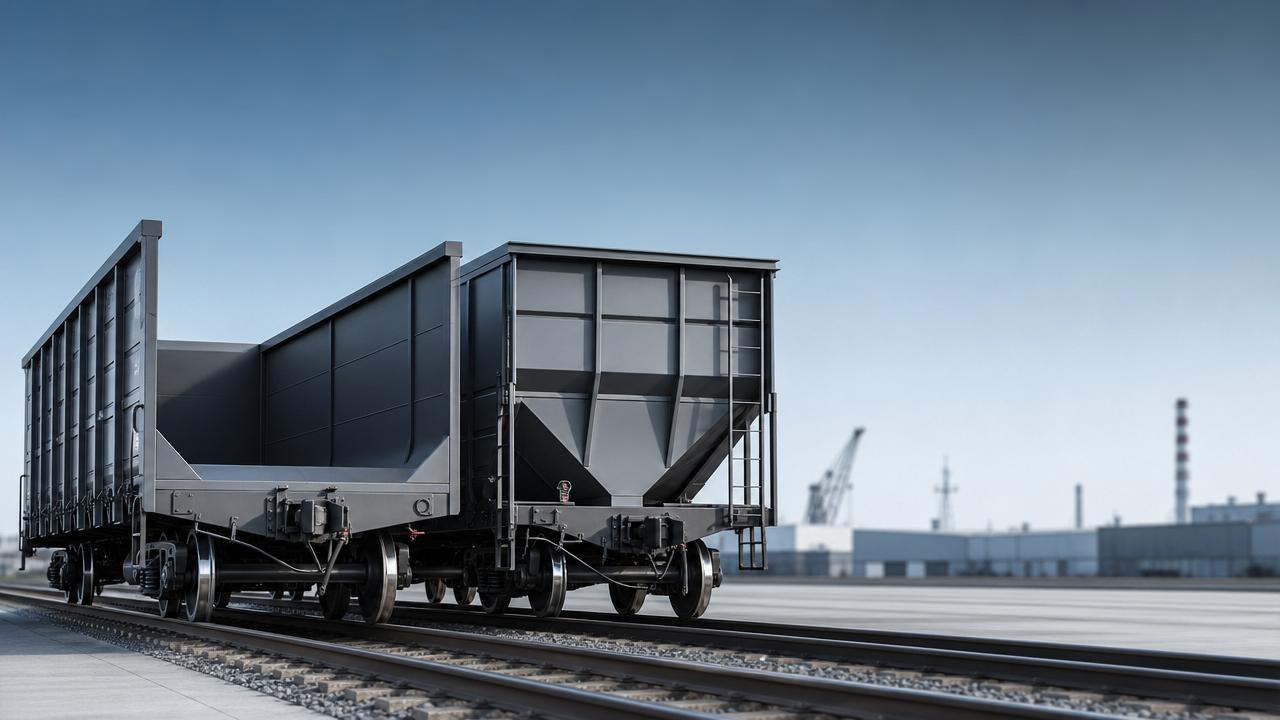
For procurement teams comparing freight wagons, identical dimensions on paper do not always translate into equal usable space. This guide explores wagon volume capacity benchmarks to reveal why similar specs can deliver less room in real operations, helping buyers assess design efficiency, loading constraints, and standard compliance before making high-value fleet decisions.
Why do similar wagon specs produce different usable volume?
In rail freight procurement, nominal dimensions often create a false sense of equivalence. Two wagons may share length over couplers, body width, and axle load limits, yet deliver noticeably different cubic loading space once structure, safety margins, and commodity restrictions are considered.
That gap matters because wagon volume capacity benchmarks are not only about gross geometry. They also reflect internal contour, door opening width, sidewall intrusion, floor profile, tare weight, bogie arrangement, and the way the wagon fits the loading gauge of the target corridor.
For procurement professionals, the real question is not “What is the advertised volume?” but “How much saleable, operationally usable volume can this wagon deliver under my route, cargo, and compliance conditions?”
- External dimensions may look similar while internal bracing, hopper angles, or reinforced end walls reduce loadable space.
- Volume can be constrained by commodity angle of repose, pallet patterns, liner use, or discharge geometry.
- Route-specific loading gauge and safety clearance rules can limit fill height before the wagon ever reaches its nominal cubic rating.
Definition: nominal volume versus usable volume
Nominal volume usually refers to the theoretical interior volume enclosed by the carbody. Usable volume is the space that can actually be filled without violating load distribution rules, door function, discharge performance, maintenance access, or route restrictions. The difference can be commercially significant across fleet life.
Which wagon volume capacity benchmarks should buyers compare first?
The table below summarizes the most practical wagon volume capacity benchmarks for purchasing teams. It is designed to move the discussion beyond headline dimensions and toward measurable operational value.
A disciplined buyer will compare at least these five indicators. When a supplier promotes only one headline volume number, the risk is that hidden design penalties remain buried in drawings rather than visible in the commercial proposal.
A practical rule for comparison
Request three figures for every wagon: gross internal volume, usable operational volume, and commodity-specific loading volume. This simple step often reveals why near-identical cars behave differently in grain, aggregates, steel products, containerized inserts, or bagged bulk service.
Where does the lost space usually go in real wagon design?
Lost space is rarely accidental. It is usually the result of structural, operational, or regulatory design choices. Some are justified and improve durability or safety. Others reflect poor optimization for the buyer’s intended traffic mix.
Structural factors
- Thicker sidewalls and internal reinforcements reduce internal width and may interrupt clean loading geometry.
- End-wall strengthening for buff loads or impact protection can consume cubic space at both ends.
- Sloped floors, hopper transitions, and discharge gates improve unloading but lower true fillable volume.
Operational factors
- Forklift entry clearances, grab access, and liner attachment points may reduce packing density.
- Door framing, roof openings, and hatch spacing affect how quickly the wagon can be filled to safe limits.
- Uneven weight distribution rules can force under-filling in one section of the body.
Regulatory and route factors
A wagon optimized for one network may lose effective space on another due to loading gauge, axle load, brake equipment packaging, or interoperability limits. This is one reason G-RFE emphasizes corridor-based assessment rather than standalone catalog comparison.
How should procurement teams compare wagon designs side by side?
The next table shows a realistic comparison framework for wagon volume capacity benchmarks. It focuses on the questions buyers should raise during technical and commercial clarification.
This comparison method is especially valuable when several suppliers appear similar on brochure data. Once drawings, terminal process, and route conditions are added, the lowest-cost option may no longer be the most economical fleet choice.
Which application scenarios make volume efficiency more critical?
Not every commodity responds the same way to wagon volume capacity benchmarks. In some flows, weight limits dominate. In others, cubic efficiency is the main profit driver.
High-cube, lower-density cargo
Agricultural products, packaged materials, certain recyclables, and lightweight industrial feedstocks are often cube-limited before mass-limited. For these applications, small reductions in usable volume can directly reduce tons moved per train slot.
Bulk flows needing rapid discharge
Coal, minerals, aggregates, or industrial powders may prioritize unloading performance. Here, buyers should balance cubic loss against discharge reliability, residue reduction, and cycle time in rotary or bottom-discharge systems.
Intermodal or multi-commodity corridors
Where wagons rotate across several cargo types, flexible internal geometry and corridor compliance become more important than the single highest advertised volume. G-RFE’s cross-pillar perspective is useful in these mixed logistics environments because wagon choice must align with terminals, signaling-driven train paths, and infrastructure limitations.
What standards and compliance checks affect wagon volume capacity benchmarks?
Buyers should never review wagon volume in isolation from standards. International freight networks require design choices that reconcile capacity with structural safety, braking integration, gauge limits, and maintainability.
The table below maps common compliance themes to their impact on usable space and procurement review.
For multinational or intercontinental projects, G-RFE’s benchmarking approach helps procurement teams evaluate wagons against technical, operational, and regulatory interfaces instead of checking only body dimensions. That wider view reduces mismatch risk during deployment.
How can buyers build a stronger RFQ and avoid specification traps?
Many procurement issues begin in the RFQ. If the request asks only for nominal capacity and price, suppliers will optimize around those two variables. A better RFQ forces comparability and reveals trade-offs early.
- Specify the target cargo mix, bulk density range, and whether loading is weight-limited or cube-limited.
- Require sectional drawings showing internal clear dimensions, bracing, discharge geometry, and opening sizes.
- Request usable operational volume, not just geometric volume, with assumptions stated clearly.
- Ask for route compatibility under the intended loading gauge, axle load, and infrastructure conditions.
- Include turnaround targets, unloading method, maintenance access, and cleaning requirements in the technical schedule.
This is where a data-led technical platform adds value. G-RFE supports decision-makers by translating broad market offerings into engineering comparison logic aligned with heavy-haul rolling stock, intermodal interfaces, and international standards.
What are the most common procurement misconceptions?
“Bigger published volume always means higher transport productivity”
Not always. If tare weight rises too much, or if loading and unloading take longer, train throughput may suffer despite a larger published cubic figure.
“If two wagons share external dimensions, they are interchangeable”
Interchangeability depends on more than size. Internal form, maintenance strategy, coupler systems, brake configuration, and route acceptance all influence whether one design can replace another efficiently.
“The lowest acquisition cost is the safest buying decision”
A cheaper wagon that carries less usable cargo or generates residue, delays, and higher cleaning costs may lose the cost case over the life of the fleet. Wagon volume capacity benchmarks should therefore be connected to life-cycle economics.
FAQ: what do buyers ask most about wagon volume capacity benchmarks?
How should I verify usable volume during supplier evaluation?
Ask for internal cross-sections, 3D loading diagrams, and commodity-specific assumptions. Verification is stronger when the supplier shows how bracing, floor transitions, and opening geometry affect fill level and discharge behavior.
Which matters more: volume or payload?
It depends on cargo density and route limits. Light bulk cargo tends to be volume-driven, while dense minerals often hit axle load first. Good procurement practice compares payload-to-volume ratio under actual corridor rules rather than treating either metric alone as decisive.
Can standards compliance reduce commercial capacity?
Yes. Structural reinforcement, gauge compliance, and equipment packaging can reduce usable internal space. The key is not to avoid compliant design, but to understand how efficiently a manufacturer converts compliant envelope into revenue-earning capacity.
What should I ask when wagons are intended for multiple corridors?
Request a corridor matrix covering gauge, axle load, interoperability conditions, and likely commodity mix. Multi-network fleets need stronger benchmarking because a wagon that performs well on one route may become partially constrained elsewhere.
Why work with us when benchmarking wagon capacity?
G-RFE supports procurement teams that need more than a brochure comparison. Our technical intelligence model connects rolling stock capacity data with infrastructure conditions, signaling-driven corridor realities, intermodal interfaces, and the international frameworks commonly referenced across UIC, EN, and AAR environments.
You can consult us for parameter confirmation, wagon volume capacity benchmarks, supplier comparison logic, route-fit review, delivery planning considerations, customization trade-offs, and compliance-oriented selection support. We also help procurement teams sharpen RFQs so that quotations become easier to compare on usable value rather than surface claims.
- Need to compare two wagon concepts with similar dimensions but different usable volume outcomes? We can structure the benchmark criteria.
- Need guidance on route compatibility, loading gauge impact, or payload-to-volume trade-offs? We can help define the decision matrix.
- Need support for quotation review, delivery discussions, customization options, or standards-related clarification? We can help frame the technical questions before award.
If your team is evaluating new freight wagons, fleet renewal, or corridor-specific rolling stock, contact us with your target cargo, route constraints, and candidate specifications. A stronger benchmark at the procurement stage usually prevents much larger losses in operation.
Industry Briefing
Get the top 5 industry headlines delivered to your inbox every morning.