
Railway Infrastructure Investment Reports: Key Cost Signals

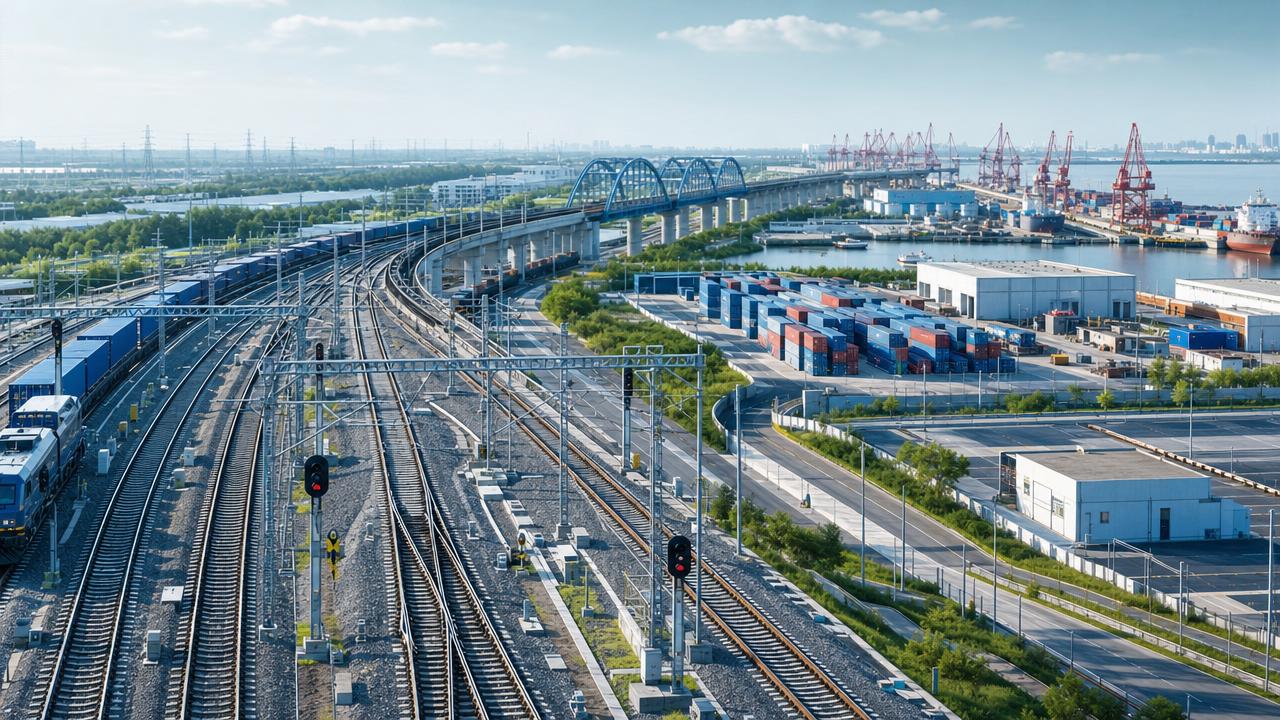
For financial approvers evaluating large-scale rail programs, railway infrastructure investment reports provide the most practical lens on capital intensity, lifecycle exposure, and funding risk. A credible report does more than list project budgets. It reveals where track renewal, signaling modernization, civil works, rolling stock compatibility, and maintenance obligations may reshape long-term cost performance. In global freight corridors, where engineering standards, safety compliance, and intermodal efficiency must align, reading these reports with a structured checklist improves comparability and reduces avoidable funding mistakes.
Why railway infrastructure investment reports need checklist-based review
Large rail programs often look similar at headline budget level, yet their cost behavior differs sharply once route conditions, signaling scope, axle-load targets, and maintenance assumptions are tested. That is why railway infrastructure investment reports should be reviewed through a checklist rather than by summary tables alone.
A checklist approach helps separate visible capex from hidden obligations. It also supports cross-border rail planning, where standards such as UIC, EN, AAR, ETCS, CBTC, and GSM-R influence both procurement structure and future upgrade cost. In the broader industrial landscape, rail assets connect mines, ports, logistics parks, factories, and inland freight hubs, so underestimating one subsystem often distorts the economics of the whole corridor.
Core checklist: key cost signals in railway infrastructure investment reports
Use the following checklist to evaluate whether railway infrastructure investment reports are decision-ready or only budget-oriented.
- Verify route baseline conditions, including soil stability, drainage quality, bridge age, tunnel clearance, and existing axle-load limits before accepting any unit-cost benchmark.
- Separate track formation, rail, sleeper, ballast, turnout, and welding costs, because blended civil totals usually hide the highest renewal risk items.
- Check signaling scope in detail, covering ETCS, CBTC, interlocking, train detection, fiber backbone, power redundancy, and cybersecurity compliance requirements.
- Confirm rolling stock interface assumptions, especially platform geometry, braking profile, locomotive power demand, and wagon axle-load compatibility with upgraded infrastructure.
- Review possession strategy and traffic disruption cost, because freight diversions, temporary speed restrictions, and construction windows can materially change project economics.
- Examine maintenance model assumptions, including tamping cycles, rail grinding frequency, turnout inspection intervals, and spare parts localization strategy over asset life.
- Test energy and utility dependencies, such as traction power upgrades, substations, backup generation, telecom shelters, and water management for remote sections.
- Identify land, permitting, environmental mitigation, and community interface costs early, since these often move later than engineering packages and strain funding schedules.
- Compare local content expectations with supplier capability, because domestic manufacturing targets can alter lead times, quality assurance cost, and certification pathways.
- Stress-test contingency logic against inflation, steel pricing, foreign exchange exposure, and contractor market tightness instead of relying on generic percentage buffers.
How to read cost signals by asset category
Track and civil works
In many railway infrastructure investment reports, track cost appears straightforward but rarely is. Earthworks, drainage correction, embankment reinforcement, and bridge rehabilitation often drive overruns more than rail steel itself. Heavy-haul or mixed-traffic corridors are especially sensitive because higher axle loads accelerate substructure stress and turnout wear.
A strong report should distinguish new-build and brownfield renewal costs. It should also show whether design speed, tonnage growth, and climate resilience assumptions justify the selected specification. If these links are missing, cost certainty is weak.
Signaling and communications
Signaling packages create some of the most misunderstood cost signals in railway infrastructure investment reports. The initial equipment value may look manageable, but integration testing, software validation, telecom redundancy, and legacy migration can expand implementation cost over several budget cycles.
Reports should clarify whether the scheme includes only field hardware or a complete operational architecture. That means interlocking migration, control center upgrades, GSM-R or successor communications, onboard fitment exposure, and cybersecurity obligations.
Maintenance and lifecycle burden
The most useful railway infrastructure investment reports convert engineering choices into lifecycle cost trajectories. A lower upfront option may produce faster rail wear, more tamping interventions, higher turnout replacement frequency, or expensive specialist maintenance dependence. Lifecycle modeling should therefore be treated as a primary cost signal, not a technical appendix.
Scenario-based interpretation of railway infrastructure investment reports
Freight corridor expansion
For freight corridor expansion, the key question is whether the report links infrastructure spending to actual throughput gain. Double tracking, loop extensions, bridge strengthening, and terminal access upgrades must be assessed together. If one segment remains constrained, the corridor may not monetize as planned.
Pay attention to axle-load assumptions, train length targets, and port or dry port interface capacity. In these projects, railway infrastructure investment reports should show how civil works and operations planning support the same tonnage objective.
Signaling modernization on existing lines
On existing lines, modernization costs are heavily shaped by migration complexity. Reports should state whether old interlockings remain in parallel, whether staff retraining is included, and how possessions will be scheduled without major service degradation. A low installation figure can be misleading if transition cost is omitted.
Intermodal rail-port integration
In intermodal projects, railway infrastructure investment reports should not stop at the rail boundary. Yard layout, crane interface, customs flow, gate automation, and truck circulation affect rail dwell time and therefore overall asset productivity. Cost signals must be read across the full logistics chain.
Commonly overlooked items and risk warnings
Legacy asset data gaps. Many reports rely on incomplete inspection records. When bridge condition, ballast quality, or cable route status is uncertain, later discoveries can rapidly erode contingency.
Interface ownership confusion. Track, signaling, power, telecom, and rolling stock interfaces may sit under different contracts. If responsibility boundaries are vague, claims and delay costs rise.
Understated commissioning periods. Testing windows for ETCS, CBTC, interlocking, and telecom systems often exceed planned durations, particularly where mixed fleets and legacy operating rules remain active.
Misaligned maintenance capability. Advanced systems can lower failure rates, but only if local teams, spare inventory, and diagnostic tools are funded from the start.
Weak inflation treatment. Reports that do not separate labor inflation, steel volatility, imported electronics exposure, and exchange-rate sensitivity can understate real funding needs.
Practical execution steps
- Build a comparison sheet using identical categories across all railway infrastructure investment reports, including civils, signaling, power, interfaces, possessions, and lifecycle maintenance.
- Request cost breakdowns at subsystem level, not just package totals, so risk concentration becomes visible before approval.
- Challenge every throughput claim with operational evidence, especially train length, path capacity, terminal dwell, and maintenance downtime assumptions.
- Model at least three downside cases covering delay, inflation, and underperformance to test resilience of funding structure.
- Align technical standards with future corridor strategy, ensuring today’s investment does not create tomorrow’s interoperability penalty.
Conclusion and next action
Effective use of railway infrastructure investment reports depends on disciplined interpretation of cost signals, not headline budget confidence. The most reliable reports explain how infrastructure condition, systems integration, maintenance burden, and logistics interfaces shape total value over time.
The next practical step is to review each report against a fixed checklist, normalize subsystem costs, and flag unresolved interface or lifecycle assumptions. That process turns railway infrastructure investment reports into actionable decision tools for safer funding, stronger corridor performance, and more durable freight infrastructure outcomes.
Industry Briefing
Get the top 5 industry headlines delivered to your inbox every morning.