
2026 Railway Infrastructure Investment Reports: Track Renewal Risks

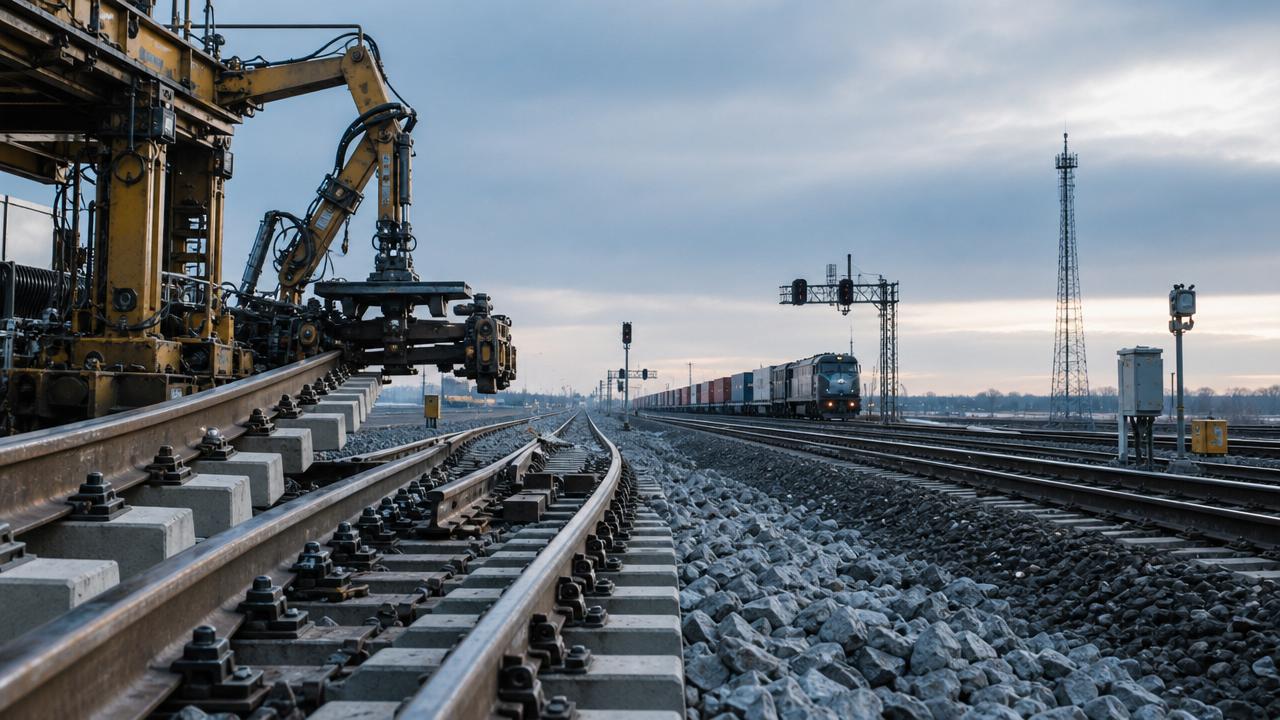
2026 Railway Infrastructure Investment Reports: Track Renewal Risks
As rail networks face heavier axle loads, aging assets, and tightening decarbonization mandates, 2026 railway infrastructure investment reports are becoming essential tools for enterprise decision-makers assessing track renewal risks.
From ballast degradation and sleeper fatigue to signaling constraints, investment choices now require sharper lifecycle, regulatory, and freight reliability judgment.
For G-RFE, the focus is clear: capital planning must connect physical track condition with corridor performance, safety standards, and intermodal freight resilience.
Track Renewal Is Moving From Maintenance Spending To Strategic Risk Control
The 2026 cycle marks a shift in how railway infrastructure investment reports are interpreted across heavy-haul, port-rail, and cross-border corridors.
Track renewal is no longer judged only by kilometers replaced or annual maintenance budgets.
It is increasingly measured against service continuity, axle-load tolerance, energy efficiency, and compliance with UIC, EN, AAR, and national safety regimes.
This matters because freight corridors are becoming more integrated with ports, inland terminals, and industrial production zones.
A single renewal delay can reduce timetable reliability, limit train length, and create cascading congestion at terminals.
Therefore, railway infrastructure investment reports now need to quantify risk exposure, not only capital requirements.
Trend Signals Emerging In 2026 Railway Infrastructure Investment Reports
Several market signals indicate that track renewal decisions are entering a more disciplined investment phase.
Asset owners are reviewing deferred maintenance backlogs against new freight demand, climate stress, and safety inspection data.
Railway infrastructure investment reports increasingly highlight bridge approaches, turnouts, curves, tunnels, yards, and terminal interfaces as priority risk points.
- Higher axle loads are accelerating rail wear, ballast settlement, and sleeper stress.
- Longer freight trains are exposing weak gradients, sidings, and passing-loop limitations.
- Extreme heat and flooding are changing assumptions behind track geometry stability.
- Digital signaling upgrades are forcing renewal teams to coordinate civil and systems work.
- Carbon policy is pushing rail toward higher modal share, raising capacity expectations.
These signals make railway infrastructure investment reports more valuable when they connect engineering detail with network-level commercial consequences.
Why Track Renewal Risk Is Rising Across Freight Corridors
The drivers behind renewal risk are structural, not temporary.
Many corridors were designed for earlier traffic patterns, lighter axle loads, and less demanding timetable expectations.
Today, the railway must carry heavier bulk, containers, energy cargo, and industrial inputs while supporting lower-emission logistics policy.
Strong railway infrastructure investment reports should convert these drivers into comparable investment options.
That means moving beyond descriptive condition data toward probability-weighted cost, capacity, and safety outcomes.
Operational Impacts: Where Renewal Delays Become Business Exposure
Track renewal delays are often underestimated because early symptoms appear manageable.
Small speed restrictions, temporary geometry faults, and localized ballast issues may not immediately disrupt annual freight volumes.
However, the compounded effect can weaken corridor competitiveness and reliability.
For heavy-haul operations, poor track condition raises wheel-rail forces and increases vehicle maintenance demands.
For intermodal rail-port systems, unreliable arrival windows create yard congestion and higher container dwell time.
For engineering programs, uncoordinated renewals can create possession conflicts with bridge, tunnel, electrification, and signaling works.
This is why railway infrastructure investment reports must identify both direct engineering risks and indirect operational penalties.
Key Business Areas Affected By Track Renewal Decisions
- Freight reliability: late trains reduce confidence in rail-based supply chains.
- Rolling stock performance: poor track accelerates component wear and fuel consumption.
- Safety assurance: defects increase inspection burden and regulatory scrutiny.
- Capital efficiency: reactive repairs consume funds that could support strategic upgrades.
- Corridor capacity: speed restrictions reduce path availability and terminal throughput.
What Strong 2026 Railway Infrastructure Investment Reports Should Measure
The quality of railway infrastructure investment reports depends on the indicators selected for investment ranking.
Condition scores alone are insufficient when freight demand, signaling integration, and climate exposure vary across assets.
A practical reporting framework should combine engineering diagnostics, financial analysis, and operational consequence modeling.
- Track geometry degradation rate by corridor segment and traffic class.
- Rail defect frequency, weld failure patterns, and curve wear intensity.
- Ballast fouling, drainage condition, and formation stability.
- Sleeper condition, fastening resilience, and turnout reliability.
- Possession availability, renewal productivity, and contractor capacity.
- Compatibility with ETCS, CBTC, GSM-R, and future digital control systems.
- Lifecycle cost under alternative renewal, grinding, tamping, and replacement strategies.
G-RFE’s technical perspective emphasizes benchmarking these indicators against recognized international practices and corridor-specific operating realities.
That approach helps railway infrastructure investment reports support defensible capital allocation rather than short-term budget balancing.
Capital Allocation Priorities For Renewal Programs
Not every deteriorating track segment requires immediate replacement.
Effective investment planning distinguishes between safety-critical risk, capacity-critical risk, and cost-efficiency opportunity.
Railway infrastructure investment reports should therefore apply transparent prioritization rules.
This type of segmentation makes railway infrastructure investment reports easier to defend during budget review and regulatory consultation.
Technology Integration Is Changing Renewal Economics
Track renewal economics are being reshaped by digital inspection, predictive analytics, and automated engineering machinery.
Unmanned measurement vehicles, wayside sensors, and machine-vision systems are improving defect visibility.
Automated tamping, ballast cleaning, and track-laying equipment can reduce possession time when planning quality is high.
Yet technology also creates integration risk.
Digital signaling, telecommunications, and train control systems depend on stable field infrastructure and accurate asset data.
Railway infrastructure investment reports should therefore assess technology readiness alongside civil engineering requirements.
The best reports evaluate whether data quality supports predictive maintenance or merely produces more disconnected inspection records.
Decision Points To Watch Before Approving 2026 Budgets
Before approving renewal budgets, several decision points deserve close scrutiny.
These points help convert railway infrastructure investment reports into executable programs with measurable outcomes.
- Confirm whether renewal priorities align with freight growth forecasts and port throughput plans.
- Test whether lifecycle cost models include possession disruption and service penalties.
- Check if climate resilience has been priced into drainage, formation, and materials choices.
- Review whether signaling upgrades are synchronized with civil renewal windows.
- Validate contractor capacity, specialized machinery availability, and supply chain lead times.
- Compare renewal standards with UIC, EN, AAR, and local operating requirements.
If these checks are missing, railway infrastructure investment reports may understate project risk and overstate delivery certainty.
A Practical Response Framework For 2026 And Beyond
A stronger response begins with corridor segmentation.
Each line section should be grouped by traffic density, asset age, safety exposure, climate sensitivity, and strategic freight value.
Then, investment options should be tested against multiple scenarios rather than one fixed demand forecast.
This framework strengthens railway infrastructure investment reports by linking engineering choices with strategic network resilience.
Turning Investment Reports Into Executable Renewal Programs
The next step is to translate findings into phased renewal programs.
A practical program should define asset scope, design standards, possession windows, procurement strategy, and performance targets.
It should also maintain a live risk register covering safety, cost, delivery, material availability, and interface management.
G-RFE’s multi-pillar view supports this approach by connecting rolling stock, track maintenance, signaling, intermodal systems, and engineering machinery.
That connection is vital because track renewal rarely succeeds as an isolated civil works package.
It succeeds when infrastructure investment, freight operations, and technical standards move together.
Action Guidance For Capital Planning Teams
Use railway infrastructure investment reports as decision instruments, not static reference documents.
Start by auditing the condition data behind each renewal recommendation.
Then compare renewal priorities with freight forecasts, safety obligations, energy goals, and digital signaling roadmaps.
Finally, convert high-risk segments into funded, scheduled, and monitored work packages.
In 2026, the strongest railway infrastructure investment reports will not simply describe where track is old.
They will show where renewal protects capacity, lowers lifecycle cost, and strengthens the steel arteries of global trade.
Industry Briefing
Get the top 5 industry headlines delivered to your inbox every morning.