
Industrial Environmental News: Impact Checks for Rail Projects

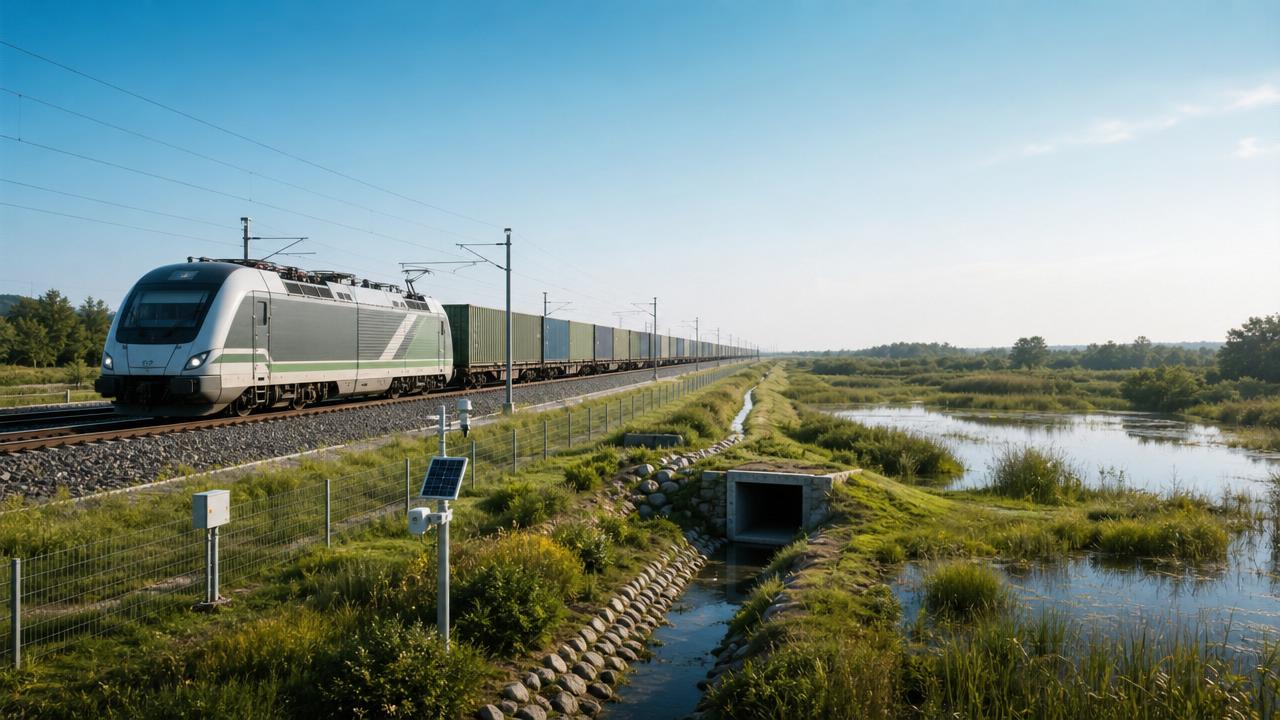
Industrial Environmental News: Impact Checks for Rail Projects
As rail corridors expand to meet low-carbon freight demand, project leaders face tighter scrutiny over emissions, land use, biodiversity, and community disruption.
This industrial environmental news for environmental impact examines how impact checks shape rail planning, approvals, construction, and long-term asset performance.
For heavy rail infrastructure, environmental assessment is no longer a late-stage compliance formality. It is a strategic control point for risk, finance, and delivery certainty.
Environmental Impact Checks in Modern Rail Development
Environmental impact checks are structured evaluations of how a rail project affects natural systems, communities, resources, and operational emissions.
In industrial environmental news for environmental impact, these checks often appear when corridors cross wetlands, forests, dense cities, ports, or agricultural zones.
A complete assessment usually covers baseline conditions, predicted impacts, mitigation measures, monitoring duties, and residual risk after controls are applied.
For railway-freight systems, the review must consider both construction disturbance and the operating footprint of locomotives, terminals, depots, signaling assets, and maintenance yards.
G-RFE tracks these developments through an engineering lens, linking policy signals with track design, rolling stock choices, safety systems, and logistics capacity.
The practical goal is clear. A rail project should reduce transport emissions without transferring unmanaged damage to land, water, habitats, or nearby communities.
Current Industry Signals Behind Stricter Reviews
The regulatory environment for rail investment is becoming more demanding, especially for cross-border freight corridors and large intermodal rail-port systems.
Industrial environmental news for environmental impact now reflects a broader shift from project-by-project approvals toward lifecycle accountability and transparent performance reporting.
These signals matter because approval delays can disrupt procurement, civil works, signaling integration, and terminal readiness.
In industrial environmental news for environmental impact, the strongest rail programs treat environmental evidence as part of core engineering governance.
Business Value of Impact Checks for Rail Assets
Impact checks create measurable business value when they are embedded before route selection, tender packaging, and construction sequencing.
Early environmental screening helps compare corridor alternatives using land constraints, engineering complexity, resettlement exposure, and future maintenance access.
Industrial environmental news for environmental impact increasingly shows that late mitigation is costlier than design-stage avoidance.
For example, shifting a depot boundary may prevent water permit disputes, while adjusting bridge spans may reduce habitat fragmentation.
The same logic applies to heavy-haul lines, where axle loads, gradients, ballast design, and drainage systems affect long-term environmental performance.
- Reduced approval uncertainty through documented baseline studies and clear mitigation commitments.
- Lower construction disruption through better phasing, spoil management, and site access planning.
- Stronger financing credibility through transparent climate, nature, and social risk controls.
- Improved asset resilience through drainage, heat, flood, and slope stability analysis.
- Better stakeholder trust through measurable commitments instead of generic sustainability statements.
From a strategic perspective, industrial environmental news for environmental impact is also a signal of changing investor expectations.
Rail projects that show credible impact management are better positioned for public funding, blended finance, and long-term concession stability.
Typical Rail Project Objects Under Review
Impact checks are not limited to mainline tracks. They cover every asset that supports railway-freight capacity and operational safety.
Industrial environmental news for environmental impact often highlights complex interfaces between civil works, rolling stock, energy systems, signaling, and intermodal logistics.
For G-RFE’s five technical pillars, this integrated view is essential because environmental performance depends on connected design decisions.
A locomotive choice affects emissions. A track geometry decision affects earthworks. A terminal layout affects local traffic and water quality.
Key Assessment Methods and Data Inputs
Reliable impact checks depend on high-quality data, consistent assumptions, and traceable methods accepted by regulators and financing institutions.
Industrial environmental news for environmental impact shows rising demand for digital baselines, geospatial evidence, and continuous monitoring after approval.
Baseline mapping
Baseline mapping records existing land use, habitats, water bodies, cultural resources, air quality, noise levels, and community receptors.
Remote sensing, field surveys, hydrological data, and local records can be combined to identify sensitive areas before engineering lock-in.
Impact modeling
Modeling estimates changes caused by construction and operation, including noise contours, vibration propagation, runoff volumes, air emissions, and traffic diversion.
For electrified lines, the analysis should include grid emissions, substations, traction power demand, and renewable procurement assumptions.
Mitigation hierarchy
The mitigation hierarchy begins with avoidance, followed by minimization, restoration, and offsets where residual impacts remain significant.
In industrial environmental news for environmental impact, projects gain credibility when avoidance is documented before compensation is proposed.
Practical Considerations for Rail Project Planning
A practical rail assessment should be synchronized with engineering milestones, not treated as a parallel administrative file.
Environmental constraints should inform route geometry, bridge design, tunnel portals, yards, spoil sites, construction camps, and access roads.
- Screen alternatives before land acquisition and final alignment approval.
- Link mitigation commitments to contract specifications and measurable acceptance criteria.
- Coordinate environmental controls with UIC, EN, AAR, safety, and signaling requirements.
- Use monitoring data to adjust construction methods before impacts escalate.
- Maintain a decision log for regulators, lenders, and public review processes.
Industrial environmental news for environmental impact also indicates greater scrutiny of contractor performance during construction.
Specifications should address dust suppression, fuel storage, waste segregation, noise barriers, water discharge limits, and emergency incident reporting.
For heavy-duty rail machinery, operating procedures should reduce idling, manage hydraulic leaks, and protect sensitive areas during track laying.
Governance, Standards, and Reporting Alignment
Environmental governance works best when responsibility is assigned across design, procurement, construction, commissioning, and operations.
Industrial environmental news for environmental impact increasingly connects approval conditions with digital reporting dashboards and auditable sustainability indicators.
Rail projects should align environmental commitments with safety cases, asset management systems, and maintenance planning.
This alignment prevents conflicts, such as noise barriers blocking maintenance access or drainage controls interfering with track stability.
International references such as UIC, EN, and AAR frameworks support technical consistency, though local environmental law remains decisive.
A mature reporting system should capture commitments, responsible parties, deadlines, evidence, exceptions, corrective actions, and performance trends.
Actionable Next Steps for Rail Impact Readiness
Rail programs can improve readiness by starting with a concise environmental risk register tied to engineering packages.
The register should rank impacts by severity, likelihood, approval sensitivity, cost exposure, and influence on project schedule.
Industrial environmental news for environmental impact should then be monitored for regulatory updates, benchmark projects, enforcement cases, and emerging disclosure expectations.
- Map sensitive receptors before finalizing corridor alternatives.
- Test mitigation options through constructability, cost, and maintenance reviews.
- Integrate environmental clauses into EPC and equipment procurement documents.
- Build monitoring plans for construction and early operations.
- Review lessons learned against future freight corridor expansion plans.
G-RFE’s technical intelligence approach supports this process by connecting environmental evidence with rail engineering, freight productivity, and policy direction.
The strongest outcome is not a longer report. It is a rail asset that secures approvals, protects communities, and performs reliably.
As industrial environmental news for environmental impact evolves, rail organizations should treat impact checks as a planning discipline and a competitiveness tool.
The next practical step is to review current project pipelines against environmental risk, technical standards, and evidence requirements before design decisions become fixed.
- Track Maintenance Solutions in North America for Freight, Climate, and Network ScaleTime : Aug 28, 2026
- What Does Railway Compliance Standards EN Cover in Modern Rail Projects?Time : Aug 16, 2026
- What Railway Engineering Platforms Must Prove for Compliance in Safety-Critical ProjectsTime : Aug 15, 2026
Industry Briefing
Get the top 5 industry headlines delivered to your inbox every morning.