
What railway infrastructure investment reports reveal now

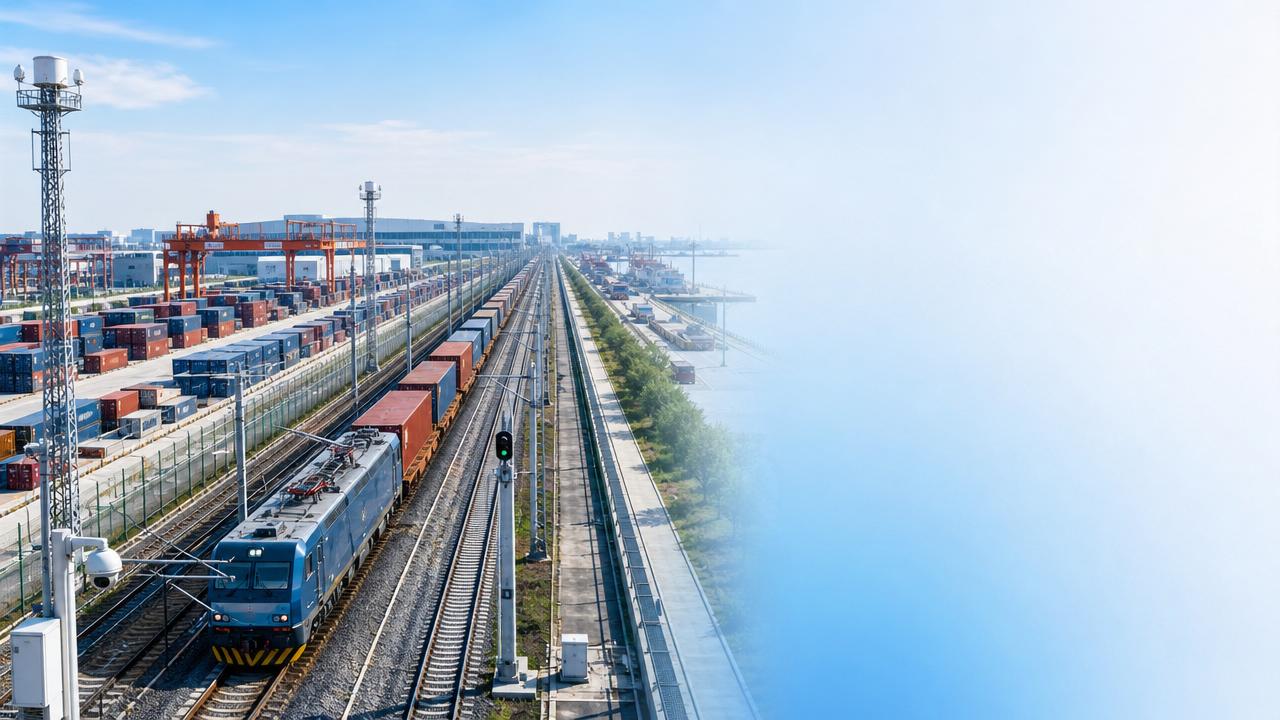
What do railway infrastructure investment reports reveal now for enterprise decision-makers? They show where capital is moving fastest, which freight corridors are becoming strategic priorities, and how modernization in track, signaling, and rolling stock is changing both risk and return.
For leaders assessing long-term logistics, engineering, and policy opportunities, these reports are no longer background reading. They are practical tools for judging market timing, regulatory direction, supplier positioning, and the durability of rail-linked growth.
Why railway infrastructure investment reports matter more now
The core search intent behind railway infrastructure investment reports is clear: decision-makers want actionable insight, not raw data. They need to know where investment is accelerating, what it signals about future demand, and how to translate report findings into strategy.
That matters because railway investment today is tied to more than public transport expansion. It increasingly reflects freight resilience, industrial policy, decarbonization targets, cross-border trade integration, and national supply-chain security.
For businesses, these reports help answer pressing questions. Which markets are becoming procurement hotspots? Which corridors will attract cargo volume and industrial development? Where are standards, compliance rules, and technology upgrades likely to reshape competition?
In this environment, railway infrastructure investment reports reveal not just spending plans, but also political commitment, execution capacity, and ecosystem readiness. For enterprise leaders, that combination is often more valuable than headline budget figures alone.
What enterprise decision-makers are really looking for in these reports
Most executives are not reading infrastructure reports for academic context. They are trying to reduce uncertainty. They want signals that support capital allocation, partnership choices, market entry timing, and product roadmap decisions.
For manufacturers, the key issue is whether planned infrastructure creates downstream demand for locomotives, wagons, track systems, signaling equipment, maintenance machinery, and digital communications platforms. Investment reports can reveal where that demand will emerge first.
For EPC contractors and engineering firms, the main concern is project bankability and delivery realism. A report may announce ambitious corridor expansion, but the real business value lies in funding structure, procurement sequencing, permitting progress, and technical standardization.
For logistics operators and industrial cargo owners, the central question is whether railway investments will materially improve throughput, reliability, intermodal integration, and total landed cost. Reports are useful when they show operational impact, not just construction scope.
For boards and strategy teams, perhaps the most important issue is risk-adjusted opportunity. A market with smaller budget outlays but stronger execution and regulatory clarity may be more attractive than a larger market with chronic delays and fragmented governance.
Where capital is flowing and what that usually means
One of the clearest messages in current railway infrastructure investment reports is that spending is becoming more selective and strategic. Governments and investors are prioritizing corridors with measurable economic, industrial, or geopolitical value.
Heavy-haul freight routes, port-linked rail systems, mineral export corridors, inland logistics connectors, and cross-border land bridges are receiving sustained attention. This is especially true where rail can relieve road congestion, lower emissions, and improve bulk commodity efficiency.
Another visible trend is the concentration of capital into modernization rather than network expansion alone. Track renewal, axle-load upgrades, bridge reinforcement, electrification, digital signaling, and predictive maintenance systems are drawing substantial investment.
That matters for suppliers because modernization projects often require higher technical standards and more integrated delivery models. Companies able to combine hardware, software, compliance expertise, and lifecycle support are better positioned than firms selling isolated components.
Reports also increasingly highlight multimodal logistics integration. Rail investment is being tied to dry ports, maritime gateways, customs processing, warehousing clusters, and industrial parks. For enterprise decision-makers, this signals value beyond the rail line itself.
How reports reveal future freight opportunity, not just public spending
A common mistake is reading railway infrastructure investment reports as if they only reflect government construction plans. In reality, the strongest reports reveal future freight economics and corridor competitiveness.
If a country is upgrading double-stack capability, strengthening track for heavier axle loads, or introducing advanced train control systems, it may be preparing for larger freight volumes, faster turnaround, and better network utilization. Those are commercial signals.
Likewise, when reports connect railway upgrades to mining regions, manufacturing zones, inland container terminals, or export ports, they often indicate broader industrial policy alignment. Rail is being used as a platform for trade expansion and regional value-chain growth.
For executives in freight, engineering, or industrial supply, that means infrastructure reports can serve as early indicators of where cargo density and project demand may rise. They help identify where market pull is likely to become more durable.
This is particularly relevant in sectors where asset cycles are long. Locomotive procurement, wagon deployment, signaling rollout, and maintenance service contracts often depend on network confidence. Investment reports provide an early read on that confidence.
What signaling and digital rail upgrades reveal about market maturity
Not all rail investment is equal. Spending on track or civil works can expand physical capacity, but spending on signaling, communications, and safety systems often reveals a deeper commitment to operational modernization.
When reports emphasize ETCS, CBTC, GSM-R, centralized traffic control, automatic train protection, or digital dispatch systems, they usually indicate a shift toward higher throughput, safer operations, and tighter network management. That has strategic implications.
First, digital upgrades often improve corridor reliability, which is essential for freight customers comparing rail with road or maritime alternatives. Second, they create opportunities for advanced suppliers that can meet interoperability and compliance requirements.
Third, they suggest that authorities are preparing for more complex traffic environments, including mixed passenger-freight networks, cross-border operations, and denser train scheduling. That tends to favor firms with strong systems integration capabilities.
For decision-makers, the lesson is simple: if railway infrastructure investment reports show significant signaling and communications spending, do not treat it as a secondary detail. It may be one of the strongest indicators of market sophistication and long-term viability.
How to separate credible opportunity from headline inflation
One reason enterprise readers search for railway infrastructure investment reports is to distinguish real opportunity from aspirational announcements. Large budget numbers alone do not guarantee commercial relevance.
A more reliable reading starts with the funding model. Is financing secured through sovereign budgets, development banks, public-private partnerships, export credit, or phased procurement? The answer affects project certainty and supplier access.
Next comes implementation structure. Reports are more credible when they include corridor priorities, engineering scope, delivery milestones, procurement timelines, and named agencies or operators. Vague ambition without execution architecture should be treated cautiously.
Technical specificity is another useful filter. If an investment report discusses gauge compatibility, axle load targets, electrification standards, signaling architecture, maintenance regimes, or interoperability goals, it usually reflects more advanced planning.
Finally, look for alignment between infrastructure investment and industrial or logistics demand. A rail project connected to clear freight flows, port access, commodity output, or manufacturing growth is generally more investable than one driven by symbolism alone.
What these reports mean for suppliers, contractors, and strategic partners
For railway suppliers and engineering companies, investment reports are not only market snapshots. They are demand-mapping tools. They help identify which capabilities will be valued in upcoming procurement cycles.
In heavy-haul markets, reports may point to opportunities in locomotive power upgrades, wagon durability, brake systems, couplers, and track resilience. In modernization programs, demand may shift toward diagnostics, automation, safety systems, and lifecycle maintenance.
For EPC contractors, the most useful reports reveal whether projects are likely to favor local partnerships, turnkey delivery, phased subcontracting, or vertically integrated consortiums. That affects bid strategy and market entry design.
For digital rail vendors, reports can show where analog-to-digital transitions are becoming urgent. This may create openings in communications networks, control centers, cybersecurity, onboard systems, and predictive asset management platforms.
For institutional partners, the broader insight is ecosystem positioning. Companies that align early with corridor development, standards compliance, and operational performance goals often gain advantage long before formal tenders are issued.
How enterprise leaders should use railway infrastructure investment reports in practice
The most effective use of railway infrastructure investment reports is not passive monitoring. It is structured decision support. Leaders should convert report findings into a practical evaluation framework tied to commercial priorities.
Start by segmenting reported investments into categories: new-build corridors, modernization programs, intermodal connectors, signaling upgrades, and maintenance-focused spending. Each category implies different revenue models, margins, and partnership requirements.
Then assess each target market using five filters: funding certainty, regulatory clarity, freight demand linkage, technical complexity, and delivery timeline. This moves analysis from interesting information to strategic prioritization.
It is also important to compare announced investment with network constraints. A corridor may receive major funding, but if customs bottlenecks, power supply limits, or port congestion remain unresolved, the commercial payoff may be slower than expected.
Finally, integrate report insights into scenario planning. The best enterprise teams use them to test expansion assumptions, refine sales focus, develop partnership pipelines, and anticipate future compliance or technology requirements.
What the latest signals suggest for long-term competitiveness
Across markets, current railway infrastructure investment reports point to a larger shift: rail is being repositioned as a strategic industrial backbone, not just a transport utility. That changes how businesses should evaluate the sector.
Competitiveness will increasingly depend on more than equipment supply. It will depend on interoperability, systems integration, maintenance intelligence, emissions performance, and the ability to support complex freight ecosystems over long asset lives.
Reports also suggest that corridor-level competition is intensifying. Countries and regions are investing to attract cargo flows, manufacturing activity, and trade relevance. For enterprise leaders, this means location strategy and partnership timing matter more than before.
The strongest opportunities are likely to emerge where capital investment is matched by execution discipline, standards alignment, and operational modernization. In other words, the best markets are not always the loudest, but the most coherent.
That is why railway infrastructure investment reports remain so valuable. They help decision-makers see beyond project publicity and focus on where infrastructure spending is genuinely reshaping logistics performance and industrial advantage.
Conclusion: what railway infrastructure investment reports reveal now
Right now, railway infrastructure investment reports reveal a sector moving toward strategic concentration, technical modernization, and freight-centered value creation. They show where governments and institutions expect rail to solve real economic and logistical challenges.
For enterprise decision-makers, the practical takeaway is clear. Use these reports to identify credible corridors, evaluate execution quality, understand technology direction, and judge where long-term demand is likely to become commercially meaningful.
When read correctly, railway infrastructure investment reports are more than sector updates. They are early-warning systems for opportunity, risk, and competitive change across freight, engineering, and rail-linked industrial markets.
For leaders seeking resilient growth, that makes them essential reading now.
Industry Briefing
Get the top 5 industry headlines delivered to your inbox every morning.