
Wagon volume benchmarks that change fleet economics

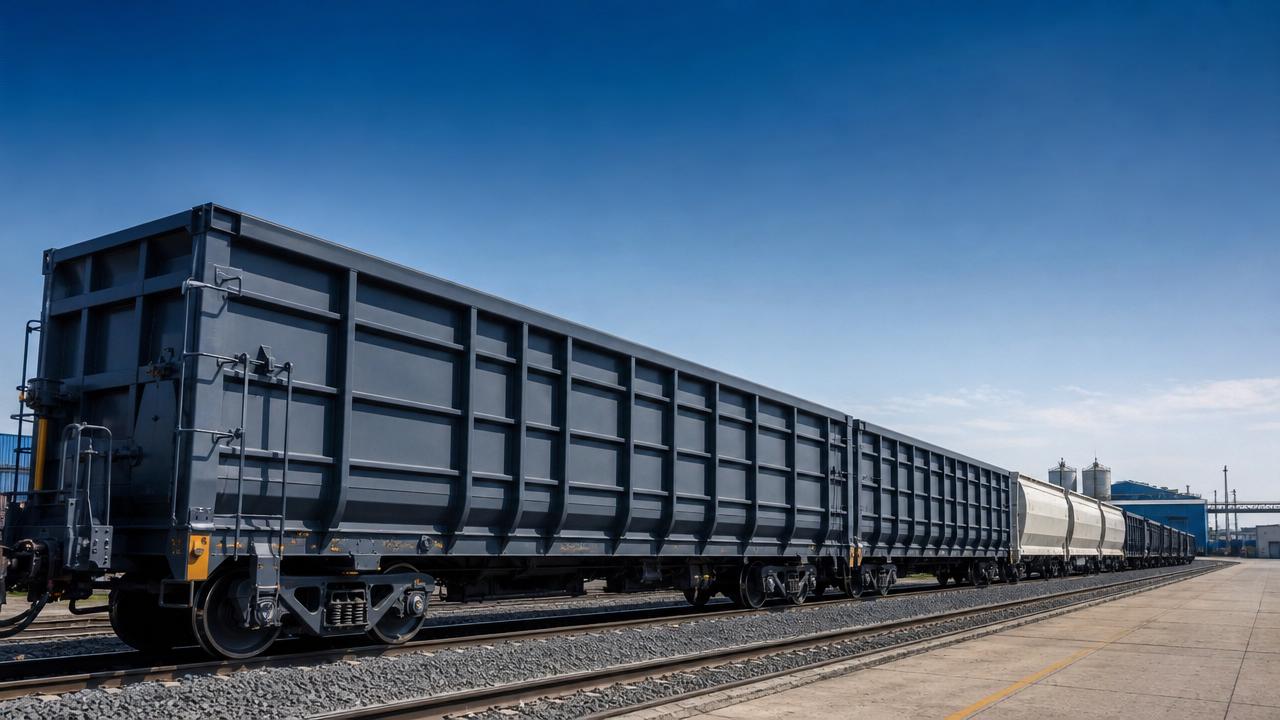
For finance approvers evaluating rail investments, wagon volume capacity benchmarks are more than engineering metrics—they directly influence asset utilization, payload economics, and corridor profitability. This article examines how credible capacity benchmarks reshape fleet planning, reduce cost-per-ton outcomes, and support capital decisions with measurable operational and regulatory context across modern freight networks.
In freight rail, volume capacity is often discussed as a technical specification, yet its financial consequences reach far beyond engineering teams. A wagon that carries 5 to 12 cubic meters more usable volume than a baseline design may change loading cycles, terminal dwell time, route allocation, and the number of wagons needed per contract. For budget holders, that means benchmark quality has a direct bearing on capital efficiency.
This matters even more in corridors serving bulk minerals, agricultural products, construction inputs, containers, and mixed industrial cargo. Different commodities cube out or weigh out at different points. As a result, wagon volume capacity benchmarks must be evaluated against axle load, tare weight, loading gauge, discharge method, and infrastructure rules under UIC, EN, or AAR-aligned operating environments.
For institutions operating across heavy-haul and intermodal systems, including stakeholders using G-RFE intelligence to compare rolling stock against international standards, benchmark discipline helps translate technical choices into board-level investment logic. The central question is not simply how large a wagon is, but how much revenue-generating volume is usable under real operating constraints.
Why wagon volume capacity benchmarks alter fleet economics
A credible wagon volume capacity benchmark defines the practical carrying envelope of a freight wagon under real service conditions. It should distinguish between nominal body volume and usable commercial volume. In many fleets, the gap between those two measures ranges from 3% to 15%, depending on commodity flow behavior, lining, door configuration, residue retention, and loading discipline.
From nominal cubic meters to usable revenue space
Finance teams often see a cubic meter figure in procurement documents and assume a direct throughput gain. That is risky. A wagon advertised at 92 m³ may deliver only 84 to 88 m³ of practical volume if the loading profile is constrained by commodity angle of repose, hatch geometry, center-of-gravity limits, or route-specific clearance rules. The benchmark must therefore be tied to operating conditions, not brochure claims.
This distinction becomes decisive when fleets scale above 300, 500, or 1,000 wagons. Even a 4 m³ variance per wagon can produce material differences in cycle-level tonnage, locomotive consist planning, and terminal resource demand. Over a 10-year asset horizon, a small benchmark error can distort both business cases and depreciation assumptions.
How benchmarks affect cost per ton and wagon count
If a commodity is volume-limited rather than weight-limited, higher usable wagon volume can reduce the number of trips or wagons required for the same annual transport target. For example, moving 2 million m³ per year with 80 m³ wagons requires roughly 25,000 loaded wagon-equivalents, while 90 m³ wagons reduce that to about 22,222. That 11% difference influences leasing logic, maintenance windows, marshalling needs, and spare ratio planning.
For dense cargo, the equation changes. A wagon may reach axle load limits before it reaches full volume. In those cases, finance approvers should not pay a premium for extra cubic capacity unless future commodity diversification is part of the corridor strategy. Good wagon volume capacity benchmarks therefore help separate valuable capacity from decorative capacity.
The table below shows how benchmark interpretation changes by commodity profile and operating constraint.
The key takeaway is that wagon volume capacity benchmarks only create financial value when they match the density, geometry, and route reality of the cargo. A larger volume figure alone does not guarantee better economics. Benchmark quality depends on whether the capacity can actually be sold and repeatedly used across the network.
Three common benchmark errors in approval files
- Using nominal body volume without subtracting operational dead zones near doors, hoppers, or structural bracing.
- Comparing wagons across different axle load classes such as 20 t, 22.5 t, and 25 t as if volume were the only variable.
- Ignoring terminal loading and unloading cycle impacts, which can add 8% to 20% hidden cost even when wagon volume looks attractive.
The benchmark variables finance approvers should test before capital approval
Before approving a fleet purchase, refinancing, or upgrade program, finance teams need a benchmark framework that connects capacity to commercial outcomes. In practice, five variables usually determine whether wagon volume capacity benchmarks are decision-grade: usable volume, tare weight, axle load class, loading gauge compliance, and cycle-time impact.
1. Usable volume versus shell volume
Require both figures. Shell volume describes the internal geometric envelope. Usable volume reflects what can be loaded consistently within safety and route rules. The difference may be minor in box wagons with uniform cargo, but can be significant in hopper, covered, or high-sided wagons where discharge geometry and commodity flow characteristics reduce practical fill rates.
2. Tare weight efficiency
A wagon with greater volume but high tare weight may worsen net payload economics on dense commodities. A finance review should test the payload-to-tare ratio and estimate whether the wagon is likely to cube out or weigh out on the top 3 to 5 cargo categories expected over the asset life. This is especially important when residual value depends on cargo flexibility.
3. Axle load and route permissions
Volume without route access is stranded capacity. Corridors may be rated differently across national boundaries, port approaches, or industrial sidings. A fleet designed for 25 t axle load but frequently routed through 22.5 t infrastructure can lose expected throughput. Benchmark reviews should therefore map wagon specifications to at least 2 operating scenarios: ideal corridor and constrained corridor.
4. Loading gauge and terminal fit
High-capacity wagons may face profile restrictions in tunnels, overhead equipment zones, or legacy yards. Similarly, loading equipment designed for one body geometry may underperform with another. Finance approvers should ask whether claimed benchmark gains require terminal retrofits, because a 6% capacity increase can be offset by capex in chutes, stackers, or rotary unloading interfaces.
5. Cycle time and maintenance exposure
More volume is financially attractive only if turnaround remains stable. If larger wagons increase loading time by 12 minutes per trainset or require more cleaning between cargoes, annual utilization can fall. Over 280 to 330 operating days, small delays compound quickly. Benchmark evaluation must include dwell time, failure modes, and planned maintenance intervals.
The next table provides a practical approval checklist that converts wagon volume capacity benchmarks into finance-ready review criteria.
For finance approvers, the table highlights a simple rule: no wagon volume capacity benchmark should be accepted without operational context. Capacity figures must survive route restrictions, commodity behavior, and maintenance economics. Otherwise, the business case may look strong on paper but weaken once the fleet enters service.
Applying benchmarks to procurement, corridor planning, and refinancing
Benchmarking becomes most valuable when it is embedded early in procurement and funding processes. In new-build acquisitions, wagon volume capacity benchmarks support specification design and supplier comparison. In fleet modernization, they help test whether refurbishment, liner changes, bogie upgrades, or body redesign will produce enough usable capacity gain to justify capital deployment.
Procurement scenario: choosing between lower capex and lower operating cost
A lower-cost wagon may appear attractive in year 1, but if it carries 7% less usable volume and requires a 10% larger fleet to meet annual transport commitments, the savings may disappear within 24 to 36 months. This is why procurement teams should model at least three cases: base demand, peak demand, and constrained network demand.
Corridor planning scenario: matching wagon design to terminal and signaling reality
In cross-border and long-haul freight systems, rolling stock performance is linked to infrastructure and operating rules. A volume benchmark that works on one corridor may underperform on another due to train length limits, braking ratios, yard siding lengths, or communication and dispatching constraints. This is particularly relevant where CBTC-adjacent yard controls, ETCS migration, or GSM-R operating disciplines influence train handling patterns.
For organizations using G-RFE as a technical and policy reference point, the advantage is not only asset comparison but also standard-aware decision framing. International benchmark interpretation requires alignment with hardware, maintenance, signaling interfaces, and route governance. Finance approval is stronger when these factors are tested together rather than in separate silos.
Refinancing scenario: defending asset value with benchmark evidence
Lenders and internal capital committees increasingly ask whether rail assets are adaptable across future freight mixes. Wagons with proven, well-documented volume capacity benchmarks can be easier to justify in refinancing discussions because they show measurable corridor utility. Evidence of compatibility with multiple commodity classes and standard regimes can support stronger residual value assumptions.
A 5-step internal review path
- Define the top 3 cargo categories by volume and density.
- Match wagon volume capacity benchmarks to axle load and gauge limits on target corridors.
- Model annual wagon turns, dwell time, and maintenance downtime.
- Stress-test the economics under at least 2 disruption scenarios, such as route restrictions or terminal delays.
- Approve capex only after usable volume is tied to cost-per-ton and service reliability outputs.
Common misconceptions, risk controls, and practical questions from finance teams
One of the most common misconceptions is that larger wagons always reduce unit cost. In reality, this is true only when the network, loading process, and cargo profile fully support the extra capacity. Another mistake is relying on a single benchmark value for all routes. Freight systems are rarely uniform, and a wagon optimized for one mine-to-port loop may be inefficient in mixed industrial service.
Risk controls worth requiring in approval packages
- Commodity-specific loading assumptions, including bulk density ranges and fill limitations.
- Route-by-route compatibility notes for axle load, loading gauge, siding length, and unloading infrastructure.
- Maintenance and cleaning assumptions over 12-month operating cycles.
- Sensitivity analysis showing what happens if usable volume is 5% below target.
- Clear distinction between prototype performance and fleet-average performance after 18 to 24 months in service.
Frequently asked approval questions
Does a higher wagon volume capacity benchmark justify a higher purchase price? Only if the added usable volume reduces wagon count, raises annual throughput, or improves service flexibility enough to offset the premium over the asset life.
Should benchmarks be compared across international standards? Yes, but only after normalizing for axle load class, gauge restrictions, coupler systems, braking requirements, and maintenance practices under UIC, EN, or AAR-oriented environments.
Can benchmark evidence support sustainability targets? In many cases, yes. Better wagon utilization can reduce empty or underfilled movements, improve train-level productivity, and strengthen the case for lower-carbon rail freight corridors without requiring unrealistic performance claims.
Wagon volume capacity benchmarks change fleet economics because they convert physical design into measurable business outcomes. When benchmark review includes usable volume, tare efficiency, route access, terminal fit, and cycle-time effects, finance approvers gain a clearer view of true asset performance. For railway authorities, OEMs, EPC contractors, and industrial freight operators navigating international standards, benchmark discipline supports stronger capex logic and more resilient corridor planning. To assess your next fleet decision with deeper technical and regulatory context, contact G-RFE to obtain a tailored benchmark review, compare rolling stock options, and explore more rail freight engineering solutions.
Industry Briefing
Get the top 5 industry headlines delivered to your inbox every morning.