
A reliable freight wagon manufacturer should prove these

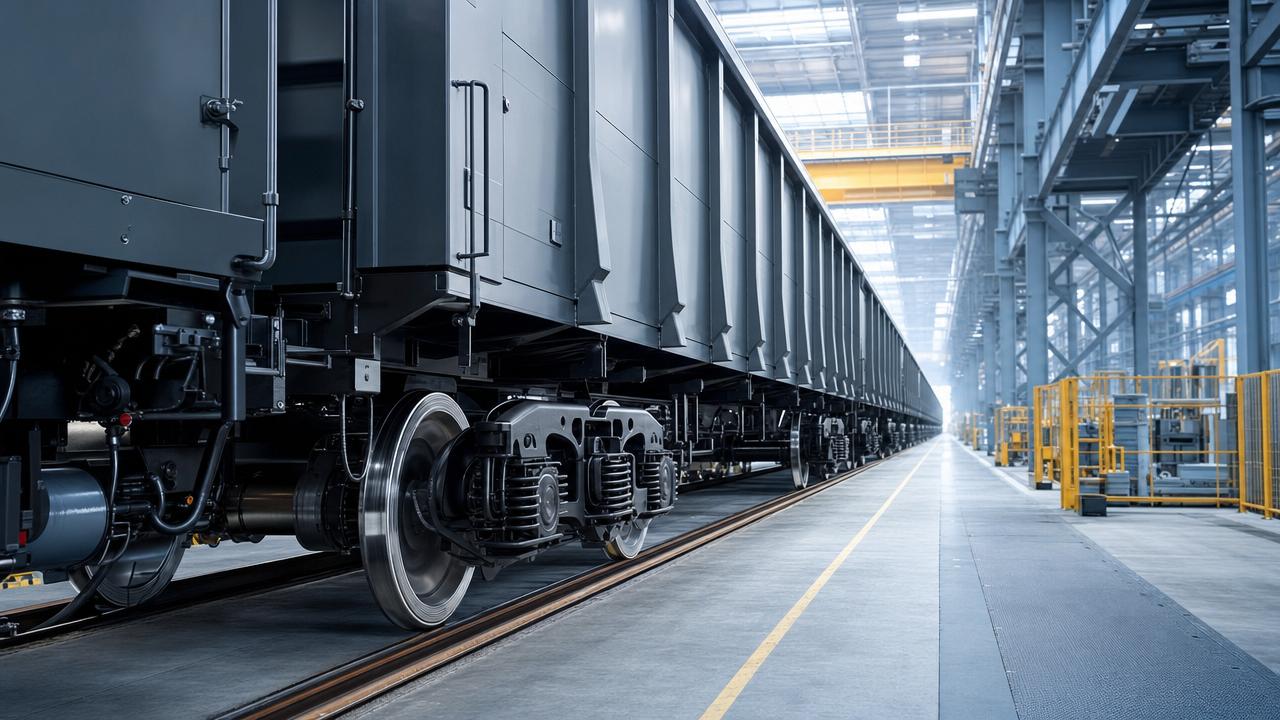
Choosing a reliable freight wagon manufacturer is not just about comparing prices or production capacity. For business evaluators overseeing rail procurement, the real test lies in proven engineering compliance, manufacturing consistency, safety performance, and long-term lifecycle support. This article outlines the key capabilities and evidence a qualified freight wagon manufacturer should demonstrate before entering any serious commercial or technical assessment.
In cross-border rail logistics, a wagon is not a standalone asset. It is part of a wider operating system that includes loading infrastructure, axle load limits, signaling compatibility, maintenance planning, and corridor-specific regulations. That is why a business evaluator must examine far more than a quotation sheet.
A dependable freight wagon manufacturer should be able to prove technical discipline across design, fabrication, inspection, delivery, and after-sales support. For institutional buyers, EPC contractors, railway authorities, and industrial fleet owners, that evidence reduces procurement risk over a service life that often extends 25 to 35 years.
Engineering proof comes before commercial proof
The first question for any freight wagon manufacturer is simple: can the company demonstrate that its design basis matches the intended operating environment? Freight wagons for 60 km/h bulk mineral service are evaluated differently from wagons intended for 100 km/h intermodal or mixed-freight corridors.
A serious supplier should provide load case assumptions, axle load ranges, tare weight targets, braking calculations, coupler configuration, bogie selection logic, and structural fatigue considerations. These documents do not need to disclose confidential design IP, but they must show a controlled engineering process.
Key design evidence a buyer should request
Business evaluators should look for at least 6 core engineering evidence sets before moving to price negotiation. If a freight wagon manufacturer cannot provide them in a structured way, technical risk is already increasing.
- Design criteria matched to route conditions, payload, and loading profile
- Material specifications for underframe, body shell, bolsters, and wear components
- Finite element or equivalent structural verification for critical zones
- Brake system configuration and stopping performance assumptions
- Bogie, wheelset, axle box, and suspension selection rationale
- Inspection and test plan covering prototype and serial production
In practical terms, a supplier should explain how the wagon performs under repeated dynamic loading, empty and loaded conditions, impact during shunting, and climate variation such as -25°C to +45°C if the target route demands it.
Standards alignment is a minimum threshold
For international procurement, standards alignment is not optional. A reliable freight wagon manufacturer should state whether the design is aligned with UIC, EN, AAR, or local rail authority requirements, and where deviations exist. Evaluators should ask for a compliance matrix rather than broad claims.
This matrix should identify at least 3 categories: fully compliant items, equivalent engineering solutions, and items requiring project-specific approval. That level of transparency helps avoid redesign delays later in the tender or acceptance stage.
The table below shows the difference between weak supplier claims and auditable technical proof when assessing a freight wagon manufacturer.
For procurement teams, the message is clear: the more measurable the evidence, the more predictable the project outcome. A freight wagon manufacturer that documents assumptions early is usually easier to manage during review, approval, and commissioning.
Manufacturing consistency is what protects fleet performance
Even a strong design can fail commercially if production quality varies from batch to batch. A capable freight wagon manufacturer should prove that prototype quality can be repeated across 20, 100, or 500 units without hidden deterioration in tolerances, weld quality, coating, or assembly accuracy.
Factory control points that matter
Evaluators should review process control in at least 5 manufacturing stages: incoming material verification, cutting and forming, welding, dimensional inspection, and final functional testing. If any of these stages is weak, lifecycle cost usually increases within the first 12 to 24 months of operation.
- Incoming steel and component traceability by heat number or batch record
- Welding procedure control and welder qualification management
- Jig or fixture-based assembly to control geometry repeatability
- Non-destructive testing for critical weld zones
- Final inspection records tied to wagon serial numbers
For example, dimensional deviation in bogie mounting interfaces, draft gear alignment, or hopper discharge geometry can create recurring failures. A difference of a few millimeters may seem minor in fabrication, but it can trigger accelerated wear, noise, uneven braking, or loading inefficiency in the field.
Repeatability is more important than showroom appearance
A polished prototype does not prove mass production readiness. A reliable freight wagon manufacturer should show how the same quality is maintained over multiple shifts, multiple suppliers, and multiple project batches. This is especially important where delivery windows are 4 to 9 months and output must scale without compromising inspection discipline.
Buyers should also ask about subcontracted content. If brake equipment, wheelsets, couplers, bearings, or castings come from third parties, the manufacturer should explain supplier approval criteria, incoming inspection routines, and replacement planning for long-term support.
Safety and operating reliability must be demonstrated, not advertised
Safety assessment for a freight wagon manufacturer goes beyond basic static strength. Rail operators need predictable braking, stable running behavior, secure load containment, and manageable maintenance intervals. In heavy-haul applications, small defects can scale into network-wide disruption.
What reliability proof should include
A practical review should cover at least 4 reliability domains: mechanical integrity, brake function, wheel-rail interface condition, and maintenance accessibility. If any one of these areas is poorly documented, total ownership cost becomes difficult to forecast.
- Prototype or type-test records for braking and running safety
- Inspection access to wear parts such as brake rigging, liners, and suspension items
- Corrosion protection strategy, especially for coastal, humid, or chemical cargo routes
- Defined maintenance intervals such as every 6 months, 12 months, or mileage-based checks
A freight wagon manufacturer should also indicate whether spare parts are standardized across wagon families. Shared components across 2 or 3 wagon variants can lower inventory complexity and shorten maintenance response time for operators managing distributed fleets.
The following table helps business evaluators compare the most important operational risk indicators before award.
The strongest suppliers are not necessarily the ones making the boldest claims. They are the ones that explain where failures typically occur, how they reduce those risks, and how quickly they can support field correction if a defect appears.
Lifecycle support often separates a vendor from a strategic manufacturer
For many buyers, lifecycle support is where the real commercial value of a freight wagon manufacturer becomes visible. Wagon fleets rarely operate under ideal conditions. They face variable loading practices, route congestion, temperature swings, and maintenance resource constraints over decades.
Support capability should be checked in 3 layers
A proper evaluation should distinguish among warranty support, technical support, and long-term fleet support. These 3 layers serve different purposes, and confusion between them often leads to disputes after delivery.
1. Warranty execution
Ask how defects are classified, how fast response begins, and whether on-site inspection is available within 48 to 72 hours for critical service interruptions. A warranty is only useful if the execution process is operationally realistic.
2. Technical documentation
A reliable freight wagon manufacturer should deliver complete manuals, spare parts lists, maintenance instructions, and as-built records. In multilingual or cross-border projects, documentation accuracy matters as much as hardware quality.
3. Fleet continuity planning
For operators planning 10-year or 20-year asset use, the manufacturer should clarify parts supply continuity, upgrade options, and engineering support for route or regulatory changes. This becomes critical when wagons are redeployed across different networks.
Commercial evaluation should include total ownership thinking
The lowest purchase price may not produce the lowest fleet cost. A wagon with lower tare mass, standardized wear parts, and shorter workshop time can create meaningful savings over 15 to 30 years. Evaluators should compare not only CAPEX, but also downtime exposure, maintenance burden, and support responsiveness.
This is where a technically mature freight wagon manufacturer becomes valuable to institutions such as railway authorities, rolling stock programs, and corridor logistics developers. The manufacturer should think in terms of operational readiness, not just factory shipment.
A practical due diligence checklist for business evaluators
Before shortlisting any freight wagon manufacturer, procurement teams can use a disciplined checklist to reduce subjectivity. This is especially useful when multiple bidders appear similar on catalog specifications but differ in execution maturity.
Eight questions worth asking before final evaluation
- Which standards and route conditions define the wagon design basis?
- What payload, speed, and axle load ranges are formally supported?
- How are welding quality, dimensional tolerances, and traceability controlled?
- What prototype, routine, and acceptance tests are included?
- Which components depend on external suppliers, and how are they qualified?
- What are the preventive maintenance intervals and high-wear items?
- How are warranty claims handled in the first 12 months and beyond?
- What evidence shows long-term parts and technical support capability?
If the answers are vague, highly promotional, or inconsistent across technical and commercial teams, evaluators should treat that as a risk signal. Reliable manufacturers are usually precise, document-based, and open about limitations as well as strengths.
Common procurement mistakes to avoid
- Selecting on unit price without checking maintenance design
- Assuming prototype approval guarantees stable serial production
- Ignoring supplier dependence for brake, wheelset, or coupling systems
- Accepting generic compliance claims without a standards matrix
- Overlooking documentation quality in multinational operating environments
For institutions working across heavy-haul, intermodal, or industrial freight corridors, these mistakes can delay acceptance, increase maintenance frequency, or undermine corridor efficiency. A freight wagon manufacturer should therefore be judged as a long-term engineering partner, not only a fabrication source.
A reliable freight wagon manufacturer proves value through verifiable engineering, stable production control, safety-focused operating logic, and structured lifecycle support. For business evaluators, the goal is not merely to buy wagons, but to secure dependable fleet performance over years of demanding service.
If you are assessing suppliers for a rail freight project, corridor upgrade, or rolling stock procurement program, use these criteria to strengthen your technical review and commercial decision. To explore tailored evaluation frameworks, product details, or broader railway-freight solutions, contact us today and get a more informed procurement path.
Industry Briefing
Get the top 5 industry headlines delivered to your inbox every morning.