
Why railway bogie manufacturer choice affects lifecycle cost

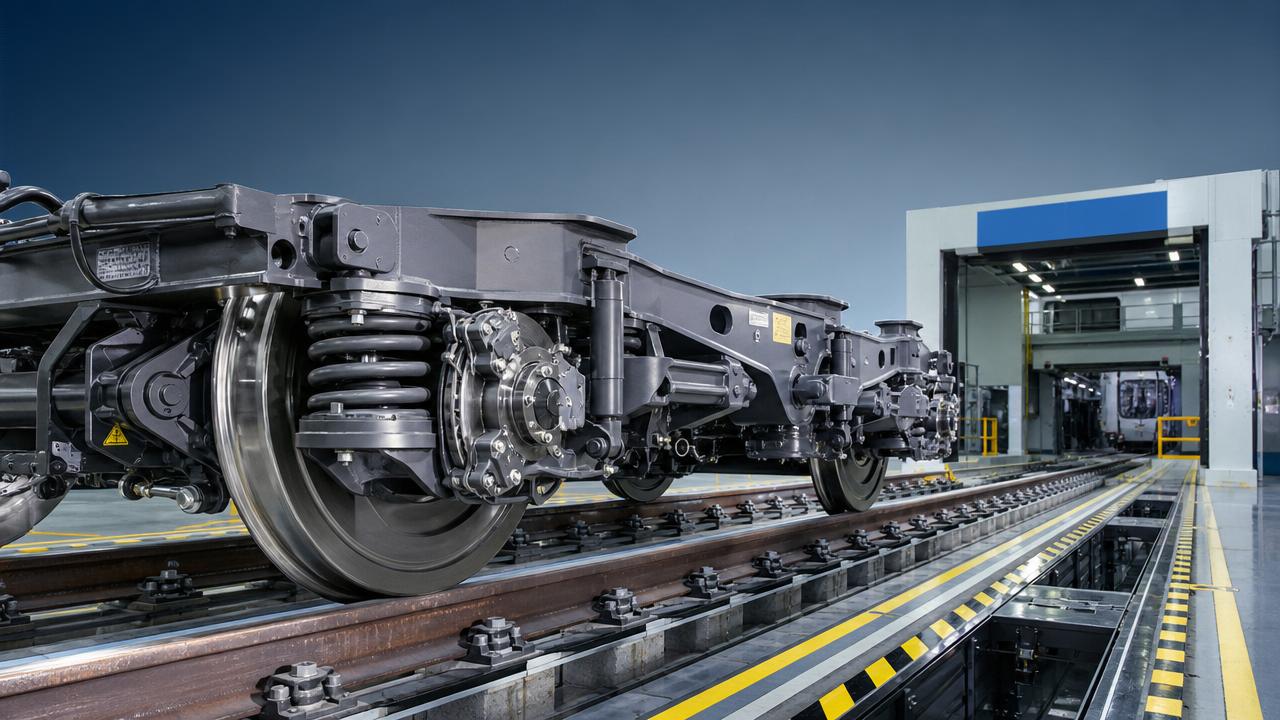
Choosing a railway bogie manufacturer is not a procurement detail. For technical evaluators, it is a lifecycle-cost decision that affects reliability, maintenance burden, wheel and track wear, compliance exposure, and long-term fleet availability.
The lowest purchase price rarely delivers the lowest total cost. In freight operations, bogie design quality, manufacturing discipline, testing depth, and aftersales support can influence cost performance for decades.
This matters even more in heavy-haul, cross-border, or high-utilization fleets. A weak supplier decision can lock operators into shorter overhaul intervals, unstable spare-parts supply, and recurring technical compromises.
For teams assessing a railway bogie manufacturer, the practical question is simple: which supplier can deliver the best cost per service year, not merely the cheapest unit price at delivery.
What technical evaluators are really trying to determine
When users search for guidance on railway bogie manufacturer choice, their core intent is usually commercial and technical at the same time. They want to know which supplier characteristics materially change lifecycle cost.
Technical evaluators are rarely looking for a generic definition of a bogie. They need a decision framework that links engineering quality to measurable outcomes such as maintenance intervals, axle load stability, wheel life, and failure risk.
They also want to reduce procurement uncertainty. A railway bogie manufacturer may look competitive on drawings and quotations, but hidden differences often appear in fatigue life, process control, metallurgy, validation, and field support.
That is why the right evaluation method must go beyond catalog specifications. The real task is to test whether the manufacturer can sustain performance under actual freight corridor conditions.
Why upfront price is a poor proxy for lifecycle cost
In many tenders, unit price gets too much attention because it is easy to compare. Lifecycle cost is harder to model, but it is where the real financial difference emerges over years of operation.
A lower-cost bogie can become expensive if it drives more frequent bearing replacements, accelerated wheel reprofiling, suspension wear, or unscheduled workshop entries. Each event increases both direct maintenance cost and lost wagon availability.
Track interaction is another hidden cost driver. Poor running stability or suboptimal suspension behavior can increase rail wear, wheel wear, and component fatigue across the vehicle system.
Energy efficiency also matters. Bogie mass, rolling resistance behavior, and alignment quality can influence haulage efficiency, especially in long freight consists where small performance penalties accumulate at scale.
For technical evaluators, the takeaway is clear: price at handover is only one data point. The economically meaningful comparison is cost across the asset life, under the intended duty cycle.
How bogie design affects maintenance intervals and workshop burden
Bogie architecture has a direct relationship with maintenance strategy. Frame design, suspension arrangement, damping selection, bearing configuration, brake integration, and access for inspection all influence service intervals.
A manufacturer with strong maintainability engineering can reduce labor hours per inspection. Better component accessibility, standardized fasteners, modular subassemblies, and easier condition monitoring all improve workshop productivity.
Durability margins are equally important. If the bogie is designed close to minimum thresholds rather than for robust freight duty, maintenance intervals may look acceptable on paper but deteriorate in real service.
Technical evaluators should ask for evidence from comparable axle loads, route quality, temperature range, and braking intensity. Maintenance interval claims only matter when they are proven in similar operating environments.
They should also examine overhaul philosophy. Some manufacturers optimize for low first cost but transfer complexity into later-stage disassembly, repair, and recertification. That increases total maintenance burden over time.
Why manufacturing quality matters as much as the design itself
A sound design can still perform poorly if manufacturing execution is inconsistent. For a railway bogie manufacturer, welding quality, dimensional control, heat treatment discipline, machining accuracy, and traceability are fundamental cost drivers.
Frame distortion, variable tolerances, or inconsistent metallurgy may not be obvious at delivery. However, they can later appear as uneven wear, crack initiation, premature component fatigue, or poor running behavior.
Process capability is therefore not a side issue. Technical evaluators should review factory quality systems, non-destructive testing procedures, weld qualification records, gauge control, and serial-level documentation.
Suppliers that demonstrate disciplined production tend to produce more predictable fleet behavior. That predictability reduces inspection uncertainty, simplifies spares planning, and lowers the probability of expensive fleet-wide corrective actions.
In lifecycle-cost terms, consistency is valuable. A bogie fleet with stable performance characteristics is easier and cheaper to maintain than one with significant unit-to-unit variation.
Spare parts availability can outweigh small differences in purchase price
Many lifecycle-cost models underestimate the impact of spare-parts support. Yet in freight fleets, downtime from delayed components can quickly erase any initial savings from a lower bid.
A capable railway bogie manufacturer should offer more than a parts catalog. Technical evaluators should assess stock policy, lead times, local or regional warehousing, interchangeability strategy, and long-term obsolescence management.
Standardized components usually reduce risk. If proprietary parts are used without a strong supply commitment, operators may face long outages or inflated replacement cost later in the asset life.
Support responsiveness also matters after incidents or unexpected wear patterns. Suppliers with strong engineering service teams can shorten diagnosis time, accelerate root-cause analysis, and prevent repeated failures.
For high-availability freight operations, parts support should be treated as a lifecycle-cost category, not merely an aftersales convenience.
Compliance risk and validation depth have direct cost implications
Regulatory and standards compliance is often viewed as a tender checkbox, but it strongly affects total ownership cost. Gaps in conformity can delay approvals, restrict deployment, or force costly redesigns after delivery.
Technical evaluators should verify alignment with relevant standards such as UIC, EN, and AAR where applicable. However, document compliance alone is not enough. Validation quality is what gives confidence.
That means reviewing static and dynamic testing, fatigue verification, material certification, braking interface validation, and track compatibility evidence. The key question is whether the manufacturer has validated the bogie for real use cases, not ideal conditions.
Cross-border freight corridors create additional complexity. Differences in infrastructure quality, maintenance regimes, loading practices, and approval procedures can expose weaknesses in a poorly validated bogie platform.
A railway bogie manufacturer with robust certification support reduces approval friction and lowers the risk of expensive modifications during commissioning or fleet expansion.
Fleet reliability starts with track interaction and operating fit
Bogie selection should always be linked to route profile and operating reality. A technically impressive product can still be the wrong economic choice if it is mismatched to axle loads, curvature, speed profile, or track condition.
For example, heavy-haul freight corridors place severe demands on suspension performance, frame strength, wheel-rail contact behavior, and braking integration. In such contexts, under-engineered bogies can create recurring reliability penalties.
Likewise, mixed-network or intermodal operations may need different optimization priorities, including noise control, stability across variable loading, or compatibility with multiple wagon designs.
This is where field references become valuable. Technical evaluators should ask the railway bogie manufacturer for evidence from similar duty cycles, not just from easier passenger or light-freight applications.
The closer the reference case is to the intended service environment, the more reliable the lifecycle-cost forecast becomes.
How to evaluate a railway bogie manufacturer beyond brochures
A practical assessment should combine engineering review, production audit, cost modeling, and service support verification. Brochure claims are useful as a starting point, but they do not reveal execution strength.
Begin with the design basis. Review axle load capability, fatigue margins, suspension concept, wheelset and bearing configuration, brake integration, and maintainability features against your actual operating profile.
Next, examine production maturity. Audit welding procedures, supplier qualification controls, inspection checkpoints, traceability systems, and corrective-action processes. Reproducible quality is essential for lifecycle-cost control.
Then assess evidence. Ask for validation reports, endurance data, field performance records, and reliability statistics from comparable fleets. The best manufacturers can connect design claims to measurable operating outcomes.
Finally, test the support model. Evaluate spare-parts strategy, engineering response capability, training, warranty terms, and long-term upgrade support. A strong product without strong support can still become an expensive asset.
The lifecycle-cost categories that should be included in comparison
To compare suppliers properly, technical evaluators should build a structured cost model. Purchase price belongs in the model, but it should not dominate the decision.
Include preventive maintenance cost, overhaul frequency, labor hours per inspection, wheel and rail wear impact, component replacement rates, spare-parts lead times, and downtime cost from unplanned failures.
Also include approval and compliance costs, retrofit risk, training requirements, and expected residual value. In long-life freight assets, even small differences in these categories can exceed the original price gap.
Where possible, scenario modeling should be used. Compare best-case, expected-case, and severe-duty performance to understand which railway bogie manufacturer remains cost-effective under operational stress.
This approach gives procurement and engineering teams a more defensible basis for decision-making, especially when low bids appear attractive but carry technical uncertainty.
Warning signs that a low-cost supplier may become a high-cost choice
Several signals often indicate elevated lifecycle-cost risk. One is limited transparency around testing, fatigue performance, or field references. Another is vague language on parts support or warranty responsibility.
Technical evaluators should also be cautious if documentation quality is weak, configuration control seems immature, or manufacturing audits reveal inconsistent process discipline.
Frequent dependence on non-standard proprietary components is another concern, especially when long-term supply arrangements are unclear. Such dependency can create future cost leverage against the operator.
Unrealistically broad performance claims without route-specific evidence should also be challenged. In freight railway applications, operating conditions are too demanding for assumptions to replace proof.
These warning signs do not always mean a supplier is unsuitable, but they should trigger deeper scrutiny before cost assumptions are accepted.
What the best manufacturer choices usually have in common
The strongest suppliers are not defined only by scale or brand recognition. They typically combine proven design competence, disciplined manufacturing, transparent validation, and reliable aftersales support.
They understand the operator’s duty cycle and can explain how their bogie platform performs under specific axle loads, track classes, speeds, and maintenance regimes. That operating fit is critical.
They also provide documentation that helps technical evaluators make decisions with confidence. Clear test evidence, service data, maintenance guidance, and parts planning support all reduce uncertainty.
Most importantly, they think in lifecycle terms rather than shipment terms. A railway bogie manufacturer that supports durability, maintainability, and fleet continuity will usually create the best long-term value.
Conclusion
The choice of railway bogie manufacturer affects far more than the price of a delivered component. It shapes maintenance cost, wagon availability, wheel and track wear, compliance exposure, and operational resilience over the full service life.
For technical evaluators, the right decision is rarely the lowest quotation. It is the supplier choice that best aligns validated engineering, manufacturing quality, spare-parts support, and route-specific performance with the intended freight mission.
When lifecycle cost is modeled properly, the evaluation focus changes. The question is no longer who sells the cheapest bogie, but who can deliver the most reliable and supportable asset across years of demanding operation.
That is why manufacturer selection should be treated as a strategic engineering decision. In freight rail, a better bogie partner can reduce risk, protect availability, and preserve value long after procurement is complete.
Industry Briefing
Get the top 5 industry headlines delivered to your inbox every morning.