
Wagon Aerodynamic Drag Metrics That Can Shift Operating Costs

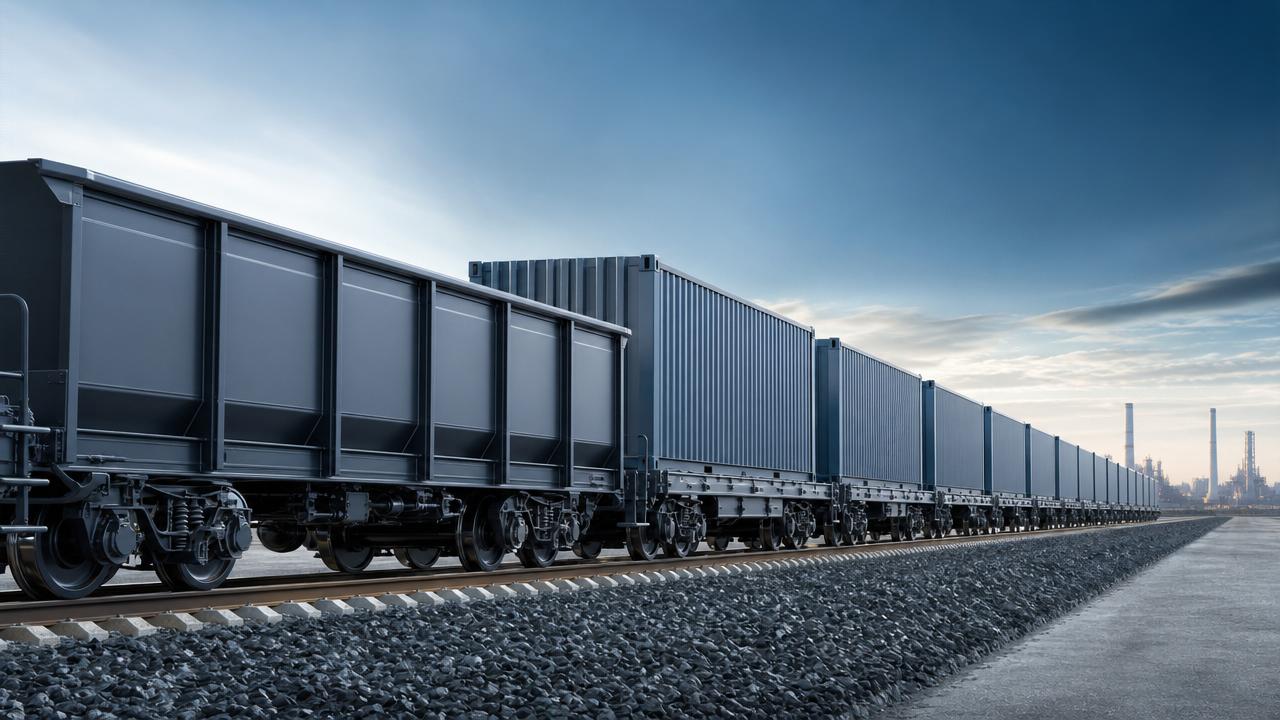
For finance approvers evaluating rail-freight investments, wagon aerodynamic drag metrics are no longer just engineering details—they directly influence fuel consumption, lifecycle costs, and corridor-level efficiency. Understanding how these metrics affect operating expenses helps decision-makers compare wagon designs, justify upgrades, and align procurement with long-term cost control in increasingly performance-driven railway networks.
What finance approvers need to know first
The core search intent behind wagon aerodynamic drag metrics is practical, not academic. Buyers want to know which drag indicators materially affect operating costs, and whether better wagon aerodynamics can produce measurable financial returns.
For a finance audience, the most important conclusion is straightforward: aerodynamic drag matters most when trains run faster, longer, and more frequently, especially on high-utilization freight corridors with stable service patterns.
In those cases, drag-related improvements can reduce fuel or energy use, improve locomotive productivity, and strengthen the business case for wagon redesign, fairings, gap management, and trainset optimization.
By contrast, on slower networks, short-haul industrial sidings, or routes dominated by terminal delays and low average speeds, aerodynamic upgrades may have weaker cost impact than axle load, maintenance, or turnaround efficiency.
Why wagon aerodynamic drag metrics affect operating costs
A wagon moving through air must overcome resistance. Part of that resistance comes from wheel-rail contact, bearings, and gradients, but another part comes from aerodynamic drag, which rises sharply as speed increases.
That speed relationship is what turns a design detail into a budget issue. At modest speeds, drag may be secondary. At higher line speeds, it can become one of the largest contributors to traction energy demand.
For finance teams, this means wagon aerodynamic drag metrics are best viewed as cost multipliers. They influence how much fuel a locomotive burns, how much electricity an electric freight service consumes, and how much capacity is needed for the same transport task.
The effect is corridor-specific. A wagon design that offers only marginal savings on a slow mineral branch may generate meaningful annual savings on intermodal, automotive, or mixed-freight services operating at higher average speeds.
Which wagon aerodynamic drag metrics matter most in financial evaluation
Not every technical metric deserves equal attention during investment approval. Finance approvers should focus on the indicators that can be translated into energy use, operating expenditure, and fleet-level savings.
The first key metric is drag coefficient, often expressed as Cd. This measures how efficiently the wagon shape moves through air. A lower Cd generally indicates less aerodynamic resistance under comparable conditions.
The second is frontal area. Even a reasonable drag coefficient can still produce high overall drag if the exposed area is large. In practice, Cd and frontal area must be evaluated together.
That combined effect is often represented as CdA, or drag area. For non-engineering decision-makers, CdA is one of the most useful metrics because it connects design form directly to total aerodynamic resistance.
Another important metric is train-level drag rather than wagon-only drag. A wagon may test well alone, yet perform differently once inserted into a consist with varying gaps, loading profiles, and end effects.
Gap spacing between wagons is financially relevant because turbulent airflow between vehicles increases resistance. Designs that reduce exposed gaps or smooth inter-wagon airflow can improve energy performance across entire trainsets.
Crosswind sensitivity also deserves attention in some geographies. If a corridor experiences frequent side winds, aerodynamic behavior affects not only energy use but also operational stability and speed management.
Finally, finance teams should ask for speed-dependent drag curves, not a single headline number. Costs are driven by actual duty cycles, and the drag impact at 100 kilometers per hour is very different from the impact at 60.
How to translate drag metrics into cost impact
Many investment proposals fail because technical performance is not converted into business language. For approval purposes, wagon aerodynamic drag metrics must be linked to annual energy consumption and cost-per-train-kilometer.
The most useful method is to start with the corridor operating profile: average speed, top speed, annual train frequency, train length, wagon count, haul distance, and traction type.
Then compare a baseline wagon configuration with an improved one using modeled or validated drag values. The output should show the expected change in resistance, traction energy demand, and fuel or electricity consumption.
From there, finance teams can calculate annual savings. Multiply the energy reduction per train by yearly train volumes, then apply expected fuel or electricity prices and sensitivity ranges.
This approach is stronger than accepting percentage claims in isolation. A promised five percent drag reduction may look attractive, but the actual financial result depends entirely on service conditions.
Approvers should also require net savings, not gross savings. If aerodynamic devices add maintenance complexity, cleaning needs, inspection time, or damage exposure, those costs must be deducted from energy benefits.
Where the business case is strongest
Aerodynamic investment is not equally valuable across all freight operations. The strongest cases usually appear in corridors where average speed is high enough for air resistance to become a major operating cost factor.
Intermodal services are a common example. These trains often run on time-sensitive schedules over long distances at relatively high speeds, making drag reduction more financially meaningful.
Automotive and premium general freight can also benefit when network access charges, locomotive utilization, and service reliability are tied to efficient line-haul performance.
Double-stack, swap-body, and high-cube container flows may present especially valuable opportunities because shape discontinuities, empty slots, and exposed underframes can worsen airflow behavior.
Another strong case is a high-frequency corridor where even modest per-train savings accumulate quickly. Finance approvers should pay attention to annual train count, because repetition drives total return.
Electrified freight networks should not dismiss this issue. Although fuel is not directly visible, aerodynamic drag still affects electricity consumption, power demand, and infrastructure efficiency.
When finance teams should be cautious
Not every drag-reduction proposal deserves capital approval. Some suppliers present aerodynamic metrics without showing how those gains survive real operating conditions, loading variability, and maintenance exposure.
Caution is especially warranted when trains operate mostly at lower speeds. On such routes, rolling resistance, asset availability, terminal dwell, and loading efficiency may produce better returns than aerodynamic refinement.
Approvers should also question business cases based only on simulation. Computational fluid dynamics is useful, but procurement decisions are stronger when supported by wind-tunnel testing, field measurements, or validated service data.
Another risk lies in overgeneralization. A wagon optimized for one consist type may not deliver the same savings when mixed into heterogeneous train formations with varying load heights and irregular spacing.
Maintenance implications must be assessed carefully. Fairings, skirts, covers, or modified end geometries can improve airflow, but they may also increase vulnerability to ballast strike, contamination, or yard handling damage.
If a proposed solution complicates loading operations or reduces flexibility across commodity types, the financial benefit can erode quickly. Practical operability is part of the drag metric conversation.
Questions finance approvers should ask suppliers and engineering teams
The quality of approval decisions often depends on asking better questions. Finance teams do not need to become aerodynamic specialists, but they should insist on cost-relevant evidence.
First, ask which exact wagon aerodynamic drag metrics are being presented: Cd, CdA, train resistance curves, crosswind data, or corridor-specific energy modeling. Vague references to “streamlined design” are not enough.
Second, ask under what conditions the results were measured or modeled. Speed range, loading state, wagon spacing, consist composition, and route assumptions all materially affect the outcome.
Third, request a conversion from drag improvement to annual operating savings. This should include low, base, and high scenarios using realistic energy price assumptions and service volumes.
Fourth, ask what capital premium is required and whether retrofitting is possible. A lower-drag wagon with a large price premium may still be justified, but only if utilization is high enough.
Fifth, request maintenance and durability evidence. A technically elegant design that performs poorly in harsh freight environments may disappoint financially over the asset lifecycle.
Finally, ask whether the metric applies at wagon level or full-train level. The investment case improves when benefits are demonstrated across actual train formations, not isolated test bodies.
How to compare wagon designs without getting lost in technical detail
Finance approvers often review multiple wagon proposals with different engineering language and inconsistent performance claims. A simple comparison framework can reduce decision risk.
Start with six commercial filters: capital cost premium, expected annual energy savings, maintenance cost impact, route suitability, operational flexibility, and payback period under realistic utilization.
Then add three technical filters that matter financially: validated drag area reduction, performance at actual service speeds, and sensitivity to consist arrangement or loading variation.
Using this structure, a proposal that offers slightly lower drag but much higher maintenance exposure may rank below a more modest solution with stronger reliability and easier fleet integration.
Approvers should also consider whether improvements can be phased. Sometimes a retrofit program on selected high-speed corridor fleets creates better returns than full-network replacement.
This matters for capital planning. Staged deployment allows teams to test realized savings, refine assumptions, and build evidence before approving wider procurement.
Lifecycle economics matter more than headline efficiency
One of the biggest mistakes in procurement is treating aerodynamic performance as an isolated feature rather than part of total lifecycle economics. Finance decisions should focus on cost over service life.
A wagon with better drag performance can create value through lower energy use, reduced locomotive demand, and potentially improved schedule resilience. But those benefits must endure over years, not months.
This is why cleaning cycles, panel durability, replacement parts, and damage rates deserve attention. If aerodynamic surfaces degrade quickly, the original savings assumption may not hold.
Residual value may also be affected. Wagons aligned with emerging corridor efficiency requirements or low-carbon procurement standards may hold stronger long-term strategic value than conventional designs.
In some markets, better aerodynamic performance can support broader decarbonization targets, which may influence financing conditions, public procurement scoring, or customer sustainability commitments.
For finance approvers, the right question is not whether drag metrics are technically impressive. The right question is whether they improve lifecycle cash performance under the network’s actual operating model.
A practical approval framework for cost-focused decision-makers
If an investment memo includes wagon aerodynamic drag metrics, the approval path should be disciplined. Begin by verifying that the targeted services run at speeds where drag materially affects energy consumption.
Next, confirm that the supplier provides train-level, speed-based evidence rather than isolated laboratory claims. Corridor relevance is more important than theoretical peak performance.
Then calculate three numbers: annual net operating savings, simple payback period, and sensitivity to lower-than-expected utilization. These usually determine whether the proposal is financially robust.
After that, review operational trade-offs, including maintenance burden, loading compatibility, and flexibility across commodities or route classes. Low drag should not come at the expense of practical railway performance.
Finally, align the proposal with long-term fleet strategy. The best investments are those that support cost reduction, compliance, and asset modernization at the same time.
Conclusion: drag metrics matter when they are tied to the right corridor and the right financial model
Wagon aerodynamic drag metrics can absolutely shift operating costs, but not in a uniform or automatic way. Their financial value depends on speed, distance, train frequency, consist design, and lifecycle durability.
For finance approvers, the goal is not to master every aerodynamic concept. It is to identify which metrics genuinely affect cash flow and which claims are too abstract to support investment decisions.
When evaluated properly, drag-related improvements can reduce fuel or electricity use, strengthen fleet productivity, and improve the economics of high-utilization freight corridors. When evaluated poorly, they risk becoming expensive engineering features with limited practical return.
The most reliable decision standard is simple: approve aerodynamic upgrades when validated wagon aerodynamic drag metrics translate into corridor-specific, net lifecycle savings with manageable operational risk.
Industry Briefing
Get the top 5 industry headlines delivered to your inbox every morning.