
How to Compare a Rail Freight Wagon Supplier

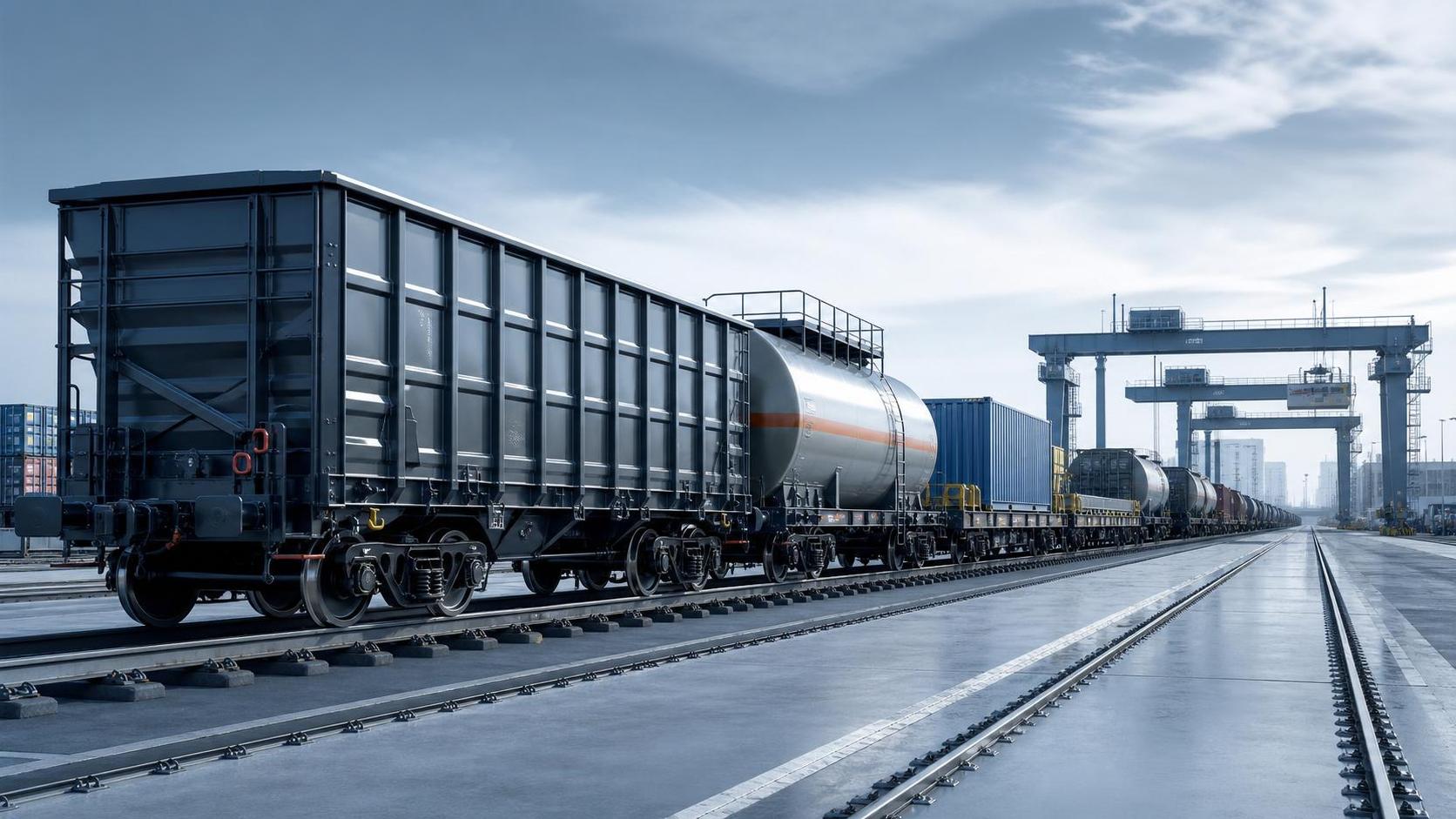
Comparing a rail freight wagon supplier is no longer a narrow sourcing exercise. It shapes fleet uptime, compliance exposure, asset life, and corridor efficiency.
A low unit price may look attractive at tender stage. Over years of service, weak engineering, slow parts support, or poor documentation can erase that advantage.
That is why the better comparison starts with operating reality. Wagon duty cycle, axle load, route conditions, standards, and maintenance capability all matter.
In the wider rail sector, this issue has become more important as freight corridors expand across borders and operators pursue lower-carbon, higher-capacity transport.
Seen from the perspective of G-RFE, where rolling stock performance is benchmarked against UIC, EN, and AAR frameworks, supplier evaluation needs both technical depth and regulatory discipline.
What a supplier comparison should really measure
A rail freight wagon supplier does more than fabricate steel structures. The supplier affects engineering integrity, manufacturing consistency, traceability, and long-term service response.
In practical terms, buyers are comparing a complete delivery system. That includes design capability, certification readiness, production control, testing discipline, and spare parts continuity.
This matters across several wagon categories. Open wagons, hopper wagons, tank wagons, flat wagons, and intermodal platforms each carry different structural and compliance demands.
A strong rail freight wagon supplier should show evidence that those demands are understood before quotation, not explained away after contract award.
Why the market is paying closer attention
Rail freight is under pressure to move more volume with fewer disruptions. At the same time, asset owners face tougher expectations on safety, emissions, digital monitoring, and interoperability.
That changes how a rail freight wagon supplier is judged. A supplier must support capacity growth without creating hidden maintenance burdens or certification delays.
Continental corridors add another layer. Wagon designs may need to align with track conditions, signaling environments, coupler arrangements, loading gauges, and braking requirements across jurisdictions.
This is where a data-led view becomes useful. G-RFE’s focus on rolling stock, infrastructure, smart signaling, and intermodal systems reflects a simple reality: wagon selection is linked to the full freight ecosystem.
Engineering capability comes before price comparison
Price should be compared, but only after technical suitability is established. Otherwise, the tender process rewards an incomplete answer.
Design depth
Look for in-house design resources, load calculation methods, fatigue analysis, bogie integration knowledge, and brake system engineering.
A credible rail freight wagon supplier should explain why a proposed design fits the cargo profile, route profile, turnaround pattern, and maintenance strategy.
Materials and structural quality
Material selection affects weight, durability, corrosion resistance, and repairability. Weld quality, steel grade traceability, and component sourcing deserve close review.
Ask how the supplier manages structural hotspots, coating systems, and wear-prone interfaces. Those details strongly influence lifecycle cost.
Validation and testing
Static testing, dynamic testing, braking validation, and type approval records are more revealing than a polished brochure.
If the wagon includes condition monitoring or smart features, ask how sensors are protected, calibrated, and integrated into existing fleet systems.
Standards, certification, and documentation
Certification is often treated as a late-stage paperwork issue. In reality, it should be visible in the first round of supplier assessment.
A rail freight wagon supplier serving serious cross-border or heavy-haul programs should be comfortable with UIC, EN, AAR, and local regulatory expectations.
It is not enough to mention standards by name. The supplier should show how those standards shape axle load limits, braking performance, bogie selection, crashworthiness, and inspection procedures.
Documentation quality also matters. Drawings, welding procedures, test reports, maintenance manuals, parts catalogs, and quality records should be complete and auditable.
Production strength is more than factory size
Large workshops do not automatically mean reliable delivery. The key question is whether production capacity is controlled, repeatable, and visible.
A rail freight wagon supplier should be able to explain fixture control, welding throughput, inspection gates, subcontractor oversight, and bottleneck management.
Delivery schedules also need scrutiny. Check historical lead times, ramp-up performance, and how the supplier responds when steel, castings, wheelsets, or brake components tighten.
For fleet renewal programs, consistency across batches matters as much as headline output. Variability in build quality creates long-term maintenance complexity.
Customization should solve an operating problem
Many wagon projects require adaptation. That may involve payload optimization, discharge configuration, coupler type, loading geometry, corrosion protection, or sensor packages.
Customization is useful when it improves route fit or lowers operating cost. It becomes a risk when it introduces avoidable complexity or weakens parts commonality.
The better rail freight wagon supplier will distinguish between essential engineering changes and cosmetic variation. That distinction protects both schedule and maintainability.
For intermodal corridors, this often includes interface details with terminals, lifting equipment, and digital tracking systems. Those connections should be reviewed early.
After-sales support often decides the real value
A wagon enters service for decades, not for the tender cycle. Support capability therefore deserves the same attention as manufacturing capability.
Evaluate spare parts availability, field response time, training support, warranty handling, and change management for updated components.
Some buyers now ask a rail freight wagon supplier to provide maintenance data packs, recommended overhaul intervals, and digital parts identification.
This is especially valuable when fleets are dispersed across ports, mines, dry terminals, and long inland corridors. Delayed support can immobilize otherwise serviceable assets.
A practical comparison framework
A structured comparison helps separate persuasive sales language from usable evidence. The criteria below usually expose the real differences.
- Technical fit for cargo, axle load, speed, climate, and route condition.
- Compliance history across the target regulatory environment.
- Factory process control and delivery reliability.
- Lifecycle cost, including wear parts, inspection intervals, and repair complexity.
- Service network, spare parts planning, and documentation quality.
- Ability to support future upgrades, including digital monitoring.
When bids are close on price, lifecycle evidence usually becomes the deciding factor. That is often where the stronger rail freight wagon supplier stands out.
Where to focus before making the shortlist
Shortlisting works best when the specification is tied to actual operating conditions, not broad assumptions. Route maps, commodity profile, turnaround targets, and maintenance resources should shape the review.
Request evidence, not only claims. Reference projects, plant audits, sample documents, and component traceability records reveal far more than presentation slides.
It also helps to compare suppliers across the broader freight chain. A wagon that performs well on paper may still create friction with terminals, track conditions, or signaling-linked operational rules.
That broader view reflects the way G-RFE approaches the sector: rolling stock should be judged in relation to infrastructure, standards, and corridor performance.
A sound next step is to build a weighted evaluation matrix, test each rail freight wagon supplier against the same evidence set, and challenge any proposal that depends on assumptions left unproven.
Industry Briefing
Get the top 5 industry headlines delivered to your inbox every morning.