
How Hopper Wagon Systems Improve Bulk Rail Loading Efficiency

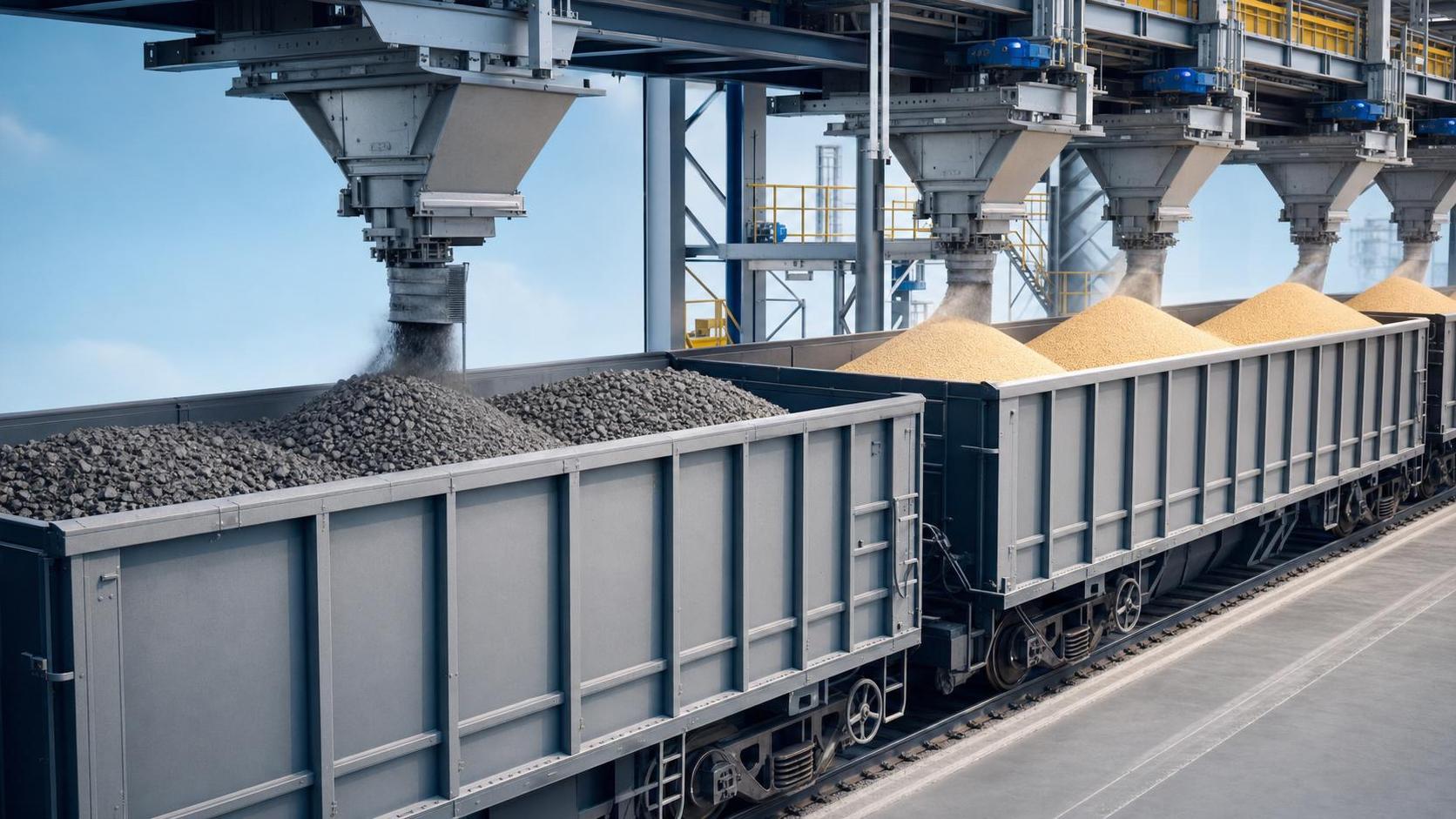
Bulk loading performance depends on more than wagon capacity
Bulk rail loading is rarely limited by headline payload alone. In practice, hopper wagon systems influence loading speed, fill consistency, dust control, axle balance, and the stability of the entire terminal cycle.
That is why hopper wagon systems matter across heavy-haul corridors, mining railheads, grain networks, and rail-port interfaces. The same wagon body can perform very differently when loading logic, discharge geometry, and infrastructure conditions change.
Within the engineering lens used by G-RFE, efficiency is not just tonnes per wagon. It is the combined result of mechanical design, track conditions, automation readiness, compliance with UIC, EN, and AAR references, and how reliably the wagon fits real operating sequences.
A well-matched hopper wagon system shortens dwell time under the loader, improves target weight accuracy, and reduces rework after off-spec loads. It also lowers the hidden losses caused by spillage, cleanup stoppages, and uneven wear.
Actual loading conditions change the value of hopper wagon systems
Different bulk flows create different loading priorities. Iron ore, coal, aggregates, fertilizer, and grain all interact with hopper wagon systems in distinct ways because density, particle size, moisture, and flow behavior are not the same.
In high-density mineral service, structural strength and axle load control usually dominate. In agricultural service, contamination control, sealing quality, and residue management can become more important than maximum throughput.
Another variable is the loading asset itself. A flood loader, chute-based silo, batch loading station, or automated rail-port terminal will place different demands on hopper opening size, wagon indexing accuracy, and communication between mechanical and control systems.
More importantly, intercontinental freight corridors increasingly connect wagons with signaling, dispatching, and terminal scheduling systems. That means hopper wagon systems are judged not only by loading performance, but also by consistency inside a larger logistics chain.
Where the main differences usually appear
In mine-to-port corridors, throughput is only half the story
Heavy-haul export lines often assume that larger hopper wagon systems automatically produce better loading efficiency. That is only true when the wagon geometry matches the loader profile and the track approach remains stable under high repetition.
In these corridors, loading speed must be balanced against dynamic loading quality. Fast fill rates can still create poor outcomes if the material peaks centrally, overloads one bogie set, or leaves operators correcting weight deviations afterward.
The better approach is to assess body shape, center-of-gravity behavior, and tolerance to variable ore moisture. Hopper wagon systems that keep material flow predictable under inconsistent feed conditions usually outperform designs that only look strong on static specifications.
This is also where standards-based evaluation matters. For assets benchmarked against UIC, EN, and AAR expectations, loading efficiency should be reviewed together with fatigue exposure, coupler forces, and maintenance access, not in isolation.
At grain and light-bulk terminals, precision often beats maximum speed
A very different pattern appears in grain and other lighter bulk services. Here, hopper wagon systems are judged less by raw impact resistance and more by how accurately they handle product integrity, compartment cleanliness, and repeatable batch loading.
Loading losses in these settings often come from fine issues. A poorly designed hatch area, difficult-to-clean corners, or inconsistent sealing can lead to contamination claims, moisture ingress, and slower wagon turnaround between commodities.
In actual use, the most efficient hopper wagon systems are often those that cooperate well with controlled loading sequences. Smooth fill behavior, manageable internal surfaces, and dependable gate mechanisms reduce inspection delays as much as they improve loading accuracy.
That makes the evaluation more operational than many expect. The right solution is not simply the largest hopper. It is the one that keeps product transitions, cleaning cycles, and dispatch schedules aligned over a long season.
Automation-ready terminals need hopper wagon systems with repeatable behavior
As rail loading becomes more automated, repeatability becomes a major efficiency factor. Automated terminals depend on predictable wagon positioning, known loading envelopes, and stable communication between loading logic and rolling stock movements.
In this environment, hopper wagon systems help efficiency when they support consistent indexing under loaders, reliable sensor interpretation, and fewer manual interventions. Small dimensional inconsistencies can create large timing losses across long consists.
This matters especially where smart signaling, GSM-R-linked operations, or integrated rail-port systems are in use. A wagon that loads well mechanically but creates repeated alignment exceptions can still undermine terminal productivity.
More advanced sites increasingly assess hopper wagon systems as part of a digital-operational stack. Loading efficiency then depends on how the wagon interacts with weigh systems, maintenance records, dispatch windows, and safety interlocks.
Useful checks before choosing a configuration
- Confirm whether the loading station uses continuous flow or batch dosing.
- Check axle load margins against actual commodity density, not nominal averages.
- Review how hopper wagon systems behave with wet, sticky, or segregating material.
- Compare cleaning access, gate service intervals, and spare parts complexity.
- Verify compatibility with track geometry, loader reach, and terminal automation logic.
Common misjudgments usually appear before the first loading cycle
One common mistake is treating similar bulk routes as identical. Two coal terminals may have different dust limits, loading speeds, moisture profiles, and maintenance windows. The same hopper wagon systems will not deliver the same efficiency in both places.
Another frequent error is focusing on procurement cost without modeling cleanup, gate wear, liner replacement, and loading interruptions. A lower-priced wagon can become less efficient if its service profile increases unscheduled downtime.
There is also a tendency to evaluate wagons independently from infrastructure. In reality, hopper wagon systems work through an interface that includes loaders, tracks, maintenance access, signaling constraints, and port or mine scheduling discipline.
The more practical method is to test for fit across the full operating cycle. Loading, transit stability, discharge behavior, inspection frequency, and return readiness all shape whether a wagon system is truly efficient.
A practical way to match hopper wagon systems to loading goals
A strong selection process begins with route conditions, not catalog data. Define the commodity envelope, target train length, loading mode, seasonal material changes, and the expected maintenance strategy before comparing hopper wagon systems.
Then build a short evaluation matrix around factors that actually influence loading efficiency. Fill accuracy, loading dwell, spillage exposure, structural reserve, automation compatibility, and serviceability usually reveal more than headline volume figures.
In the end, hopper wagon systems improve bulk rail loading efficiency when they are selected as operating systems, not isolated products. The most reliable gains come from matching wagon behavior to commodity flow, terminal design, maintenance reality, and corridor standards.
A useful next step is to map current loading delays against wagon design factors, then compare those findings with route-specific technical constraints. That usually makes the right hopper wagon systems choice clearer than starting from payload claims alone.
Industry Briefing
Get the top 5 industry headlines delivered to your inbox every morning.