
Why sustainable railway transport news matters in 2026

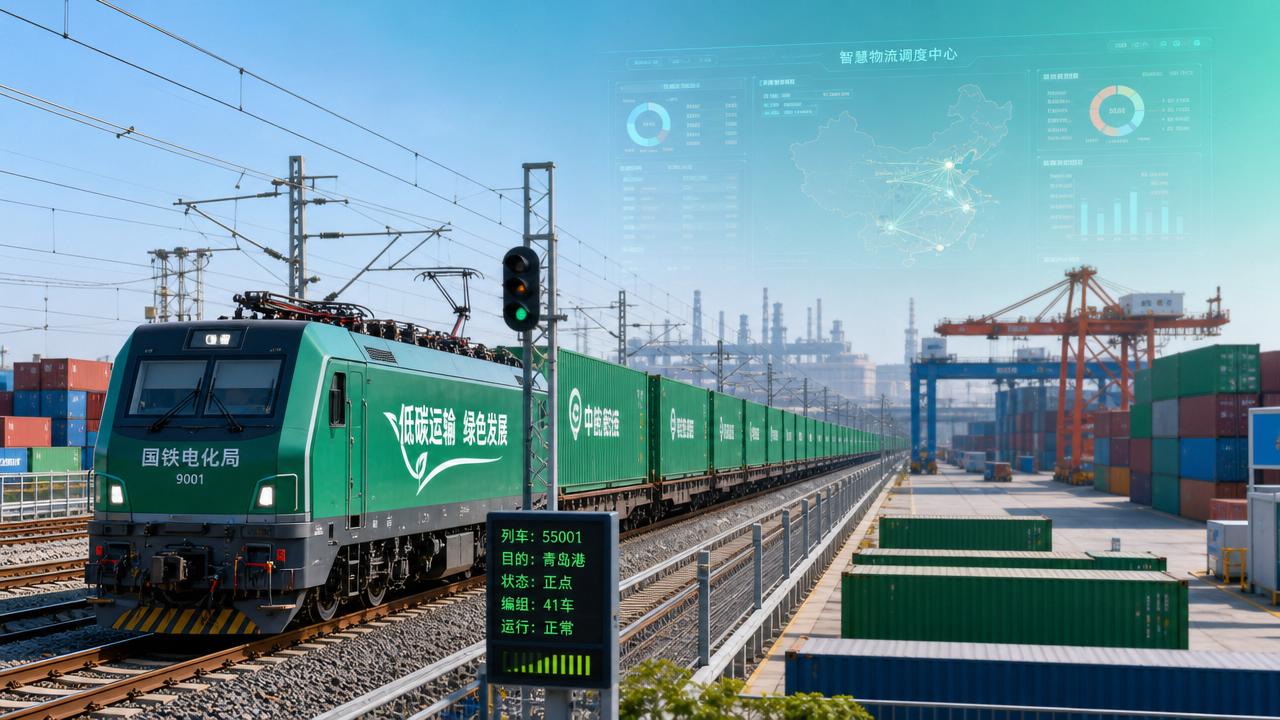
In 2026, sustainable railway transport news matters because it helps business decision-makers track the technologies, regulations, and infrastructure investments shaping resilient freight networks. From low-carbon locomotives to smart signaling and intermodal efficiency, timely insights reveal where risk, opportunity, and competitive advantage are emerging across global rail corridors.
For enterprise leaders, the issue is not whether rail is becoming more sustainable. It is whether their organization can read the signals early enough to allocate capital, manage compliance, and secure capacity.
That is why sustainable railway transport news has become a strategic input rather than a background industry update. It now influences procurement timing, corridor selection, technology partnerships, and long-term supply chain design.
Why this topic matters to decision-makers now
In 2026, rail sustainability is no longer a narrow environmental discussion. It sits at the intersection of energy cost, industrial policy, freight resilience, carbon reporting, and infrastructure modernization.
For business decision-makers, every major rail development can affect landed cost, service reliability, cross-border risk, and access to lower-emission logistics options. News in this space often signals future operating conditions before they appear in contracts.
That is especially true for organizations exposed to bulk commodities, containerized freight, industrial equipment, automotive parts, and strategic raw materials. Rail corridor performance increasingly shapes competitive position in regional and intercontinental trade.
In practical terms, sustainable railway transport news helps executives answer urgent questions. Which corridors are getting public funding, which fleets are being decarbonized, and which signaling upgrades will change throughput or border efficiency?
It also helps leaders distinguish temporary headlines from structural shifts. Not every pilot project matters, but repeated movement in standards, regulation, and financing usually indicates a lasting direction of travel.
What “sustainable” means in railway transport in 2026
Sustainability in rail now extends well beyond electrification. It includes energy efficiency, lifecycle maintenance, digital traffic control, modal shift from road to rail, asset durability, and interoperability across national systems.
For freight-focused businesses, the most relevant dimension is operational sustainability. This means moving more tonnage with lower energy intensity, fewer delays, better asset utilization, and stronger compliance with environmental expectations.
Low-carbon locomotives are part of the story, including electric, battery-assisted, hydrogen, and advanced diesel-electric platforms. But equally important are wagon design, braking systems, regenerative technologies, and route optimization.
Track infrastructure matters as much as rolling stock. Upgraded track geometry, predictive maintenance, heavier axle loads, and automated inspection can increase corridor efficiency while reducing energy waste and unplanned disruption.
Smart signaling also belongs at the center of sustainability. Systems such as ETCS, CBTC variants, GSM-R migration, and future digital communications improve capacity, spacing, safety, and timetable stability across dense networks.
Intermodal integration is another critical factor. Rail becomes meaningfully more sustainable when port terminals, inland depots, customs systems, and last-mile trucking are synchronized rather than managed as separate silos.
Why sustainable railway transport news is a business intelligence tool
Executives should treat this news category as a form of market intelligence. It reveals where governments, operators, and manufacturers are concentrating investment and where future freight advantages are likely to emerge.
For example, repeated news on cross-border electrification or ETCS rollout may indicate that a corridor will soon offer higher reliability, better scheduling, and lower compliance friction for international shippers.
Announcements about locomotive procurement often reveal broader policy direction. A shift toward battery-electric switchers, dual-mode freight locomotives, or hydrogen trials can signal future maintenance ecosystems and fueling infrastructure decisions.
News on rail-port systems is equally valuable. If terminals are expanding automated loading, customs digitization, or double-stack handling, that may reshape route economics for exporters and importers.
From a risk perspective, sustainable railway transport news can highlight bottlenecks before they become operational problems. Deferred maintenance, grid constraints, interoperability gaps, and delayed signaling upgrades often appear first in industry reporting.
From an opportunity perspective, the same news stream can identify subsidy windows, technology alliances, pilot programs, and capacity expansions that support better long-term planning for freight-intensive enterprises.
Which developments deserve the closest attention
Not every headline should carry the same weight. Decision-makers need a filter that prioritizes developments with clear implications for cost, resilience, and strategic positioning.
First, watch infrastructure funding and corridor designation. When a government or multilateral lender prioritizes a freight route, downstream effects often include capacity growth, improved reliability, and new private participation opportunities.
Second, track signaling and communication modernization. Capacity gains from digital signaling can materially affect train frequency, safety margins, maintenance planning, and border interoperability in ways that directly influence service quality.
Third, monitor rolling stock transitions. New locomotive classes, lighter wagons, automated couplers, onboard condition monitoring, and brake innovations can reduce total operating cost and improve network performance.
Fourth, assess energy pathway news carefully. Electrification remains foundational, but energy sourcing, power stability, charging infrastructure, and fuel economics determine whether a sustainability project is commercially scalable.
Fifth, pay close attention to standards and regulation. Updates tied to UIC, EN, AAR, emissions rules, safety certification, and data requirements can rapidly change procurement criteria and market access assumptions.
Finally, follow intermodal and port integration. Rail sustainability generates the greatest business value when handoffs between sea, inland terminal, warehouse, and road feeder services become faster and more predictable.
How this news affects investment and procurement decisions
For corporate leaders, the main value of sustainable railway transport news lies in decision quality. It helps determine where to invest, whom to partner with, and which technologies are mature enough to back.
In procurement, reliable news can improve timing. A company evaluating locomotives, signaling components, wagons, or maintenance systems gains leverage when it understands upcoming regulation, competing technical standards, and vendor deployment momentum.
It also supports better capital allocation. If one corridor is receiving synchronized upgrades in track, signaling, and terminal handling, investment near that corridor may produce stronger returns than expansion in a stagnant network.
For infrastructure and EPC participants, the news flow helps identify where project pipelines are becoming real. Early visibility into policy commitments and technical specifications supports bid strategy and partnership formation.
For freight users, these developments affect network design. A shipper may shift modal mix, renegotiate contracts, or prioritize rail-served facilities if sustainable corridors show better long-term economics than road-heavy alternatives.
Most importantly, this information reduces the chance of stranded decisions. Leaders can avoid overcommitting to technologies, corridors, or assets that look attractive in isolation but lack regulatory or operational support.
What enterprise readers care about most
Business decision-makers generally ask a practical set of questions when they consume sustainable railway transport news. They want to know what changes, how soon it changes, and whether the change improves commercial outcomes.
They also want to understand implementation risk. Is a project funded, permitted, and technically coherent, or is it still a political announcement with uncertain delivery?
Another priority is measurable return. Executives need evidence that sustainability improvements translate into lower fuel exposure, fewer delays, better asset life, stronger compliance, or more resilient freight capacity.
Cross-border complexity is a major concern as well. A corridor is only as valuable as its weakest operational link, especially where signaling systems, customs procedures, and maintenance regimes differ between jurisdictions.
Leaders also care about scalability. Pilot locomotives and demonstration terminals are interesting, but business value comes from repeatable deployment across networks, fleets, and multi-country logistics chains.
This is why high-quality sustainable railway transport news must move beyond simple announcements. It should explain technical readiness, standards alignment, financing logic, and the likely effect on service performance.
How to separate meaningful signals from greenwashing
As sustainability becomes a competitive narrative, some reporting will naturally emphasize ambition over execution. Decision-makers need a disciplined way to test whether a development is strategically meaningful.
Start with infrastructure reality. If a low-emission locomotive project lacks charging, fueling, grid access, or maintenance support, the deployment case may remain limited despite positive headlines.
Next, examine standards compatibility. Technologies that do not align with established rail norms or interoperability requirements often face delays, cost overruns, or restricted cross-network usability.
Then review the economics. A sustainability claim becomes more credible when there is evidence of lifecycle cost improvement, productivity gains, subsidy structure, or long-term demand support.
Check operational metrics whenever possible. Capacity uplift, punctuality, energy consumption per ton-kilometer, maintenance intervals, and dwell time reduction are more informative than broad emissions statements alone.
Finally, look for ecosystem depth. The strongest signals involve coordinated change across operators, infrastructure managers, regulators, ports, technology vendors, and financing institutions rather than isolated pilot activity.
The strategic value of staying informed in 2026
In 2026, sustainable railway transport news matters because rail is becoming a policy-backed, technology-rich backbone for lower-carbon trade. That makes information in this field directly relevant to business strategy.
For enterprise decision-makers, the value is clear. Timely insight improves procurement, lowers uncertainty, sharpens investment choices, and reveals where resilient freight capacity is actually being built.
The organizations that benefit most will not be those that merely follow headlines. They will be the ones that interpret sustainable railway transport news through the lenses of standards, infrastructure readiness, interoperability, and return on capital.
In a market shaped by decarbonization targets, corridor competition, and supply chain pressure, informed attention creates advantage. Sustainable rail developments are no longer peripheral news; they are signals of where industrial logistics is heading next.
Industry Briefing
Get the top 5 industry headlines delivered to your inbox every morning.