
What Locomotive Cab Ergonomics Benchmarks Actually Reveal

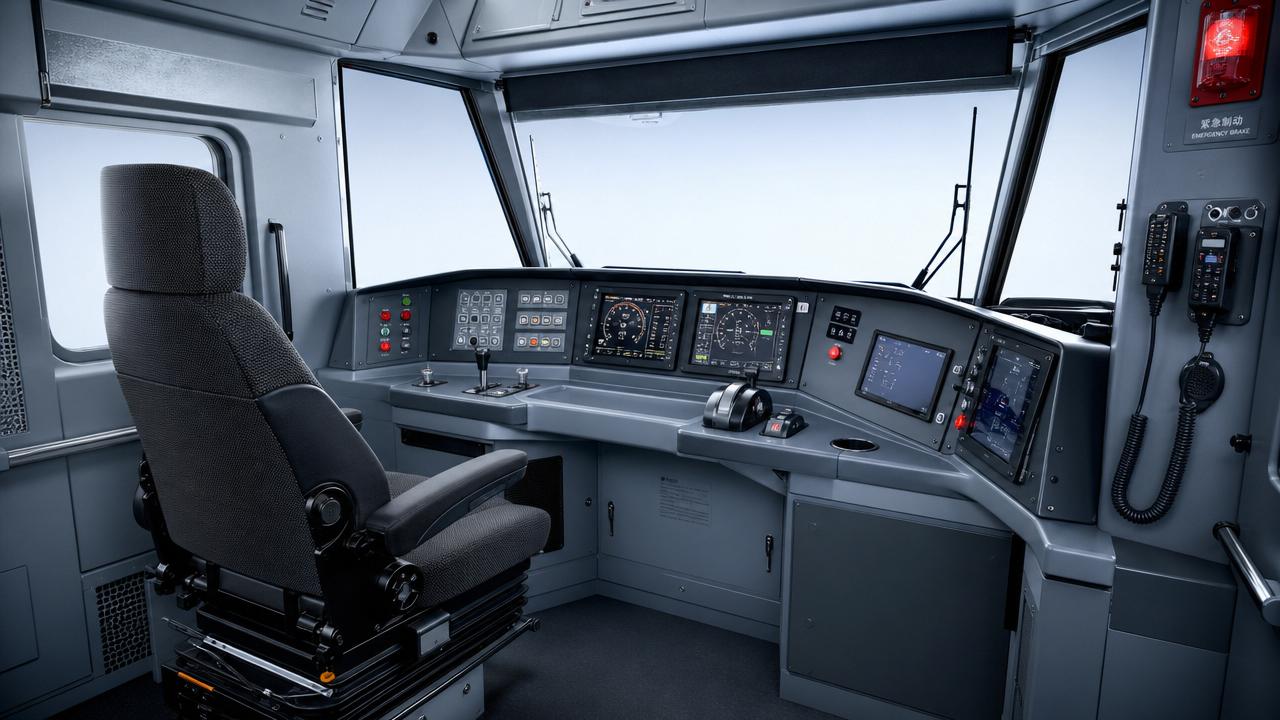
What do locomotive cab ergonomics benchmarks actually reveal beyond seat comfort and control layout? For technical evaluators, they expose measurable links between human factors, operational safety, driver fatigue, visibility, and long-haul efficiency. This article examines how these benchmarks help assess cab design against international engineering expectations, offering a practical lens for comparing locomotive platforms in demanding freight and cross-border railway environments.
Why are locomotive cab ergonomics benchmarks attracting so much attention in technical evaluation?
For technical assessment teams, locomotive cab ergonomics benchmarks are no longer a secondary design topic. They have become a structured way to verify whether a locomotive is truly fit for sustained, high-consequence operation. In heavy-haul freight, cross-border corridors, desert and mountain routes, and mixed-traffic networks, a cab is not simply a workspace. It is the operational interface between the human driver and the locomotive’s traction, braking, signaling, vigilance, and communication systems.
This is why locomotive cab ergonomics benchmarks matter: they translate human-factor quality into measurable engineering criteria. They reveal whether controls can be reached without strain, whether sightlines remain effective in poor weather or night operation, whether alarms are distinguishable under stress, and whether seating posture supports safe attention across long duty cycles. For evaluators working within UIC, EN, or AAR-informed procurement frameworks, these benchmarks offer evidence instead of impressions.
In practical terms, an ergonomically weak cab can increase reaction time, raise cognitive load, reduce signal recognition consistency, and create fatigue accumulation that may not appear in static demonstrations. A cab that looks modern can still perform poorly when examined against structured ergonomic benchmarks. That gap between appearance and operational suitability is precisely what evaluators need to uncover.
What do locomotive cab ergonomics benchmarks actually measure?
A common misconception is that locomotive cab ergonomics benchmarks focus mainly on the driver’s seat. In reality, the benchmark scope is much wider and usually intersects mechanical design, safety engineering, display architecture, climate management, vibration control, and maintainability. The strongest evaluations examine the full operator environment rather than isolated components.
Core measurement categories often include:
- Driver reach envelope for traction, braking, horn, radio, vigilance, and auxiliary controls
- Seat adjustability, posture support, shock attenuation, and compatibility with different body sizes
- Forward, lateral, and downward visibility, including signal, platform, trackside, and coupling-related sightlines
- Display readability in daylight, low-light, and glare conditions
- Acoustic environment, alarm differentiation, and speech intelligibility
- Cab climate performance, airflow distribution, and thermal stability
- Vibration exposure, ride harshness, and noise transfer from engine or bogie systems
- Emergency egress, crew movement space, and interface clarity during abnormal operations
When locomotive cab ergonomics benchmarks are applied rigorously, they can reveal whether the design supports normal operation, degraded operation, and emergency decision-making equally well. That is important because many operator errors occur not during routine cruise conditions but during transitions: braking into restrictions, receiving multiple warnings, coping with poor adhesion, or responding to signaling anomalies.
How do these benchmarks connect directly to safety and fatigue risk?
The strongest value of locomotive cab ergonomics benchmarks is their ability to expose hidden safety risks before fleet deployment. Human fatigue is rarely caused by one dramatic design flaw. More often, it comes from cumulative ergonomic friction: a seat that creates pressure points after four hours, a control panel that requires repetitive shoulder rotation, poor demisting that degrades visibility during weather changes, or alarm logic that overloads attention in dense traffic territory.
For technical evaluators, these benchmarks help answer a more important question than “Is the cab acceptable?” The better question is “How stable is operator performance over time?” A cab may feel acceptable during a short demonstration run, yet still drive fatigue growth over an eight-to-twelve-hour freight duty. Benchmarking therefore needs both static inspection and dynamic operational validation.
Several safety-relevant indicators commonly emerge from ergonomic assessments:
- Reduced head and torso movement needed to scan instruments and route conditions
- Lower likelihood of missed signal or indicator recognition
- Faster and more consistent access to critical controls under time pressure
- Improved vigilance retention during monotonous long-haul operation
- Less physical strain that could distract from route monitoring
In institutional procurement or fleet modernization programs, these findings are especially relevant because they link ergonomic quality with incident prevention, crew acceptance, training burden, and even life-cycle reliability. A driver who works in a poorly designed cab may compensate through experience, but that does not mean the design is safe or efficient at system level.
Which benchmark findings matter most when comparing locomotive platforms?
When several locomotive platforms appear similar on paper, locomotive cab ergonomics benchmarks can become a decisive differentiation tool. Technical evaluators should focus less on marketing descriptions and more on operational evidence. Not every benchmark result carries the same weight. The most important findings are usually those that affect safety-critical consistency across route types and driver populations.
The comparison should not stop at whether a feature exists. It should test how well the feature performs in real use. A digital display, for example, is not automatically superior to analog or hybrid architecture. Evaluators need to examine glare resistance, hierarchy of information, warning prioritization, redundancy, and how quickly the driver can interpret abnormal conditions.
In short, locomotive cab ergonomics benchmarks reveal how design decisions translate into repeatable operating quality. For G-RFE-style technical intelligence work, these details are not cosmetic; they help distinguish a locomotive optimized for brochure presentation from one prepared for heavy-duty service reality.
Are there common mistakes evaluators make when interpreting locomotive cab ergonomics benchmarks?
Yes, and these mistakes can distort procurement decisions. One frequent error is treating compliance as proof of excellence. Meeting a standard threshold does not always mean the cab is operationally superior. It only means minimum criteria may have been achieved. Benchmark interpretation should therefore compare margin, consistency, and route-specific suitability, not just pass-or-fail status.
Another mistake is evaluating the cab without reference to mission profile. A locomotive intended for short regional operations may tolerate a different ergonomic compromise than a unit assigned to long-haul, multi-climate freight corridors. Technical evaluators should connect benchmark findings to crew duty length, signaling regime, route density, vibration environment, and local maintenance capability.
A third mistake is relying too heavily on showroom impressions. Locomotive cab ergonomics benchmarks should include dynamic trials, diverse driver body-size testing, low-visibility scenarios, and interaction with onboard systems such as ETCS, GSM-R, vigilance devices, and brake monitoring functions. Static inspection alone often misses the workload peaks that define real ergonomic performance.
Finally, some teams separate ergonomics from maintainability and retrofit planning. That is risky. If replacing a seat, relocating a display, or improving airflow requires major redesign, the cost of correcting weak ergonomic performance can escalate rapidly after delivery.
How should technical evaluators build a practical assessment process around these benchmarks?
A strong process starts by defining operational use cases before reviewing supplier claims. Technical evaluators should map the intended duty profile: haul class, average trip duration, climate range, signaling complexity, route geometry, crew staffing model, and cross-border interoperability demands. Only then can locomotive cab ergonomics benchmarks be interpreted in context.
The assessment process is usually strongest when it combines document review, physical inspection, simulated task analysis, and field validation. Supplier drawings and declarations are useful, but they should be tested against actual driver interaction. In many freight projects, a benchmark that appears minor on paper becomes decisive in operation, especially where fatigue resistance and rapid response are essential.
A practical evaluation sequence may include:
- Confirm applicable standards, corridor requirements, and operator rules
- Review cab layout drawings, visibility studies, and control logic documentation
- Inspect seating range, display readability, and reach envelope in person
- Run scenario-based task checks for normal, degraded, and emergency conditions
- Collect driver feedback from multiple body sizes and operating backgrounds
- Score ergonomic findings together with safety, maintainability, and retrofit risk
This approach turns locomotive cab ergonomics benchmarks into decision-grade intelligence rather than a checklist exercise. It also supports more transparent dialogue with OEMs, national railway authorities, and EPC stakeholders that need defensible technical justification.
What should buyers, engineers, and railway institutions confirm before moving toward specification or procurement?
Before finalizing a specification, stakeholders should clarify which ergonomic outcomes are mission-critical and which are merely desirable. For example, if the fleet will serve long-distance freight routes with frequent night operation, visibility management, fatigue control, and alarm prioritization may deserve heavier weighting than in short-haul shunting or terminal roles.
They should also confirm whether the locomotive cab ergonomics benchmarks used in evaluation align with driver population diversity, training model, and onboard technology stack. A cab that performs well in one region may require changes when adapted to different signaling protocols, communication systems, or operating postures.
Most importantly, evaluators should ask whether the supplier can provide evidence, not just claims. That evidence may include visibility simulations, vibration test data, environmental performance results, ergonomic studies, trial feedback, and standard-compliance documentation tied to actual cab configuration rather than generic platform literature.
Quick FAQ for decision-makers
What do locomotive cab ergonomics benchmarks ultimately reveal?
They reveal whether a locomotive cab is merely acceptable on paper or genuinely engineered for sustained, safe, high-performance operation. For technical evaluators, locomotive cab ergonomics benchmarks provide a disciplined way to connect human factors with asset reliability, driver effectiveness, training efficiency, and operational resilience. In a market shaped by heavier freight demand, interoperability pressure, and stricter safety expectations, that insight is increasingly strategic.
If you need to confirm a specific locomotive platform, retrofit direction, corridor-fit requirement, evaluation method, or supplier comparison path, the most useful next conversation should focus on operating profile, applicable standards, driver workload assumptions, cab-interface evidence, and what test data the manufacturer can provide before procurement moves forward.
Industry Briefing
Get the top 5 industry headlines delivered to your inbox every morning.