
Traction inverter power density and the cooling tradeoff

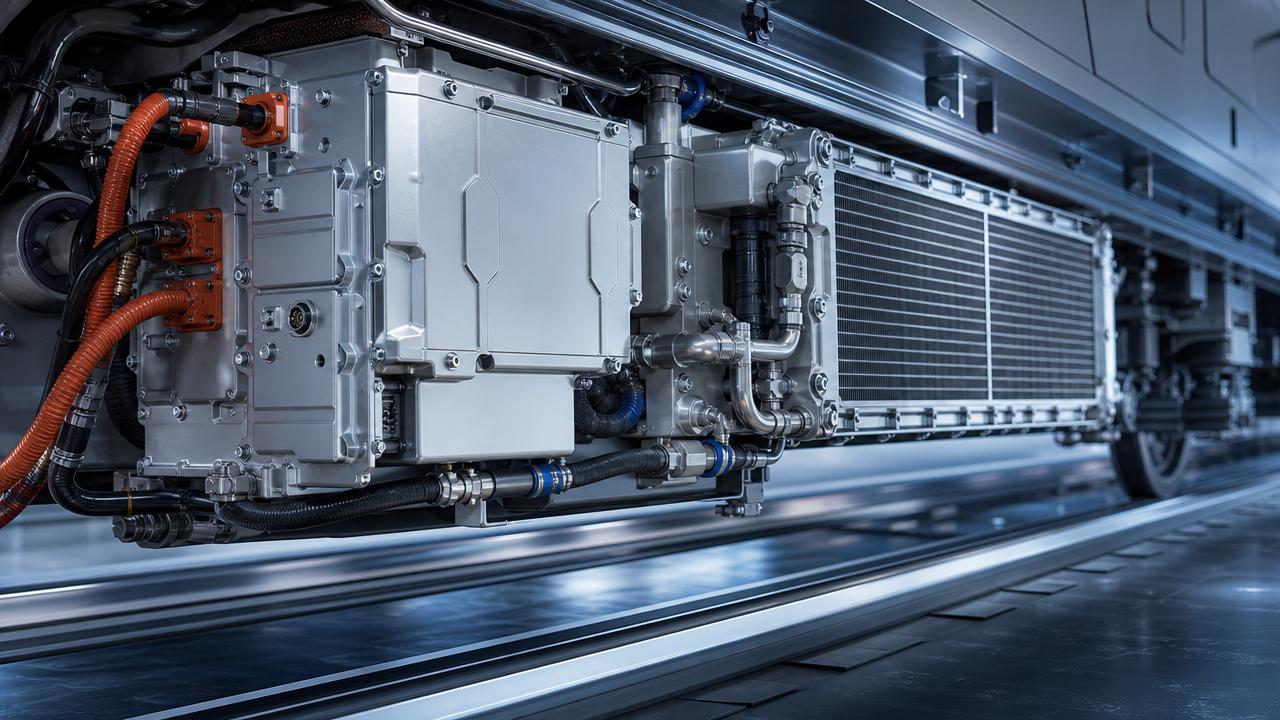
For project leaders in rail traction programs, traction inverter power density is more than a component metric—it drives vehicle packaging, thermal margins, reliability, and lifecycle cost. As power modules become more compact, the cooling tradeoff grows sharper, affecting system efficiency, maintenance strategy, and operational resilience. This article examines how engineering teams can balance density and cooling performance in demanding railway-freight applications.
In practical terms, the core question behind traction inverter power density is not whether higher density is technically possible. It is whether a denser inverter creates measurable program value once heat rejection, duty cycle, maintainability, and railway reliability targets are included. For project managers and engineering leads, that is the decision that matters most.
In heavy-haul and freight rail applications, the right answer is usually a balanced one. Higher power density can reduce enclosure size, cable length, and platform integration constraints. However, if density gains depend on aggressive cooling architectures, narrow thermal margins, or difficult service access, the result may be higher system risk and greater lifecycle cost. The strongest designs are rarely the most compact on paper; they are the ones that sustain performance under real railway operating conditions.
What project leaders are really evaluating when they assess traction inverter power density
Search intent around this topic is typically commercial-technical rather than academic. A project leader is usually trying to decide how to compare inverter options, what tradeoffs should be accepted, and how much emphasis should be placed on compactness versus thermal robustness. The reader wants a framework for judgment, not just a definition.
For rail-freight programs, power density influences several downstream decisions at once: carbody or underframe packaging, cooling loop design, auxiliary power demand, EMC layout, maintenance access, and even corridor availability targets. That means the inverter cannot be evaluated as an isolated converter. Its value depends on how it behaves inside the full traction architecture.
This is why experienced teams treat power density as a system-level metric. A supplier may present an impressive kW/L figure, but a railway operator or EPC contractor should ask what thermal assumptions support that number. Was it measured at peak output only? Under which ambient conditions? With what coolant inlet temperature? At what altitude, contamination level, and service interval? Without these answers, density comparisons can be misleading.
Why higher density is attractive in modern rail traction platforms
The push toward higher traction inverter power density is understandable. Locomotives and freight traction units are under constant pressure to improve energy efficiency, reduce weight, free installation space, and simplify vehicle architecture. A more compact inverter may allow better placement of other systems, shorter high-current busbars, and tighter integration with traction motors, transformers, or onboard energy systems.
In some programs, compactness also supports platform commonality. If one inverter family can fit multiple vehicle layouts, OEMs can standardize cabinet design and reduce engineering variation across regional product lines. This matters for organizations managing multi-country rail projects where standards, axle loads, and environmental conditions differ but procurement economics still favor common modules.
There is also a direct operational argument. Reduced internal path lengths may lower parasitic losses and improve electrical performance. Depending on topology and semiconductor choice, denser packaging can support faster switching, cleaner mechanical integration, and potentially lower overall converter mass. In competitive bids, these benefits can look compelling.
Yet none of these advantages are free. As switching elements, gate drivers, capacitors, and magnetic components are packed more tightly, local heat flux rises. This is where the cooling tradeoff becomes decisive.
The cooling tradeoff: the real constraint behind compact inverter design
The fundamental challenge is simple: as inverter power density increases, the amount of heat that must be removed per unit volume also rises. In traction duty, this heat is not steady and gentle. It reflects repeated acceleration events, gradients, regenerative braking transitions, ambient swings, and long daily operating cycles. A cooling system that looks adequate in a steady-state model may underperform in actual freight service.
Project teams therefore need to think beyond “can this inverter be cooled?” and focus on “can this inverter be cooled reliably, efficiently, and maintainably over the full operating envelope?” That distinction is critical. Many designs can survive nominal conditions. Fewer can maintain lifetime expectations when exposed to dust, vibration, coolant degradation, high ambient temperatures, and partial-load inefficiencies.
Higher-density traction inverters often require more sophisticated liquid cooling, optimized cold-plate geometry, tighter thermal interfaces, and careful management of coolant quality and flow stability. These features may be entirely justified, but they add dependencies. If the cooling loop becomes more complex, the project should account for additional pumps, sensors, filtration, leak management, and maintenance protocols.
In freight railway service, thermal resilience is especially important because operating patterns are punishing and route delays are expensive. A compact inverter that saves cabinet space but introduces a higher probability of thermal derating during summer peaks may weaken the business case rather than improve it.
Which metrics matter more than a headline kW/L figure
For decision-makers, one of the most useful steps is to move the conversation away from a single density metric and toward a broader scorecard. The first question is not “what is the highest power density available?” but “what density can be sustained at our required duty cycle with acceptable reliability margin?”
Several metrics deserve close attention. Continuous power at defined ambient and coolant conditions is more important than a short-duration peak number. Thermal cycling capability matters because repeated expansion and contraction affect solder joints, bond wires, substrates, and interfaces. Efficiency across the real operating profile matters because cooling demand and energy cost are linked. Pressure drop in the cooling circuit matters because it affects pump sizing and parasitic load.
Teams should also ask for junction temperature assumptions, hotspot distribution, derating curves, and mission-profile validation. In railway procurement, the difference between lab performance and route performance often comes from these details. A vendor with a moderate density figure but well-documented thermal validation may represent lower program risk than a vendor offering more aggressive packaging with limited field evidence.
Serviceability is another metric that deserves stronger weighting than it often receives. How quickly can cooling components be isolated, inspected, or replaced? Can heat exchangers be cleaned without major disassembly? How sensitive is performance to coolant contamination or reduced flow? These questions have direct implications for fleet availability.
How the cooling strategy changes the business case
The cooling tradeoff is not only an engineering issue; it is a capital and operating cost issue. Air cooling may appear simpler, but for high-power traction applications it can become bulky, noisy, and sensitive to contamination. Liquid cooling can unlock higher power density and tighter packaging, but it introduces hoses, connectors, seals, pumps, and heat exchangers that must be qualified for railway vibration and long-life operation.
For project leaders, the correct comparison is total system cost, not inverter cost alone. A denser inverter may reduce cabinet volume, save weight, and simplify vehicle integration, but if it requires a more expensive thermal loop or more frequent maintenance intervention, the net benefit may narrow. Conversely, a carefully engineered liquid-cooled system may justify itself if it improves continuous rating, protects semiconductor lifetime, and stabilizes performance across difficult climates.
This is why the cooling architecture should be reviewed early alongside vehicle layout and operating profile. Decisions made at concept stage can lock in either a robust thermal path or a fragile one. Late-stage changes are expensive because they affect enclosure design, coolant routing, cable placement, and sometimes certification work.
A useful rule for rail projects is this: if higher inverter density shifts complexity into cooling, make sure that complexity is visible in the business case. Hidden thermal complexity has a way of reappearing later as reliability events, maintenance burden, or derating limitations.
Rail-freight operating conditions make thermal margin more valuable than brochure compactness
Freight railway applications differ from lighter-duty transport in one important respect: the duty cycle is unforgiving. Long trains, repeated traction demands, harsh climates, and route-level reliability expectations all increase the value of conservative thermal design. In this context, a modestly larger inverter with strong cooling margin can outperform a smaller unit over the life of the asset.
Heavy-haul locomotives and freight traction packages often operate in dusty yards, tunnels, coastal corrosion zones, and regions with wide temperature swings. These conditions stress both electronics and cooling hardware. Thermal interfaces age. Filters load up. Coolant chemistry drifts. Heat exchangers foul. Pumps lose efficiency. Every one of these effects reduces real-world cooling performance over time.
That is why railway engineering teams should assess density through the lens of degraded-state operation, not pristine commissioning condition only. Ask what happens when ambient temperature rises above expectation, when radiator performance drops, or when one part of the cooling loop underperforms. Does the inverter derate gracefully? Does it provide predictive diagnostics? Can the train continue service at reduced output, or is availability sharply affected?
For project managers responsible for delivery milestones and long-term contract performance, these questions are not secondary. They often determine whether the chosen platform remains commercially successful after deployment.
How to evaluate supplier claims and avoid common decision traps
A common trap is to compare suppliers using only nominal power density and efficiency figures from datasheets. These values can be useful, but they rarely describe the same boundary conditions. One supplier may state density at inverter-only level, another at cabinet level. One may exclude auxiliaries, another may include them. One may assume ideal coolant inlet temperatures that are difficult to maintain in summer operation.
To avoid distorted comparisons, request a normalized evaluation package. This should include mechanical envelope, continuous and peak power definitions, coolant conditions, pressure drop, full-load and part-load efficiency, thermal derating curves, expected maintenance intervals, and validation references from similar rail applications. If possible, compare against a mission profile that resembles your route conditions rather than a generic industrial cycle.
Another trap is undervaluing integration interfaces. A high-density inverter may perform well on its own but create challenges in the wider system, such as tighter service clearances, more complex coolant manifold routing, or stricter EMC layout requirements. Those issues can consume engineering time and introduce schedule risk during vehicle integration and testing.
Supplier maturity matters as well. In railway programs, a slightly less aggressive design backed by proven field performance, strong documentation, and support for international standards can be the better strategic choice. Reliability evidence, spare parts planning, and diagnostic capability should carry significant weight in the evaluation.
A practical decision framework for project and engineering leaders
When selecting or approving a traction inverter platform, project leaders should organize the decision around five questions. First, what continuous performance is required under the actual operating envelope? Second, what thermal margin remains under degraded cooling conditions? Third, what complexity does the cooling method add to the vehicle and maintenance plan? Fourth, how does the design affect lifecycle cost and availability? Fifth, what proof exists from comparable rail deployments?
This framework helps align engineering and commercial stakeholders. Mechanical teams can assess packaging and maintainability. Electrical teams can review efficiency and derating. Operations teams can evaluate service impact. Procurement can compare total cost rather than unit price. The result is a decision process more closely linked to asset value.
It is also useful to separate “density that creates value” from “density that creates presentation appeal.” Value-creating density improves integration, efficiency, and platform flexibility without eroding thermal resilience. Presentation-driven density mainly improves the headline metric while shifting burden into cooling, validation, or maintenance. The distinction is subtle, but it is one of the most important judgments a rail project team can make.
The strategic takeaway for traction programs
In the rail sector, traction inverter power density should be treated as a strategic design variable, not a standalone badge of advancement. Higher density can absolutely support better vehicle packaging and stronger platform competitiveness. But once cooling requirements escalate, the engineering tradeoff becomes broader than component innovation. It touches reliability, serviceability, fleet availability, and whole-life economics.
For project management and engineering leadership teams, the most defensible position is to pursue the highest practical density that preserves comfortable thermal margin, maintainable cooling architecture, and validated railway durability. That may not produce the smallest inverter in the market, but it is more likely to produce the strongest result in freight service.
Ultimately, the best inverter for a railway-freight program is not the one with the most aggressive brochure specification. It is the one that delivers sustained performance under real duty cycles, integrates cleanly into the vehicle, and keeps thermal risk under control throughout the asset lifecycle. That is where the real value of power density is either proven or lost.
Industry Briefing
Get the top 5 industry headlines delivered to your inbox every morning.