
Traction Motor Efficiency Benchmarks That Expose Hidden Energy Trade-Offs

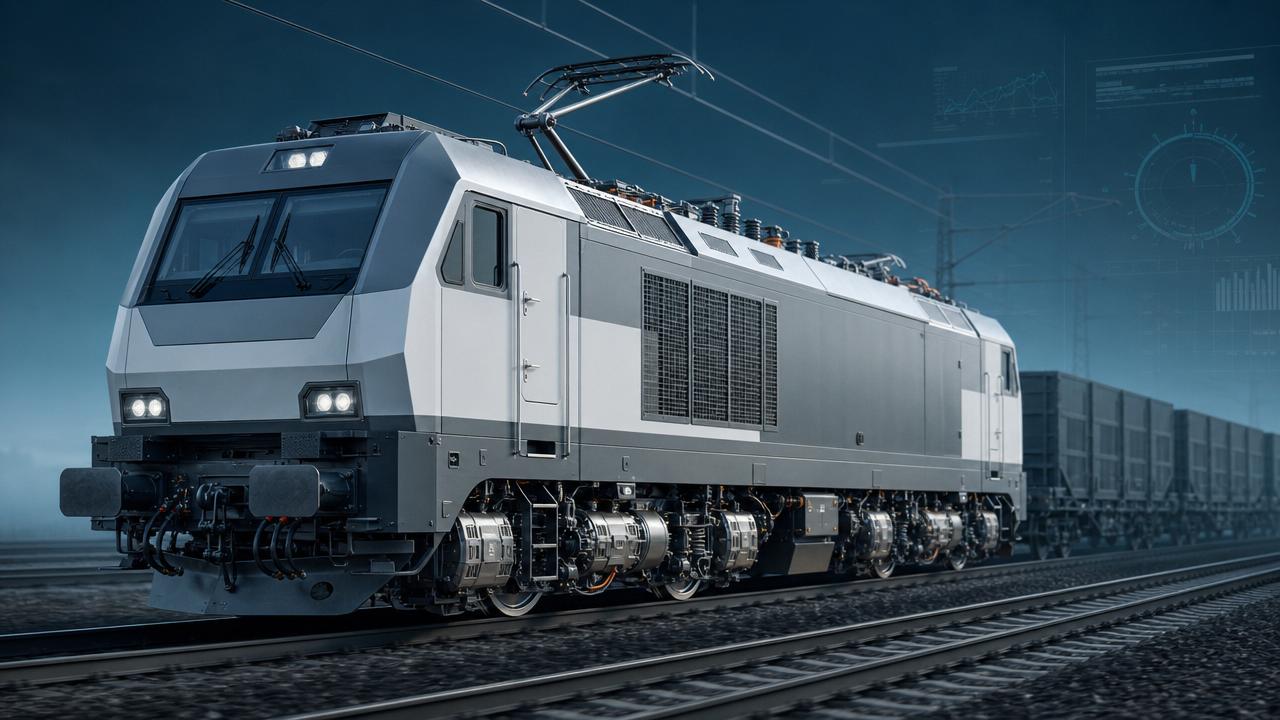
For rail systems operating under tighter energy targets, higher axle loads, and more demanding duty cycles, traction motor efficiency benchmarks have become a strategic decision tool rather than a simple engineering comparison. In locomotive and freight applications, a headline efficiency number rarely tells the full story. What matters is how motor efficiency behaves across starting torque, continuous operation, regenerative braking, thermal saturation, altitude, dust exposure, and variable inverter control. That is why traction motor efficiency benchmarks increasingly help expose hidden energy trade-offs that shape lifecycle cost, maintenance planning, corridor capacity, and overall fleet reliability.
Why traction motor efficiency benchmarks are gaining new importance across rail freight systems
The industry is moving beyond nominal efficiency claims because network economics have changed. Heavy-haul corridors now face stricter decarbonization pressure, greater sensitivity to electricity price volatility, and stronger expectations for asset transparency under international engineering and operating standards. In this environment, traction motor efficiency benchmarks are used to compare not only motor designs, but also the total interaction between the motor, converter, cooling architecture, gearbox, adhesion strategy, and route profile.
A motor that performs well at one test point may consume more energy over a real duty cycle if it runs hotter, loses efficiency at partial load, or requires aggressive cooling that increases auxiliary power draw. Likewise, one traction package may offer superior peak torque but create hidden penalties in harmonic behavior, bearing stress, or wheel-rail adhesion management. These are the trade-offs that modern traction motor efficiency benchmarks are designed to reveal.
The market signal is clear: benchmarking is shifting from static ratings to duty-cycle truth
Across integrated freight networks, the strongest trend is the shift from laboratory nameplate data toward route-specific performance mapping. Operators and engineering evaluators increasingly ask how efficiency changes during low-speed haulage, repeated acceleration, long gradient climbs, hot-weather operation, and regenerative braking windows. This means the most useful traction motor efficiency benchmarks now reflect operating reality rather than isolated certification values.
This trend is especially relevant in cross-border and intermodal rail systems, where power supply conditions, signaling constraints, track geometry, train mass, and operating stops can vary sharply. A traction motor package that appears competitive on paper may underperform when exposed to mixed traffic schedules, frequent power transitions, or heavy trailing loads. As a result, benchmarking is becoming more granular, more digital, and more connected to total corridor performance.
Key drivers behind this shift
Where hidden energy trade-offs usually appear in traction motor efficiency benchmarks
Not all losses are visible in a single efficiency curve. The most valuable traction motor efficiency benchmarks expose where one design advantage is offset by another system penalty. In practical rail engineering, these hidden trade-offs often appear in the following areas:
- Partial-load efficiency: Freight locomotives do not operate at one constant power point. Motors with excellent peak efficiency may lose ground during extended medium-load operation.
- Thermal derating behavior: A motor that heats quickly may require current limitation, reducing effective tractive effort and increasing trip energy use.
- Cooling power demand: Better thermal control can improve motor survival, but if fan or liquid-cooling systems consume too much auxiliary power, net efficiency drops.
- Inverter-motor matching: Switching strategy, harmonic content, and control logic can materially alter usable efficiency and component wear.
- Low-speed adhesion and slip control: More aggressive torque delivery may improve launch performance while increasing wheel slip events and wasted energy.
- Regenerative braking capture: Some systems show high motoring efficiency but weaker real-world energy recovery due to network constraints or control limitations.
In short, robust traction motor efficiency benchmarks should not ask only, “How efficient is the motor?” They should also ask, “Efficient under which load, in which climate, for how long, and with what system penalties?”
How these benchmark shifts affect rolling stock, infrastructure planning, and operating resilience
The broader impact goes well beyond the traction motor itself. When traction motor efficiency benchmarks become more realistic, rolling stock evaluations tend to shift toward total energy architecture. This affects locomotive platform selection, converter sizing, bogie integration, maintenance intervals, spare parts strategy, and cooling system design. It can also influence whether a fleet remains operationally stable on hot routes, mountain gradients, or high-utilization freight schedules.
At the network level, benchmark quality also matters for substation loading, timetable robustness, and regenerative energy planning. If traction packages consume more than modeled during repeated starts or prolonged climbs, energy infrastructure may be undersized in practice. If thermal derating appears earlier than expected, dispatch reliability can suffer. Better traction motor efficiency benchmarks therefore support not only equipment selection, but also corridor engineering and asset risk control.
Typical effects by business function
- Fleet engineering: clearer comparison of induction, permanent magnet, and advanced synchronous solutions under actual traction duty cycles.
- Operations: more accurate energy forecasting for route assignment, train marshalling, and seasonal planning.
- Maintenance: earlier identification of insulation stress, bearing exposure, contamination sensitivity, and cooling-system burden.
- Infrastructure: improved visibility into feeder demand, regenerative absorption limits, and system-wide efficiency assumptions.
What deserves closer attention when reviewing traction motor efficiency benchmarks
A useful benchmark package should make hidden assumptions visible. The following points deserve careful attention when interpreting traction motor efficiency benchmarks for freight, heavy-haul, or mixed-traffic rail projects:
- Whether efficiency is reported at nominal rating only, or across a full torque-speed map.
- How ambient temperature, ventilation constraints, dust, and altitude influence sustained performance.
- Whether benchmark data includes inverter losses, auxiliary loads, and regenerative braking effectiveness.
- How the motor behaves during repeated low-speed starts, hill climbing, and long continuous haulage.
- What standards or test references govern the measurements, including UIC, EN, AAR, or project-specific validation methods.
- How field data compares with bench-test claims after wheel wear, contamination, and real operational variance are introduced.
This level of scrutiny is increasingly necessary because efficiency leadership is often situational. One platform may lead in low-speed heavy-haul traction, another in medium-speed corridor operations, and another in regenerative urban freight or intermodal cycles. The role of traction motor efficiency benchmarks is to reveal which solution aligns with the actual mission profile.
A practical framework for judging the next phase of efficiency performance
Looking ahead, the strongest benchmark methodologies will combine standardized test discipline with route-aware digital modeling. They will compare motor technologies not just by efficiency percentage, but by network contribution: energy use per ton-kilometer, thermal stability across seasons, braking energy recovery quality, and maintenance burden over service life. That is the direction in which advanced traction motor efficiency benchmarks are clearly moving.
The next useful step is to benchmark for operating reality, not brochure performance
When evaluating future rail traction investments, the most reliable path is to structure comparisons around actual corridor duty cycles, environmental stress, interoperability requirements, and long-term asset behavior. Well-built traction motor efficiency benchmarks can expose hidden energy trade-offs before they become budget overruns, thermal constraints, or service disruptions. They also provide a clearer basis for aligning rolling stock strategy with infrastructure capacity, signaling discipline, and low-carbon freight objectives.
A disciplined review should therefore request full efficiency maps, thermal performance evidence, auxiliary power data, regenerative braking assumptions, and field-validation references. In a market defined by heavy loads and rising efficiency expectations, the value of traction motor efficiency benchmarks lies in turning technical detail into better long-term decisions.
Industry Briefing
Get the top 5 industry headlines delivered to your inbox every morning.