
Railway wheelset wholesale: when lower pricing raises lifecycle risk

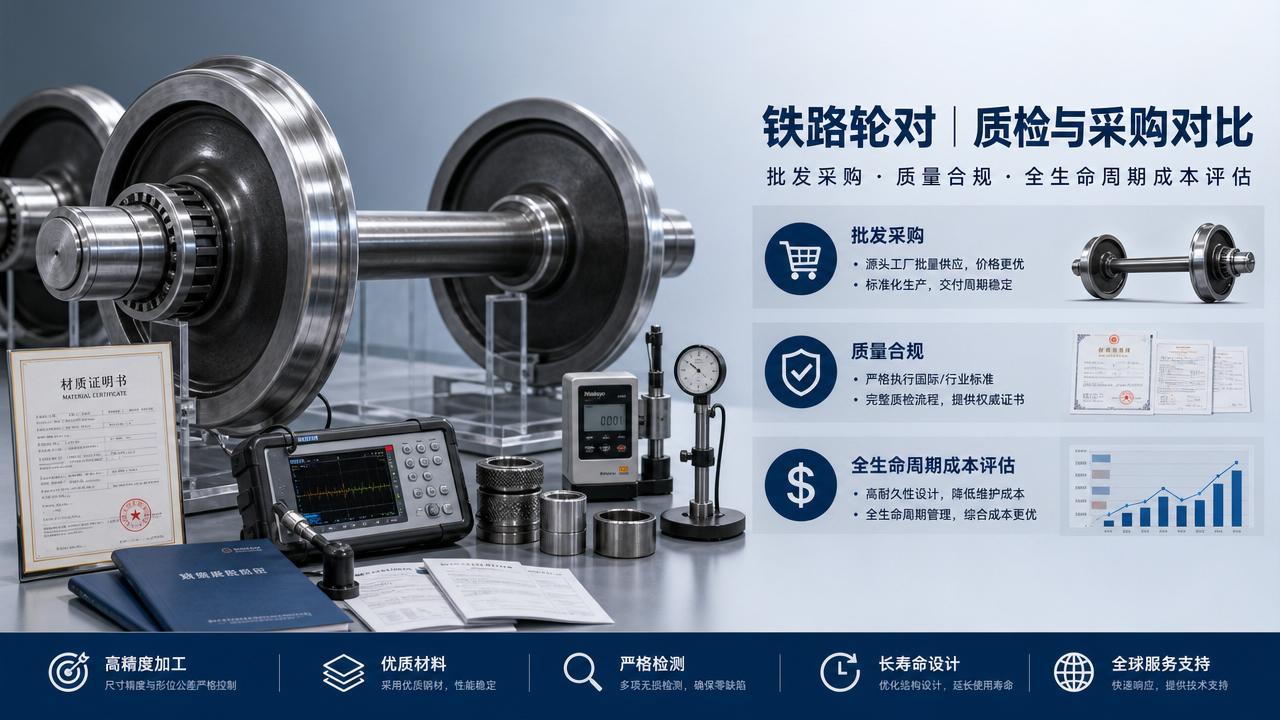
In railway wheelset wholesale, the lowest quote can conceal the highest long-term cost. For business evaluators responsible for procurement risk, supplier compliance, and asset reliability, price alone is a poor benchmark. This article examines how lower upfront pricing may increase lifecycle exposure through material inconsistency, maintenance frequency, failure risk, and certification gaps—helping decision-makers compare wheelset offers with a sharper total-cost and operational perspective.
Why the Cheapest Wheelset Offer Often Becomes the Most Expensive Decision
For business evaluators, the core search intent behind railway wheelset wholesale is not simply finding a lower supplier price. It is understanding whether a cheaper wholesale offer creates hidden operational, compliance, and financial risks later.
That concern is justified. A wheelset is not a commodity in the same sense as standard steel parts. It is a safety-critical assembly whose metallurgy, machining precision, heat treatment, and traceability directly affect service life.
When a supplier wins attention mainly on initial pricing, evaluators should assume that cost was reduced somewhere. The real question is where that reduction occurred and whether it weakens lifecycle reliability, maintenance stability, or regulatory defensibility.
In practical procurement reviews, the lowest bid becomes dangerous when it shifts cost from purchase order value into workshop labor, inventory burden, unplanned downtime, wheel reprofiling frequency, or premature replacement across the asset fleet.
This is why experienced buyers in railway wheelset wholesale increasingly compare offers through total cost of ownership rather than unit price. They want to know not what the wheelset costs today, but what it will cost to operate.
What Business Evaluators Actually Need to Judge Before Comparing Wholesale Quotes
The target reader here is usually not looking for a basic explanation of what a wheelset is. They are trying to make a defensible commercial judgment under pressure from budget targets, delivery timelines, and technical compliance requirements.
Their biggest concerns usually cluster around five issues: supplier legitimacy, specification conformity, maintenance impact, failure exposure, and long-term value predictability. If these areas remain unclear, a low quote is not a bargain but an unresolved liability.
What helps most is not generic product promotion. Evaluators need a practical framework for comparing offers: material standards, axle and wheel manufacturing routes, inspection scope, certification evidence, warranty structure, and historical field performance.
They also need to distinguish between acceptable cost optimization and dangerous underpricing. Some suppliers are competitive because of scale, process efficiency, or regional manufacturing advantages. Others are cheap because they reduce quality controls or documentation rigor.
So the article should focus on decision criteria, lifecycle cost drivers, and risk screening methods. General descriptions of railway hardware add little value unless they support a procurement choice.
Where Low Pricing Usually Comes From in Railway Wheelset Wholesale
Low pricing in railway wheelset wholesale does not happen by accident. In most cases, it results from one or more reductions in material cost, process control, inspection depth, certification investment, packaging quality, or after-sales support.
One common source is lower-grade steel input or inconsistent metallurgy control between heats. On paper, the component may appear compliant. In service, however, variations in toughness, hardness, or fatigue resistance can reduce predictable performance.
Another area is heat treatment discipline. Wheel and axle performance depend heavily on controlled thermal processing. When this stage is optimized only for throughput or energy savings, the result may be uneven wear behavior or reduced resistance to crack initiation.
Machining tolerance is another hidden variable. Lower-cost production may still produce dimensionally acceptable parts at inspection, but with tighter risk of assembly variation, press-fit inconsistency, or reduced running stability over time.
Inspection scope is also frequently trimmed. A low-cost supplier may rely on minimal non-destructive testing, reduced batch sampling, or weaker process records. That lowers factory cost, but it transfers defect detection risk to the buyer’s operation.
Finally, some suppliers underprice the product because they underinvest in quality documentation, traceability systems, engineering support, or claims response. The quote looks attractive until a field issue appears and accountability becomes difficult to enforce.
How Lower Upfront Cost Can Increase Lifecycle Cost
The strongest business case against overly cheap sourcing is lifecycle economics. A wheelset that costs less to buy may still cost more per kilometer, more per maintenance cycle, and more per year of service availability.
If wheel wear rates are higher, reprofiling intervals shorten. That means more workshop entries, more labor allocation, more service interruption, and potentially greater spare inventory requirements. None of those costs appear in the supplier’s initial invoice.
If axle fatigue resistance is less consistent, operators may face stricter monitoring intervals or earlier removal from service. Even when no failure occurs, the burden of added inspection can erase the apparent savings of the low procurement price.
Premature replacement is another major cost multiplier. A wheelset that delivers only a reduced fraction of expected life forces earlier capital reinvestment. For fleet operators, the financial effect compounds across many units, especially in heavy-haul applications.
There is also the opportunity cost of asset unavailability. Freight networks depend on wagon and locomotive readiness. If lower-quality wheelsets increase maintenance dwell time, the real loss may appear in missed throughput and reduced logistics efficiency.
For evaluators, the key metric is therefore not “price per wheelset” alone. It is cost per service life delivered under actual operating conditions, including maintenance burden and the operational consequences of performance variability.
Material Consistency and Manufacturing Discipline Matter More Than Many Buyers Expect
In safety-critical rolling stock components, consistency can be more valuable than an apparently strong average result. A supplier may show acceptable sample properties, yet still expose the buyer to batch-to-batch variability that complicates long-term fleet planning.
Wheelsets operate under repeated stress, impact, braking loads, thermal cycling, and track-induced dynamic forces. In such conditions, minor inconsistency in raw material quality or process control can create disproportionate differences in fatigue life.
Business evaluators should therefore ask for more than a compliance statement. They should review process capability indicators, material source controls, heat treatment procedures, NDT coverage, and dimensional consistency records across production batches.
Press-fit integrity between wheel and axle is especially important. A supplier with weak assembly process discipline may still deliver a physically complete product, but one with less stable long-term behavior under demanding service conditions.
In international procurement, consistency also matters because replacement cycles and maintenance strategies are planned at fleet level. Variability creates uncertainty in spare planning, workshop scheduling, and reliability forecasting, all of which raise indirect cost.
Certification, Traceability, and Standards Compliance Are Commercial Issues, Not Just Technical Ones
For business evaluators, compliance documents are not paperwork to be checked at the end. They are part of the commercial risk profile of the wheelset supplier and should be reviewed early in the sourcing process.
A supplier offering railway wheelset wholesale should be able to demonstrate alignment with applicable standards, whether governed by UIC, EN, AAR, or project-specific authority requirements. A vague statement of “international quality” is not sufficient.
Traceability is equally important. If each wheel, axle, and assembly cannot be linked to material batches, manufacturing records, inspection results, and shipment documentation, post-delivery problem resolution becomes slower and more expensive.
This matters especially in cross-border projects involving public authorities, EPC contractors, and fleet operators. In such environments, any documentation gap can delay approvals, trigger rejection, complicate claims, or expose the buyer to audit pressure.
From a commercial standpoint, strong certification and traceability reduce dispute cost. They also improve defensibility when procurement teams must justify supplier selection to management, regulators, insurers, or project partners.
In other words, compliance quality is not an administrative add-on. It is a contributor to transaction security, operational continuity, and procurement credibility.
Red Flags That Suggest a Low Quote May Carry Hidden Risk
Some low-priced offers are legitimate. Others contain warning signs that experienced evaluators should not ignore. The challenge is to identify the difference before award, not after the wheelsets enter service.
One red flag is incomplete technical disclosure. If the supplier avoids detailed discussion of steel grade, heat treatment route, inspection methodology, fatigue testing, or assembly controls, the low price may reflect an underlying capability gap.
Another warning sign is inconsistent documentation across proposal stages. If certificates, standards references, or production lead times change materially between quotation, negotiation, and final offer, governance discipline may be weak.
Very short warranties can also be revealing. Suppliers confident in their manufacturing quality usually accept reasonable performance accountability. Minimal warranty language may indicate an effort to limit exposure to foreseeable field issues.
Unusually aggressive lead times deserve scrutiny as well. Fast delivery can be a strength, but if the schedule appears unrealistic for forging, machining, testing, and documentation preparation, the supplier may be compressing critical quality stages.
Evaluators should also be cautious when a supplier has little verifiable reference history in similar axle loads, speeds, climatic conditions, or maintenance regimes. A low price without a relevant operating track record is not a complete value proposition.
How to Compare Railway Wheelset Wholesale Offers Using a Total-Cost Framework
A practical comparison model should begin with specification fit. Does the offered wheelset match load profile, speed class, braking conditions, track environment, and maintenance strategy? A lower-cost mismatch is still a poor procurement outcome.
Next, compare manufacturing quality evidence. This includes material certificates, process controls, NDT scope, dimensional tolerances, balancing where relevant, press-fit validation, and historical rejection rates. Price should be interpreted only after this review.
Then estimate lifecycle cost drivers. These include expected wheel life, reprofiling interval, axle inspection frequency, replacement rate, warranty exposure, and likely spare stock requirements. Even directional estimates are useful for decision support.
Supplier support capacity should also be scored. Can the vendor respond to non-conformance events, provide root-cause analysis, supply replacement units quickly, and support technical discussions with maintenance or regulatory teams?
Documentation maturity deserves its own weighting. For institutional buyers, poor paperwork can become a project delay, a payment issue, or a compliance dispute. A slightly higher-priced supplier with strong documentation may reduce much larger downstream costs.
Finally, convert the evaluation into a weighted commercial matrix. This helps procurement teams defend decisions internally and prevents sourcing outcomes from being dominated by headline price alone.
Questions Business Evaluators Should Ask Before Approving a Supplier
Before approving a supplier in railway wheelset wholesale, evaluators should ask what exactly drives the quoted price advantage. Is it scale efficiency, integrated forging capacity, logistics advantage, or reduced quality and compliance overhead?
They should ask for batch traceability examples, not just policy statements. Seeing how one delivered wheelset can be traced through material, process, and inspection records provides a more reliable indicator of supplier maturity.
Field performance references are also essential. Buyers should request evidence from comparable operating environments, including axle loads, track conditions, and maintenance intervals. Relevance matters more than the number of references alone.
It is also wise to ask how the supplier handles non-conformities. Response time, escalation path, technical investigation capability, and replacement responsibility reveal whether the seller is prepared for the realities of long-life rail assets.
Another useful question concerns process change control. If raw material source, machining subcontractor, or heat treatment settings change later, how will the buyer be informed and protected? Stable quality depends on disciplined change governance.
These questions do more than test the supplier. They help business evaluators identify where the low price is commercially sound and where it may become operationally expensive.
When a Lower Price Is Acceptable and When It Is Not
Not every low quote should be rejected. In some cases, a supplier can legitimately offer better pricing through automation, regional cost efficiency, vertical integration, or lower overhead while still meeting demanding rail standards.
The issue is not low pricing by itself. The issue is whether the buyer can verify that performance, consistency, and compliance remain intact. If those pillars are evidenced well, competitive pricing may represent genuine procurement value.
Lower pricing is more acceptable when operating duty is less severe, maintenance access is strong, approval pathways are clear, and the supplier’s technical records are transparent. Risk becomes easier to manage in such conditions.
It becomes far less acceptable in heavy-haul, high-cycle, cross-border, or safety-sensitive applications where downtime cost is high and certification scrutiny is strict. In those environments, wheelset reliability has outsized strategic importance.
For business evaluators, the right conclusion is usually conditional rather than absolute: buy the lower-priced wheelset only when the supplier can prove that reduced price does not mean reduced lifecycle confidence.
Conclusion: In Wheelset Procurement, Cheap Is Only Good When Risk Stays Controlled
The main search intent behind railway wheelset wholesale is commercial judgment under technical uncertainty. Buyers want to know whether a lower quote delivers real value or merely shifts cost and risk into later stages of operation.
The answer is clear. Lower upfront pricing can raise lifecycle risk when it reflects weaker material control, reduced manufacturing discipline, limited inspection, poor traceability, or inadequate supplier accountability. Those weaknesses often surface after installation, not before purchase.
For business evaluators, the best approach is to compare wheelset offers through total cost, compliance strength, and operational reliability. Unit price remains important, but it should never be the dominant decision criterion for a safety-critical rail component.
In a disciplined procurement process, the winning offer is not the cheapest on paper. It is the one that best protects service life, maintenance predictability, regulatory confidence, and long-term fleet economics.
Industry Briefing
Get the top 5 industry headlines delivered to your inbox every morning.