
Petrochemical Price Trends: What to Watch This Year

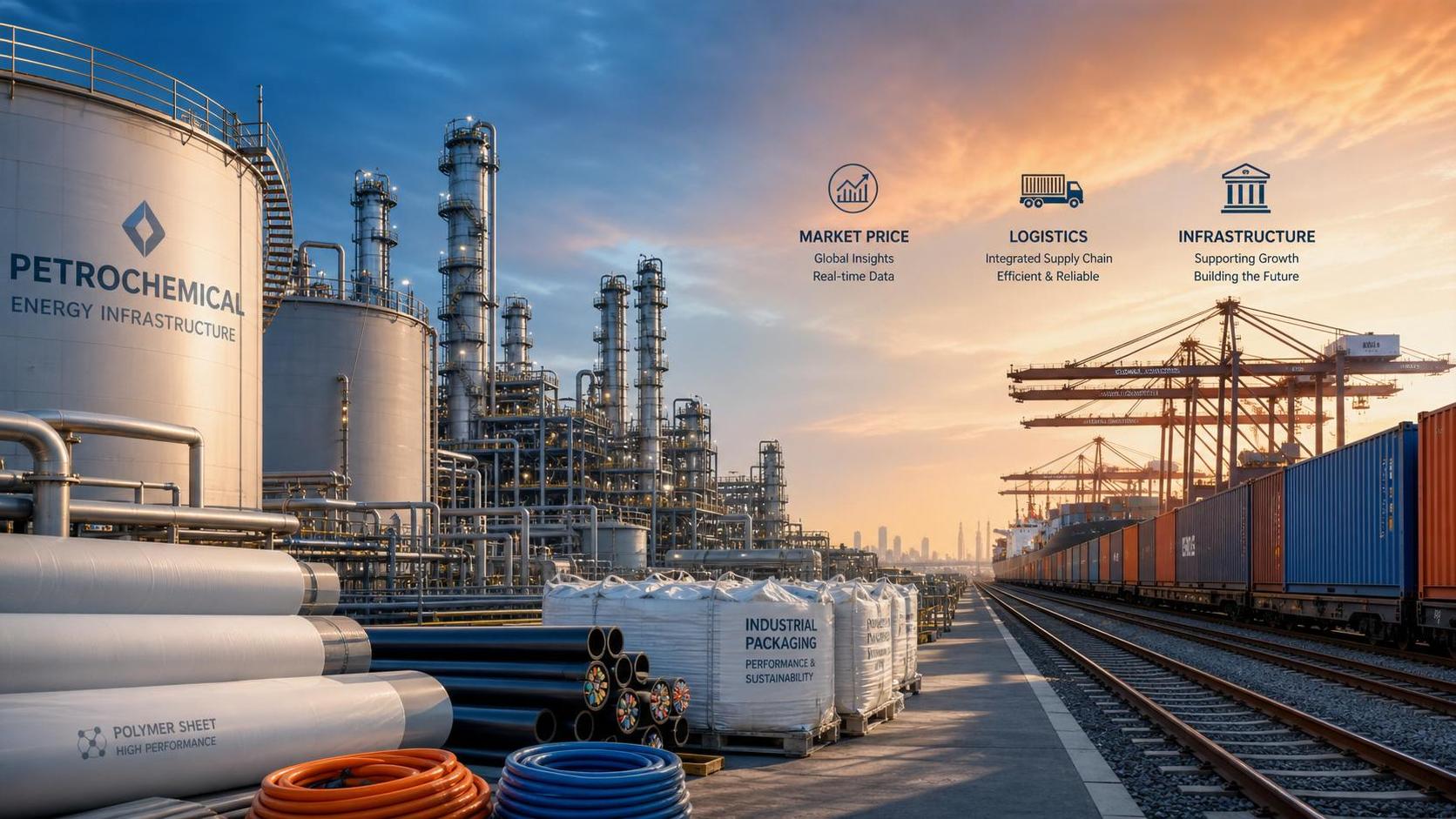
Petrochemical price trends are becoming a broader industrial signal
Petrochemical price trends matter well beyond chemical trading desks.
This year, they are shaping transport costs, equipment sourcing, project timing, and capital allocation across interconnected industrial systems.
The more visible shift is that pricing no longer moves on feedstock logic alone.
Energy policy, freight availability, refinery operating rates, and regional manufacturing recovery now influence petrochemical price trends more directly.
For organizations linked to rail engineering, intermodal logistics, and infrastructure delivery, that change is especially relevant.
Materials derived from petrochemicals sit inside cables, insulation, seals, coatings, composites, packaging films, and maintenance inputs.
When prices move sharply, the effects spread into contract margins and network planning.
That is why petrochemical price trends should be read as an operating signal, not just a commodity headline.
What is changing now looks less like a cycle and more like a reset
Recent movement suggests a market balancing between oversupply in some chains and tighter conditions in others.
Ethylene derivatives, polymers, and industrial intermediates are not moving in perfect alignment.
Some prices remain soft because downstream demand is cautious.
Others are reacting faster to energy costs, plant outages, and shipping disruptions.
A notable feature of current petrochemical price trends is fragmentation by region.
North America benefits from relative feedstock flexibility.
Europe remains more exposed to energy pricing and regulatory pressure.
Parts of Asia continue to influence global pricing through new capacity, export flows, and industrial recovery speed.
This uneven pattern makes old benchmarking habits less reliable.
A single average price view can hide material risk inside actual supply chains.
Signals worth watching in the next two to three quarters
- Naphtha and natural gas spreads, because they shape upstream cost competitiveness.
- Operating rates at crackers and refineries, especially after maintenance cycles.
- Port congestion and rail corridor performance, which affect landed cost and delivery certainty.
- Construction and automotive demand, since both absorb large petrochemical volumes indirectly.
- Environmental restrictions on high-emission plants, which can tighten short-term supply unexpectedly.
Why petrochemical price trends are being pushed by more than feedstock
It is tempting to treat oil as the main explanation.
That view is now too narrow.
The current market is being shaped by a layered set of forces that interact unevenly across products.
The practical implication is clear.
Petrochemical price trends now reflect infrastructure conditions and policy direction almost as much as raw materials.
The impact does not stay inside chemical procurement
In complex industrial networks, pricing pressure moves through several layers before it appears on a balance sheet.
That is especially true in rail-freight and engineering ecosystems where materials, maintenance cycles, and logistics are tightly linked.
For a platform such as G-RFE, which tracks rolling stock, signaling, track systems, and intermodal assets, petrochemical price trends connect directly to engineering execution.
Cable sheathing, polymer housings, industrial lubricants, protective coatings, geosynthetics, and packaging all reflect petrochemical inputs.
When those inputs rise, project budgets rarely move evenly.
Short-cycle maintenance may absorb the impact quickly.
Long-cycle EPC contracts may feel it later, but more sharply.
Where the pressure tends to surface first
- Signaling and communications assemblies using polymer-insulated cabling and housings.
- Track maintenance consumables, including resins, sealants, protective films, and packaging.
- Intermodal rail-port interfaces that rely on containers, pallets, and wrapped cargo systems.
- Rolling stock interiors and auxiliary components where plastic and composite content is significant.
- Storage and transport costs for chemical-linked spare parts moving across long rail corridors.
More importantly, price direction can alter sourcing logic.
A lower unit price may still be unattractive if delivery windows become unreliable.
That trade-off is showing up more often in current petrochemical price trends.
Regional freight networks are now part of the pricing story
One of the less obvious developments is the growing role of inland logistics in petrochemical market behavior.
As supply chains diversify, rail corridors and intermodal terminals matter more to delivered petrochemical cost.
This is where the industrial perspective behind G-RFE becomes useful.
Heavy-haul locomotives, digital signaling, and rail-port coordination are not separate from commodity flows.
They influence route reliability, carriage availability, and timing risk.
In practical terms, smoother corridor performance can offset part of a price increase.
Weak corridor performance can turn a moderate upstream move into a severe delivered-cost shock.
That is why petrochemical price trends should be monitored alongside rail capacity, turnaround times, and port transfer efficiency.
A better reading framework for this year
A useful approach is to separate price moves into three layers.
- Upstream cost movement, driven by crude, gas, and refinery conditions.
- Midstream conversion pressure, shaped by plant utilization and compliance cost.
- Downstream delivery risk, affected by freight corridors and regional demand timing.
Reading petrochemical price trends through those layers gives a more realistic operating picture.
What deserves closer attention before budgets are locked
The next phase is not only about predicting direction.
It is about identifying which exposures can still be managed.
Several checkpoints stand out in the current environment.
- Map petrochemical-linked components across maintenance, infrastructure, and equipment programs.
- Separate price exposure from logistics exposure, because mitigation tactics differ.
- Review whether contracts reference timely regional indexes or outdated averages.
- Track substitution possibilities where material standards allow equivalent performance.
- Stress-test delivery plans against rail and port bottlenecks, not just supplier quotations.
- Watch policy changes affecting emissions, recycling content, and energy-intensive production sites.
These actions matter because petrochemical price trends can stay volatile even without a dramatic oil rally.
Fragmented logistics and selective outages are enough to keep costs uneven.
The better response is disciplined timing, not reactive buying
There is no single answer to this year’s petrochemical price trends.
Some categories may soften on capacity expansion.
Others may tighten because freight friction and policy pressure limit actual availability.
The stronger response is to build a staged view of exposure.
That means combining commodity monitoring with engineering demand schedules, corridor performance, and compliance developments.
For organizations operating across rail infrastructure, heavy equipment, and intermodal systems, this integrated reading is becoming essential.
Petrochemical price trends now carry signals about where supply chains are tightening, where projects may slip, and where cost assumptions need revision.
The immediate next step is straightforward.
Update exposure maps, compare regional price signals with freight conditions, and review whether present sourcing plans still match the market that is actually forming.
Industry Briefing
Get the top 5 industry headlines delivered to your inbox every morning.