
Traction Power Cost: What Drives Rail System Spending

Traction Power Cost: What Drives Rail System Spending
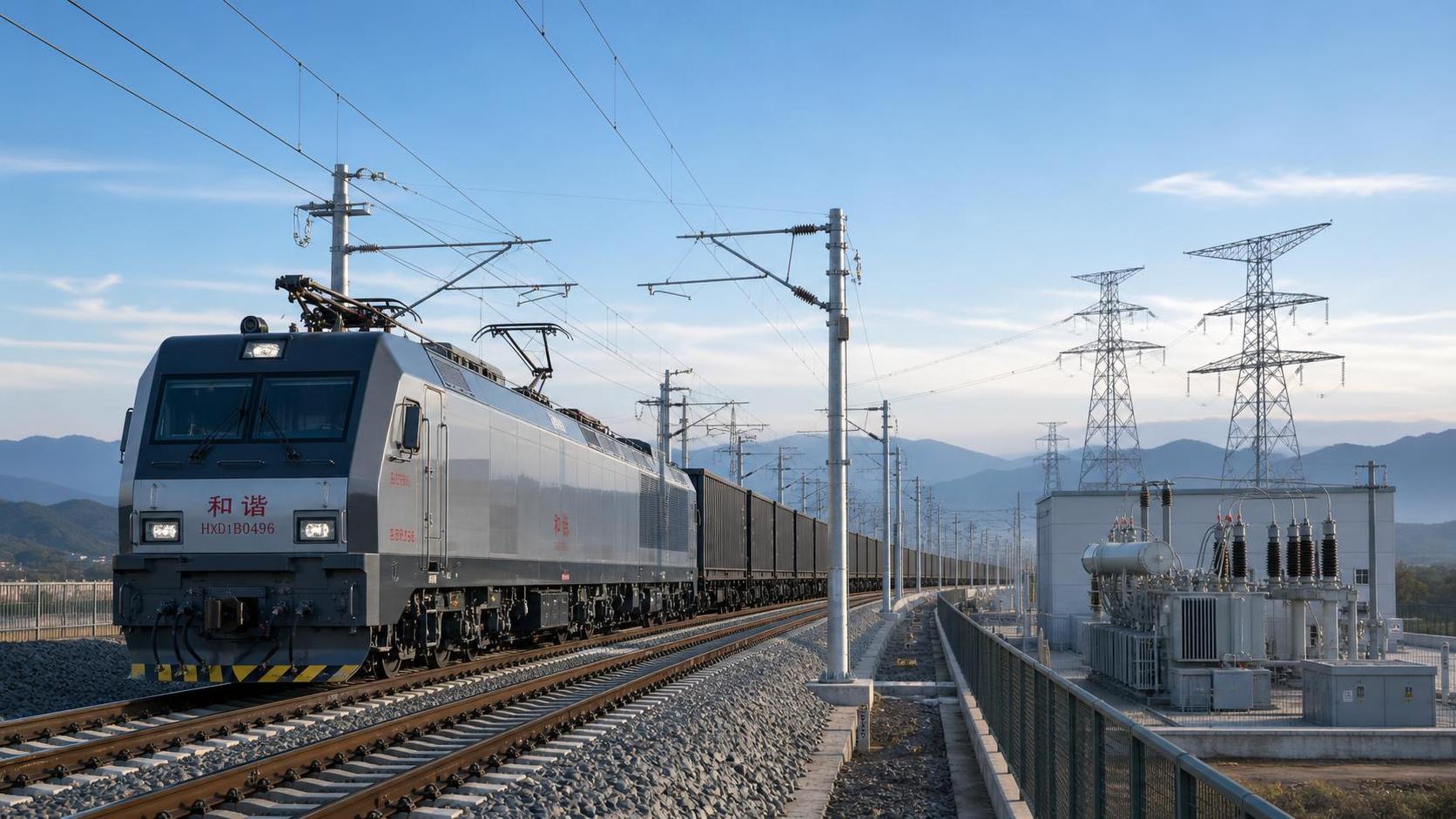
Traction power cost is often the largest and least transparent variable in rail system budgets, directly shaping CAPEX approval, OPEX stability, and long-term corridor profitability. For financial decision-makers, understanding what drives energy demand, infrastructure sizing, load profiles, and compliance requirements is essential to evaluating investment risk. This article breaks down the core cost drivers behind traction power systems and shows how smarter technical choices can improve lifecycle returns across modern freight rail projects.
If you are reviewing a rail freight project, do not treat traction power as a single line item. That is where budgets get distorted. In practice, the spending is shaped by a chain of technical choices: train mass, gradients, headway, substation spacing, electrification architecture, grid interface, power quality obligations, and how much operating flexibility the corridor is expected to carry ten years from now.
The checklist below is written for people approving funding, not designing converters. The point is to help you ask better procurement questions before the commercial offer hardens into a long-lived cost structure.
Start with the duty profile, not the equipment list
A traction package can look competitively priced and still be wrong for the corridor. The first thing to verify is the operating duty profile behind the supplier’s sizing assumptions.
- Axle load, trailing tonnage, ruling gradient, and target commercial speed
- Train frequency by time window, not just daily average volume
- Whether the line is mixed-traffic or freight-dominant
- Expected locomotive consist and future train length expansion
This matters because substations, feeders, autotransformer arrangements, and protection settings all respond to peaks, not to annual averages. A corridor with modest annual tonnage but sharp dispatch peaks can force much higher installed electrical capacity than a smoother operating plan would suggest.
One practical check: ask whether the load study used timetable-based simulation or broad planning assumptions. If the answer is vague, the traction power cost estimate is probably still immature.
Separate energy consumption from power infrastructure cost
Buyers often mix two different questions: how much electricity trains will consume, and how much it costs to build the system that can deliver that power reliably. They move together, but they are not the same budget driver.
Energy consumption is influenced by train resistance, acceleration profile, regenerative braking utilization, climate, and traffic management. Infrastructure cost is more sensitive to peak demand, redundancy philosophy, route length, grid connection distance, and civil works around substations and switching stations.
When these are blended into one number, weak assumptions hide easily.
Check the electrification architecture early
The chosen system architecture can swing both CAPEX and operating complexity. For heavy freight, the commercial conversation usually turns around AC electrification arrangements, feeder strategy, return current management, and how the design handles long-distance voltage drop. The right answer depends heavily on route geometry and traffic density, so there is no universal lowest-cost option.
Ask suppliers to show where the money moves if substation spacing changes, if train paths become denser, or if future axle loads increase. If the proposal has no sensitivity analysis, it is harder to trust the headline number.
This is also where standards discipline matters. If the procurement references UIC, EN, AAR, ETCS, or national grid codes, make sure the traction power scope clearly states which clauses actually apply. Broad claims of “compliant design” are not enough for approval. The cost of late compliance corrections is usually far higher than the cost of sharper specification at tender stage.
Do not ignore the grid connection line in the budget
In many projects, the expensive surprise is not the traction equipment itself. It is the interface with the utility.
Financial approvers should verify:
- Who pays for upstream grid reinforcement
- Whether utility connection charges are fixed, staged, or demand-based
- Power factor, harmonic, and fault-level obligations at the point of connection
- The schedule risk tied to utility approvals and right-of-way for incoming lines
These obligations vary by country and utility structure, so they need project-specific verification. Do not let anyone fill the gap with assumptions. If the grid study is still provisional, label that budget portion as provisional too. That is not being cautious for the sake of it; it is basic procurement hygiene.
Look closely at regenerative braking claims
Regenerative braking can improve traction power cost, but only when the network can actually use the returned energy. That depends on traffic patterns, substation design, reversible power capability where applicable, and whether nearby trains are drawing power at the same time.
A proposal that advertises strong energy savings should explain the operating conditions behind those savings. On freight corridors with long headways or uneven directional flow, the practical benefit may be lower than the brochure suggests. That does not mean regeneration has no value. It means the value should be modeled against real operations.
Good question to ask: “What percentage of braking energy recovery in your estimate is based on simulated train interaction, and what percentage is assumed as a generic default?” If the answer is unclear, the saving is not yet bankable.
Maintenance cost usually follows asset complexity
A low supply price can come with a maintenance profile that finance teams only discover after handover. More substations, more switching points, more specialized electronics, or poor access arrangements will all show up later in labor hours, outage planning, and spare inventory.
Check whether the supplier has priced:
- Condition monitoring and remote diagnostics
- Critical spare parts lead times
- Training for local maintenance teams
- Obsolescence management for control and protection systems
This is especially relevant on cross-border freight routes, where downtime can trigger broader logistics penalties beyond the railway itself.
Future capacity is cheaper to plan than to retrofit
Not every project should overbuild, but underbuilding traction power is one of the costliest mistakes to unwind. If corridor strategy points to heavier trains, tighter headways, port expansion, or intermodal growth, ask what reserve has been included in the electrical design and where the upgrade bottlenecks would appear first.
Sometimes the right financial decision is to spend slightly more on land, civil interfaces, transformer bays, cable routes, or protection architecture now, while deferring part of the installed equipment. That keeps initial capital controlled without locking the project into a disruptive rebuild later.
Procurement teams should ask for a staged expansion map, not just a base-case design.
A few red flags worth catching before approval
- The bid gives total traction power cost but does not separate utility interface, civil works, and system integration.
- Energy savings are promised without a documented simulation basis.
- Standards references are broad, but there is no compliance matrix.
- Substation count looks unusually low, yet no voltage-drop or peak-load evidence is shown.
- Lifecycle support is thin, and spare strategy is described only at a high level.
- The project assumes future traffic growth but includes no expansion allowances.
Any one of these can be manageable. Several together usually mean the commercial package is ahead of the engineering maturity.
What a finance-ready traction power review should include
Before signing off, ask for a compact decision file that includes the load study basis, peak demand assumptions, grid connection scope, standards matrix, maintenance philosophy, and an explicit list of cost items marked 【待核实】 where external approvals or utility conditions are still open.
That last point matters. Mature projects do not pretend uncertainty has disappeared. They isolate it, price it carefully, and keep it visible. For financial approvers, that is usually the difference between a traction power cost estimate that can support procurement and one that still belongs in pre-feasibility.
If the corridor is strategic, long-haul, and expected to carry heavy freight for decades, the best buying decision is rarely the cheapest electrical package on day one. It is the option with assumptions you can trace, constraints you can test, and upgrade paths you do not have to rediscover under operational pressure.
Industry Briefing
Get the top 5 industry headlines delivered to your inbox every morning.