
Industrial Water Treatment News That Signals Equipment Risk

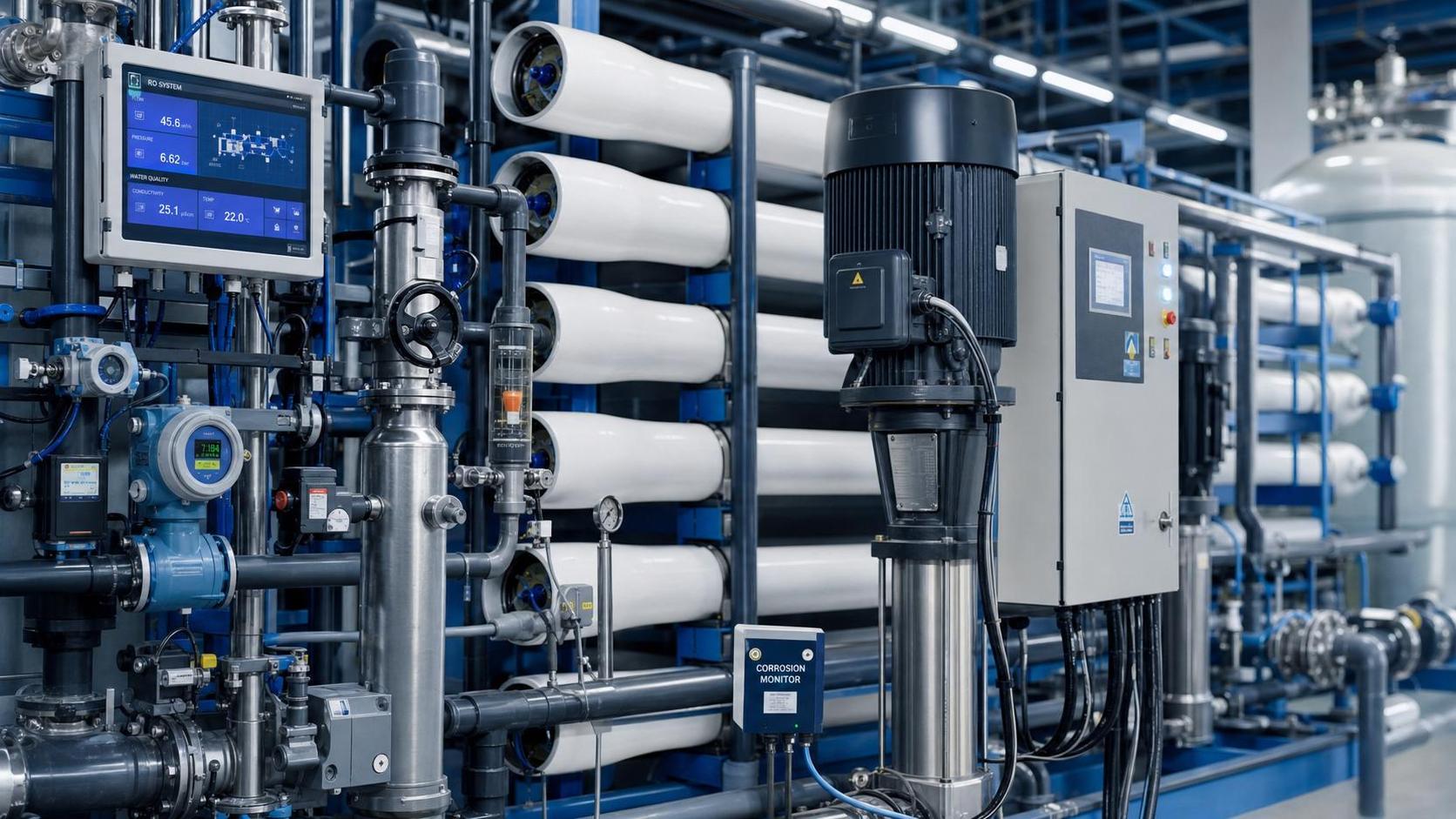
Industrial Water Treatment News That Signals Equipment Risk
For many industrial sites, environmental equipment news for industrial water treatment acts like an early alarm system.
It often reveals weak points before pumps fail, membranes rupture, or inspectors force an unexpected stop.
That matters in heavy industry, transport engineering, rail maintenance depots, steel-linked logistics hubs, and utility-heavy workshops.
In these settings, water treatment is not a side system.
It protects boilers, cooling loops, wash plants, coating lines, and wastewater discharge performance.
The practical question is simple.
How do you read environmental equipment news for industrial water treatment as a risk signal, not just industry noise?
The answer starts with connecting external news to internal failure modes, maintenance trends, and compliance exposure.
Why equipment risk now shows up first in industry news
Recent environmental equipment news for industrial water treatment is more technical and more urgent than before.
Reports now focus on stricter discharge thresholds, chemical handling controls, energy intensity, and equipment reliability under variable loads.
That shift is important because external reporting usually mirrors internal plant stress.
When suppliers warn about fouling, seal degradation, or sensor drift, similar issues are often emerging across multiple sites.
In practice, environmental equipment news for industrial water treatment can point to five risk layers.
- Mechanical wear in pumps, valves, and dosing skids.
- Process instability in filtration, reverse osmosis, and sludge handling.
- Water chemistry imbalance that accelerates corrosion or scaling.
- Instrumentation errors that hide noncompliance until too late.
- Regulatory shifts that turn minor defects into shutdown triggers.
The more clearly a site maps news topics to these layers, the faster it can act before damage becomes visible.
The clearest warning signals hidden inside industrial water treatment updates
Not every headline deserves equal attention.
The most useful environmental equipment news for industrial water treatment usually shares one feature.
It describes repeatable failure patterns, not isolated incidents.
1. Rising corrosion alerts
If industrial water treatment updates mention corrosion-resistant retrofits, check your own metallurgy assumptions.
Changes in chloride levels, pH swings, or oxygen ingress can quickly undermine stainless components.
This is especially relevant where cleaning chemicals, washdown cycles, and recycled process water interact.
2. Membrane fouling and shortened replacement cycles
When environmental equipment news for industrial water treatment highlights membrane replacement costs, treat it as a process warning.
Fouling rarely begins at the membrane alone.
It often starts with poor pretreatment, unstable feedwater, weak CIP discipline, or drifting instrumentation.
3. More attention on sensor reliability
A stronger market focus on online monitoring is another meaningful signal.
If pH, conductivity, turbidity, or ORP sensors drift, control decisions become unreliable.
That creates hidden exposure long before an alarm threshold is crossed.
4. Sludge and concentrate handling issues
Many teams focus on clean water output and overlook waste streams.
Yet environmental equipment news for industrial water treatment often shows that disposal bottlenecks drive larger operating risk.
When sludge dewatering or brine handling weakens, storage, odor, transport, and permit problems follow quickly.
How to turn environmental equipment news for industrial water treatment into a risk review process
The best response is not collecting more articles.
It is building a simple review method that connects news signals with asset decisions.
Step one: classify the signal
Sort each item of environmental equipment news for industrial water treatment into one of four categories.
- Compliance change.
- Technology performance issue.
- Supply chain or spare-parts risk.
- Incident pattern or safety lesson.
This prevents reactive overreading and keeps the review useful.
Step two: match the signal to equipment
Map the news item to actual assets on site.
That includes pumps, membranes, analyzers, clarifiers, filter presses, chemical tanks, and automation nodes.
If the affected technology exists in your plant, assign an owner and a due date.
Step three: verify your leading indicators
A good review always checks plant data against the external signal.
Useful indicators include differential pressure, conductivity drift, cleaning frequency, corrosion coupons, leak history, and unplanned work orders.
This is where environmental equipment news for industrial water treatment becomes operationally valuable.
Common failure scenarios and what the news is really telling you
In real operations, the same news theme can point to very different risks.
The table below helps translate industrial water treatment updates into specific action paths.
This approach keeps environmental equipment news for industrial water treatment tied to action, not speculation.
What matters most in complex industrial and transport-linked facilities
In rail engineering, freight maintenance, fabrication yards, and intermodal equipment bases, water treatment risks are rarely isolated.
They interact with uptime targets, safety procedures, and infrastructure reliability.
A wash plant upset can delay fleet turnaround.
A cooling-water issue can shorten motor, compressor, or power electronics life.
A discharge failure can shut down a critical workshop during peak logistics demand.
That is why environmental equipment news for industrial water treatment should be reviewed alongside broader asset intelligence.
- Tie water treatment alerts to maintenance planning.
- Link compliance trends with shutdown risk models.
- Check whether spare-part lead times are getting longer.
- Review contractor capability for specialist repairs.
- Confirm alarm management reflects real process consequences.
When these links are visible, industrial water treatment updates become part of enterprise risk control.
A practical checklist for faster decisions
If a new item of environmental equipment news for industrial water treatment looks relevant, use this quick screen.
- Identify the affected process stage.
- List matching assets at your site.
- Check the latest operating and inspection data.
- Score the issue by safety, uptime, and compliance impact.
- Assign a short verification action within one week.
- Escalate only if data confirms a real trend.
This method works because it filters noise without missing early warnings.
It also makes environmental equipment news for industrial water treatment easier to use in routine management meetings.
Over time, that discipline improves both asset reliability and regulatory confidence.
Final takeaway
The strongest value of environmental equipment news for industrial water treatment is not awareness alone.
It is earlier judgment.
When you read recurring news on corrosion, membranes, analyzers, sludge handling, or regulation, assume there is a practical question behind it.
Could the same pattern already exist in your system?
That question leads to better inspections, sharper maintenance priorities, and fewer surprise failures.
In a complex industrial environment, that is exactly how industrial water treatment updates should be used.
Track the signal, verify the trend, and act before equipment risk becomes operational damage.
Industry Briefing
Get the top 5 industry headlines delivered to your inbox every morning.