
Locomotive Cab Equipment OEM: What to Verify

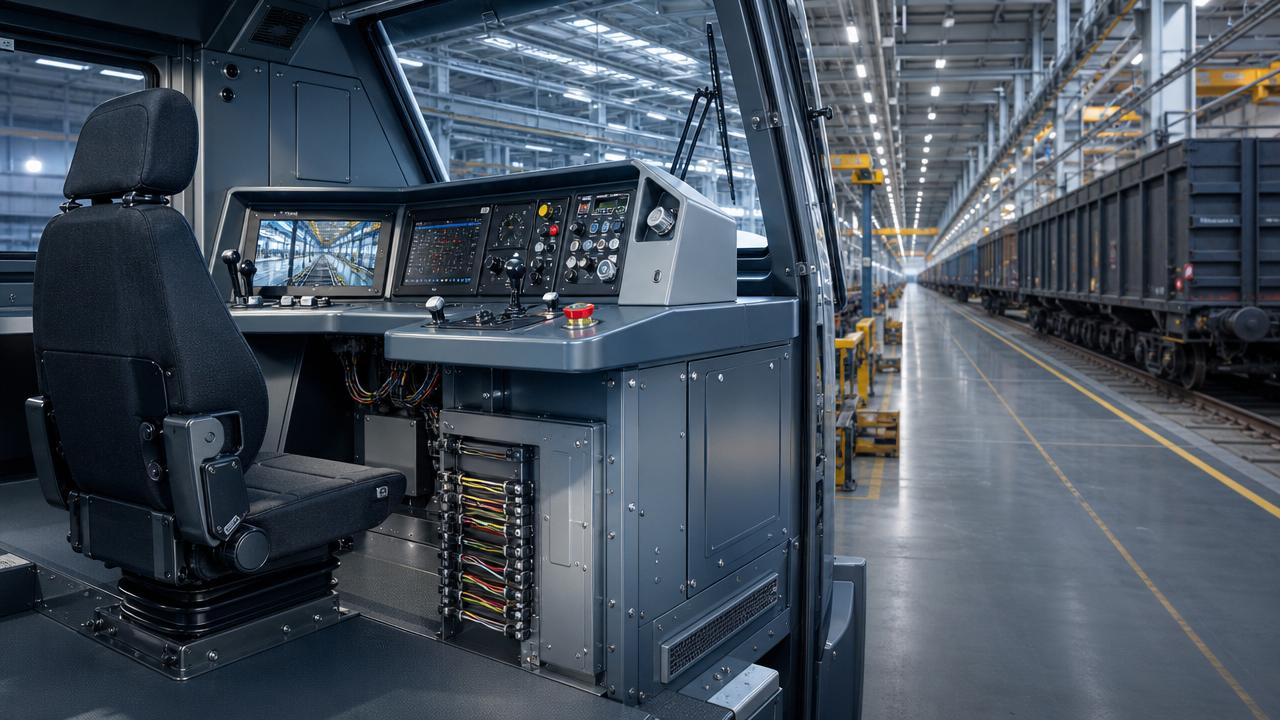
Selecting a locomotive cab equipment OEM is a high-stakes decision affecting safety, compliance, lifecycle cost, and fleet availability.
Beyond price and delivery, the evaluation must verify standards, ergonomics, signaling integration, climate resilience, maintainability, and documentation quality.
The right locomotive cab equipment OEM should prove manufacturing discipline and long-term support across demanding freight corridors.
Why a Checklist Matters for Locomotive Cab Equipment OEM Selection
A cab is not a passive enclosure. It is the working interface between crew, locomotive systems, signaling logic, and operational rules.
A weak locomotive cab equipment OEM can create hidden problems after commissioning, when modification costs become high and downtime becomes disruptive.
Checklist-based verification reduces subjective decisions. It converts technical expectations into evidence, test records, acceptance criteria, and support obligations.
For heavy-haul freight, every cab detail matters. Visibility, control layout, alarms, HVAC, seat structure, and console wiring affect daily operating reliability.
Core Checklist for Verifying a Locomotive Cab Equipment OEM
Use the following checklist to compare each locomotive cab equipment OEM on measurable engineering and service criteria.
- Verify compliance with UIC, EN, AAR, fire safety, crashworthiness, EMC, and national cab standards before reviewing commercial terms.
- Request design evidence for driver visibility, sightline envelopes, console reach zones, seat adjustment, and emergency access.
- Check whether the locomotive cab equipment OEM can integrate ETCS, CBTC, GSM-R, event recorders, and train protection interfaces.
- Review HVAC performance under heat, dust, altitude, humidity, tunnel pressure pulses, and cold-start operating conditions.
- Inspect materials for flame spread, smoke toxicity, vibration resistance, corrosion protection, and cleanability during long service intervals.
- Confirm wiring harness standards, connector labeling, grounding strategy, cable routing, shielding, and spare capacity for future upgrades.
- Require maintainability proof through access panels, modular replacement procedures, diagnostic ports, standard tools, and documented repair times.
- Audit manufacturing quality through welding records, torque control, inspection plans, supplier traceability, and nonconformance closure reports.
- Ask for lifecycle support commitments covering spare parts, obsolescence management, software updates, training, and field response time.
- Validate documentation quality, including drawings, interface control documents, test certificates, maintenance manuals, and configuration baselines.
Engineering Standards and Certification Evidence
A credible locomotive cab equipment OEM should provide standard mapping rather than simple compliance claims.
The mapping should link each requirement to drawings, calculations, laboratory tests, factory inspections, and field validation results.
Certification must cover the complete cab scope. This includes structure, interior panels, windows, doors, seats, controls, displays, lighting, and HVAC.
For cross-border freight corridors, verify compatibility with regional safety authorities and operating rules.
A locomotive cab equipment OEM with international experience should understand how UIC, EN, and AAR requirements affect design choices.
Ergonomics, Visibility, and Human-Machine Interface
Cab ergonomics directly influence fatigue, reaction time, and operational consistency. It should never be treated as cosmetic design.
The locomotive cab equipment OEM should demonstrate driver workstation layouts using mock-ups, simulation, anthropometric data, and operator feedback records.
Visibility checks should include signals, trackside markers, yard movements, coupling operations, and low-light conditions.
Control placement must support routine operation and emergency response without awkward reaching, hidden switches, or confusing alarm priorities.
A reliable locomotive cab equipment OEM should also document display brightness, night mode, multilingual labels, and tactile differentiation.
Signaling, Communication, and Control Integration
Modern freight locomotives depend on seamless communication between cab equipment and onboard train control systems.
The locomotive cab equipment OEM must define interface boundaries clearly. Ambiguity causes late-stage failures during installation and acceptance testing.
Review how the supplier handles ETCS displays, GSM-R terminals, radio panels, vigilance systems, cameras, and event recorders.
The interface control document should specify electrical loads, communication protocols, mounting positions, heat output, cable paths, and maintenance access.
A mature locomotive cab equipment OEM will support integration workshops with locomotive builders, signaling specialists, and certification bodies.
Environmental Resilience for Freight Corridors
Freight corridors expose cab systems to extreme weather, dust, vibration, oil mist, and long operating cycles.
A locomotive cab equipment OEM should test assemblies under conditions matching the route profile, not only standard laboratory temperatures.
For desert corridors, HVAC filtering, seal durability, and dust-resistant switches need special attention.
For cold regions, verify defrosting performance, heater redundancy, insulation, door sealing, and screen readability after overnight parking.
For coastal or mining routes, the locomotive cab equipment OEM should address corrosion protection, washable surfaces, and connector sealing.
Maintainability, Spare Parts, and Obsolescence Control
Maintenance cost is often determined during cab design. Poor access can turn a simple replacement into a long outage.
The locomotive cab equipment OEM should provide part-level replacement procedures, inspection intervals, and recommended spare quantities.
Assess whether critical modules can be replaced without removing large panels, disturbing wiring bundles, or recalibrating unrelated systems.
Obsolescence planning is essential for displays, processors, communication modules, sensors, and specialty switches.
A dependable locomotive cab equipment OEM should offer alternative part qualification before original components become unavailable.
Documentation and Configuration Management
Documentation quality indicates engineering maturity. Incomplete manuals usually reveal weak internal configuration control.
The locomotive cab equipment OEM should deliver controlled drawings, revision logs, wiring diagrams, test procedures, and inspection records.
Configuration management must track every change affecting safety, EMC behavior, maintenance procedures, and spare parts compatibility.
Digital documentation should be searchable, structured, and aligned with the fleet maintenance management system.
Before approval, compare the delivered document set with the contractual technical data list.
Scenario Notes for Different Applications
Heavy-Haul Diesel-Electric Locomotives
Heavy-haul service places high demands on cab durability, vibration isolation, noise control, and driver fatigue management.
The locomotive cab equipment OEM should prove that consoles, seats, glazing, and panels withstand continuous high-load operation.
Intermodal Rail-Port Systems
Port rail operations involve frequent starts, tight visibility requirements, radio communication, and interaction with terminal automation.
A locomotive cab equipment OEM serving this environment should prioritize camera integration, rugged communications, and clear low-speed control interfaces.
Cross-Border Freight Corridors
International routes require multi-standard signaling readiness, language flexibility, and adaptable documentation for certification review.
The locomotive cab equipment OEM should support national variants without uncontrolled customization or fragmented spare parts structures.
Commonly Overlooked Risks
Assuming prototype success equals production stability. A prototype can pass tests while serial production suffers from supplier variation or weak process control.
Ignoring EMC until late testing. Cab electronics, radios, displays, and power converters can create interference if grounding is poorly designed.
Underestimating HVAC load. Heat from displays, electronics, sunlight, and crew occupancy can exceed assumptions used in early design.
Accepting unclear interface ownership. A locomotive cab equipment OEM must define responsibility for hardware, software, cabling, installation, and commissioning support.
Skipping maintainability trials. Maintenance access should be tested physically, with real tools, gloves, lighting limits, and replacement time measurement.
Practical Execution Steps Before Award
- Build a requirement matrix linking standards, route conditions, cab functions, acceptance tests, and document deliverables.
- Request a technical compliance file from each locomotive cab equipment OEM, including deviations and proposed mitigations.
- Conduct a design review focused on sightlines, interfaces, access panels, environmental loads, and human-machine interaction.
- Audit the production site for traceability, inspection discipline, calibration control, and corrective action effectiveness.
- Require a maintainability demonstration using representative cab modules, tools, manuals, and time-based acceptance targets.
- Negotiate support obligations for spare parts, field issues, software revisions, training, and configuration change notification.
These steps help reveal whether a locomotive cab equipment OEM can support both the initial build and the full fleet lifecycle.
Conclusion and Action Guidance
Choosing a locomotive cab equipment OEM requires disciplined verification, not a simple comparison of price and delivery dates.
The strongest evaluation combines standards compliance, ergonomic evidence, integration readiness, environmental testing, maintainability, and documentation control.
Before contract award, convert every major expectation into a requirement, test method, document deliverable, and acceptance responsibility.
A qualified locomotive cab equipment OEM should make those obligations clear, measurable, and sustainable across the locomotive service life.
Industry Briefing
Get the top 5 industry headlines delivered to your inbox every morning.