
Railway Compliance Standards Certification: Key Risks Before Approval

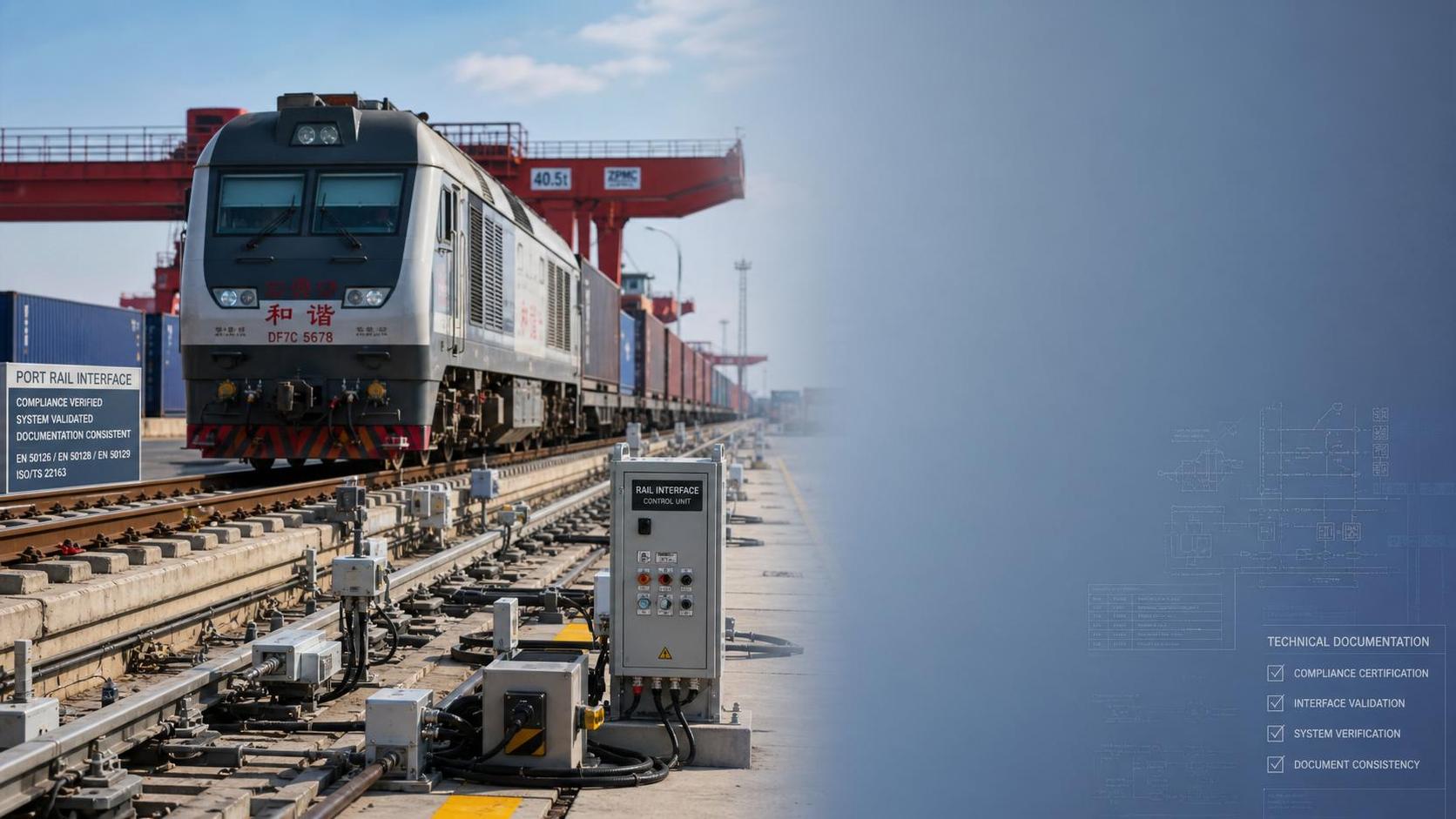
Railway compliance standards certification is rarely delayed by one dramatic failure. More often, approval slows because technical files, test evidence, and operational assumptions do not align early enough. In freight corridors where rolling stock, track systems, signaling, and port interfaces must work together, those gaps quickly become schedule risks.
That matters even more now. Cross-border rail expansion, low-carbon transport targets, and higher axle-load expectations are pushing projects into stricter review environments. Whether the asset is a locomotive, wagon, braking system, maintenance machine, or digital control interface, railway compliance standards certification now depends on disciplined preparation before any formal approval window opens.
Why pre-approval risk has become harder to manage
Rail projects no longer sit inside a single technical silo. A heavy-haul locomotive may satisfy core performance targets, yet still fail review because EMC behavior, braking integration, software traceability, or maintenance documentation remains incomplete.
The same pattern appears across infrastructure and signaling. Track components, CBTC or ETCS interfaces, GSM-R communications, and intermodal transfer systems may each follow separate evidence paths. Approval bodies then assess how those paths connect.
This is why railway compliance standards certification should be treated as a system question, not only a product question. G-RFE’s technical perspective is useful here because it places rolling stock, infrastructure, digital signaling, and specialized machinery against the same international benchmark logic.
What certification really tests before approval
At a practical level, certification examines whether the claimed design, tested configuration, and intended operating conditions are genuinely the same thing. Many teams believe they are close enough. Reviewers usually do not.
For railway compliance standards certification, assessors typically look for a consistent chain across these areas:
- Applicable standards selection, including UIC, EN, AAR, and local authority rules
- Design inputs, calculations, drawings, and revision control
- Type testing, routine testing, and field validation evidence
- Safety case logic, hazard controls, and residual risk treatment
- Supplier conformity, material traceability, and production consistency
- Operating limits, maintenance instructions, and lifecycle obligations
In other words, approval is not just about passing tests. It is about proving that the tested asset will remain compliant in real service conditions.
The risks that most often delay railway compliance standards certification
Incomplete or fragmented technical documentation
Documentation is still the most common weakness. Teams may hold drawings, calculations, software records, and test reports across different owners, suppliers, and formats. During review, that fragmentation turns into missing evidence.
A frequent problem is document inconsistency. The bill of materials reflects one configuration, the test report references another, and the maintenance manual describes a third. Even a capable design can stall under that mismatch.
Misreading which standards actually apply
Not every railway market uses the same compliance logic. A project influenced by EN requirements may still need local derogations, operator specifications, or freight corridor conditions that alter acceptance criteria.
This is especially relevant where UIC, EN, and AAR expectations overlap but do not fully match. Railway compliance standards certification can be delayed when teams assume equivalence without mapping the exact clauses, tolerances, and evidence demands.
Testing gaps between component and system level
A subsystem can pass bench testing and still fail approval at integration stage. Brake controls, onboard software, wheelset behavior, couplers, and communication modules often show acceptable isolated results but uncertain system interaction.
Reviewers pay close attention to interface evidence. If a locomotive control unit, freight wagon sensor, and signaling gateway were not validated in the intended operating architecture, approval risk rises sharply.
Weak traceability in supplier and manufacturing chains
Rail assets are built through layered supply networks. Castings, braking components, cable assemblies, software libraries, and welded structures may come from different jurisdictions. Certification can slow when traceability stops at tier-one purchasing level.
Material certificates, process qualifications, inspection records, and change notices need to connect back to the approved design baseline. If that chain breaks, review bodies may question repeatability, not only product quality.
Safety cases that do not reflect operating reality
Hazard logs often look complete on paper but remain too generic. Real freight operations involve climate variation, axle-load stress, braking distance changes, maintenance access limits, and mixed-traffic network constraints.
If the safety case does not connect hazards to actual routes, duty cycles, and recovery procedures, railway compliance standards certification may pause until the residual risk argument becomes credible.
Where these issues show up across rail business segments
The risk profile changes by asset type. A useful way to evaluate readiness is to compare where evidence usually fails first.
This cross-segment view reflects why technical intelligence platforms such as G-RFE are increasingly relevant. Benchmarking one asset alone is not enough when approval depends on how assets interact inside freight networks.
How to judge readiness before formal submission
A strong pre-approval review should be tougher than the external audit. That means testing whether the compliance narrative survives challenge from design, production, operations, and safety perspectives at the same time.
- Build a standards matrix that links each clause to evidence, owner, and revision status
- Check that tested configurations match released drawings and procurement records
- Review interface assumptions between rolling stock, infrastructure, and signaling systems
- Reopen hazard logs using realistic route, climate, loading, and maintenance conditions
- Audit supplier traceability beyond certificates, including process changes and nonconformance closure
- Confirm that operations and maintenance instructions reflect certified limits
If these checks reveal contradictions, the project is not ready for railway compliance standards certification, even if individual documents appear complete.
What stronger compliance preparation delivers
Better preparation does more than reduce audit findings. It protects delivery logic across procurement, commissioning, and long-term service. When evidence is structured early, design changes become easier to assess and less likely to trigger late approval disruption.
It also improves communication with authorities, notified bodies, operators, and EPC partners. Railway compliance standards certification becomes a managed technical process rather than a final-stage negotiation over missing facts.
For organizations active across locomotive platforms, track assets, signaling frameworks, and rail-port interfaces, that discipline creates a reusable advantage. The same evidence culture supports future bids, corridor expansion, retrofit programs, and lifecycle assurance.
A practical next step
Before the next submission cycle, it is worth running a targeted gap review around three questions: which standards govern the asset, which evidence proves compliance, and where do interfaces still rely on assumption rather than validation.
That exercise usually exposes the real schedule risk faster than another round of document collection. In railway compliance standards certification, approval is rarely blocked by lack of effort. It is blocked by gaps between what is designed, what is tested, and what can actually be defended.
A disciplined review baseline, informed by international benchmarks such as UIC, EN, and AAR, gives projects a clearer path forward. It also makes the next decision easier: refine the evidence, retest the weak interfaces, or hold submission until the compliance story is complete.
Industry Briefing
Get the top 5 industry headlines delivered to your inbox every morning.