

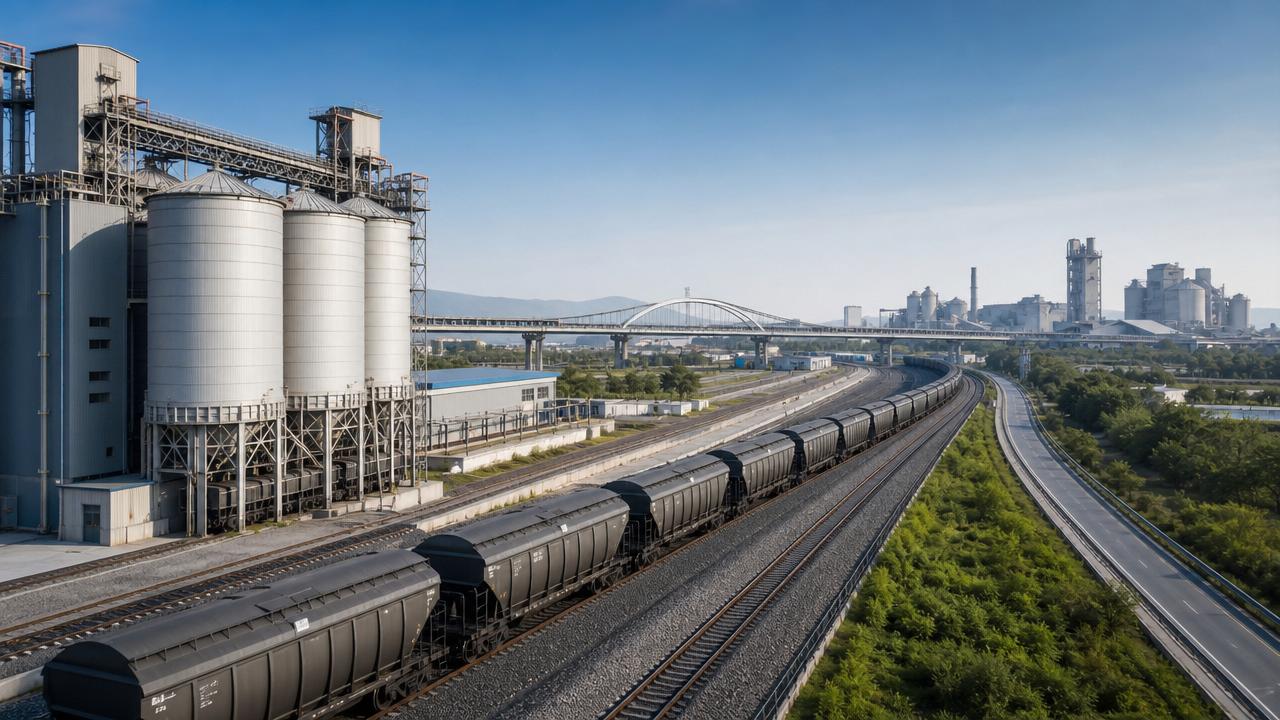
As infrastructure cycles, energy costs, and low-carbon logistics reshape material flows, cement industry news is becoming a key signal for business evaluators.
For stakeholders in railway freight, EPC planning, and heavy industrial transport, cement consumption reveals where capacity and corridor investment may be needed next.
This article examines the demand changes worth watching and what they may mean for strategic decisions across land-based logistics networks.
Why Cement Demand Matters Beyond the Cement Sector
Cement is not only a construction input; it is a high-volume freight indicator tied to infrastructure, housing, energy, and public investment cycles.
For business evaluators, the key question is not whether cement demand rises or falls, but where, when, and by which transport mode.
A shift in regional cement consumption can alter wagon allocation, terminal throughput, storage needs, axle-load planning, and rail-port integration strategies.
Because cement is heavy, time-sensitive, and often moved in bulk, logistics efficiency directly affects delivered cost and project execution reliability.
That makes cement industry news valuable for railway authorities, EPC contractors, rolling stock suppliers, and investors assessing industrial corridor utilization.
The Main Demand Shift: From Broad Growth to Selective Regional Momentum
The global cement market is moving away from uniform expansion toward more selective, project-driven, and regionally uneven demand patterns.
Mature markets often show stable or declining volumes, while emerging infrastructure corridors may experience sharp increases linked to transport, energy, and urban projects.
Business evaluators should therefore avoid reading global cement figures as a single signal for freight planning or industrial capacity decisions.
The more useful approach is to map cement demand against railway construction, port expansion, renewable energy bases, mining logistics, and urban transit programs.
When cement growth is concentrated near rail-enabled corridors, it can support higher wagon turns, better terminal economics, and stronger long-term freight contracts.
When demand is dispersed across fragmented construction sites, road transport may remain dominant, limiting immediate opportunities for rail freight operators.
Infrastructure Spending Remains the Strongest Signal to Track
Infrastructure spending is still the most important demand driver because it consumes cement at scale and usually requires predictable logistics capacity.
Railways, highways, bridges, tunnels, hydropower, ports, and industrial parks all generate dense cement flows during defined project phases.
For railway-linked decision-makers, the timing of procurement packages can be more useful than headline announcements about national infrastructure budgets.
A funded project entering site preparation may create near-term cement movements, while a policy plan may remain irrelevant for freight demand.
Evaluators should monitor tender awards, EPC mobilization, clinker availability, terminal permits, and bulk handling contracts alongside broader cement industry news.
These indicators help distinguish politically announced demand from physically executable demand that will require wagons, silos, loading systems, and corridor capacity.
Housing Weakness Changes the Mix, Not Always the Total Opportunity
Residential construction slowdowns are a major concern in many markets, especially where property investment previously drove cement consumption.
However, weaker housing demand does not automatically eliminate logistics opportunity; it often changes shipment destinations, product mix, and customer credit risk.
Infrastructure cement is typically more centralized and contract-based, while housing-related demand may be more fragmented and sensitive to local financing conditions.
For rail freight planners, this distinction matters because centralized public works can justify dedicated loading terminals and scheduled block-train services.
In contrast, scattered residential consumption may favor truck-based distribution unless regional consolidation hubs are commercially viable.
Business evaluators should examine whether lost housing volume is being replaced by public infrastructure, industrial construction, or energy transition projects.
Energy Costs Are Reshaping Cement Production and Freight Routes
Cement production is energy-intensive, so changes in coal, gas, electricity, and alternative fuel costs can shift plant competitiveness quickly.
When energy prices rise unevenly across regions, buyers may source cement or clinker from different production zones, changing established freight patterns.
This creates opportunities for rail where longer-distance bulk movement becomes more economical than high-frequency road distribution.
Rail-linked evaluators should watch plant utilization, kiln shutdowns, fuel switching, import parity, and clinker grinding capacity near consumption markets.
A grinding plant near a port or rail terminal may increase inbound clinker flows while reducing finished cement movement from inland plants.
Such changes can affect covered hopper demand, bulk cement wagon specifications, terminal dust-control systems, and last-mile distribution requirements.
Low-Carbon Construction Is Creating New Demand Questions
Decarbonization is becoming a practical market force, not just a regulatory theme, and cement is central to that transition.
Demand may shift toward blended cements, supplementary cementitious materials, lower-clinker products, and concrete mixes designed for lower embodied carbon.
For freight and engineering stakeholders, this can change which materials move, where they originate, and how terminals must handle them.
Fly ash, slag, limestone, calcined clay, and other substitutes may require new sourcing routes and different storage or blending infrastructure.
Cement industry news increasingly includes carbon pricing, emissions trading, green procurement standards, and industrial decarbonization subsidies.
These policies can influence plant investment decisions, cross-border competitiveness, and the business case for rail-based low-carbon logistics.
Rail has a strategic advantage when customers need lower transport emissions, especially for long-haul bulk materials moving between industrial clusters.
Import and Export Flows Are Becoming More Volatile
Cement and clinker trade is sensitive to freight rates, energy prices, exchange rates, carbon rules, and local supply-demand imbalances.
Business evaluators should not assume that today’s import corridor will remain stable throughout the next construction cycle.
A domestic plant restart, new grinding capacity, tariff change, or carbon border measure can quickly redirect trade flows.
Ports connected to rail may benefit when clinker imports rise, especially if inland grinding plants need reliable high-volume delivery.
Conversely, if domestic production becomes more competitive, inland rail movements from plants to consumption centers may increase.
The practical issue is optionality: terminals and corridors that can handle both imported clinker and domestic cement flows are more resilient.
What Business Evaluators Should Measure Before Committing Capital
Before investing in wagons, terminals, silos, or corridor upgrades, evaluators need a disciplined framework for separating temporary demand from durable freight volume.
The first measure is project certainty, including financing closure, EPC award status, land access, environmental approval, and construction start probability.
The second measure is volume concentration, because rail economics improve when demand is aggregated across predictable routes and repeat customers.
The third measure is logistics substitutability, including road distance, fuel costs, congestion, unloading capacity, and reliability requirements at the destination.
The fourth measure is contract structure, especially whether customers accept take-or-pay terms, indexed pricing, or multi-year capacity commitments.
The fifth measure is regulatory alignment, including axle-load limits, emissions requirements, cross-border procedures, and safety standards for bulk material handling.
When these indicators align, cement demand can support strong rail freight economics and justify investment in specialized assets.
Implications for Railway Freight and Engineering Strategy
For railway authorities, cement demand shifts should inform corridor prioritization, siding development, axle-load policies, and industrial terminal planning.
For rolling stock manufacturers, demand analysis can guide the mix of covered hoppers, pneumatic discharge systems, smart wagon monitoring, and maintenance packages.
For EPC contractors, cement logistics should be addressed early because material delivery risk can disrupt construction schedules and working capital planning.
For intermodal operators, the opportunity lies in integrating rail trunk haul with port reception, inland storage, and truck-based last-mile distribution.
Smart signaling and traffic management also matter when cement flows compete with containers, coal, grain, steel, or passenger services.
A corridor with strong demand but weak dispatching discipline may still fail to deliver the reliability needed for construction supply chains.
Risks That Can Weaken the Cement Freight Opportunity
The biggest risk is overbuilding logistics capacity based on temporary construction stimulus rather than recurring industrial or urban demand.
Another risk is assuming cement will automatically move by rail because it is heavy, even when terminals are poorly located.
Rail competitiveness can also be weakened by short haul distances, slow loading cycles, inconsistent wagon availability, and complex customer unloading arrangements.
Policy risk is increasing as carbon costs, quarry permits, import restrictions, and public procurement rules reshape cement supply chains.
Credit risk should not be ignored, especially in property-linked markets where contractors may delay payments or reduce purchases suddenly.
Evaluators should build scenarios for low, base, and high demand, then test asset utilization under each case before committing capital.
How to Read Cement Industry News More Strategically
The most useful cement industry news is not necessarily the largest headline; it is the information that changes freight assumptions.
A new kiln, plant closure, clinker import deal, infrastructure tender, or carbon regulation can each signal different logistics outcomes.
Readers should connect news items to four questions: where volume originates, where it moves, how often it moves, and who controls capacity.
If those answers are unclear, the news may be interesting but not yet actionable for investment or operational planning.
Strategic readers also compare cement signals with steel, aggregates, diesel prices, public budgets, port throughput, and railway utilization data.
This wider view helps identify whether cement demand is part of a durable industrial cycle or a short-lived procurement surge.
Conclusion: The Demand Shifts Worth Watching
Cement demand is becoming more regional, policy-sensitive, energy-linked, and logistics-dependent, making headline market growth less useful on its own.
For business evaluators, the real value lies in linking cement industry news to corridor demand, terminal economics, and capital deployment timing.
The most important shifts to watch are infrastructure execution, housing substitution, energy-driven sourcing changes, low-carbon material flows, and import-export volatility.
When these signals point toward concentrated, repeatable, long-distance movement, rail freight and engineering stakeholders can find meaningful opportunities.
When signals remain fragmented or speculative, the better decision may be to preserve flexibility rather than commit to fixed heavy assets.
In a changing cement market, disciplined interpretation turns news into foresight and helps decision-makers plan resilient land-based logistics networks.