
How electrification is changing rail cost beyond energy bills

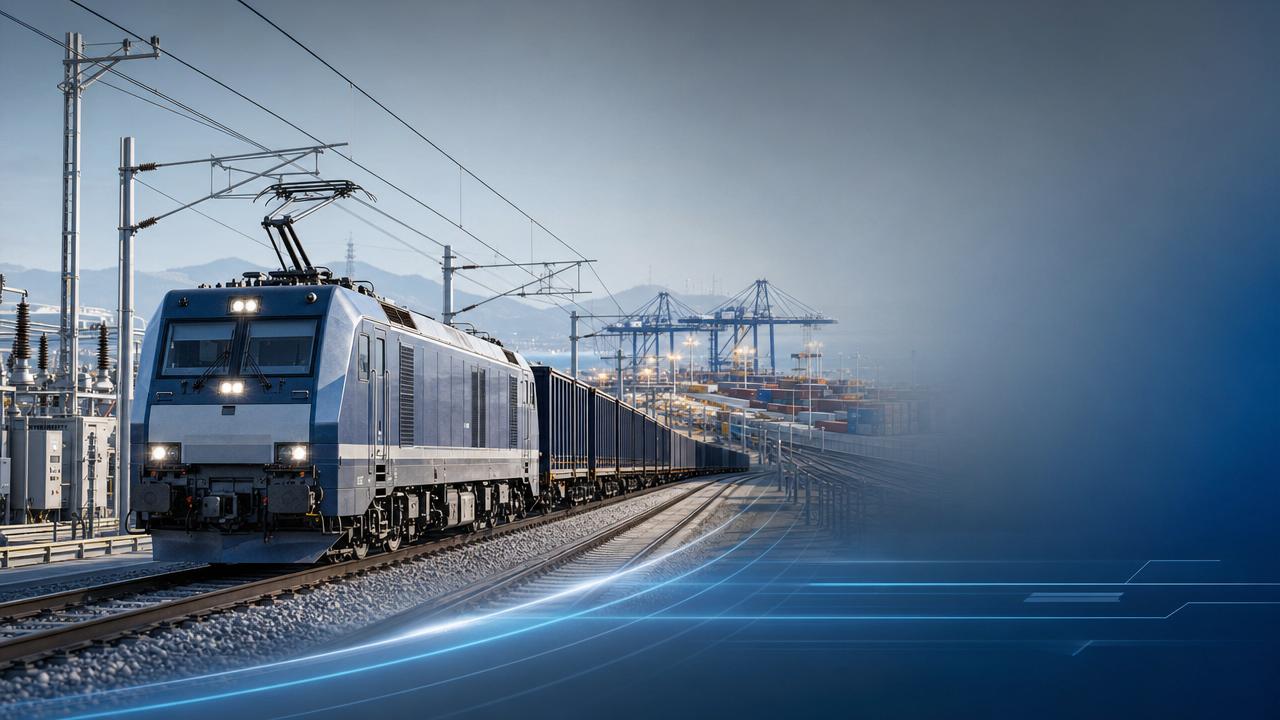
For financial approvers evaluating rail investment, the impact of electrification on rail cost goes far beyond lower energy bills. It reshapes capital allocation, maintenance profiles, asset life cycles, network capacity, and long-term regulatory exposure. Understanding these cost drivers is essential for making sound funding decisions in freight corridors where efficiency, resilience, and compliance increasingly define return on investment.
In heavy-haul and intercontinental freight networks, the funding question is no longer whether traction energy can be reduced. The more important issue is how electrification changes total rail economics over 20–40 years, especially across high-tonnage corridors, mixed-traffic routes, and port-linked inland logistics systems.
For boards, ministries, lenders, and capital committees, the impact of electrification on rail cost must be assessed across infrastructure, rolling stock, maintenance windows, signaling integration, and future compliance costs. A narrow fuel-versus-electricity comparison often understates both the upside and the hidden execution risks.
Why electrification changes rail cost structure, not just the utility bill
Electrification replaces one variable operating expense with a broader cost architecture. Instead of focusing mainly on diesel procurement and engine maintenance, asset owners must evaluate catenary systems, substations, grid access, protection systems, and interface requirements with ETCS, GSM-R, or other corridor control layers.
On many freight routes, traction energy may represent only one part of lifecycle cost. Track wear, locomotive availability, axle-load performance, turnaround time, and planned possession windows can collectively influence financial outcomes more than a simple per-kWh comparison.
From fuel savings to full lifecycle accounting
A finance team typically reviews electrification over a 15-year, 25-year, or 30-year horizon. In that period, three cost categories usually dominate: initial fixed infrastructure, rolling stock transition, and long-term system upkeep. Each category carries a different payback profile and risk sensitivity.
- Infrastructure CAPEX: overhead contact system, feeder stations, civil clearance works, protection, and grid interface.
- Fleet transition cost: new electric locomotives, dual-mode bridging strategy, depot adaptation, and driver conversion.
- OPEX shift: reduced diesel engine complexity but increased dependence on power quality, component renewal, and network resilience.
This is where the impact of electrification on rail cost becomes strategic. The economics improve fastest when a corridor already carries dense traffic, long-haul trains, predictable timetables, and sufficient daily train paths to spread fixed infrastructure cost across high annual tonnage.
Key cost areas financial approvers should separate
Many approvals fail because cost categories are blended too early. Separating direct energy, non-energy OPEX, and network-level productivity helps decision-makers avoid distorted ROI assumptions. A corridor with 18–24 trains per day may justify electrification very differently from a branch line with 4–6 train pairs.
The table below shows how the impact of electrification on rail cost typically appears when compared by financial category rather than by energy line item alone.
The core takeaway is that electrification increases fixed-cost exposure while often improving utilization, reliability, and long-run operating discipline. For finance teams, value emerges when these gains are quantified corridor by corridor rather than averaged across an entire national network.
Capital allocation: where the biggest approval mistakes happen
The first major budgeting challenge is not the traction unit itself. It is the corridor-wide capital stack: electrical clearances, bridge modifications, substations, transmission connections, depot retrofits, protection systems, and signaling interface updates. These can shift project economics by 10%–30% depending on route condition and terrain.
For G-RFE-type decision environments involving railway authorities, EPC contractors, and Tier-1 rolling stock suppliers, financial approval should treat electrification as a system program rather than a fleet purchase. If one subsystem is underfunded, the whole return profile can weaken.
Infrastructure CAPEX often sits outside early board assumptions
A frequent mistake is to benchmark only locomotive acquisition. In practice, route electrification may require 4–7 interdependent work packages: civil adaptation, OCS installation, traction power supply, SCADA integration, protection upgrades, communication adaptation, and staged commissioning.
Tunnel sections, port approaches, and older bridges tend to create outlier costs. Even a limited number of constrained structures can delay energization by 6–18 months if possession planning, approvals, or redesign cycles are not addressed early.
Capital questions every approver should ask
- What percentage of route kilometers requires clearance intervention?
- How many substations are needed at current train density and future growth levels?
- Is signaling already compatible with the electrical environment and planned protection logic?
- What is the transition cost if diesel and electric operations must coexist for 3–8 years?
- Which components are imported and therefore exposed to foreign exchange or supply lead times?
Financing needs to reflect phased benefits
The impact of electrification on rail cost is rarely linear from year 1. Benefits often arrive in phases. Early years may show negative cash flow because construction, commissioning, and fleet adaptation overlap. Years 4–8 may deliver the first meaningful OPEX improvement, while years 10+ reveal stronger capacity and compliance value.
A phased model is especially important on international freight corridors where customs interfaces, intermodal terminals, and cross-border operating rules affect the speed at which productivity gains become bankable.
The following table helps financial approvers map major CAPEX areas to approval risk and expected payback influence.
For approval committees, the lesson is clear: electrification should be evaluated through program governance, milestone funding, and corridor-specific sensitivity analysis. A single blended CAPEX number usually hides the risk areas that matter most.
Maintenance, reliability, and asset life: the hidden drivers of cost change
One reason the impact of electrification on rail cost is often underestimated is that maintenance savings do not always appear immediately in annual budgets. They show up as fewer engine-related failures, longer intervals between heavy mechanical interventions, and more consistent fleet availability over 12-month operating cycles.
Electric traction generally reduces onboard mechanical complexity compared with diesel traction. However, the maintenance burden does not disappear; it shifts to fixed electrical assets, power quality monitoring, contact wire wear management, and specialized safety procedures for energized infrastructure.
How maintenance profiles change after electrification
For financial planning, it helps to split maintenance into mobile assets and fixed assets. Locomotive workshops may experience fewer fuel-system and engine-overhaul events, while infrastructure teams take on periodic inspections of catenary geometry, insulators, sectioning equipment, and feeder installations.
- Mobile asset effect: improved locomotive uptime and potentially fewer heavy mechanical interventions per operating year.
- Fixed asset effect: recurring inspections at defined intervals, often monthly, quarterly, and annually depending on route load and climate.
- Operational effect: better acceleration can reduce schedule knock-on delays and improve network punctuality under dense traffic.
On freight corridors with heavy axle loads and long train formations, even a 2%–5% improvement in locomotive availability can influence revenue service levels, crew planning, and terminal slot reliability. These are financially relevant outcomes, even when they are not booked under “energy savings.”
Asset life and renewal timing matter to board-level ROI
A proper approval model should distinguish between asset life and replacement cycles. Overhead line components may have different renewal intervals from substation equipment, and both differ from rolling stock depreciation schedules. Misalignment here can distort lifecycle costing.
For example, a financial model based on a 20-year horizon may fail to capture the value of infrastructure that remains productive well beyond that period. Conversely, it may also underestimate midlife refurbishments needed around years 12–18 for certain electrical components or workshop systems.
Common maintenance planning mistakes
- Assuming electric fleets eliminate maintenance rather than redistribute it.
- Underbudgeting training for high-voltage procedures and protection systems.
- Ignoring spare-part lead times for specialized electrical equipment.
- Failing to coordinate maintenance windows with freight path commitments.
In high-capacity land transport, reliability is a commercial asset. If electrification reduces service interruptions, improves departure consistency, or supports tighter intermodal handoffs, the cost benefit extends into contract retention and corridor competitiveness.
Capacity, compliance, and strategic risk: where electrification creates long-term value
Electrification can change network economics even when direct energy savings are moderate. The biggest gain may come from throughput. Faster acceleration, stronger performance on gradients, and more stable operating speeds can release extra path capacity without adding a new track on every segment.
For financial approvers, this matters because capacity expansion through better traction performance can be cheaper than large-scale civil duplication. On constrained freight corridors, improving train flow by a few additional paths per day may unlock significant commercial value.
Throughput improvement affects cost per ton-kilometer
When network utilization rises, fixed infrastructure cost is spread across more tonnage. That can reduce effective cost per train-kilometer or ton-kilometer even if annual maintenance of electrical assets increases. This is one of the least understood aspects of the impact of electrification on rail cost.
On corridors connected to ports, dry ports, or intermodal terminals, higher schedule consistency can also reduce dwell time, improve crane planning, and strengthen ship-to-rail synchronization. Those downstream gains often support the business case indirectly.
Regulatory and carbon exposure should be priced into approvals
Another major factor is future compliance. In many jurisdictions, emissions regulation, local air-quality restrictions, and public procurement rules are becoming tighter over 5–15 year windows. Diesel-heavy rail systems may face increasing compliance cost or reduced access to concessionary finance.
Electrification does not remove regulatory exposure, since grid carbon intensity and resilience still matter. But it often improves alignment with low-carbon transport policy, especially when the route is positioned as a strategic freight artery under UIC, EN, or other international operating frameworks.
A practical risk screen for decision-makers
- Traffic density below threshold for amortizing fixed electrification assets.
- Weak grid reliability or insufficient utility coordination.
- Cross-border interoperability gaps in signaling, standards, or power systems.
- Construction windows too limited for efficient delivery sequencing.
- Unclear terminal-side benefits despite high line-haul investment.
Where these risks are manageable, electrification can strengthen long-term corridor positioning. For national railway authorities and EPC-backed programs, that means the cost discussion should include strategic resilience, not only annual expenditure.
How financial approvers can assess electrification proposals more accurately
A strong approval process combines engineering realism with disciplined capital review. The most useful models test base case, downside case, and phased uptake case rather than relying on one expected-volume assumption. This is especially important for corridors carrying commodities, containers, and cross-border freight in mixed ratios.
Five evaluation lenses for a stronger funding decision
- Traffic density: confirm whether current and forecast volume supports fixed-asset amortization.
- System readiness: review track, structures, depots, and signaling as one package.
- Transition strategy: define whether diesel, electric, or dual-mode operation is needed over 2–7 years.
- Maintenance capability: test internal readiness for high-voltage operations, inspection routines, and spares planning.
- Policy alignment: examine carbon, concession financing, and freight corridor development priorities.
What a decision-ready business case should include
Before approving budget, finance teams should request an integrated business case with corridor segmentation, asset-life assumptions, maintenance transfer mapping, and possession-based construction logic. A useful dossier should also show sensitivity to power tariffs, utilization rates, and deferred civil works.
For institutions operating in technically demanding freight environments, the strongest cases are those that link rolling stock, infrastructure, signaling, and regulatory pathways into one investment narrative. That is where specialized intelligence platforms such as G-RFE add value: they help decision-makers benchmark assets, standards, and corridor risks in one framework.
Questions often raised at approval stage
Will electrification always reduce rail cost? No. On low-density lines, the fixed infrastructure burden may outweigh operational gains for many years. The impact of electrification on rail cost is strongest on busy freight arteries with long distances, repeatable flows, and high annual utilization.
Should boards prioritize fleet or route first? Usually route economics should lead, because electric traction only creates full value when the corridor, depot, power supply, and operating model are aligned. Buying locomotives before system readiness can delay returns.
How should uncertainty be handled? Use staged approvals tied to engineering maturity, possession planning, and traffic validation. This can reduce the risk of locking in full funding before major civil or utility constraints are resolved.
The impact of electrification on rail cost should be evaluated as a corridor transformation decision, not a narrow energy substitution exercise. For financial approvers, the real value lies in understanding how electrification changes fixed-versus-variable cost balance, maintenance distribution, asset longevity, path capacity, and long-term compliance exposure.
Where traffic density, technical readiness, and policy direction are aligned, electrification can support stronger lifecycle economics and a more resilient freight network. Where those conditions are weak, a phased or hybrid strategy may be more defensible. To compare corridor options, validate technical assumptions, or build a decision-ready investment case, contact us to get a tailored rail electrification assessment and explore more freight corridor solutions.
Industry Briefing
Get the top 5 industry headlines delivered to your inbox every morning.