
How Trade Shifts Are Reshaping the Rail Supply Chain

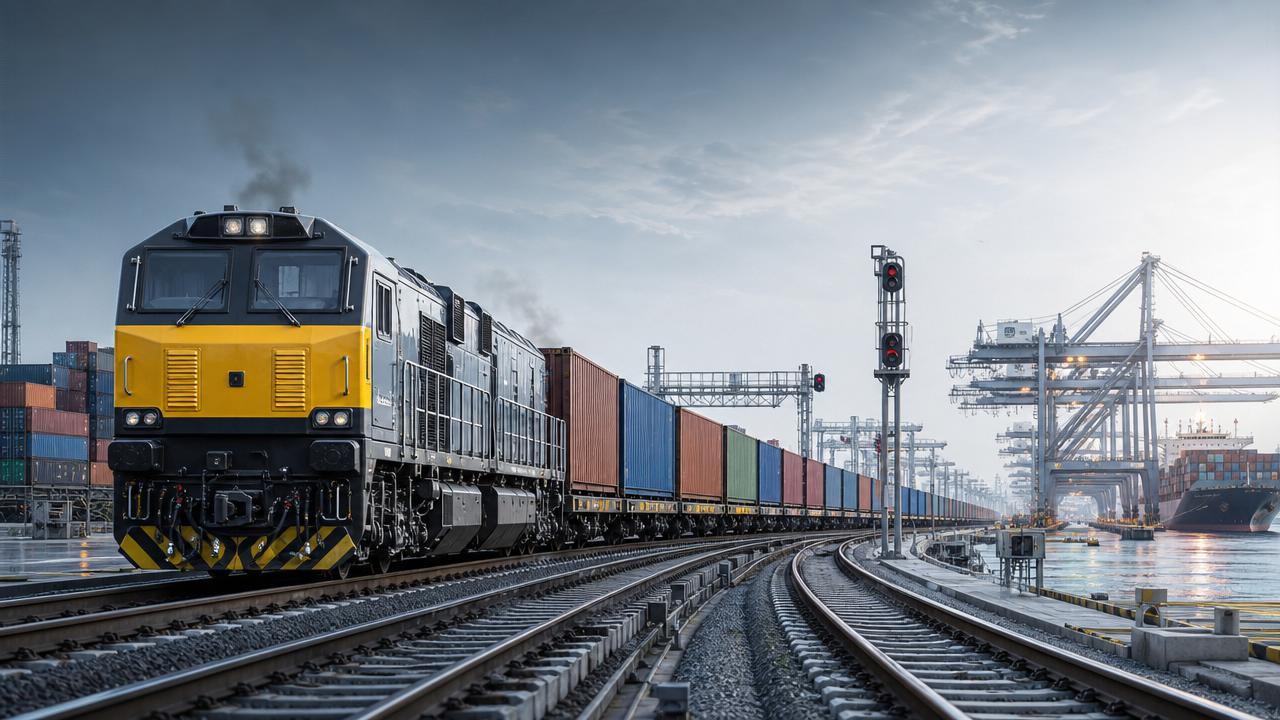
As trade routes realign under geopolitical pressure, nearshoring, and decarbonization goals, the impact of trade on rail supply chain performance is becoming a critical issue for business evaluators. From rolling stock procurement to signaling systems and intermodal capacity, rail networks now face sharper demands for resilience, compliance, and cost efficiency. This article explores how shifting trade patterns are redefining investment priorities across the global rail freight ecosystem.
Why a checklist is now essential
The impact of trade on rail supply chain decisions is no longer limited to freight volumes. It now shapes asset lifecycles, sourcing risk, border operations, energy strategy, and digital interoperability.
A checklist-based review helps compare route exposure, supplier concentration, maintenance readiness, and standards compliance before capital or operating assumptions become outdated.
This matters across the broader industrial economy because rail sits between mining, steel, ports, manufacturing, agriculture, and inland distribution networks.
Core checklist for evaluating trade-driven rail supply chain shifts
- Map corridor dependency by origin, destination, border crossing, and port interface to see where the impact of trade on rail supply chain stability is most concentrated.
- Audit rolling stock exposure by locomotive type, wagon class, axle-load profile, and maintenance interval before demand shifts create mismatches in fleet allocation.
- Check supplier concentration for rails, wheels, braking systems, couplers, traction components, and signaling hardware across both domestic and offshore sources.
- Verify standards alignment with UIC, EN, AAR, ETCS, GSM-R, and local safety rules to avoid delays when traffic is rerouted across jurisdictions.
- Measure intermodal transfer capacity at dry ports, terminals, and rail-port nodes where trade redirection can create new choke points overnight.
- Review lead times for castings, bogies, semiconductors, control units, and maintenance machinery because trade volatility often hits specialized inputs first.
- Stress-test energy assumptions for diesel, electricity, and hybrid traction where sanctions, fuel routes, or grid constraints alter operating economics.
- Assess digital visibility across dispatching, condition monitoring, customs documentation, and yard management to shorten reaction time during trade disruptions.
- Recalculate total landed cost, not just purchase price, including dwell time, spares availability, border inspection, and compliance rework.
- Build redundancy into maintenance depots, spare-part pools, and engineering support so the impact of trade on rail supply chain uptime remains manageable.
How trade shifts are changing investment priorities
One clear trend is the move from pure expansion toward resilient capacity. New lines still matter, but investors increasingly favor assets that improve rerouting flexibility and faster recovery.
That includes switchgear upgrades, passing loops, yard automation, heavier wagons, dual-mode locomotives, and predictive maintenance tools. Each reduces disruption when cargo flows migrate unexpectedly.
The impact of trade on rail supply chain performance also pushes more spending into interoperability. A corridor is only as efficient as its weakest signaling interface, gauge break, or customs handoff.
Procurement is becoming more strategic
Rail procurement used to emphasize unit price and delivery date. Now it must weigh geopolitical risk, approved alternates, service support, firmware control, and long-term parts availability.
For heavy-duty rail systems, a delayed traction converter or onboard signaling module can idle high-value assets longer than a standard commodity shortage would suggest.
Infrastructure planning is becoming corridor-led
When trade lanes shift, isolated infrastructure upgrades lose value. The better approach is corridor-led planning across mainline capacity, terminals, maintenance, customs interfaces, and port synchronization.
This is where the impact of trade on rail supply chain outcomes becomes visible: bottlenecks often appear at transfer points, not on the longest line section.
Scenario-based guidance across the rail freight ecosystem
Nearshoring and regional manufacturing growth
Nearshoring increases short-to-medium corridor importance. Rail networks must support more frequent inland moves between factories, border hubs, and consumption centers.
In this scenario, prioritize wagon versatility, terminal handling speed, and customs data integration. Smaller delays multiply quickly when shipment frequency rises.
Commodity route realignment
Shifts in grain, ore, coal, or steel flows can overload lines built for different traffic patterns. Axle-load capacity, siding length, and unloading systems must be reviewed together.
The impact of trade on rail supply chain resilience is especially sharp here because commodity corridors depend on fleet density, turnaround discipline, and infrastructure durability.
Sanctions, export controls, and compliance barriers
Trade restrictions can block electronics, braking components, software updates, or specialist maintenance tools. Physical assets may remain available while support capability weakens.
Response plans should include qualified substitutes, software escrow paths, and documented engineering change procedures for cross-border approvals.
Decarbonization and modal shift
As policy pushes freight from road to rail, demand can surge on corridors that were operationally stable but not capacity-rich. Electrification and energy supply become supply chain issues too.
The impact of trade on rail supply chain planning expands beyond equipment sourcing to include substations, grid readiness, regenerative braking compatibility, and emissions reporting.
Commonly overlooked risks
- Ignoring maintenance tooling can undermine new asset deployment. A locomotive delivered on time still loses value if depot capability lags behind technical complexity.
- Treating signaling as separate from trade planning creates blind spots. Cross-border capacity often fails because communication systems are not operationally harmonized.
- Overlooking spare-part localization increases downtime risk. Long-haul sourcing may be acceptable in stable periods, but not during sudden route disruption.
- Assuming port congestion is temporary can distort rail planning. Persistent terminal delays reshape wagon cycles, yard occupancy, and service reliability.
- Underestimating regulatory divergence can slow corridor activation. Technical compatibility does not guarantee fast customs clearance or safety approval.
Practical execution steps
Start with a 12-to-24-month corridor review. Rank trade lanes by volatility, strategic value, and operational dependence on constrained suppliers or infrastructure nodes.
Then create a rail asset matrix covering locomotives, wagons, track systems, signaling, depot equipment, and digital platforms. Mark each item by lead time, substitution difficulty, and standards exposure.
Next, model disruption scenarios. Include border delay, parts embargo, demand spike, energy price change, and port diversion. Compare throughput, turnaround, and maintenance effects.
Finally, align procurement, engineering, and operations around trigger points. Predefined thresholds support faster action when the impact of trade on rail supply chain conditions intensifies.
Conclusion and next action
The impact of trade on rail supply chain performance is now a strategic engineering issue, not only a logistics variable. Trade shifts are changing where capacity is needed, which assets matter most, and how risk should be priced.
A structured checklist turns uncertainty into a workable decision process. It clarifies corridor risk, exposes hidden dependencies, and supports better timing for upgrades, sourcing changes, and compliance work.
The most effective next step is to run a corridor-by-corridor diagnostic using the checklist above, then convert findings into phased actions across procurement, infrastructure, and technical support.
Industry Briefing
Get the top 5 industry headlines delivered to your inbox every morning.