
Machinery Parts Selection Guide: Performance, Wear, and Fit

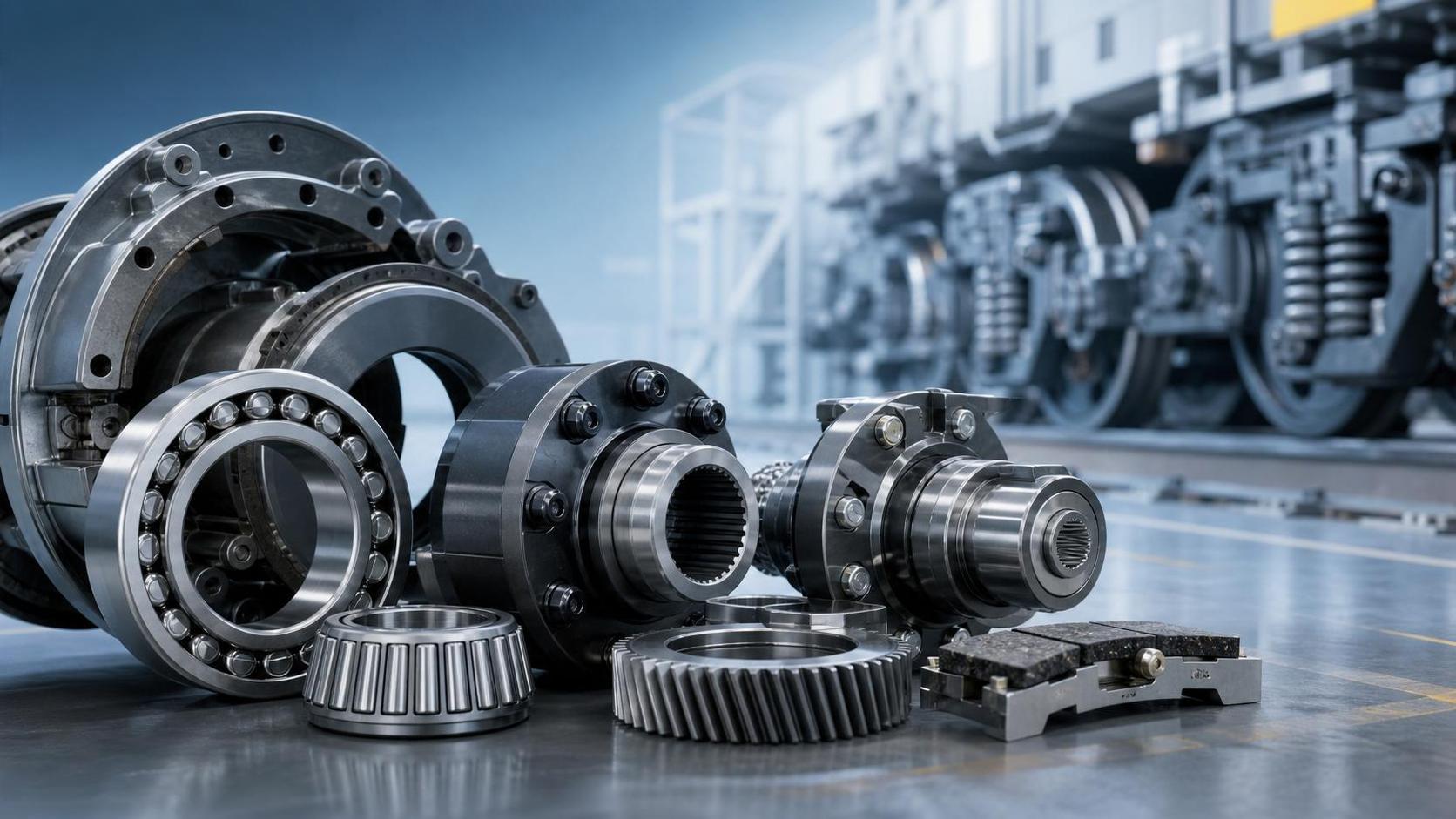
Machinery Parts Selection Guide: Performance, Wear, and Fit
Choosing the right machinery parts is rarely a simple purchasing task.
It directly shapes uptime, safety, maintenance cycles, and total asset value.
In railway-freight and heavy engineering environments, that impact becomes even more visible.
A poorly matched part can accelerate wear, increase vibration, and trigger compliance concerns.
A well-selected part does the opposite.
It improves reliability, protects connected assemblies, and supports stable long-term performance.
That is why machinery parts selection should balance three factors together.
Those factors are performance, wear resistance, and dimensional fit.
In practical projects, these factors never work in isolation.
A stronger part may still fail if tolerance, lubrication, or interface conditions are ignored.
Why machinery parts selection matters more in heavy-duty operations
Heavy-duty systems operate under repeated stress, contamination, and changing loads.
Railway equipment adds another layer through safety rules and international standard requirements.
This includes locomotives, wagons, braking subsystems, maintenance machines, and track assets.
In these applications, machinery parts must handle both steady duty and shock events.
Recent procurement patterns show a clear shift toward lifecycle-based decisions.
Buyers increasingly compare service life, maintenance intervals, and failure traceability.
That also means material certificates and test records now carry more weight.
Selection quality is no longer about catalog matching alone.
Common consequences of poor part selection
- Unexpected downtime caused by premature wear or heat build-up.
- Misalignment that damages bearings, shafts, housings, or seals.
- Higher maintenance cost from frequent replacement cycles.
- Reduced energy efficiency due to friction, drag, or imbalance.
- Compliance risk when documentation does not support UIC, EN, or AAR expectations.
Performance first: define what the machinery parts must actually do
Performance is the starting point of any machinery parts evaluation.
Still, performance should be defined by operating reality, not marketing language.
Begin with load, speed, duty cycle, ambient conditions, and interface behavior.
For example, a drive component on track machinery faces different stress than a wagon coupler part.
The same part family may perform well in one case and fail early in another.
This is where application-specific selection becomes critical.
Key performance checks before approval
- Confirm rated load against peak load, not only average demand.
- Review temperature range, dust exposure, moisture, and chemical contact.
- Check dynamic behavior under vibration, shock, and repeated starts.
- Assess interaction with neighboring parts and lubrication systems.
- Validate supplier test methods, not just the stated result.
In actual operations, performance margins often decide whether maintenance stays planned.
A part that only meets nominal conditions usually has little room for disruption.
Wear resistance: look beyond material labels
Wear is one of the biggest hidden costs in machinery parts management.
It affects replacement planning, inventory strategy, and equipment availability.
However, wear resistance is not solved by simply choosing harder materials.
Hardness matters, but surface finish, heat treatment, coating, and lubrication matter too.
More importantly, wear mode must match the application.
Abrasive wear, adhesive wear, fatigue wear, and corrosive wear need different responses.
Questions that improve wear-related decisions
- What is the dominant wear mechanism in service?
- Does the part face contamination from dust, ballast, or metal debris?
- Will lubrication remain stable across seasons and duty cycles?
- Can the surface treatment survive impact and repeated contact?
- Is field data available from a similar operating environment?
This is especially relevant for rail engineering machinery and freight handling equipment.
These systems often work outdoors, under dirt ingress, and under uneven loading.
In that context, the best machinery parts are those with proven wear behavior, not theoretical strength alone.
Fit and tolerance: the small details that prevent large failures
Dimensional fit is often underestimated during machinery parts sourcing.
Yet many field failures begin with improper tolerance, misalignment, or poor interface contact.
A part may meet material and performance targets but still create system instability.
That usually happens when drawings, mating geometry, or installation conditions are not fully reviewed.
In precision assemblies, a minor deviation can multiply stress across the whole system.
Fit-related items to verify
The more critical the asset, the more important it is to validate real assembly conditions before purchase release.
How to compare machinery parts suppliers with less risk
Supplier comparison should go beyond unit price and delivery time.
For technical selections, evidence quality is often the better decision filter.
This is where experienced industrial platforms such as G-RFE add practical value.
By benchmarking components against UIC, EN, and AAR expectations, review teams gain stronger reference points.
That makes machinery parts selection more disciplined and easier to defend internally.
What reliable suppliers should provide
- Material traceability and manufacturing process records.
- Test data tied to relevant duty conditions.
- Drawings with clear tolerance and revision control.
- References from similar railway or industrial applications.
- After-sales support for installation, inspection, and failure review.
When these elements are missing, low initial cost can quickly turn into high operational exposure.
A practical machinery parts selection workflow
A structured workflow helps teams make faster and more consistent decisions.
It also reduces the chance of missing critical technical details.
- Define the operating context, including load, speed, environment, and maintenance limits.
- List critical performance requirements and acceptable safety margins.
- Identify expected wear modes and likely contamination sources.
- Verify fit, tolerance, and assembly method against actual equipment drawings.
- Compare machinery parts suppliers based on traceability, validation, and service support.
- Review lifecycle cost, not just purchase price, before final selection.
This process is simple, but it creates stronger decisions.
More importantly, it keeps machinery parts evaluation connected to field reality.
Final decision points for better lifecycle value
The best machinery parts decision is usually the one that performs steadily over time.
That means balancing performance targets with wear behavior and exact fit.
It also means using verified supplier data instead of assumptions.
From a strategic perspective, this approach supports safer assets and more predictable maintenance budgets.
For railway-freight and engineering programs, the value is even broader.
It helps align hardware decisions with operational resilience and standard-driven compliance.
If the goal is long service life with fewer surprises, selection discipline matters early.
Start with application demands, validate wear and fit, and choose machinery parts that prove their value in service.
Industry Briefing
Get the top 5 industry headlines delivered to your inbox every morning.