
Locomotive Engine Components Overhaul: Cost Drivers and Downtime Risks

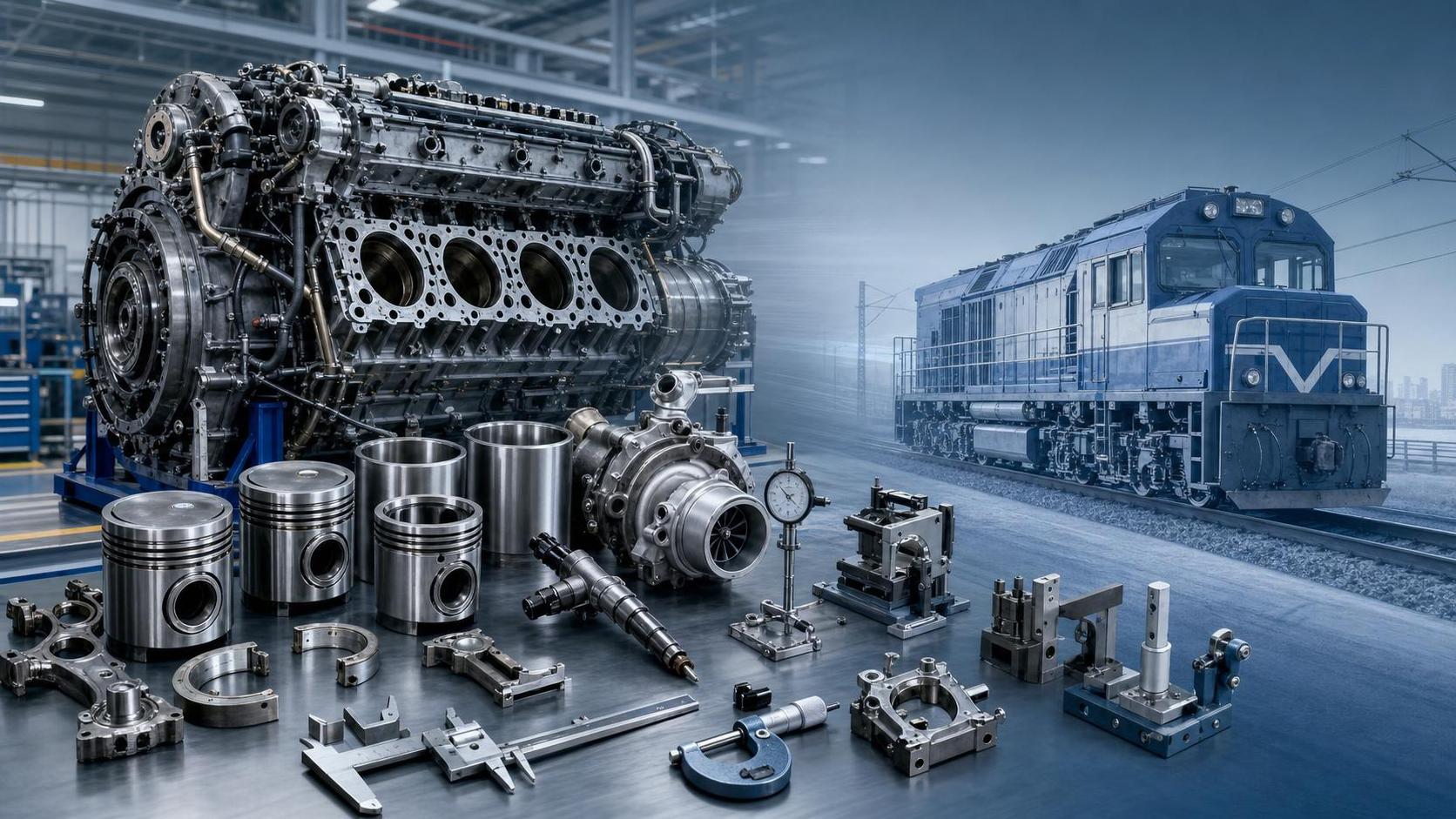
Locomotive Engine Components Overhaul: Cost Drivers and Downtime Risks
For finance approvers, locomotive engine components overhaul is not a routine workshop expense.
It is a capital-risk decision tied to availability, contract delivery, fuel efficiency, and lifecycle value.
A delayed overhaul can ripple across freight schedules, asset utilization, and customer penalty exposure.
An over-scoped overhaul can also lock budget into low-return work.
That is why locomotive engine components overhaul must be evaluated as both a maintenance event and an investment decision.
In practice, the best decisions come from understanding what truly drives cost and what extends downtime.
This is where technical detail matters, especially for freight fleets operating under strict availability targets.
Why locomotive engine components overhaul costs vary so much
At first glance, overhaul pricing may look comparable across suppliers.
Once teardown begins, however, cost differences usually widen fast.
The main reason is condition uncertainty inside core assemblies.
A quoted overhaul for pistons, liners, bearings, cylinder heads, turbochargers, and injectors rarely stays static if hidden wear appears.
More clearly now, buyers are paying for risk allocation as much as for physical parts.
That shifts the conversation from unit price to total exposure.
The biggest cost drivers inside an overhaul scope
Several variables consistently shape locomotive engine components overhaul budgets.
- Core component condition after disassembly and inspection.
- Whether OEM parts, approved alternatives, or refurbished modules are used.
- Labor intensity for machining, balancing, precision fitting, and test runs.
- Lead times for imported spares or long-cycle castings.
- Required compliance documentation, traceability, and post-overhaul validation.
- Unexpected findings in crankcases, camshafts, connecting rods, and cooling systems.
Among these, parts replacement usually dominates direct cost.
Yet labor and waiting time often dominate commercial impact.
That distinction matters when comparing bids for locomotive engine components overhaul.
Direct cost versus total downtime cost
A lower workshop quote does not always create a lower total cost.
This is one of the most common mistakes in overhaul approval.
If locomotive engine components overhaul adds extra idle days, the hidden losses can exceed the savings on parts.
Those losses may include missed freight slots, backup locomotive rental, crew rescheduling, and customer service penalties.
For heavy-haul corridors, availability is usually the stronger financial metric.
A realistic approval model therefore needs two lenses: repair spend and downtime risk.
A practical way to frame total cost
- Estimate base overhaul cost from the confirmed scope.
- Add probable variation cost from known failure patterns.
- Price the value of each lost locomotive day.
- Assess schedule risk from long-lead items and vendor capacity.
- Compare options on expected total cost, not quote price alone.
This approach gives locomotive engine components overhaul a clearer business case.
It also improves discussions between finance, engineering, and operations teams.
Where downtime risks usually begin
Downtime does not start when the locomotive enters the workshop.
In many cases, it starts earlier, with weak planning and incomplete condition data.
From recent market shifts, supply-chain volatility has made this more visible.
A missing fuel injection component or turbocharger rotor can stall an otherwise routine overhaul window.
The same applies when inspection findings trigger engineering approvals not covered in advance.
This means downtime control must start before disassembly.
Common downtime triggers in locomotive engine components overhaul
- Late parts ordering based on incomplete fault diagnosis.
- Supplier dependence on a single OEM or overseas stock point.
- Workshop congestion during fleet-wide overhaul cycles.
- Additional machining caused by secondary wear damage.
- Documentation delays for regulated components and inspections.
- Retesting after quality escapes or incomplete assembly checks.
Each of these factors can extend locomotive engine components overhaul beyond planned outage windows.
When multiple triggers overlap, schedule slippage becomes expensive very quickly.
How to assess supplier proposals with less budget risk
A procurement decision should test more than price and delivery promises.
For locomotive engine components overhaul, proposal quality often predicts cost stability.
A strong bid will define scope boundaries, inspection criteria, exclusions, turnaround assumptions, and escalation rules.
A weak bid usually looks attractive early, then expands later through variation charges.
That is where disciplined comparison becomes useful.
Checklist for comparing overhaul vendors
This kind of review reduces surprises during locomotive engine components overhaul execution.
It also creates a better audit trail for capital approval decisions.
When overhaul should be approved, deferred, or re-scoped
Not every asset deserves the same overhaul response.
In actual fleet management, timing matters as much as technical necessity.
A full locomotive engine components overhaul makes sense when expected life extension clearly outweighs spend and outage cost.
Deferral may be justified when the engine remains within monitored wear limits and network demand is peaking.
Re-scoping is often the best path when only selected modules are driving reliability risk.
This is especially relevant for mixed-age freight fleets.
Useful approval questions before release of funds
- What failure risk is being removed by this overhaul scope?
- What fleet availability gain is expected after return to service?
- What is the expected cost of one extra week of downtime?
- Are high-risk parts already secured in the supply chain?
- Does the workshop have proven experience with this engine platform?
- Is there a fallback plan if hidden damage expands the scope?
These questions keep locomotive engine components overhaul aligned with operating reality.
A more defensible approach to locomotive engine components overhaul
The most reliable decisions combine engineering evidence with commercial discipline.
That means validating condition data, mapping cost drivers, and pricing downtime before approval.
It also means treating locomotive engine components overhaul as a fleet performance lever, not just a maintenance transaction.
For railway freight operators, the stronger signal is not the cheapest quote.
It is the option that controls lifecycle cost while protecting asset availability.
In the end, a well-structured locomotive engine components overhaul should reduce uncertainty, shorten outage time, and support stable freight performance.
That is the basis for an approval decision that stands up commercially and operationally.
Industry Briefing
Get the top 5 industry headlines delivered to your inbox every morning.