
Railway Wheel Wear Data Standards and Inspection Risks

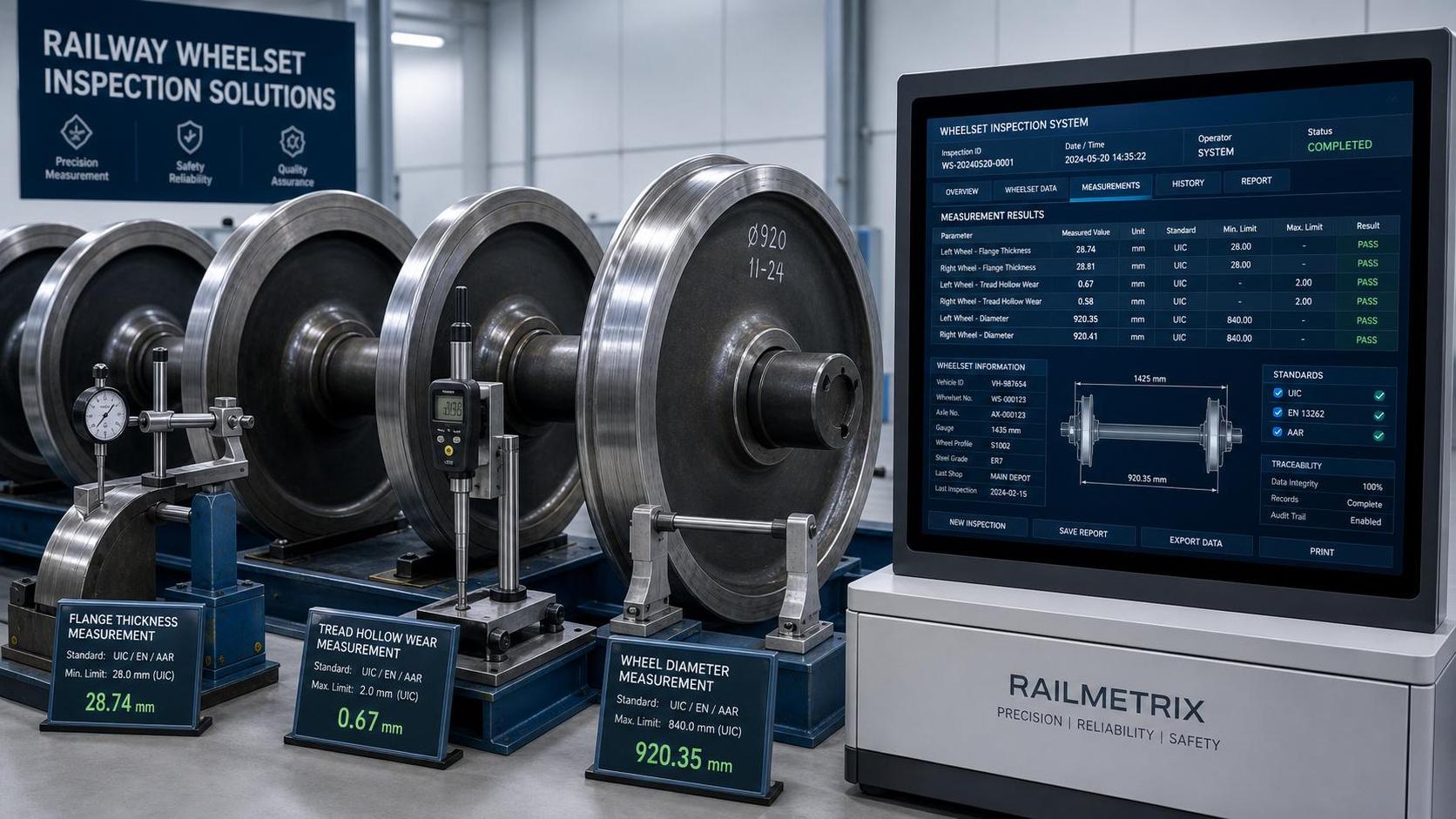
Why do railway wheel wear data standards matter more than many teams expect?
Railway wheel wear data standards look technical, but the risk is operational from the first inspection record.
When measurement rules differ between depots, contractors, and wagon fleets, the same wheel can receive different judgments.
That creates hidden exposure in maintenance planning, asset life forecasting, and compliance reviews.
In heavy-haul and cross-border freight, this matters even more.
Higher axle loads, longer duty cycles, and mixed operating environments accelerate tread, flange, and hollow wear patterns.
If railway wheel wear data standards are weak, inspection results stop being comparable over time.
A record may look complete, yet still fail audit or engineering review because datum points, tolerances, or wear limits were not aligned.
This is why G-RFE places wheel condition data within a broader engineering control framework.
The issue is not only hardware wear.
It is the connection between rolling stock integrity, maintenance traceability, and standards such as UIC, EN, and AAR references.
What should be included in railway wheel wear data standards?
A usable standard is more than a rejection limit.
It must define how wear is measured, recorded, interpreted, and escalated.
In practice, railway wheel wear data standards should cover at least five control layers.
- Measurement geometry: flange thickness, flange height, tread hollowing, diameter loss, and wheel profile reference points.
- Instrument rules: gauge type, calibration interval, digital system accuracy, and environmental limits during inspection.
- Data structure: unit format, timestamp, axle position, wheelset ID, wagon ID, and operator traceability.
- Acceptance logic: alert thresholds, condemn limits, reprofiling criteria, and exception handling.
- Review workflow: who validates borderline readings, how disputes are resolved, and what evidence is retained.
More common failures appear in the middle layers.
Teams often define wear limits, yet leave calibration records or profile reference methods vague.
That gap makes the final decision hard to defend.
A useful benchmark table helps separate complete standards from partial ones.
Where do inspection risks usually appear, even when data collection seems routine?
Inspection risk rarely begins with a dramatic failure.
It usually starts with small inconsistencies that become accepted as normal.
One example is profile measurement taken after contamination is only partially removed.
Another is using a correct gauge on a wheel profile that requires a different reference method.
Digital systems can also introduce risk.
If software maps axle positions incorrectly, the wear trend appears stable while the wrong wheelset is being tracked.
That kind of data integrity issue is harder to catch than a broken tool.
In actual operations, the highest-risk conditions often include these situations.
- Different workshops using local wear codes without a common conversion rule.
- Manual entry of wheel dimensions after field inspection.
- Mixed fleets measured against one threshold despite different wheel profiles.
- Borderline readings closed without a second verification step.
- Reprofiling decisions made from diameter loss alone.
The last point deserves attention.
A wheel can remain within diameter tolerance while flange wear or hollow tread has already moved into a risk zone.
Railway wheel wear data standards need multi-parameter judgment, not a single number shortcut.
How do UIC, EN, and AAR references affect day-to-day judgment?
Many searches around railway wheel wear data standards are really asking a practical question.
Which reference should govern the decision when fleets, routes, or suppliers come from different systems?
The short answer is that standard names alone do not solve alignment.
What matters is how each reference is translated into inspection criteria, data fields, and acceptance logic.
UIC-based environments often emphasize interoperability across international corridors.
EN-related frameworks usually push more formalized conformity and documentation discipline.
AAR references are frequently central in North American freight applications with their own profile and maintenance practices.
The real risk appears when organizations borrow limits from one system but retain measurement logic from another.
That creates a hybrid process with unclear technical defensibility.
G-RFE’s cross-standard benchmarking is useful here because it frames wheel wear data as part of a larger freight engineering chain.
Rolling stock condition, track interaction, signaling reliability, and cross-border acceptance all depend on consistent records.
So the better question is not only, “Which standard applies?”
It is, “Can every depot and system interpret the same wheel condition the same way?”
What is the most reliable way to judge whether current data is good enough?
A simple audit often reveals more than months of routine reporting.
Start by checking whether the same wheelset can be traced across inspections without ambiguity.
Then test whether repeated measurements by different inspectors stay within an accepted spread.
If either result fails, the dataset is weaker than it appears.
A practical review usually includes the following questions.
Needless complexity is not the goal.
The goal is confidence that railway wheel wear data standards are driving defensible maintenance decisions.
How can inspection controls improve without slowing maintenance cycles?
Speed and control are not opposites if the process is designed well.
Most delays come from unclear exceptions, duplicate checking, and poor data handover.
The first improvement is to standardize the inspection sequence.
That means consistent cleaning, measurement order, tool verification, and digital record capture.
The second improvement is to separate routine wear from anomaly patterns.
Shelling, thermal damage, out-of-round behavior, or asymmetrical flange wear should trigger a different path.
They are not just large values on a normal form.
A lean control model usually includes these actions.
- Use one approved data dictionary for every inspection point.
- Lock measurement units and mandatory fields in digital forms.
- Set automatic flags for conflicting values and impossible wear jumps.
- Require second-level review only for defined edge cases.
- Review monthly trend exceptions against route, load, and braking conditions.
This is where railway wheel wear data standards become commercially relevant as well.
Better data reduces unnecessary wheel removal, avoids late intervention, and supports consistent planning across depots and contractors.
What should be the next step if the current standard looks incomplete?
Do not start by rewriting every procedure.
Start by identifying where inspection judgment can no longer be defended with evidence.
That usually means tracing one wheelset through the full lifecycle, from field measurement to maintenance decision.
If the logic breaks anywhere, the standard needs work.
A practical next-step sequence is straightforward.
- Map all current measurement points and thresholds.
- Check them against the governing UIC, EN, AAR, or internal engineering basis.
- Review tool calibration, operator consistency, and digital traceability.
- Define exception rules for abnormal wear, not only normal wear progression.
- Run a pilot audit on a mixed fleet before full rollout.
Railway wheel wear data standards should make decisions clearer, not heavier.
When the standard aligns measurement method, data structure, and maintenance action, inspection risk drops quickly.
That is especially important in freight systems where wheel condition affects not only component life, but corridor reliability, interoperability, and safety assurance.
For organizations using G-RFE style benchmarking, the most useful move is to compare local practice against internationally referenced control points, then close the gaps that affect judgment quality first.
Industry Briefing
Get the top 5 industry headlines delivered to your inbox every morning.