
Industrial Equipment Buying Guide: Cost, Uptime, and Service Life

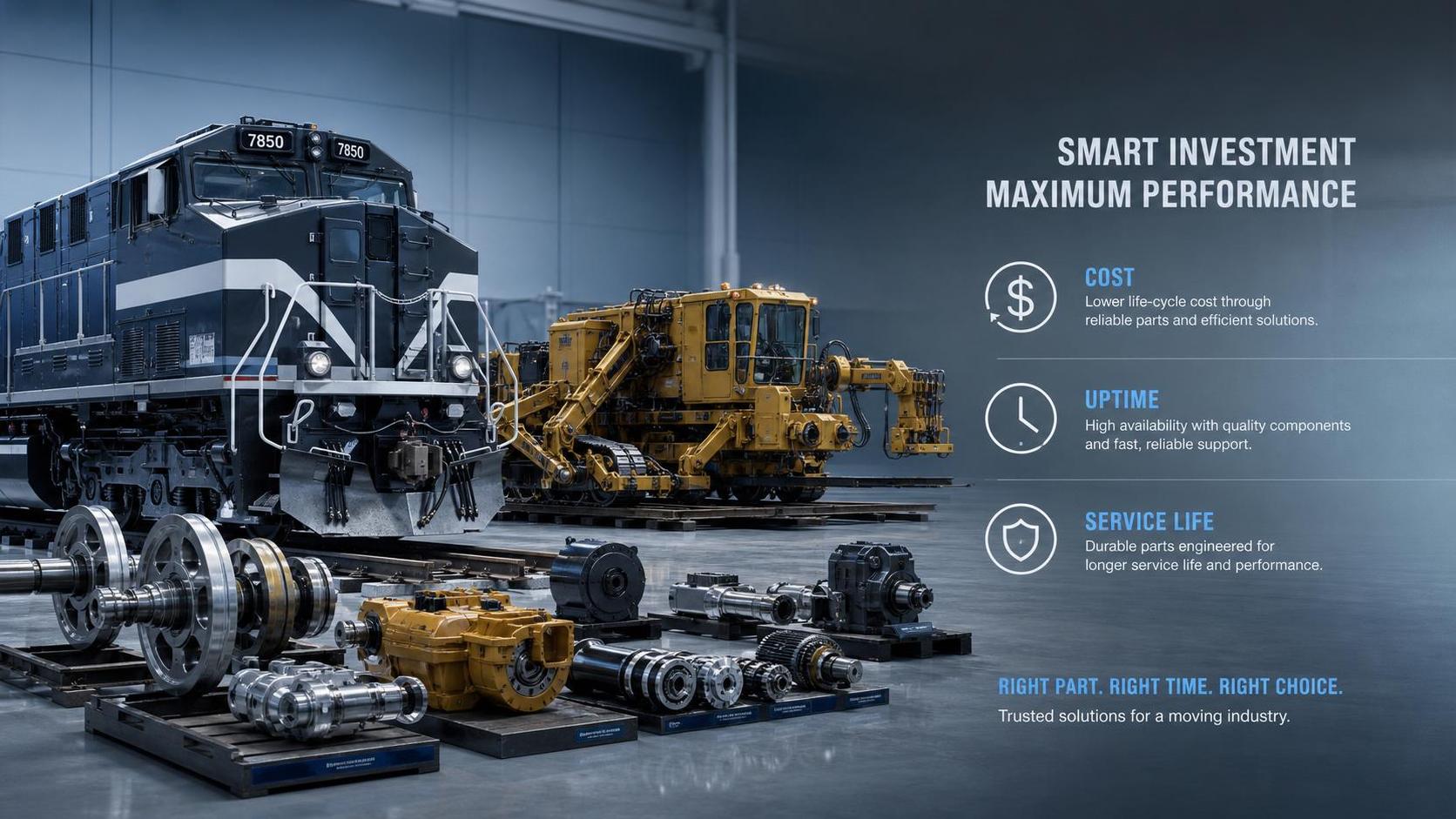
Industrial Equipment Buying Guide: Cost, Uptime, and Service Life
Buying industrial equipment is more than comparing price tags. The smarter decision comes from balancing cost, uptime, compliance, and service life.
In rail freight, engineering, and heavy industry, that balance is rarely simple. One low bid can become an expensive asset if failures, delays, or spare part issues appear later.
That is why an effective industrial equipment buying process should look beyond purchase price. It should connect operational performance with lifecycle economics and supplier capability.
For organizations managing locomotives, wagons, signaling systems, track assets, and specialized machinery, this approach reduces commercial risk and improves long-term value.
Why Purchase Price Alone Can Mislead
The first quote often gets the most attention. In practice, however, industrial equipment cost continues long after the invoice is paid.
Energy use, wear rates, labor input, downtime exposure, certification needs, and spare parts access all shape the true financial outcome.
This is especially relevant in railway and engineering projects. Assets operate in demanding environments where uptime affects network reliability, safety, and contractual performance.
A cheaper machine may look attractive during tender review. Yet if maintenance cycles are short, diagnostics are weak, or components are hard to source, total ownership cost rises quickly.
A better industrial equipment decision asks a practical question: what will this asset cost to run, maintain, and support across its useful life?
Start With the Operating Context
The right industrial equipment for one site may underperform at another. Operating context should shape the entire evaluation process.
In heavy-haul rail, for example, axle load, gradient, ambient temperature, dust levels, utilization rates, and maintenance windows all matter.
The same principle applies to track maintenance machines, intermodal systems, and signaling equipment. Duty cycle and environmental stress influence both performance and service life.
From a buying perspective, this means technical specifications should reflect real operating conditions, not generic catalog descriptions.
Useful questions include:
- What throughput, duty cycle, or load profile will the industrial equipment face?
- How sensitive is production or network performance to one hour of downtime?
- Which failure modes are most disruptive in this operating environment?
- What local skills, tools, and maintenance infrastructure already exist?
Clear answers help separate a technically suitable asset from one that only appears competitive on paper.
Evaluate Total Cost of Ownership, Not Just Capex
A strong industrial equipment buying guide always includes total cost of ownership, or TCO. This is where procurement decisions become financially disciplined.
TCO should cover the full lifecycle, from installation to retirement. That includes visible costs and hidden operating burdens.
Key cost elements usually include:
- Purchase price, freight, installation, and commissioning
- Energy or fuel consumption
- Routine maintenance labor and consumables
- Critical spare parts and lead times
- Software updates, diagnostics, and training
- Downtime cost, output loss, and service disruption
- Compliance upgrades and end-of-life replacement
In actual projects, downtime cost often changes the ranking. A higher-priced industrial equipment package can become the lower-cost option over ten or fifteen years.
This is even more obvious when assets support freight corridors, continuous production, or safety-critical operations.
Uptime Should Be Measured, Not Assumed
Suppliers often promise reliability. The real task is turning those claims into measurable requirements.
For industrial equipment, uptime should be tied to documented indicators such as availability, mean time between failures, and mean time to repair.
If the asset supports signaling, track access, rolling stock movement, or intermodal transfer, availability targets should be written into technical and commercial documents.
A practical review should check:
- Proven performance in similar duty conditions
- Diagnostic functions and fault isolation speed
- Ease of preventive maintenance access
- Remote monitoring and predictive maintenance options
- Response commitments for technical support
This also means looking at system integration. High-quality industrial equipment can still underperform if controls, interfaces, or supporting infrastructure are mismatched.
Service Life Depends on Design and Support
Service life is not simply a brochure number. It depends on materials, engineering margins, maintenance discipline, and support continuity.
In industrial equipment procurement, long service life matters because replacement projects are disruptive, capital intensive, and often tied to broader infrastructure planning.
When comparing options, examine the components that age fastest. Bearings, braking elements, hydraulic systems, power electronics, control modules, and structural wear points deserve close attention.
It is also wise to ask whether the supplier supports refurbishment, obsolescence management, and upgrade paths. These factors extend the useful life of industrial equipment significantly.
A durable asset is not only strong on day one. It remains serviceable when technology, regulations, and operating demands change.
Compliance and Standards Protect the Investment
Compliance is sometimes treated as a checklist item. In reality, it is a core part of risk control.
For industrial equipment used in railway and heavy engineering, standards such as UIC, EN, and AAR provide an essential reference point.
These standards help validate safety, interoperability, endurance, and technical consistency across suppliers and jurisdictions.
This matters even more in cross-border freight corridors and public infrastructure projects, where approval delays can create major commercial consequences.
A reliable industrial equipment review should confirm:
- Applicable standards and certification scope
- Test records, validation reports, and reference installations
- Safety documentation and regulatory support
- Compatibility with local and cross-border requirements
In short, compliant industrial equipment reduces approval risk, protects uptime, and strengthens asset value over time.
Supplier Strength Matters as Much as the Machine
Even well-designed industrial equipment can become a problem if supplier support is weak. Service capability should be assessed with the same rigor as technical performance.
This includes spare parts planning, field service presence, engineering response speed, training quality, and software support.
In practical terms, ask how the supplier handles urgent failures, obsolete parts, firmware revisions, and major overhauls.
For strategic assets, strong suppliers usually offer lifecycle agreements, condition monitoring, and clear escalation paths.
A useful supplier review can cover:
- Installed base in comparable industries or rail applications
- Regional parts stock and delivery reliability
- Field technicians, engineering depth, and training resources
- Warranty structure and service-level commitments
- Financial stability and long-term product roadmap
When industrial equipment is expected to remain in service for many years, supplier resilience becomes part of the asset itself.
A Practical Buying Framework for Better Decisions
A structured process helps keep industrial equipment decisions consistent and defensible. It also makes cross-functional evaluation easier.
- Define the operating context and performance targets.
- Translate those needs into clear technical specifications.
- Request lifecycle cost data, not just capex pricing.
- Compare uptime evidence using measurable reliability indicators.
- Check compliance with relevant standards and approvals.
- Review supplier service capability and spare parts strategy.
- Score commercial, technical, and operational risk together.
This kind of framework is especially useful when evaluating locomotives, intelligent wagons, track machines, signaling systems, or port-rail interface equipment.
It shifts the discussion from “Which quote is lowest?” to “Which industrial equipment option protects performance and cost over time?”
Make the Final Decision With Lifecycle Value in Mind
The best industrial equipment choice is rarely the one with the lowest initial number. It is the one that delivers reliable output, manageable maintenance, and durable compliance.
From recent market shifts, one signal is becoming clearer. Buyers are placing more weight on resilience, digital diagnostics, and lifecycle support than on price alone.
That makes sense. In rail freight and engineering, industrial equipment decisions shape productivity, safety, and budget performance for years.
A disciplined evaluation process helps reduce avoidable risk. It also creates stronger justification for investment decisions across technical, commercial, and regulatory teams.
Before the next purchase cycle, review your specifications, scoring model, and supplier criteria. Better industrial equipment buying starts with better questions, asked early and answered with evidence.
Industry Briefing
Get the top 5 industry headlines delivered to your inbox every morning.