
Industrial Environmental News and Renewable Energy in Rail Repair

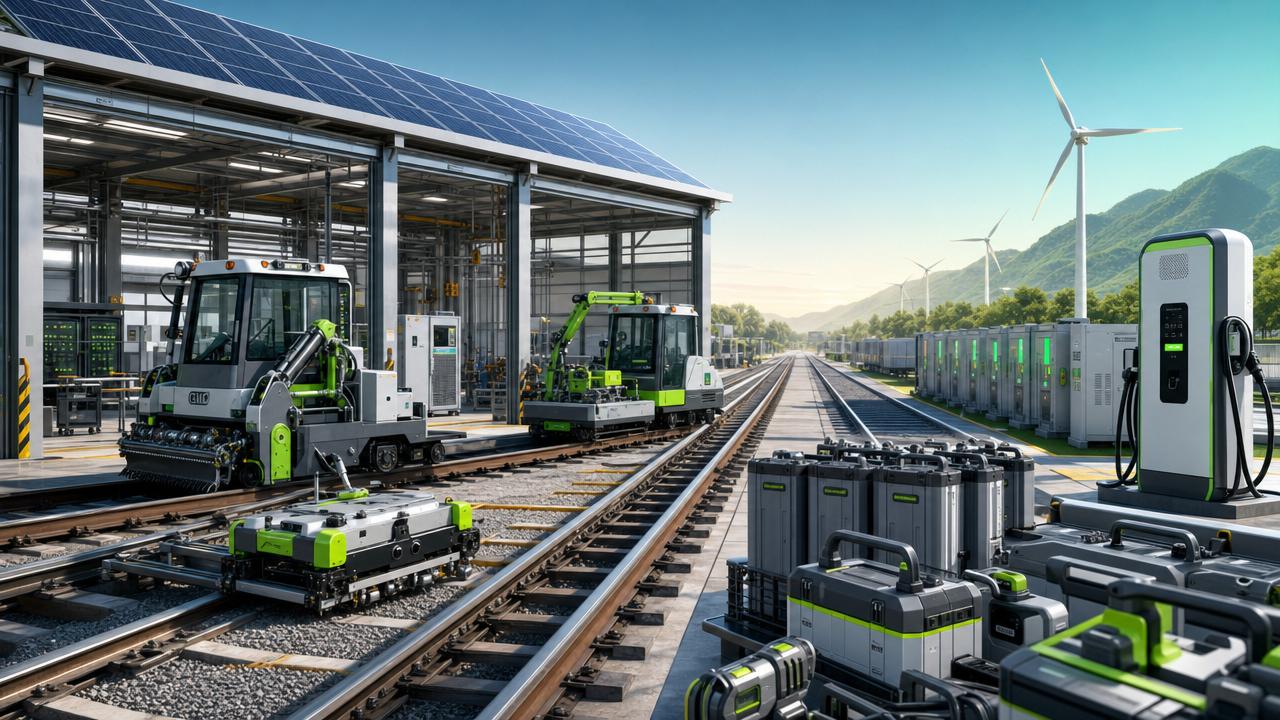
For researchers following industrial environmental news for renewable energy, the central question is no longer whether rail repair can become cleaner, but how quickly it is doing so and where the most meaningful changes are appearing.
The strongest answer is that rail repair is shifting from a diesel-heavy maintenance function into a strategic decarbonization layer of the freight system. Renewable electricity, hybrid machinery, battery tools, digital inspection, and smarter asset planning are now influencing cost, uptime, emissions, and procurement choices.
For information researchers, this matters because rail maintenance sits at the intersection of infrastructure renewal, industrial policy, and operational performance. It reveals where sustainability claims are becoming real engineering decisions rather than public relations language.
What is the real search intent behind industrial environmental news for renewable energy in rail repair?
Most readers searching this topic want more than broad environmental headlines. They want to understand how renewable energy trends are changing industrial maintenance practice in a sector that depends on reliability, safety, and long asset life.
They are usually looking for signals that help them assess direction: which technologies are being adopted, what practical benefits they deliver, which barriers remain, and how rail repair fits into larger low-carbon freight strategies.
In other words, the search intent is investigative and comparative. The reader wants evidence of transition, not just advocacy. They need a structured view of where renewable energy is influencing workshops, track possessions, mobile equipment, and maintenance planning.
Why rail repair has become a meaningful lens for renewable energy adoption
Railway repair was once treated as a back-end engineering necessity. Today it is increasingly understood as a major source of fuel use, equipment emissions, material waste, and service disruption across the freight and infrastructure lifecycle.
Maintenance depots consume electricity for lifting systems, machining, diagnostics, ventilation, and charging. Track repair uses tampers, grinders, cranes, road-rail vehicles, welders, and lighting systems, many of which have historically relied on diesel power.
As rail operators face stricter carbon targets and energy-cost volatility, repair activities are being reviewed with the same seriousness once reserved for traction systems or new rolling stock procurement.
This is why industrial environmental news for renewable energy increasingly includes maintenance stories. Repair is where carbon reduction can be measured through energy source changes, fewer emergency interventions, reduced idle time, and longer asset life.
Which renewable energy trends are most relevant to rail maintenance and repair?
The first major trend is workshop electrification linked to cleaner grids or dedicated renewable supply. Depots are adopting solar rooftops, power management systems, and battery storage to lower operating emissions and stabilize energy costs.
The second trend is the shift from diesel-only maintenance fleets toward hybrid and battery-assisted machinery. This includes smaller service vehicles, portable tools, inspection units, and some specialized machines used for localized intervention.
Third, digital condition monitoring reduces unnecessary repair cycles. While not a renewable energy technology by itself, it supports lower energy use by helping teams repair assets only when data indicates real degradation.
Fourth, charging infrastructure planning is becoming part of maintenance strategy. As more electric support equipment enters service, depots and corridor maintenance bases must be designed around load management, charging windows, and resilience.
Finally, circularity is growing in importance. Renewable energy discussions increasingly connect with parts remanufacturing, rail steel recovery, sleeper recycling, lubrication management, and repair-first approaches that delay carbon-intensive replacement.
How renewable energy changes the economics of rail repair
Researchers often assume sustainability measures increase costs. In practice, the economics are more nuanced. Renewable-linked repair systems usually require upfront investment, but they can reduce lifecycle costs in several measurable ways.
Electrified workshop equipment often has lower maintenance demand than combustion-based alternatives. Battery tools can reduce fuel logistics, lower noise, and improve worker usability during short intervention windows.
Solar-supported depots can cut daytime grid purchases, especially where workshops run predictable operating hours. If paired with storage or demand management, they may also reduce exposure to peak electricity pricing.
Predictive maintenance creates an additional economic layer. By finding defects earlier, operators can avoid severe failures that require heavy repair machinery, possession overruns, emergency freight rerouting, and higher material replacement volumes.
The economic case becomes stronger when viewed system-wide. A cleaner repair model is not only about energy bills. It also affects network availability, workforce productivity, ESG reporting, procurement scoring, and public financing eligibility.
What information researchers should watch in industrial environmental news for renewable energy
Not all news items carry equal strategic value. The most useful reports are those that connect sustainability measures with operational metrics such as downtime reduction, fuel savings, maintenance intervals, failure rates, or asset life extension.
Announcements about depot solar projects are more meaningful when they specify workshop loads, storage capacity, charging integration, or expected carbon reductions. Vague green branding says little about actual industrial transition.
Similarly, reports on battery or hybrid maintenance machines should be evaluated against duty cycle, charging speed, field reliability, and suitability for heavy-haul or long-distance freight environments.
Policy news also matters. Funding rules, emissions standards, rail modernization programs, and local-content requirements can accelerate adoption of renewable-powered repair solutions even before the technology becomes universally cost-competitive.
For a platform like G-RFE, the highest-value intelligence sits where engineering evidence meets policy momentum: standards compliance, fleet performance, workshop upgrades, track machinery trials, and corridor-level decarbonization frameworks.
Where the biggest technical challenges still remain
Despite progress, rail repair is not an easy decarbonization space. Heavy machinery used in remote track environments still demands high power density, long shifts, and dependable all-weather performance that battery systems do not always provide.
Charging access is another constraint. Many maintenance activities occur far from fixed infrastructure, often during narrow possession windows at night. Temporary charging or mobile energy supply models are still evolving.
Workshop retrofits can also be complex. Older depots may require electrical upgrades, ventilation redesign, fire safety changes, or structural adjustments before renewable-powered systems can be integrated safely.
Procurement practices create a further barrier. Buyers may want low-emission repair solutions, but tender structures often prioritize lowest upfront price over lifecycle carbon performance or operational savings.
There is also a skills challenge. Maintenance teams need training in battery safety, power electronics, digital diagnostics, and energy management, not just traditional mechanical repair disciplines.
How digitalization supports cleaner rail repair even when energy systems change slowly
In many networks, the fastest sustainability gains do not come from replacing every machine immediately. They come from using data to reduce unnecessary interventions and to target repair resources more precisely.
Wayside monitoring, onboard diagnostics, machine vision, acoustic detection, and geometry measurement help identify defects before they grow into disruptive failures. This lowers repeat visits and reduces the energy intensity of maintenance activity.
Digital planning tools also improve possession management. Better scheduling means fewer standby vehicles, less idle machinery, and more efficient crew deployment, all of which contribute indirectly to lower emissions.
For researchers, this is an important insight. Industrial environmental news for renewable energy should not be read only through the lens of generation technology. Software-led maintenance efficiency is part of the same decarbonization story.
What decision-makers can learn from rail repair case patterns
Across markets, the strongest programs usually begin with high-visibility, controllable applications. Depot energy systems, inspection fleets, portable tools, lighting, and fixed workshop processes are easier to convert than the heaviest field machinery.
From there, organizations expand into hybrid support equipment, smart charging, and condition-based maintenance. The transition tends to be staged rather than absolute, especially in freight corridors where uptime and safety margins are unforgiving.
Another common pattern is integration. Renewable energy projects perform better when linked to maintenance strategy, asset management, and procurement reform instead of being treated as isolated sustainability initiatives.
This matters for readers evaluating sector maturity. A single pilot project may indicate experimentation. A coordinated program spanning energy, maintenance, and digital systems suggests structural change with long-term industrial significance.
How to judge whether a renewable rail repair initiative is substantive or superficial
First, look for technical specificity. Credible initiatives explain equipment types, energy sources, operational conditions, and expected performance outcomes. They do not rely only on broad claims about green transformation.
Second, check whether the initiative addresses maintenance realities such as night work, remote access, safety certification, interoperability, and spare parts support. Without these, many solutions remain limited to demonstration value.
Third, examine whether emissions reduction is tied to measurable baselines. Useful reporting includes fuel displacement, electricity sourcing, material recovery rates, or maintenance efficiency improvements.
Fourth, ask whether the program is scalable. A depot pilot with no grid, training, procurement, or reliability roadmap may have little long-term impact. Scalable projects connect engineering, finance, and operations from the start.
These filters help researchers separate meaningful industrial environmental news for renewable energy from symbolic announcements that generate attention without changing maintenance practice.
Why this topic matters for freight, engineering, and infrastructure strategy
Rail repair affects much more than workshop activity. It shapes freight punctuality, corridor resilience, rolling stock availability, and the total environmental footprint of land transport systems.
As governments and operators promote rail as a lower-carbon alternative to road haulage, maintenance quality becomes strategically important. A freight mode cannot claim sustainability leadership if its repair systems remain inefficient, wasteful, and emissions-intensive.
For engineering firms, OEMs, and infrastructure planners, this creates new demand for integrated solutions: smarter maintenance machinery, depot electrification, digital inspection, renewable power interfaces, and standards-aligned asset management.
That is why this subject belongs in serious industrial research. It is not a niche environmental theme. It is a practical indicator of how deeply the low-carbon transition is penetrating heavy transport infrastructure.
Conclusion: what researchers should take away
The clearest conclusion is that rail repair is becoming a strategic front in renewable energy adoption. The most important developments combine cleaner power, lower-emission equipment, predictive maintenance, and better lifecycle decision-making.
For information researchers, the value lies in tracking evidence, not slogans. Focus on projects that show operational metrics, engineering fit, cost logic, and scalability across freight and infrastructure settings.
Industrial environmental news for renewable energy becomes most useful when read through this lens. In rail repair, the real story is not just decarbonization in theory, but how maintenance systems are being redesigned to support cleaner, more reliable, and more competitive freight networks.
As modernization accelerates, rail repair will remain one of the best places to observe whether sustainability is truly being built into industrial transport from the ground up.
Industry Briefing
Get the top 5 industry headlines delivered to your inbox every morning.