
How covered wagon OEM suppliers differ on lead time

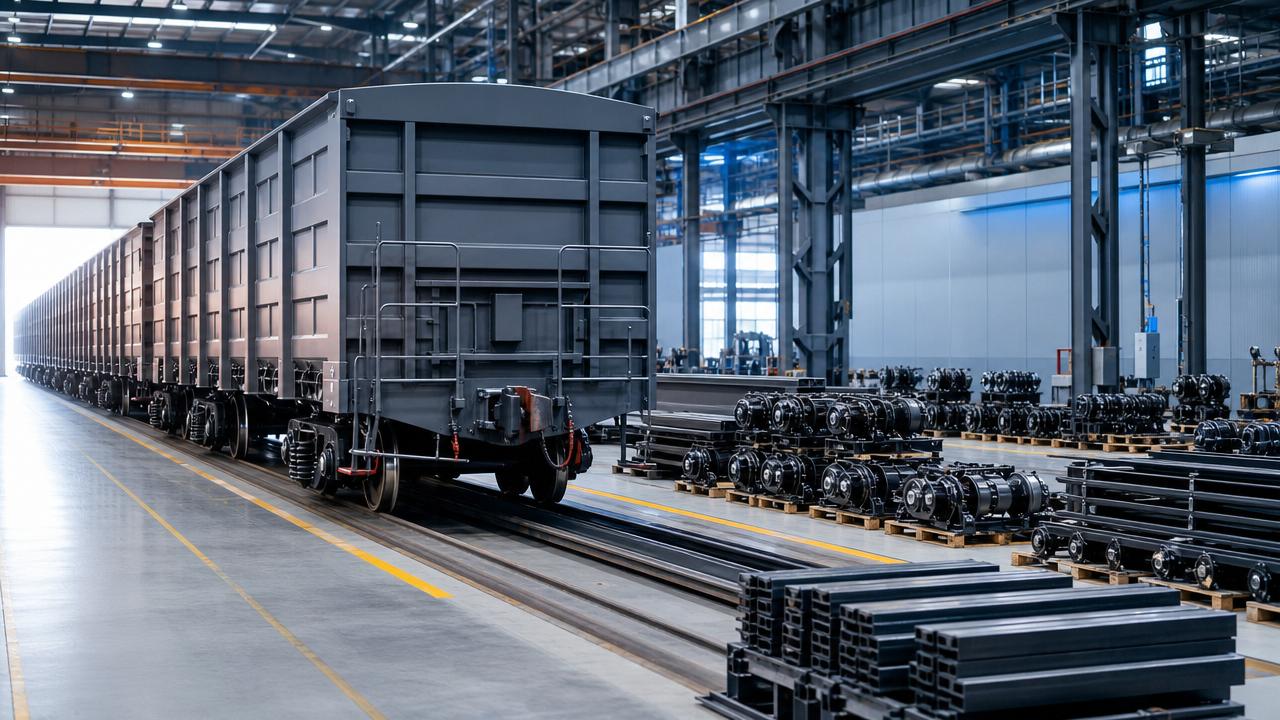
For project managers and engineering leads, choosing a covered wagon OEM supplier is not only about unit price or specifications—it is often a decision shaped by lead time reliability. Differences in design standardization, material sourcing, production scheduling, certification processes, and after-sales coordination can significantly affect delivery speed. Understanding how covered wagon OEM suppliers differ on lead time helps stakeholders reduce project risk, protect rollout schedules, and make more informed procurement decisions.
In railway freight projects, a delay of 4 to 8 weeks can affect route commissioning, cargo handling readiness, financing milestones, and infrastructure handover. For buyers managing fleet expansion, cross-border freight corridors, or heavy industrial logistics, lead time is not a secondary metric. It is a planning variable that directly influences deployment certainty.
A covered wagon OEM supplier may quote a similar technical scope as another manufacturer, yet actual delivery performance can differ sharply. The gap often comes from engineering maturity, procurement depth, welding and fabrication capacity, bogie and brake system sourcing, paint shop throughput, and documentation readiness under UIC, EN, or AAR-aligned requirements.
For G-RFE readers in project delivery, rolling stock procurement, and railway engineering management, the key question is practical: which supplier can deliver covered wagons within the required window, with the least schedule volatility and the lowest downstream disruption.
Why lead time varies between covered wagon OEM suppliers
Lead time differences usually begin long before fabrication starts. In many tenders, the total cycle for covered wagons includes 5 major phases: technical clarification, detailed engineering, material procurement, manufacturing and testing, and shipment plus documentation closure.
A supplier with a mature platform design may complete engineering adaptation in 2 to 4 weeks. A supplier starting from a semi-custom or new-body concept may need 6 to 12 weeks before frozen drawings are available. That early difference can cascade across the entire production plan.
Standardized designs versus highly customized builds
The first major divider is design standardization. A covered wagon OEM supplier working from a modular, previously validated platform can reduce engineering changes, material variation, and tooling adjustment. In practical terms, this may save 15 to 30 days on the front end.
By contrast, projects that require non-standard loading gauges, special door arrangements, climate-specific corrosion packages, or mixed brake interfaces often trigger redesign loops. Even a small change in roof profile or side wall reinforcement can affect weight balance, welding sequence, and test documentation.
Typical customization items that influence schedule
- Carbody dimensions adjusted for national gauge or axle load limits
- Different door opening systems for palletized or bulk freight
- Alternative bogie or coupler arrangements
- Brake systems adapted to local operating standards
- Special coating systems for coastal, desert, or cold-region service
Material sourcing and sub-supplier dependency
The second major factor is supply chain depth. Covered wagons depend on long-lead components such as wheelsets, bearings, draft gear, brake valves, and steel plate of specified grade and thickness. If a supplier relies on spot purchases, delivery can drift by 3 to 6 weeks or more.
Suppliers with framework agreements for steel, bogies, and braking assemblies typically provide better date certainty. They may not always offer the lowest headline price, but they often reduce schedule exposure during periods of raw material volatility or freight bottlenecks.
The table below shows how common supplier operating models affect covered wagon lead time performance in B2B railway procurement.
For project managers, the message is clear: the quoted lead time is only credible when backed by supplier operating structure. A covered wagon OEM supplier with deeper internal control usually offers tighter predictability, even if the nominal manufacturing period looks similar on paper.
The hidden lead time drivers inside railway wagon manufacturing
Beyond design and sourcing, internal factory execution shapes delivery reliability. Two suppliers may both quote 120 days, but one may have only 5 percent float while the other depends on multiple parallel assumptions. That difference matters when inspection, weather, or transport interruptions occur.
Production slot discipline and line loading
A frequent issue in rolling stock procurement is overbooked capacity. Some manufacturers accept orders beyond realistic welding, assembly, or paint shop throughput. If a plant has 3 active lines but 5 concurrent heavy wagon programs, actual output may slip regardless of the purchase order date.
Buyers should ask for monthly capacity visibility, not only annual capacity statements. For example, a plant rated at 2,400 wagons per year may still face a 6 to 10 week bottleneck if underframes, blasting booths, or static test stations are committed to another export batch.
Quality rework and inspection hold points
Rework is one of the least visible causes of lead time slippage. Dimensional deviation, weld nonconformance, coating thickness failure, and brake test issues can each add several days per batch. In larger lots of 50 to 150 wagons, cumulative rework can become a 2 to 3 week delay.
A disciplined covered wagon OEM supplier usually defines hold points at underframe completion, body shell assembly, bogie fitment, brake installation, static testing, and pre-dispatch inspection. This structured sequence reduces last-minute failures and compresses corrective actions into manageable windows.
Operational checks procurement teams should request
- Weekly production status by batch and serial range
- Material availability status for all long-lead items
- Inspection and test plan with approval milestones
- Rework ratio or nonconformance trend by production stage
- Shipment readiness checklist including documents and markings
The matrix below helps engineering and project teams assess where lead time risk typically emerges across the covered wagon supply cycle.
This stage-based approach is especially useful for EPC contractors and railway authorities managing linked schedules. It turns a general supplier promise into a measurable execution framework, which is far more useful than relying on a single promised delivery date.
Certification, documentation, and logistics can add weeks
In international railway procurement, factory completion does not always mean shipment readiness. A covered wagon OEM supplier may finish physical production on time but still lose 2 to 5 weeks because of document closure, third-party inspection, marking corrections, or export packing arrangements.
Compliance pathway and approval timing
Covered wagons serving national networks or cross-border corridors often require alignment with UIC, EN, AAR, or local authority procedures. If the approval path is clear from day 1, the supplier can integrate inspections into the production plan. If not, completed wagons may wait in the yard for signature, witness testing, or revised documentation.
This is why document readiness should be assessed as early as technical bid evaluation. Material certificates, welding procedure records, brake test reports, dimensional records, and coating reports are not administrative extras. They are schedule-critical deliverables.
Transport mode and shipment batching
Logistics planning also changes lead time outcomes. Depending on distance and network access, wagons may move by rail ferry, flatcar transfer, road convoy for subassemblies, or direct rail dispatch. Each option carries different permit, marshalling, and transit requirements.
A supplier that batches dispatch every 20 or 30 units may delay the first delivered wagons while waiting for a full lot. Another supplier may ship in phased lots of 8 to 12 units, allowing earlier site reception and progressive commissioning. For project rollout, that difference can be more important than the final batch completion date.
Questions to ask before contract award
- What is the engineering freeze date and what inputs can still change after it?
- Which components have the longest confirmed procurement cycle?
- How many wagons can be produced per month under current line loading?
- Which inspections require third-party witness or authority attendance?
- Can deliveries be phased in partial lots without affecting warranty terms?
- What is the response time for document corrections after factory inspection?
How project managers should evaluate a covered wagon OEM supplier
For project managers, the best supplier is not simply the one with the shortest quoted duration. It is the one whose schedule is technically supported, operationally visible, and contractually manageable. A reliable lead time evaluation usually combines 4 dimensions: design maturity, supply chain control, factory execution, and delivery governance.
Build a lead time due diligence checklist
A practical due diligence process should test assumptions before the purchase order is released. If the order size is 40, 80, or 120 covered wagons, ask the supplier to break down the timeline by week rather than by broad month. This reveals where actual schedule compression is realistic and where it is only aspirational.
It is also useful to separate first article timing from serial production timing. Some suppliers can produce the first 2 to 5 wagons quickly for inspection, but then struggle to sustain monthly output. Others may need a slower start yet maintain stronger batch rhythm over a 6 month production horizon.
Contract terms that protect rollout schedules
Procurement teams should define milestone logic with care. Good practice often includes approved drawing dates, long-lead material commitment dates, first article completion, monthly batch output, factory acceptance timing, and dispatch readiness. These milestones create early warning triggers instead of waiting for the final delivery date to fail.
For higher-value railway programs, weekly or biweekly schedule reporting is common. Escalation thresholds can be set when slippage exceeds 7 days on engineering, 10 days on material arrival, or 14 days on batch completion. These are not universal numbers, but they are workable planning benchmarks in complex wagon procurement.
Recommended evaluation framework
- Check whether the covered wagon platform is proven or newly engineered
- Verify procurement commitments for bogies, brakes, wheelsets, and steel
- Review actual monthly line capacity and competing orders
- Map inspection, approval, and document release milestones
- Confirm phased shipment capability and after-sales coordination process
When these five checks are completed, lead time comparisons become far more meaningful. Instead of selecting a covered wagon OEM supplier based on an optimistic promise, buyers can compare execution logic, risk ownership, and recovery capability if disruptions occur.
Final decision guidance for railway freight and engineering teams
Lead time is a composite indicator. It reflects engineering readiness, procurement discipline, production control, compliance management, and logistics coordination. In practice, the strongest covered wagon OEM supplier is often the one that can explain each of these layers in measurable terms, not just offer a compressed delivery promise.
For railway authorities, locomotive and wagon integrators, EPC contractors, and industrial freight operators, the right sourcing decision should reduce uncertainty across the full project chain. That means aligning factory capability with route launch dates, terminal readiness, and maintenance planning from the start.
If you are comparing suppliers for a new fleet program, replacement batch, or cross-border freight corridor upgrade, a structured lead time review can prevent costly downstream disruption. G-RFE supports decision-makers with technical intelligence, supplier evaluation logic, and railway engineering insight shaped by international operating standards. Contact us to discuss your covered wagon procurement scope, request a tailored assessment, or learn more solutions for schedule-resilient rolling stock sourcing.
Industry Briefing
Get the top 5 industry headlines delivered to your inbox every morning.