
China Europe Railway Express Trends That Could Reshape Lead Times

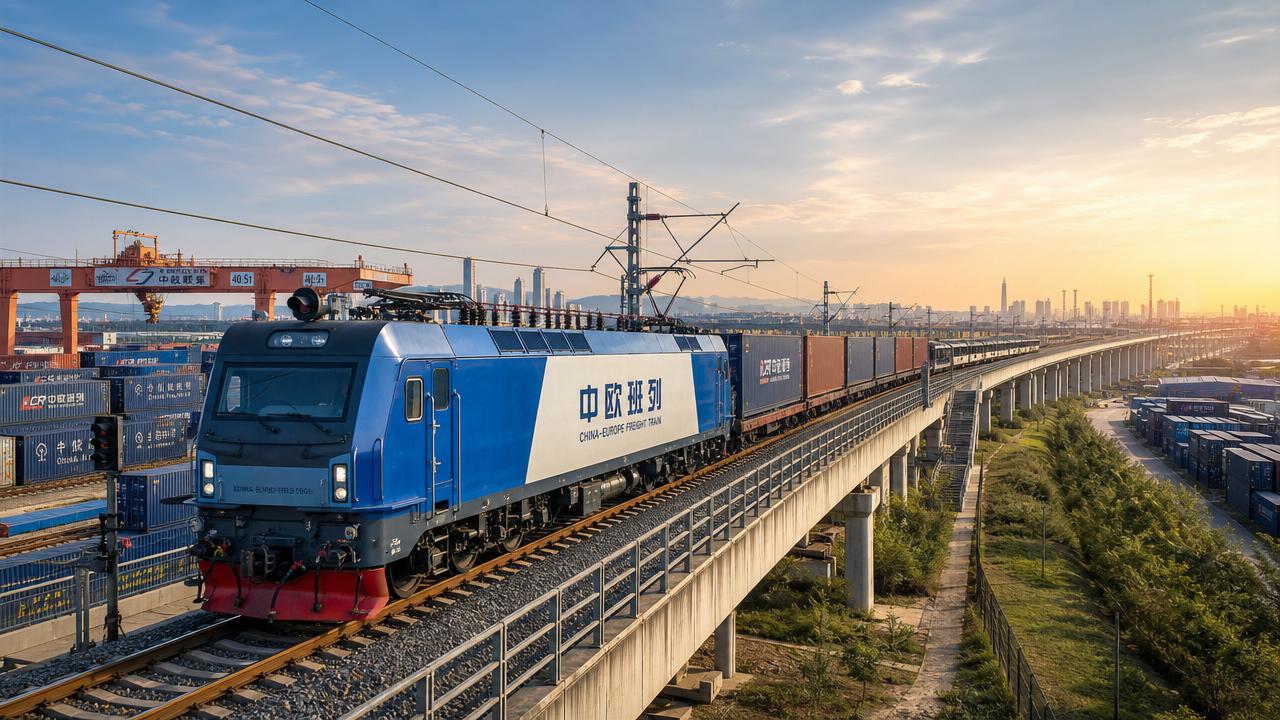
For project managers overseeing cross-border rail programs, understanding china europe railway express trends is becoming essential to protecting schedules and controlling delivery risk. From corridor congestion and customs digitization to infrastructure upgrades and geopolitical shifts, these trends are starting to redefine lead-time expectations across Eurasian freight networks. This article outlines the developments most likely to influence planning, execution, and long-term supply chain resilience.
Why are china europe railway express trends receiving so much attention now?
Project leaders are paying closer attention because lead times across Eurasian rail are no longer shaped by distance alone. The old planning model assumed a relatively stable rail corridor with manageable seasonal swings. Today, china europe railway express trends are influenced by route diversification, border control changes, traction and terminal capacity, transshipment bottlenecks, and policy reactions to global trade shifts. In practical terms, the transit window that looked reliable on paper may now be highly dependent on which corridor is used, how quickly cargo clears customs, and whether inland terminals can absorb surges in volume.
For engineering and infrastructure-related supply chains, this matters even more. Heavy equipment, signaling components, rail maintenance machinery, steel products, and high-value industrial assemblies often move on project-based schedules. A delay of several days can affect site mobilization, commissioning sequences, contractor interfaces, and even financing milestones. That is why china europe railway express trends are now a management issue, not just a freight topic.
Another reason for increased interest is the strategic shift toward lower-carbon transport. Rail remains attractive compared with pure air freight for speed-cost balance and compared with some ocean routes for schedule certainty on selected lanes. However, the growth of this mode has also exposed weak links: gauge breaks, inconsistent digital document flows, terminal congestion, and uneven corridor resilience. Project managers need to understand where rail is becoming stronger and where it remains vulnerable.
Which china europe railway express trends are most likely to reshape lead times?
Several high-impact developments are changing transit expectations across the network. The first is corridor rebalancing. As shippers and operators adjust routing choices, some gateways become overloaded while others gain relevance. This does not simply change maps; it alters queue times, handover windows, and the probability of missed connections. For project cargo planners, route selection now has to include scenario-based lead-time analysis rather than one average transit estimate.
The second trend is customs digitization and pre-clearance expansion. Where customs data is shared earlier and documentation quality is high, dwell time can fall materially. But digitization is not uniform. The benefit depends on whether origin, transit, and destination authorities recognize the same data standards and whether operators can submit complete and accurate shipment information. Incomplete harmonization means some lanes become faster while others remain document-sensitive.
A third trend is terminal and infrastructure modernization. New cranes, expanded intermodal yards, better track access, signaling upgrades, and improved locomotive deployment can all reduce transfer delays. This is especially relevant in systems where freight growth has outpaced physical capacity. For decision-makers in the G-RFE audience, the engineering layer matters: track availability, axle-load capability, digital signaling maturity, wagon turnaround efficiency, and maintenance discipline all affect whether rail capacity is real or only nominal.
The fourth trend is volatility in border transfer performance. Gauge changes between networks still create structural friction. Even when average handling times improve, a single spike in wagon exchange, crane allocation, inspection intensity, or customs review can add days. As a result, china europe railway express trends should be tracked with percentile performance, not just average transit time. A project manager cares less about the best-case run and more about the likelihood of a disruptive outlier.
How should project managers judge whether these trends will affect their own schedules?
The first step is to classify cargo by schedule criticality. If the shipment contains commissioning parts, power systems, signaling modules, specialized machinery, or long-lead rail infrastructure components, the tolerance for delay is low. In these cases, china europe railway express trends should be evaluated at lane level, terminal level, and even border-pair level. If the cargo is buffer-friendly stock replenishment, broader corridor analysis may be enough.
The second step is to check dependence on a single route. Many teams still ask for a rail quote and compare only cost and nominal transit days. That is no longer sufficient. A stronger evaluation framework includes route alternatives, gauge-break exposure, winter risk, terminal substitution options, and the availability of recovery actions if a train misses a planned onward movement. The more single-point dependence in the plan, the more sensitive the schedule will be to current china europe railway express trends.
The third step is to distinguish operational promises from demonstrated performance. Ask for actual lane data: median transit time, 80th or 90th percentile transit time, average border dwell, terminal handling time, and frequency reliability. This is where a technical and data-driven platform mindset becomes useful. Engineering and logistics teams should work from measured corridor behavior rather than from marketing claims.
A quick judgment table for schedule risk
Are infrastructure and technology upgrades actually improving performance?
In many cases, yes, but the improvement is uneven. Terminal expansion, better train path allocation, wagon management systems, GSM-R or other digital communication layers, and stronger signaling coordination can all improve throughput. On major freight corridors, even small engineering improvements can reduce cumulative delay by improving handoffs between depots, terminals, border yards, and inland distribution nodes.
That said, capacity upgrades do not automatically translate into better lead times. If one terminal modernizes but a downstream transshipment point remains constrained, the gain may be absorbed by the next bottleneck. For project managers in rail equipment, EPC delivery, or industrial procurement, this means infrastructure news should be tested against end-to-end corridor logic. A faster line segment does not matter much if customs inspection, crane availability, or locomotive rotation still creates waiting time.
The most useful interpretation of china europe railway express trends is therefore system-based. Look at rolling stock readiness, maintenance windows, border interoperability, terminal operating discipline, and digital document exchange together. G-RFE-style technical evaluation is valuable because it links freight promises to engineering realities. In cross-border rail, reliability is produced by the entire chain, not by one upgraded asset.
What are the most common planning mistakes when using rail between China and Europe?
The first mistake is assuming that rail is always a fixed middle ground between ocean and air. In reality, rail can be highly competitive for certain lanes and cargo types, but performance varies with corridor conditions, border flows, and operational maturity. A plan built on outdated assumptions may underestimate schedule volatility.
The second mistake is treating customs as a paperwork detail instead of a lead-time driver. Documentation completeness, commodity classification, origin accuracy, packaging declarations, and consignee readiness can materially influence dwell time. In several china europe railway express trends, digital customs capability is becoming a competitive advantage, but only for shippers that prepare high-quality data upstream.
The third mistake is ignoring cargo handling requirements. Heavy-haul components, maintenance machinery, signaling cabinets, and oversized industrial assemblies may require special wagons, lifting plans, securement engineering, or transshipment coordination. These technical needs can affect route eligibility and terminal selection. Lead-time planning that ignores physical handling constraints often fails during execution.
The fourth mistake is relying on average transit time without contingency design. Project schedules should include escalation triggers, milestone buffers, and mode-switch logic for critical cargo. The question is not whether disruption can occur, but whether the project can absorb it without cascading impact.
How do china europe railway express trends compare with ocean and air for project cargo planning?
Rail continues to occupy a valuable middle position, but comparison must be lane-specific and cargo-specific. Ocean freight may still offer lower unit cost, especially for less urgent and higher-volume cargo, but port congestion, feeder dependencies, and long sailing windows can reduce agility. Air freight offers speed, but cost and capacity limitations can make it unsuitable for large industrial shipments or repeated project flows. Rail can provide a balance if the corridor is stable and the cargo profile fits rail handling conditions.
For project managers, the right question is not which mode is globally best, but which mode creates the best risk-adjusted schedule. Current china europe railway express trends suggest that rail is strongest when used for mid-urgency cargo, repeatable cross-border flows, and shipments that benefit from lower carbon intensity without accepting ocean-scale lead times. Rail is weaker when cargo requires extreme schedule certainty but the chosen corridor lacks resilience, or when documentation and terminal readiness are poor.
Mode selection snapshot
What should teams confirm before committing to a rail-based delivery plan?
Before confirming a plan, teams should validate five points. First, verify the actual corridor design, including border crossings, terminal handoffs, and fallback options. Second, confirm cargo compatibility with wagons, lifting equipment, and transshipment procedures. Third, audit customs and compliance readiness at origin and destination. Fourth, request recent performance data for the exact lane rather than a general network claim. Fifth, define escalation rules if a shipment misses a planned milestone.
These checks are particularly important for institutions and contractors working with rail infrastructure, rolling stock, signaling systems, intermodal equipment, and specialized engineering machinery. In these sectors, one shipment delay can affect installation windows, track possession plans, labor sequencing, or systems integration. That is why china europe railway express trends should be incorporated into project governance, not left only to freight forwarding teams.
What is the practical takeaway for decision-makers?
The practical takeaway is that china europe railway express trends should be treated as a live planning input. They are not just market headlines; they are indicators of how corridor physics, border policy, terminal engineering, and documentation quality combine to shape real delivery performance. For project managers and engineering leads, the goal is not to predict every disruption. It is to build schedules, procurement plans, and route choices that remain workable under changing conditions.
If you need to move from market awareness to execution, the first conversations should focus on route alternatives, terminal capability, customs workflow, cargo handling requirements, and lane-specific reliability data. If needed, you can then refine the discussion around technical parameters, project milestones, equipment compatibility, contingency windows, pricing structure, and cooperation model. Those are the questions most likely to turn china europe railway express trends into a practical, lower-risk delivery strategy.
Industry Briefing
Get the top 5 industry headlines delivered to your inbox every morning.