
Latest Environmental Equipment News Shaping Industrial Upgrades

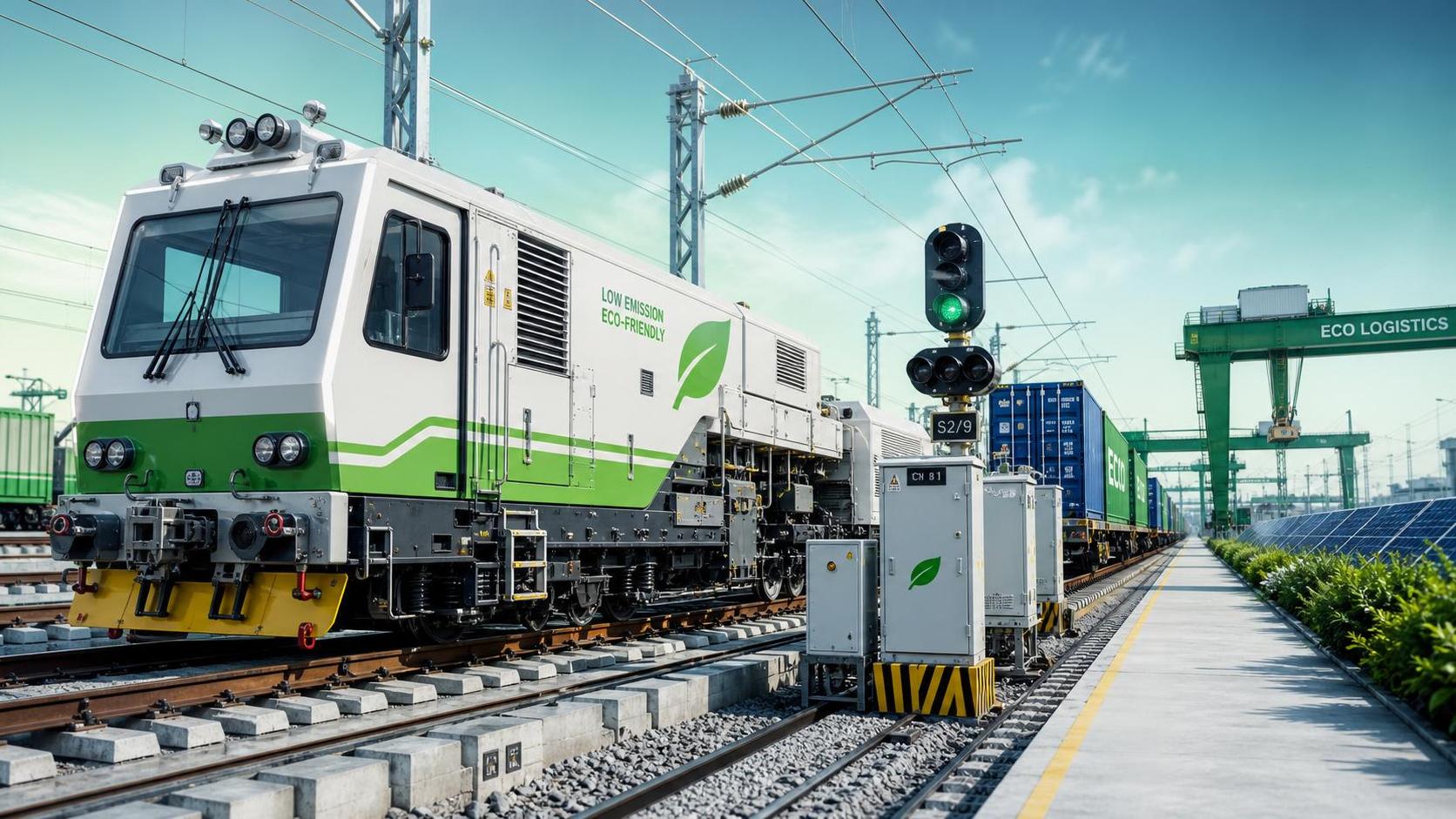
Latest environmental equipment news is becoming a rail investment signal
For rail modernization programs, the latest environmental equipment news now carries strategic weight, not just technical interest.
What changed is simple to spot.
Low-emission machinery, cleaner propulsion support systems, efficient signaling, and smarter maintenance assets are moving from pilot status into upgrade planning.
That shift matters across freight corridors, rail-port interfaces, and infrastructure maintenance cycles.
In practical terms, the latest environmental equipment news has become a decision filter for asset life, compliance exposure, and network resilience.
This is especially visible in rail engineering, where equipment choices affect energy demand, uptime, safety protocols, and cross-border operating standards at the same time.
Viewed through the G-RFE lens, environmental upgrades are no longer isolated sustainability projects.
They sit inside a broader industrial equation linking rolling stock, track machinery, signaling, intermodal systems, and regulatory benchmarking under UIC, EN, and AAR frameworks.
Why the change looks sharper now
Recent market behavior shows that environmental equipment demand is being pulled by several forces at once.
The most important one is that decarbonization targets now meet hard operating constraints.
Rail operators and engineering contractors cannot treat emissions, energy efficiency, and maintenance productivity as separate topics anymore.
More tellingly, the latest environmental equipment news increasingly centers on assets that improve both environmental performance and system economics.
- Battery-assisted maintenance vehicles reduce idle fuel burn during inspection and repair windows.
- Efficient traction power and substation controls lower energy losses across high-volume freight routes.
- Dust, noise, and waste-control systems help projects clear permitting hurdles faster.
- Digital signaling upgrades reduce unnecessary train movements and improve corridor capacity utilization.
Another reason is capital discipline.
Industrial buyers are under pressure to justify every upgrade with measurable life-cycle value.
As a result, the latest environmental equipment news gains attention when it points to lower fuel dependency, fewer unplanned shutdowns, or smoother compliance across multiple jurisdictions.
The equipment story is broader than exhaust reduction
A narrow reading would focus only on cleaner engines or emissions hardware.
The real market shift is wider.
The latest environmental equipment news now spans how infrastructure is built, monitored, powered, and maintained.
This wider view explains why the latest environmental equipment news often overlaps with automation, telemetry, and safety modernization.
Environmental performance is increasingly engineered into the operating system, not attached at the end.
Where the strongest impact is already visible
Heavy-haul corridors are rethinking upgrade priorities
Heavy-haul networks have traditionally centered decisions on horsepower, axle load, and reliability.
Those metrics still matter, but they no longer stand alone.
The latest environmental equipment news is pushing corridor planners to examine auxiliary consumption, refueling dependency, brake energy recovery, and maintenance emissions together.
That changes upgrade sequencing.
A locomotive program may now be judged alongside yard electrification, digital train control, and lower-emission service equipment.
Track and machinery fleets face a new scrutiny
Specialized rail engineering machinery is under closer review than before.
In many projects, maintenance fleets operate for long hours in sensitive zones near cities, tunnels, ports, or export corridors.
That makes noise, particulate output, idle behavior, and waste handling much more visible in tender evaluation and project governance.
From recent demand patterns, equipment with measurable environmental performance now has a better chance of fitting long-term framework agreements.
Intermodal nodes are becoming environmental pressure points
Ports, inland terminals, and cross-border transfer hubs are no longer judged only by speed.
They are also judged by local emissions, power efficiency, and land-use friction.
That is why the latest environmental equipment news is increasingly relevant to rail-port systems, container handling, and transfer scheduling.
Cleaner node operations often produce an outsized strategic benefit because they remove bottlenecks that pure line-haul investment cannot solve.
What separates useful signals from market noise
Not every headline points to durable change.
The more reliable reading of the latest environmental equipment news comes from comparing four layers at once.
- Standard alignment, including UIC, EN, AAR, and local environmental reporting rules.
- Operational fit, especially duty cycle, climate tolerance, and corridor utilization patterns.
- Service ecosystem, such as parts access, diagnostics support, and retrofit feasibility.
- Economic durability, measured through energy savings, maintenance intervals, and asset residual value.
This is where a platform like G-RFE becomes relevant as an analytical reference point.
Its value is not in promoting a single technology path.
Its value is in connecting equipment performance, signaling architecture, corridor engineering, and policy compliance into one evaluation frame.
That approach helps separate equipment that photographs well from equipment that will perform across demanding freight networks.
The next phase will favor integrated upgrades
A clear pattern is emerging.
The latest environmental equipment news is gradually shifting from single-asset improvements toward integrated upgrade packages.
That means cleaner machinery will matter most when paired with digital monitoring, network control improvements, and maintenance planning discipline.
The implication is important for industrial evaluation.
An environmentally advanced machine may underdeliver if the depot, signaling system, or corridor timetable still forces inefficient operation.
By contrast, moderate equipment upgrades can outperform expectations when the surrounding system is optimized.
This is why recent investment logic increasingly favors staged modernization instead of isolated replacement.
What deserves attention in the next review cycle
The most practical response is to watch the latest environmental equipment news through a structured but flexible lens.
- Map which assets create the largest environmental burden across locomotives, maintenance fleets, signaling power, and terminal operations.
- Check whether standards, reporting rules, or corridor policies are changing faster than asset replacement plans.
- Compare retrofit potential against full replacement, especially for machinery with strong structural life remaining.
- Review environmental claims alongside uptime data, service support, and cross-border compatibility.
- Prioritize upgrades that improve both compliance readiness and operational flexibility.
The current market does not reward symbolic green spending for long.
It rewards assets and systems that keep freight moving efficiently under tighter technical and environmental expectations.
That is the deeper message inside the latest environmental equipment news.
The next useful step is to compare recent equipment signals against corridor realities, asset age, and standards exposure, then build a phased response plan around those findings.
Industry Briefing
Get the top 5 industry headlines delivered to your inbox every morning.