
Economic Indicators Shaping 2026 Rail Maintenance Budgets

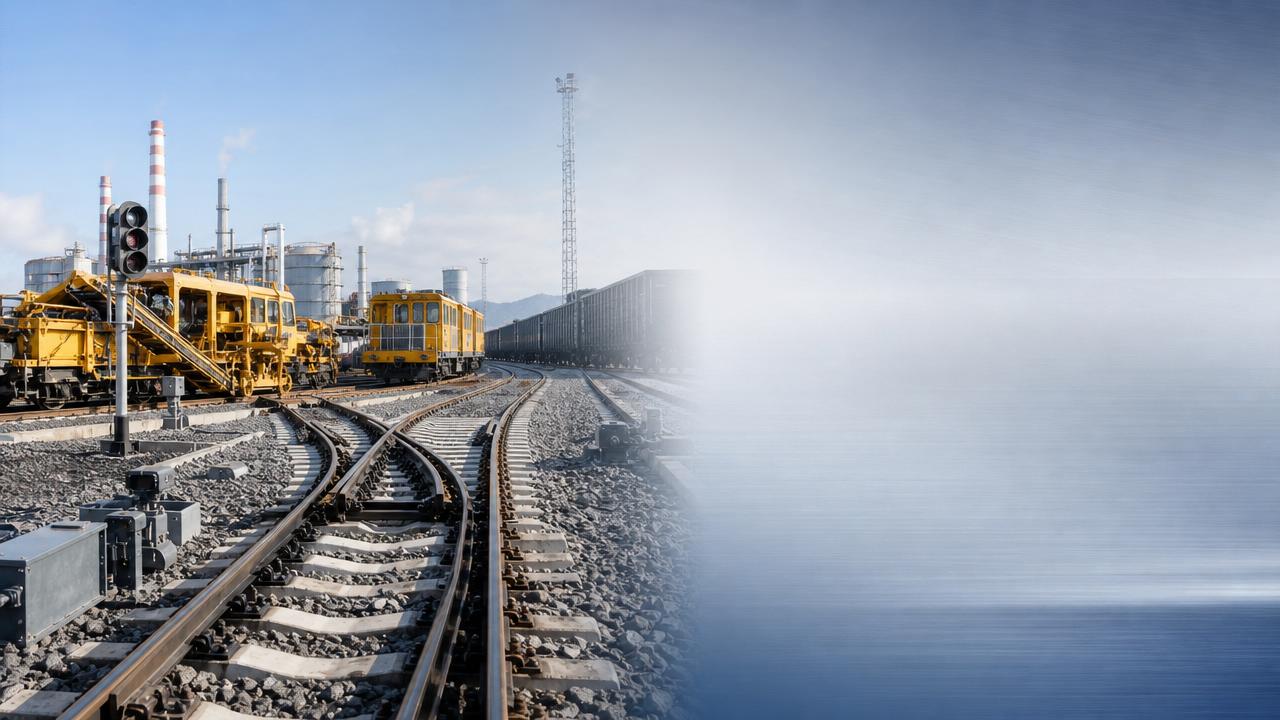
Why economic indicators now sit at the center of 2026 rail maintenance budgets
For 2026 planning, rail maintenance can no longer be treated as a fixed engineering line item. It is now a moving financial decision shaped by economic indicators across the full railway value chain.
Inflation changes steel, ballast, cable, and labor costs. Interest rates affect borrowing and lease structures. Freight demand shifts wear patterns, asset utilization, and shutdown timing.
Energy prices also matter more than many budget models admit. Higher diesel and electricity costs influence tamping schedules, machine deployment, and possession planning.
At the same time, public infrastructure funding can either accelerate renewal cycles or delay critical works. That is why economic indicators deserve a direct place in every 2026 rail maintenance budget review.
Within the G-RFE framework, this matters across all five pillars, from heavy-haul rolling stock to smart signaling, track maintenance, intermodal systems, and specialized engineering machinery.
The economic indicators worth watching first
Not every metric deserves equal weight. A practical budget model starts with the economic indicators that most directly affect maintenance scope, procurement timing, and lifecycle risk.
- Track inflation by input class, not one blended rate. Steel, sleepers, signaling electronics, and labor often move differently, and mixed assumptions can hide real budget pressure.
- Watch interest rates alongside refinancing dates. A stable maintenance need can still become unaffordable when debt service rises before long-cycle renewal packages are committed.
- Map freight demand to route stress. Higher axle loads and denser train paths usually shift spend toward rail grinding, fastening replacement, turnout inspection, and subgrade monitoring.
- Treat energy costs as an operating signal. Maintenance trains, tampers, depots, and electrified systems all react differently, so budget assumptions should reflect asset-specific exposure.
- Follow public infrastructure spending by corridor. Funding may favor cross-border freight, low-carbon upgrades, or port connectivity, changing the priority of maintenance windows and asset renewals.
- Check exchange-rate exposure in imported components. Signaling modules, diagnostic systems, and specialized rail engineering machinery can create hidden cost variance late in the budget cycle.
A simple way to separate signal from noise
A useful rule is this: if an indicator changes asset condition, procurement cost, financing cost, or possession efficiency, it belongs in the maintenance budget model.
If it does not affect those four areas, it is probably a secondary signal. This keeps budget discussions focused and easier to defend internally.
How those economic indicators change spending decisions on the ground
Budget pressure rarely shows up as one dramatic cut. More often, economic indicators reshape maintenance through smaller decisions that slowly alter risk across the network.
When inflation stays high
High inflation pushes many teams to defer non-critical renewals. That may protect short-term cash, but it can raise failure risk in turnouts, weld zones, and signaling interfaces.
A better response is to split work into safety-critical, performance-critical, and deferrable layers. That allows capital discipline without treating all maintenance as equally flexible.
When freight volumes recover unevenly
A corridor linked to mining, ports, or intermodal terminals may recover faster than the network average. Wear then concentrates in fewer locations, especially in heavy-haul operations.
In that case, condition-based budgeting becomes more valuable than flat annual allocations. G-RFE data models are especially useful here because they connect traffic intensity with engineering thresholds and compliance expectations.
When financing becomes expensive
Higher rates do not only reduce borrowing appetite. They also make spare-parts stocking, framework contracts, and machine procurement harder to justify under traditional payback assumptions.
This is where lifecycle costing matters. A cheaper delay today can become a much more expensive outage next year.
Seven budget moves that are practical for 2026
The most resilient plans usually combine engineering logic with a clear reading of economic indicators. The following actions are practical, measurable, and easier to implement than a full budget redesign.
- Build three budget cases instead of one. Use a base case, a cost-stress case, and a demand-spike case to test how maintenance priorities change.
- Protect inspection and diagnostics first. Cutting monitoring may save money briefly, but it usually weakens fault prediction and increases emergency maintenance exposure later.
- Bundle procurement where standards align. Cross-asset purchasing under UIC, EN, or AAR frameworks can reduce lead-time risk and improve price visibility.
- Rank assets by failure consequence, not age alone. Older equipment is not always the highest risk; critical junctions and signaling interfaces often deserve earlier funding.
- Reserve funds for access disruption. Possession overruns, weather delays, and energy-cost spikes can distort maintenance budgets even when material prices stay stable.
- Tie contractor scope to measurable outputs. Geometry correction, turnout reliability, and response times should be priced against results, not vague service categories.
- Review imported technology exposure early. CBTC, ETCS, GSM-R, and specialized diagnostic tools may face currency, logistics, or certification delays that affect 2026 timing.
Where many rail maintenance budgets still go wrong
Even experienced organizations sometimes use economic indicators in a narrow way. They watch macro headlines, but miss how those signals translate into engineering consequences.
A hidden risk: deferred compliance work
One commonly missed issue is compliance-linked maintenance. When budgets tighten, calibration, signaling validation, or documentation updates may be postponed because they appear non-physical.
That is risky. In regulated corridors, delayed compliance work can block operations as effectively as a track defect.
Applying economic indicators across G-RFE priority areas
The value of economic indicators grows when they are applied by asset class, not only at enterprise level. Different rail systems respond to the same signal in different ways.
Heavy-haul locomotives and rolling stock
If freight demand rises while fuel costs remain volatile, wheel, brake, and traction maintenance should be reviewed together. Isolated budget lines often miss the true reliability picture.
Rail infrastructure and track maintenance
Here, economic indicators directly influence rail replacement, ballast cleaning, mechanized maintenance cycles, and drainage work. Deferred drainage is especially dangerous because failures compound quietly.
Smart signaling and communication
Electronics-heavy systems are more exposed to exchange rates and supply-chain swings. Budgeting should include longer lead-time buffers for ETCS, CBTC, and GSM-R support components.
Intermodal rail-port systems and engineering machinery
Port-linked demand spikes can raise maintenance needs very fast. Machines may be available, but access slots, operator time, and spare parts often become the real constraint.
A realistic review process for the next budget cycle
A strong 2026 plan does not need a complicated model. It needs a disciplined sequence that links economic indicators to engineering actions.
- Start with corridor-level condition and traffic data. Budgeting from real asset stress is more reliable than beginning with last year’s spending baseline.
- Overlay key economic indicators for six to twelve months ahead. Focus on inflation, rates, energy, public funding, and freight outlook by route.
- Reclassify projects into must-do, timing-sensitive, and deferrable work. This creates flexibility without losing control of safety or network performance.
- Confirm standards and compliance impacts before cutting scope. Savings that break UIC, EN, or AAR alignment usually create larger downstream costs.
- Review contractor capacity and machinery access early. A funded project can still slip if tampers, crews, or signaling specialists are not available.
In practical terms, the best rail maintenance budgets for 2026 will not be the cheapest. They will be the ones that respond fastest and most accurately to economic indicators.
That means treating inflation, interest rates, freight demand, energy costs, and infrastructure spending as operating inputs, not background news.
If the next review starts with corridor condition, asset criticality, and a short list of relevant economic indicators, budget decisions become clearer, easier to defend, and far more resilient.
For organizations working across freight corridors, signaling systems, and heavy engineering assets, that is the right place to begin the 2026 budget conversation.
Industry Briefing
Get the top 5 industry headlines delivered to your inbox every morning.